Palm Sunday in Elche
On Palm Sunday, Elche turns gold and white as tens of thousands of people walk behind Jesús Triunfante carrying palm fronds braided by hand from the city's famous palm groves.
The days that matter
-
Fri 19 – Sat 20 Mar
White Palm Market
Artisans sell white palms in the Plaça de Baix, from simple fronds to elaborate sculptural pieces.
-
Sun 21 Mar, morning
Blessing of the palms
The palms are blessed on the Paseo de la Estación, where the market also sets up on Sunday.
-
Sun 21 Mar, morning
Procession of the Palms
Tens of thousands follow Jesús Triunfante, the Pas de la Burreta, through the centre to the Basílica de Santa María.
-
Sun 21 Mar, afternoon
Holy Week processions
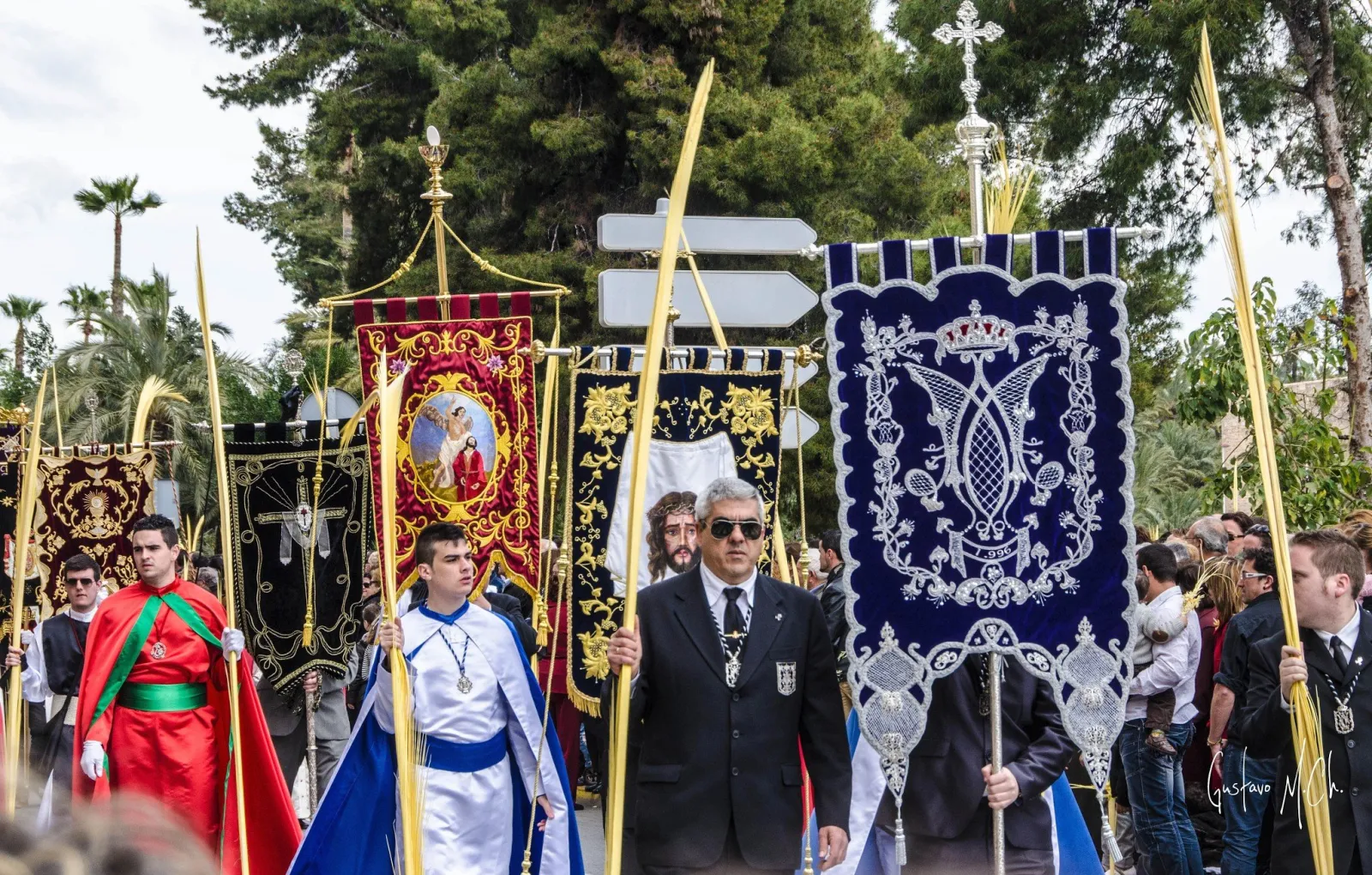
Elche's brotherhoods bring out their floats for the first afternoon processions of Holy Week.
What Palm Sunday in Elche is like
- Procession
- Family
- Free
- Noise
- Bands and chatter, but no fireworks or drum battles
- Crowds
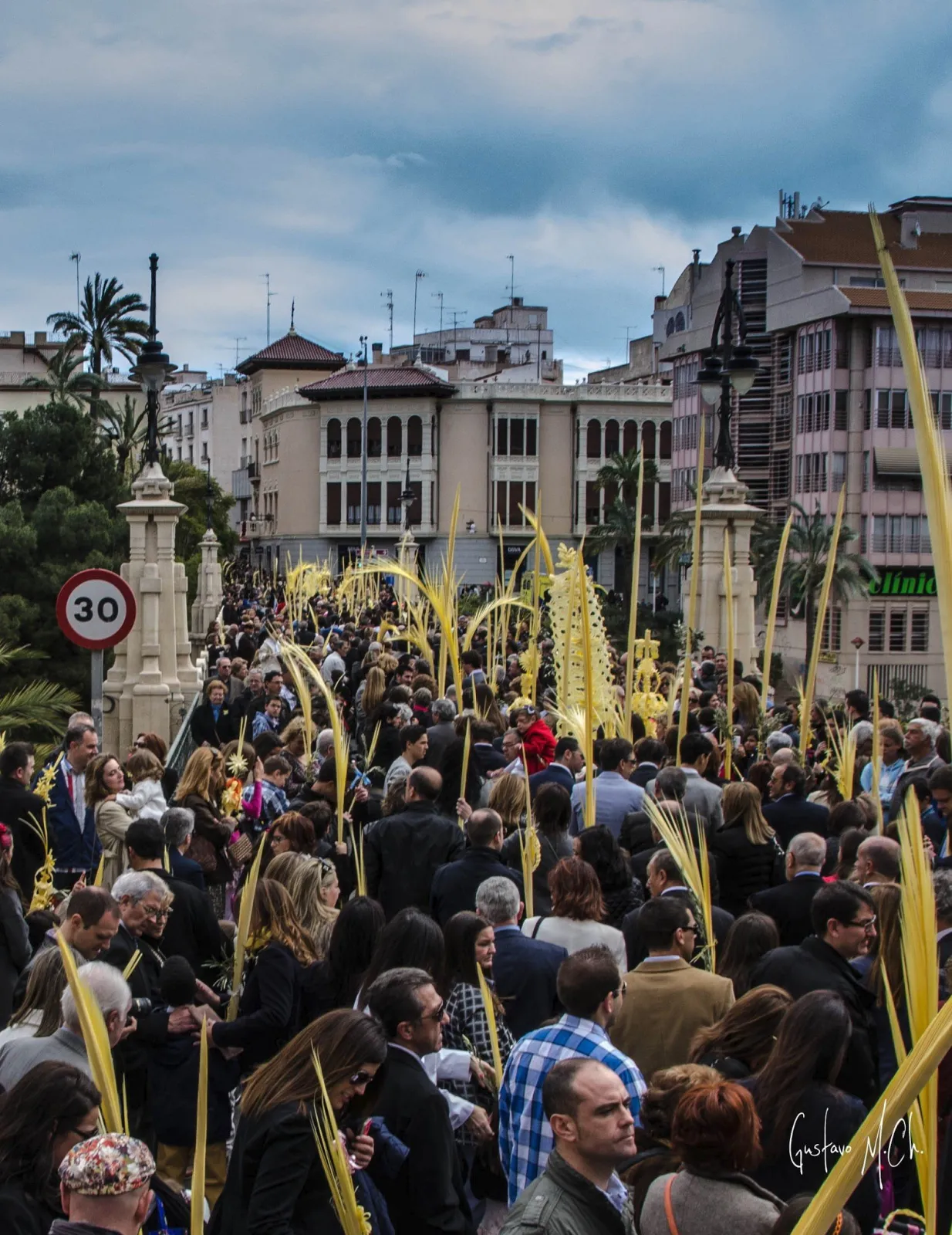
- Tens of thousands in the centre for the morning procession
- Mess
- Nothing messier than a few dropped palm strands
- With kids
- Families walk together and children carry small palms
Highlights
Tens of thousands of people in the street, each carrying a hand-crafted white palm
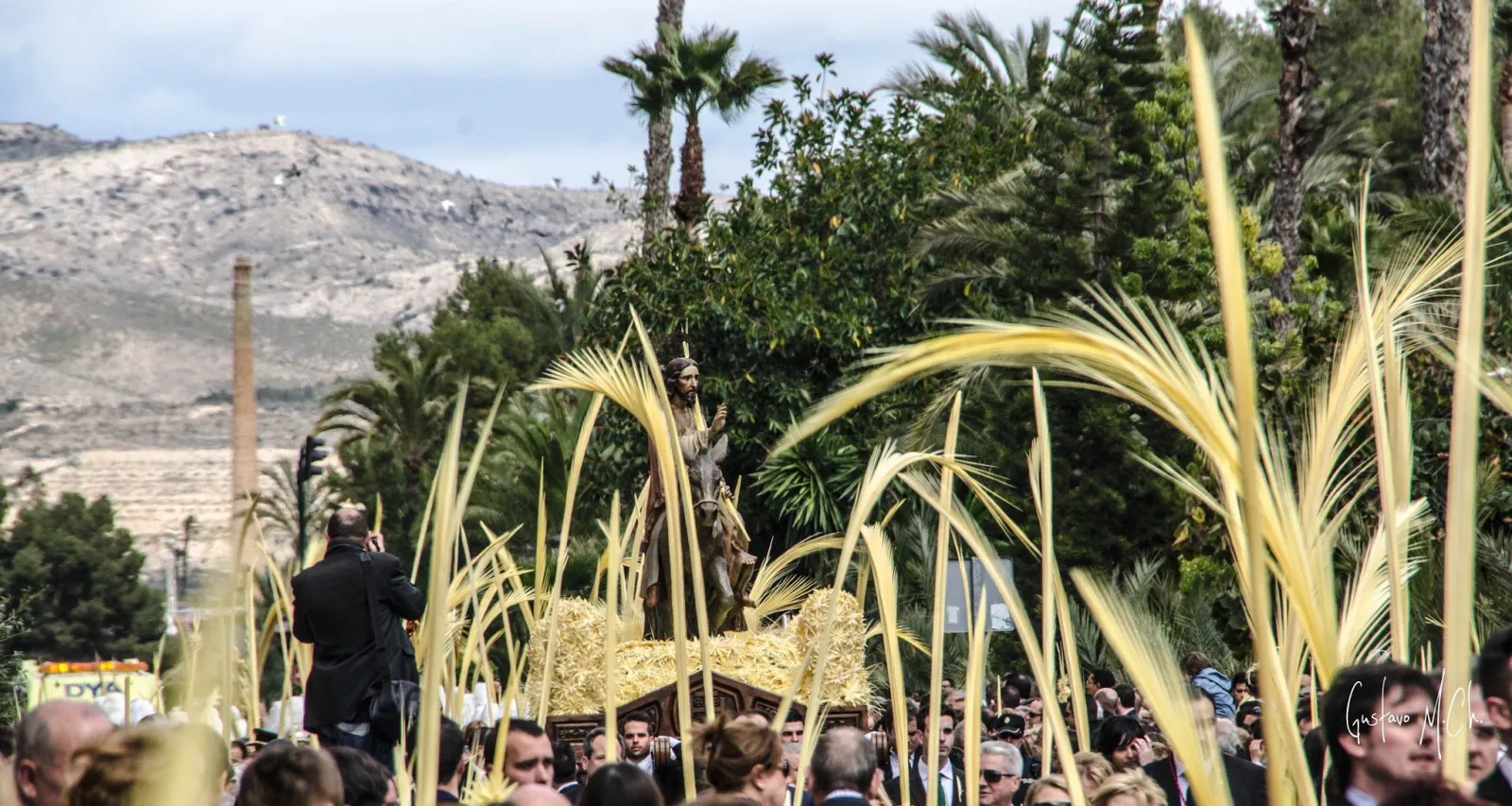
Jesús Triunfante, the Pas de la Burreta, leading the procession
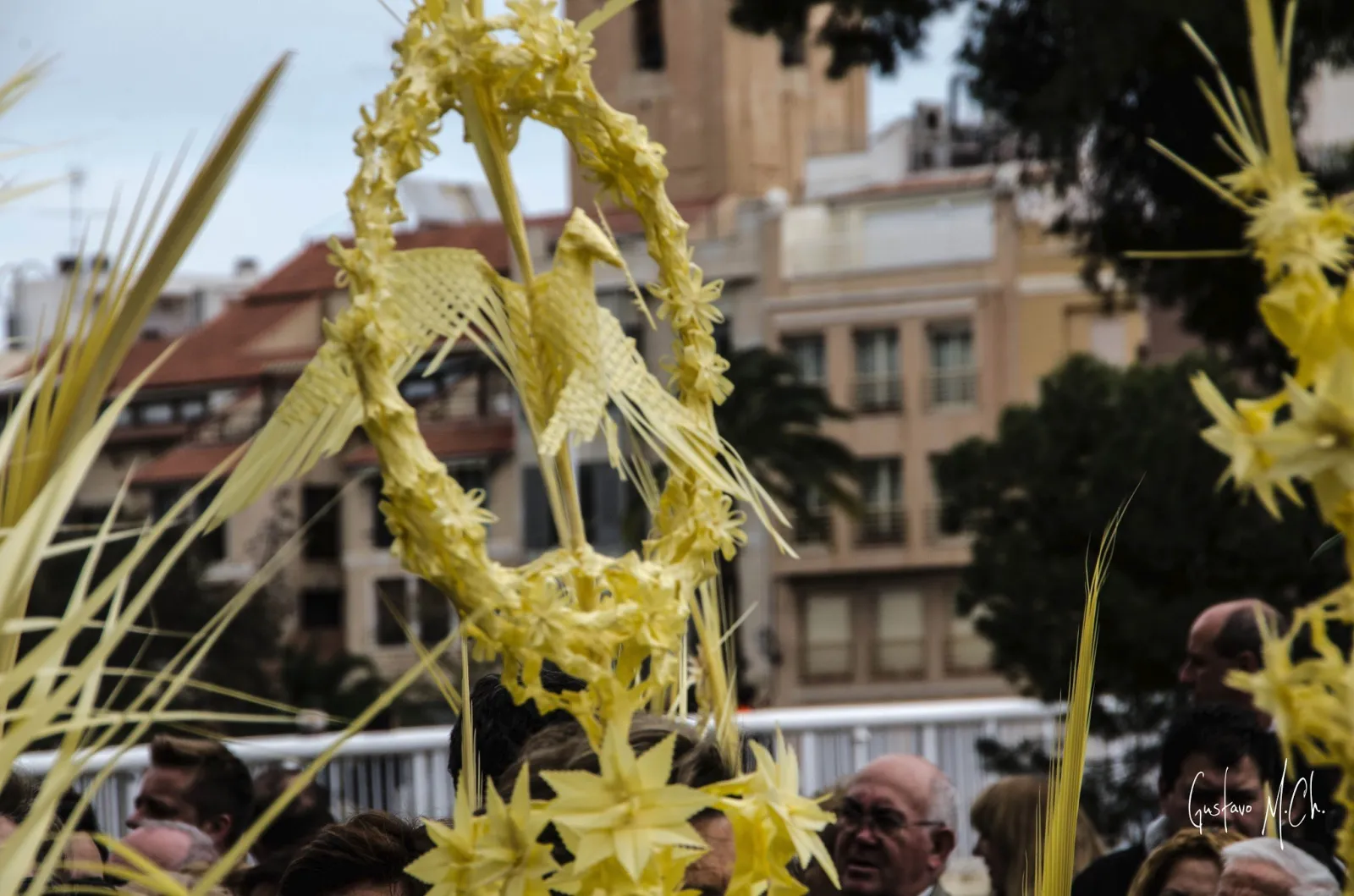
Prize-winning palm sculptures from the white-palm craft contest
The Mercado de la Palma Blanca, where you can buy a palm of your own
The UNESCO-listed Palmeral, just steps from the route
Palm Sunday in Elche 2027: the date
The procession takes place on Palm Sunday, 21 March 2027, the day that opens Holy Week in Elche (Alicante). It has held the title of Fiesta de Interés Turístico Internacional since 1997, and Elche's tourist office puts the number of people who walk in it at around 60,000. The local police counted more than 70,000 in 2026.
What makes it different
Everywhere in Spain people carry palms or olive branches on Palm Sunday, but Elche does it with palma blanca: pale, almost ivory fronds from the city's own palm groves, worked entirely by hand into crosses, stars, spirals and tall sculptural pieces. The craft has been handed down in families for centuries, and visitelche describes Elche as the place where this tradition lives on.
The city sits inside the Palmeral of Elche, a UNESCO World Heritage Site since 2000, with tens of thousands of date palms in its orchards. That landscape is the raw material for the whole day.
How the day unfolds
In the morning the palms are blessed on the Paseo de la Estación, and the procession then sets off through the centre behind the float of Jesús Triunfante, known locally as the Pas de la Burreta because it shows Jesus riding into Jerusalem on a young donkey. The procession ends at the Basílica de Santa María. Anyone can join along the route with their own palm, which is why the crowd keeps growing as it goes.
The winning pieces of the white-palm craft contest also parade, and in the days before you can buy palms at the Mercado de la Palma Blanca. Later on Palm Sunday, Elche's Holy Week brotherhoods take to the streets again for the afternoon processions.
Gallery
History & Origins
The earliest written record of Palm Sunday in Elche is a municipal council minute from 1371, kept in the town archive, which set aside money for alms on Palm Sunday. Trade in white palm appears soon after: a record from 1429 mentions people from Elche jailed in Valencia after going there to sell palma blanca.
Weaving the pale fronds for Palm Sunday became one of the city's signature crafts, tied to the palm groves that still surround the centre. The procession was declared a Fiesta de Interés Turístico Internacional on 22 July 1997, and the Palmeral itself joined the UNESCO World Heritage list in 2000. Elche also sends white palms abroad each year; in 2026 the council's gifts included one for the Pope.
What to Expect
Expect a festive rather than solemn morning. Families dress up, children carry small palms and older craftsmen show off towering pieces worked into crowns and lanterns. The blessing on the Paseo de la Estación draws the densest crowd, so arrive early if you want to see it.
The procession is long and slow, and joining it is part of the experience: buy a palm, step in behind the brotherhoods and walk with everyone towards the Basílica de Santa María. Bands play along the way. In the afternoon and evening the mood changes as the Holy Week brotherhoods bring out their floats.
How to Get There
By air: Alicante-Elche airport lies within Elche's municipal area, a short taxi or bus ride from the centre.
By train: Elche AV, on the high-speed line, has direct services from Madrid. Commuter trains on the Alicante–Murcia line stop at Elx Parc, which is right in the city centre and walkable to the Paseo de la Estación.
By car: Parking in the centre is very hard on Palm Sunday morning. Leave the car on the edge of town and walk in.
Tips & Advice
- Buy your palm at the Mercado de la Palma Blanca on the Friday or Saturday before (Plaça de Baix) or on Sunday at the Paseo de la Estación; the best pieces go first.
- Check the programme on visitelche.com for the exact blessing time before you go.
- Carry a tall palm upright and watch the people around you; the streets get tight.
- Stay on to visit the Huerto del Cura or the Palm Grove Museum, and book early: rooms across the Valencia region fill up for Holy Week.
Photos: Gustavo Morán Chacón / CC BY-SA 3.0 / Wikimedia Commons
Misteri d'Elx (Mystery of Elche)
Elche, ValenciaThe Misteri d'Elx is a medieval liturgical drama depicting the Assumption of the Virgin Mary, performed entirely in verse and song inside the Basilica of Santa María. UNESCO declared it a Masterpiece of the Oral and Intangible Heritage of Humanity in 2001 — it has been performed uninterrupted since the 15th century.
Las Fallas
Valencia, ValenciaLas Fallas is one of Spain's most spectacular and UNESCO-recognised festivals — a stunning combination of art, fire, music, and Valencian pride. Every March, the city of Valencia fills its streets with hundreds of enormous satirical sculptures (fallas), only to burn them all to the ground in a magnificent midnight inferno on the final night.
La Tomatina
Buñol, ValenciaLa Tomatina is one of the most unique and exhilarating festivals in the world. Every year, on the last Wednesday of August, the small town of Buñol, near Valencia, transforms into a battlefield of ripe tomatoes — and tens of thousands of visitors come from every corner of the globe to join the fun.
Noche de San Juan
Alicante, ValenciaNoche de San Juan (St. John's Eve) is Spain's most magical night. On 23 June, beaches and towns across the country light up with bonfires as millions of Spaniards celebrate the summer solstice with fire, sea, and ancient rituals. It's one of those rare festivals that unites the entire country in celebration.