Noche de San Juan
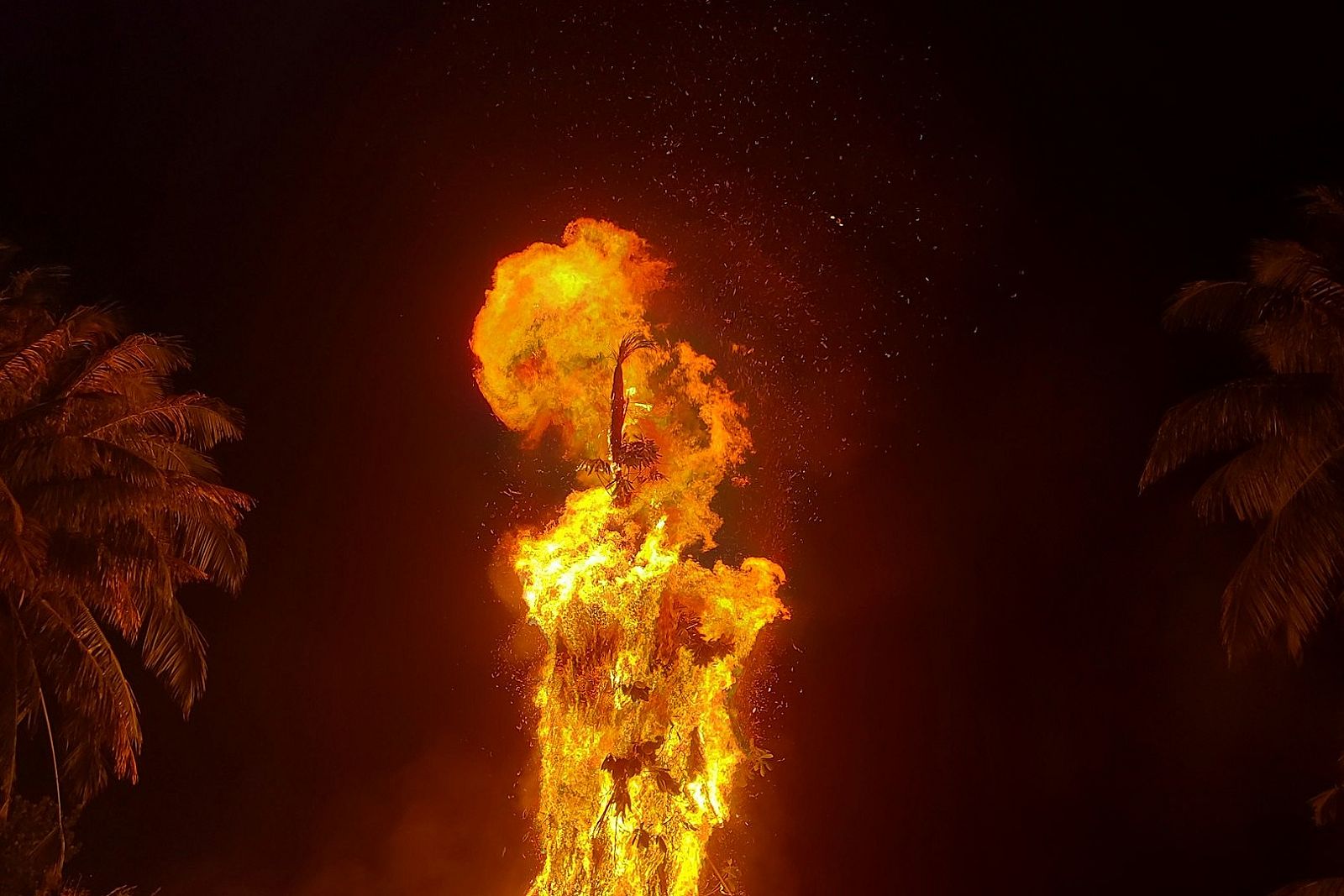
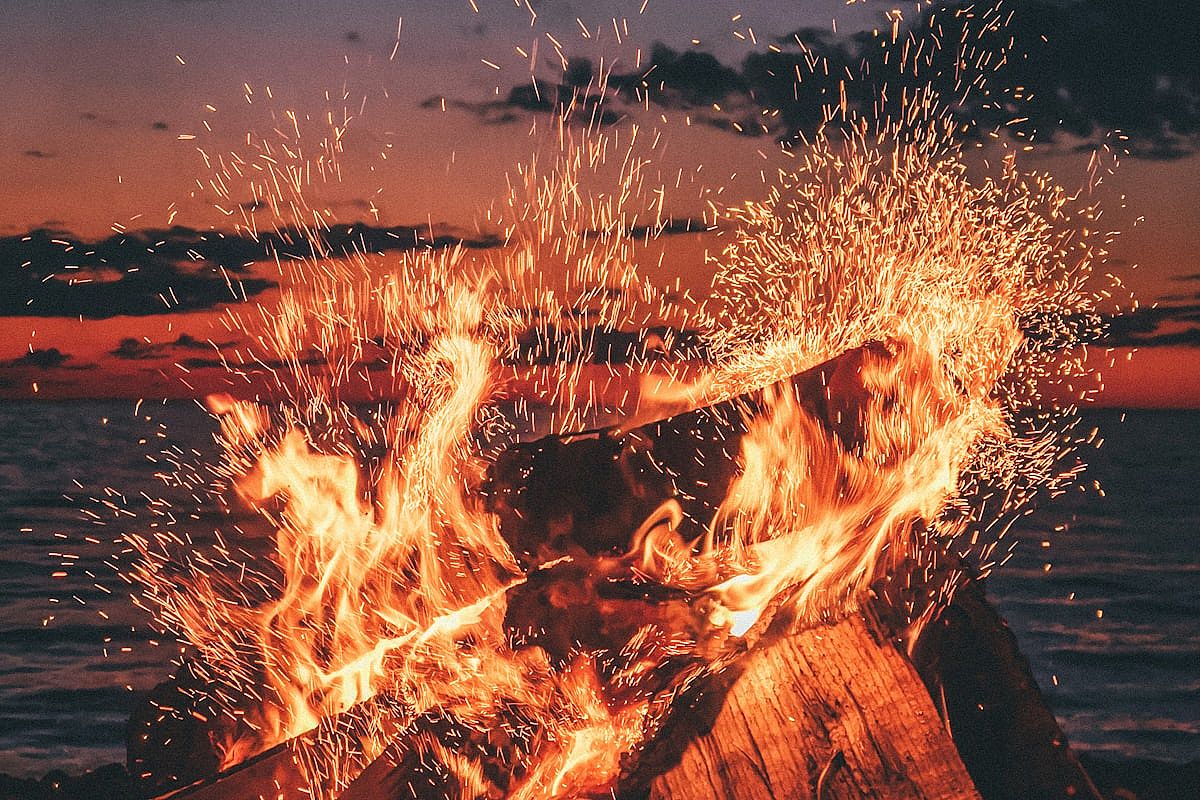
Noche de San Juan (St. John's Eve) is Spain's most magical night. On 23 June, beaches and towns across the country light up with bonfires as millions of Spaniards celebrate the summer solstice with fire, sea, and ancient rituals. It's one of those rare festivals that unites the entire country in celebration.
Highlights
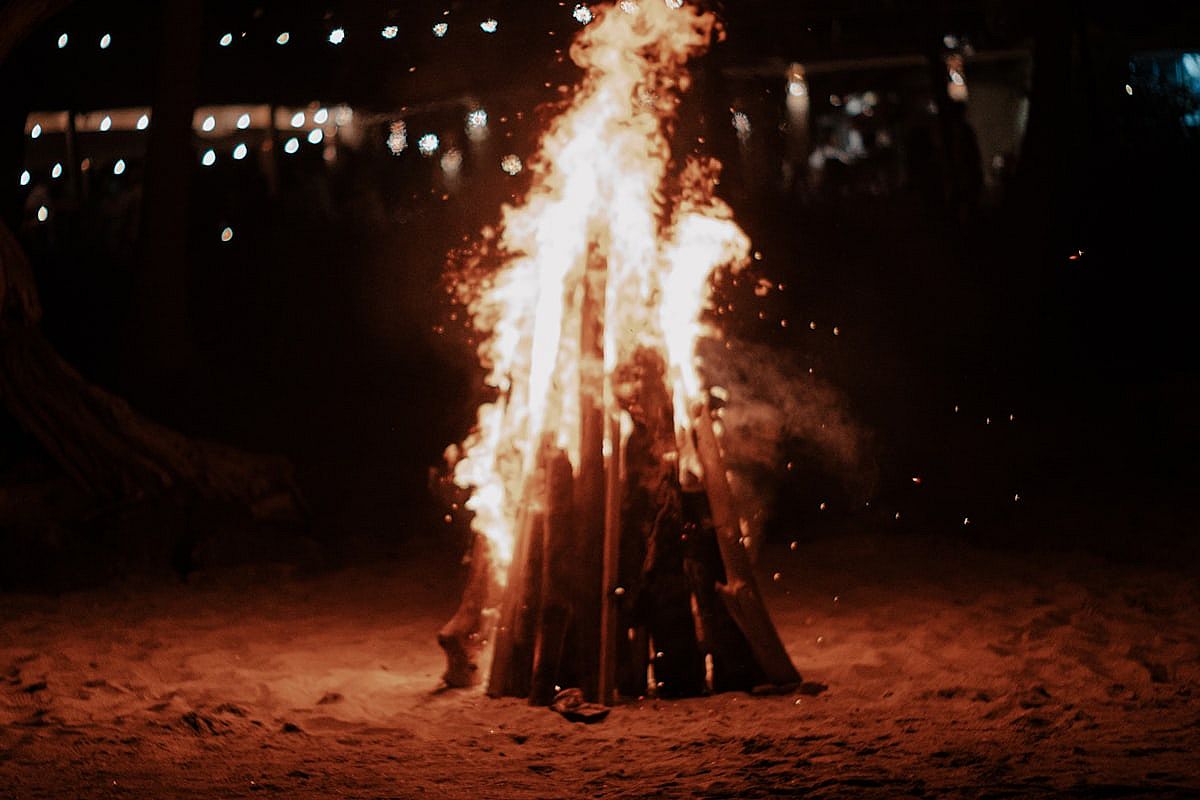
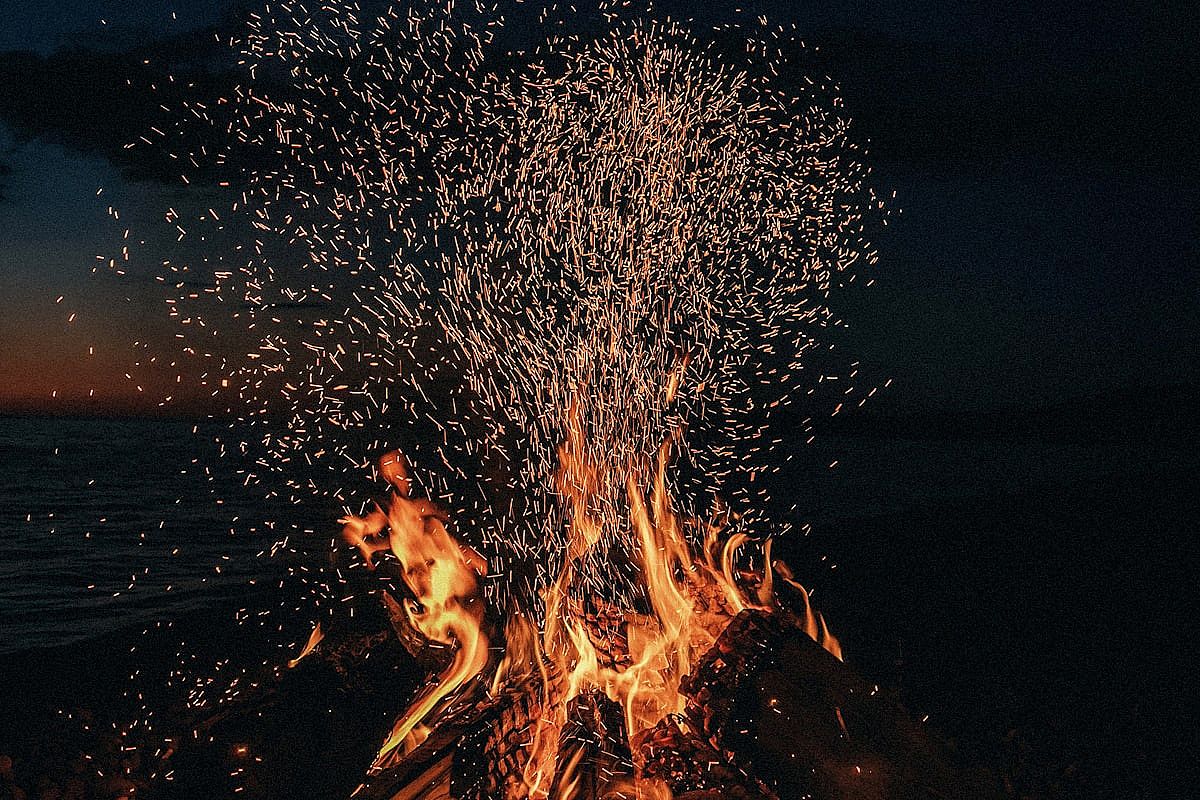
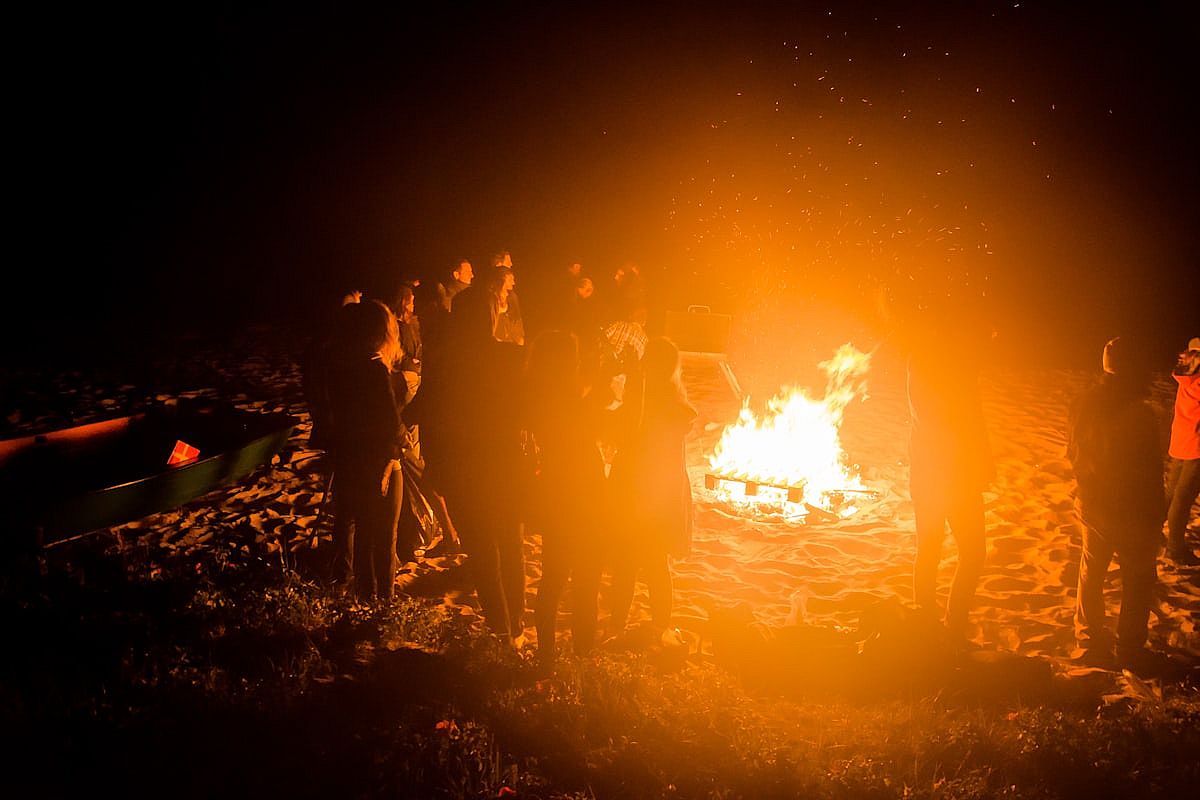
There is something primal and magical about standing on a beach at midnight, surrounded by bonfires stretching along the coast, jumping waves under a summer sky. It is Spain at its most elemental — fire, sea, community, and the joy of the longest days of the year.
Date & Schedule
| Detail | Info |
|---|---|
| Date | Night of 23 June (into early hours of 24 June) |
| Bonfires lit | Around 22:00–23:00 |
| Main celebration | Midnight |
| Location | Nationwide — beaches, plazas, and towns across Spain |
Best Locations
The best celebrations happen on the coast:
- Alicante — The biggest, with the Hogueras festival (separate event lasting days)
- Barcelona — Barceloneta beach fills with thousands
- Valencia — Strong bonfire tradition
- Málaga, Cádiz, A Coruña — Major coastal celebrations
- San Sebastián — Beautiful beach bonfires
What to Bring
- Warm layers — Nights can cool down even in June
- Swimwear — For the midnight swim
- Food and drinks — Beach picnic essentials
- Something to burn — Write wishes on paper to throw into the bonfire
- Shoes you can remove easily — For walking on the beach
Choosing the right San Juan celebration
Noche de San Juan is celebrated in many coastal communities, and local rules matter more than a generic description. One beach may permit an organised bonfire while another restricts flames, alcohol, glass or access to protect people and the shoreline. Pick the municipality first, then read its current public notice. Never arrive carrying equipment on the assumption that every beach follows the same custom.
You can enjoy the night without entering the water or approaching a fire. Families may prefer an earlier public programme, while adults seeking a late gathering should confirm transport home. Treat the beach as a natural public space: remove everything you bring, avoid dunes and protected areas, and do not leave embers, food or plastic behind.
Noche de San Juan programme and daily planning
The detailed programme should shape the trip, not the other way around. Confirm the current dates, venues, reservation rules and late changes through the organiser or Alicante's official visitor information. Older schedules remain useful for understanding the character of the event but cannot guarantee this edition's times. Save the essential listings offline and check them again before leaving the accommodation.
Build each day around one priority and one nearby alternative. Leave room for queues, security checks, street closures and a meal away from the busiest area. If an event reaches capacity or moves because of weather, the backup keeps the day enjoyable. Avoid buying a non-refundable journey tied to one unconfirmed performance.
Where to stay for Noche de San Juan
Choose accommodation by the journey home as well as the journey in. A central property may reduce late transport but can bring noise, crowds and a higher rate. A quieter district can be better value when it has a direct, dependable connection. Check the real walking route, hills, lighting and temporary closures rather than relying on straight-line map distance.
Compare cancellation terms, reception hours, luggage storage and accessibility before paying. Ask whether festival restrictions affect vehicle access or check-in. Reserve early when demand is strong, but never transfer money outside a protected booking channel. Keep the address and reservation details available without mobile data.
Transport and arrival strategy
Public transport and walking are often more predictable than driving during a large celebration. Consult live municipal notices because stations, bus stops and traffic routes can change. Plan at least two ways back and note the last practical connection. A charged phone and offline map help, but every traveller should also know the meeting point and accommodation address.
Arrive early enough to understand the area before it becomes crowded. Identify toilets, exits, medical assistance and a quiet place to regroup. Visitors with reduced mobility should confirm step-free routes and accessible viewing for the specific venue; city-wide accessibility statements do not answer every entrance or historic street.
Tickets, costs and avoiding bad purchases
Separate free public activity from reserved seats, concerts or special venues. Read the listing for each event and use only the sales route named by the organiser. Never assume that a festival pass covers an associated activity, or that a public square guarantees admission after capacity is reached. Keep proof of purchase offline.
A realistic budget includes accommodation, meals, local transport and an emergency reserve. Prices change, so current official listings and menus are more useful than old averages. Flexible plans often save more than chasing the cheapest non-refundable option. Decline unofficial tickets that cannot be transferred through an approved system.
Clothing, weather and personal safety
Comfortable closed shoes and adaptable layers suit long hours outdoors. Check the forecast, carry water where permitted and use sun or rain protection as conditions require. Take only a compact secure bag and review prohibited items before arrival. Keep valuables in inner pockets and avoid displaying a phone unnecessarily in dense crowds.
Eat regularly, pace alcohol and step into a quieter area before tiredness becomes a problem. Never block emergency access or ignore a steward's direction. If the group separates, return to the agreed point rather than pushing against crowd flow. Call for professional help when someone is unwell, lost or unsafe.
Local etiquette and a better visitor experience
Noche de San Juan belongs first to the people who sustain it. Keep residential entrances open, lower your voice during solemn activity and ask before taking close portraits. Do not climb street furniture or cross a procession, performance or controlled route for a photograph. Leave no litter and follow local rules even when other visitors do not.
Learn the names of the main traditions before arrival and listen to local explanations. A slower itinerary creates more meaningful encounters than racing through every headline. Use the Spain festival calendar to compare dates and avoid an unrealistic multi-city schedule.
Noche de San Juan FAQ
Do I need a ticket?
Some public activity may be free while specific events require booking or have capacity controls. Check every item in the current official programme.
How early should I arrive?
Allow time for transport changes, walking and security. Popular events need a larger margin, but the organiser's current access notice is the best guide.
Is the festival suitable for children or limited mobility?
Often yes, with careful selection. Compare noise, crowd density, toilets, surfaces and accessible entrances for the exact event before committing.
Gallery
Video
History & Origins
Noche de San Juan has pre-Christian pagan roots celebrating the summer solstice. The Catholic Church absorbed the tradition, associating it with the birth of St. John the Baptist. Key traditions include:
- Jumping over bonfires — For purification and good luck (jump three times)
- Jumping waves at midnight — Jump seven waves at midnight while making wishes
- Burning old items — Writing wishes on paper and throwing them into the fire
- Herbs and flowers — Collecting special herbs believed to have magical properties on this night
How to Get There
This is a nationwide festival — simply head to your nearest beach or main plaza! In major cities, public transport usually runs late or all night on San Juan.
Tips & Advice
Is it safe to jump over bonfires? Generally yes, but use common sense. Jump over smaller fires, not roaring bonfires. Supervision is recommended for children.
Is it free? Yes, all celebrations are free and open to everyone.
Can I bring my own bonfire? Most beaches have organised bonfires. Check local regulations — some municipalities restrict private fires.
Plan Your Trip
Book accommodation and transport for this festival. Get the best deals on hotels and train tickets.
This page contains affiliate links. We may earn a commission at no extra cost to you.
 August
La Tomatina
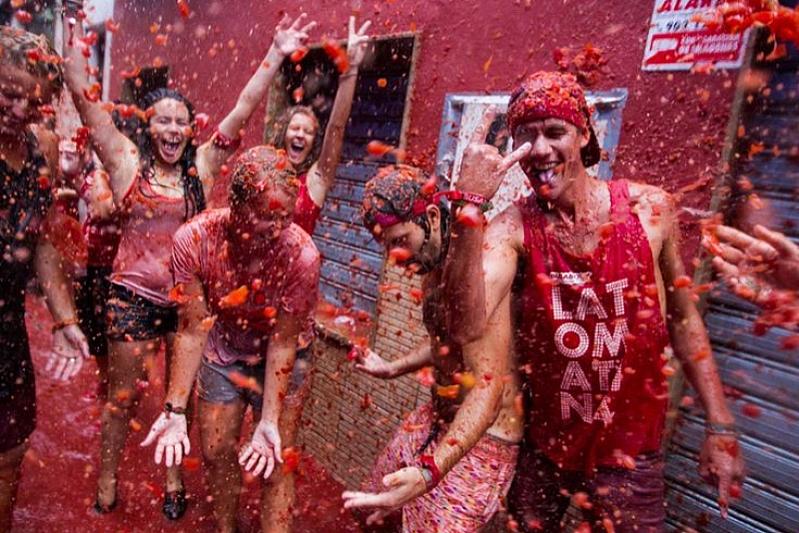
La Tomatina is one of the most unique and exhilarating festivals in the world. Every year, on the last Wednesday of August, the small town of Buñol, near Valencia, transforms into a battlefield of ripe tomatoes — and tens of thousands of visitors come from every corner of the globe to join the fun.
Els Enfarinats
Every December 28th (Holy Innocents' Day), the town of Ibi erupts into a massive flour, egg and firecracker battle as mock revolutionaries 'seize power' in this 200-year-old tradition.
 April
April
Moros y Cristianos
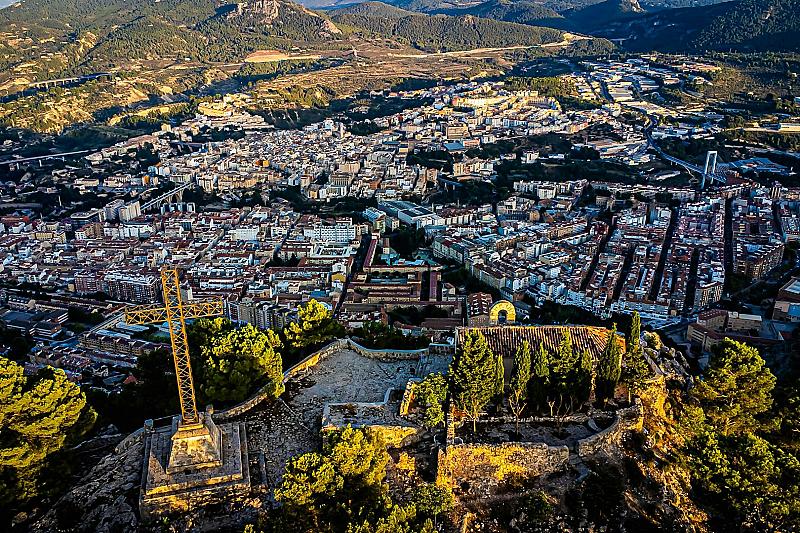
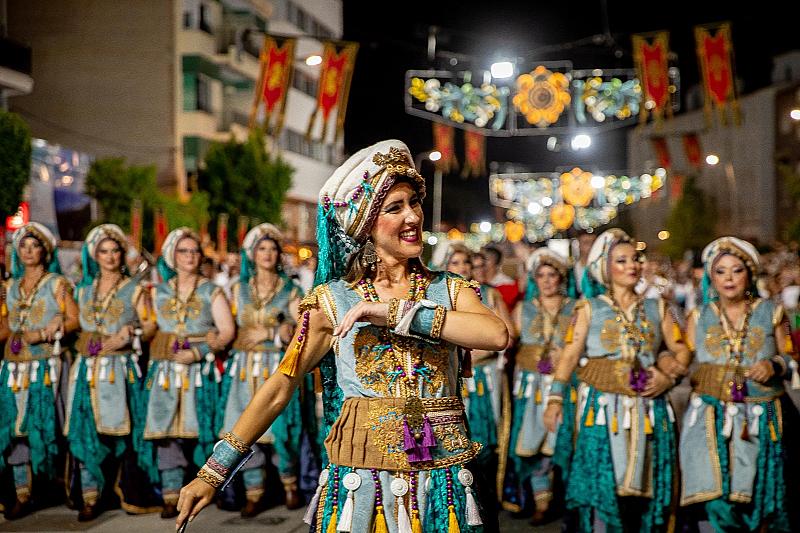
The Moros y Cristianos (Moors and Christians) festivals are among Spain's most visually spectacular celebrations — elaborate historical re-enactments of the medieval battles between Christian and Muslim forces, performed with extraordinary costumes, gunpowder, music, and drama across dozens of cities and towns, primarily in the Valencia region and Andalusia.
 July
July
Moros y Cristianos de Villajoyosa
Villajoyosa's Moros y Cristianos features one of Spain's most spectacular beach landings — Moorish troops arrive by sea and storm the beach in a dramatic re-enactment of medieval battles.