Moors and Christians of Ontinyent
Five days of marching bands, Moorish and Christian armies, arquebus battles and a castle in the main square: Ontinyent's Moors and Christians, held since 1860, became a Fiesta de Interés Turístico Internacional in 2024.
The days that matter
-
Thu 19 Aug from 18:00 (2026)
Entrada de Bandas and Alardos
Dozens of bands march in and play Chimo together in Plaça Major; the Alardos parade follows late at night.
-
Fri 20 Aug 18:00 and 22:00 (2026)
Christian and Moorish Entradas
The children's parade in the morning, then the Christian Entrada in the afternoon and the Moorish Entrada at night.
-
Sat 21 Aug from 17:30 (2026)
Contrabando and Baixada del Crist
The comic Contrabando at midday; in the afternoon the Christ is brought down from Santa Anna amid arquebus fire.
-
Sun 22 Aug
Diana de Gala and procession
An early Diana de Gala, the main mass and the solemn procession in honour of the patron in the evening.
-
Mon 23 Aug 12:00 and 18:00 (2026)
Embajadas
Arquebus battles and the Moorish and Christian embassies at the castle in Plaça Major, followed by the final parade.
What Moors and Christians of Ontinyent is like
- Loud
- Procession
- Night
- Noise
- Dozens of bands and deafening arquebus battles
- Fire
- Gunpowder smoke from arquebuses, not bonfires
- Crowds
- Streets packed for the Entradas and the Bajada del Cristo
- With kids
- Kids love the costumes; bring ear protection for the gunpowder
Highlights
Usually Thursday 19 to Monday 23 August 2027 (around the fourth Sunday of August)
The Entrada de Bandas and all bands playing Chimo together in Plaça Major
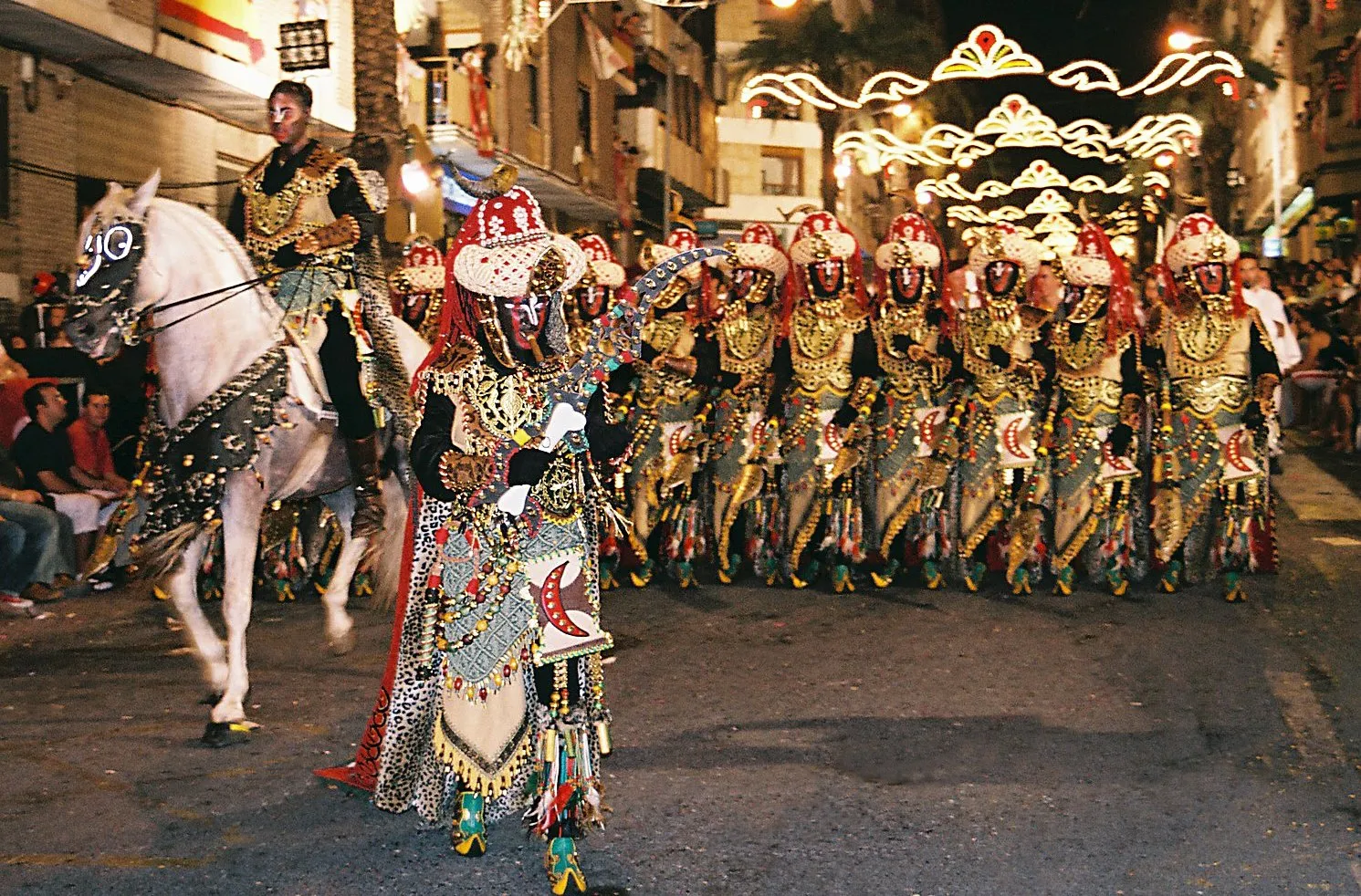
The Christian and Moorish Entradas, with 24 comparsas
The Baixada del Crist from the hermitage of Santa Anna, amid arquebus fire
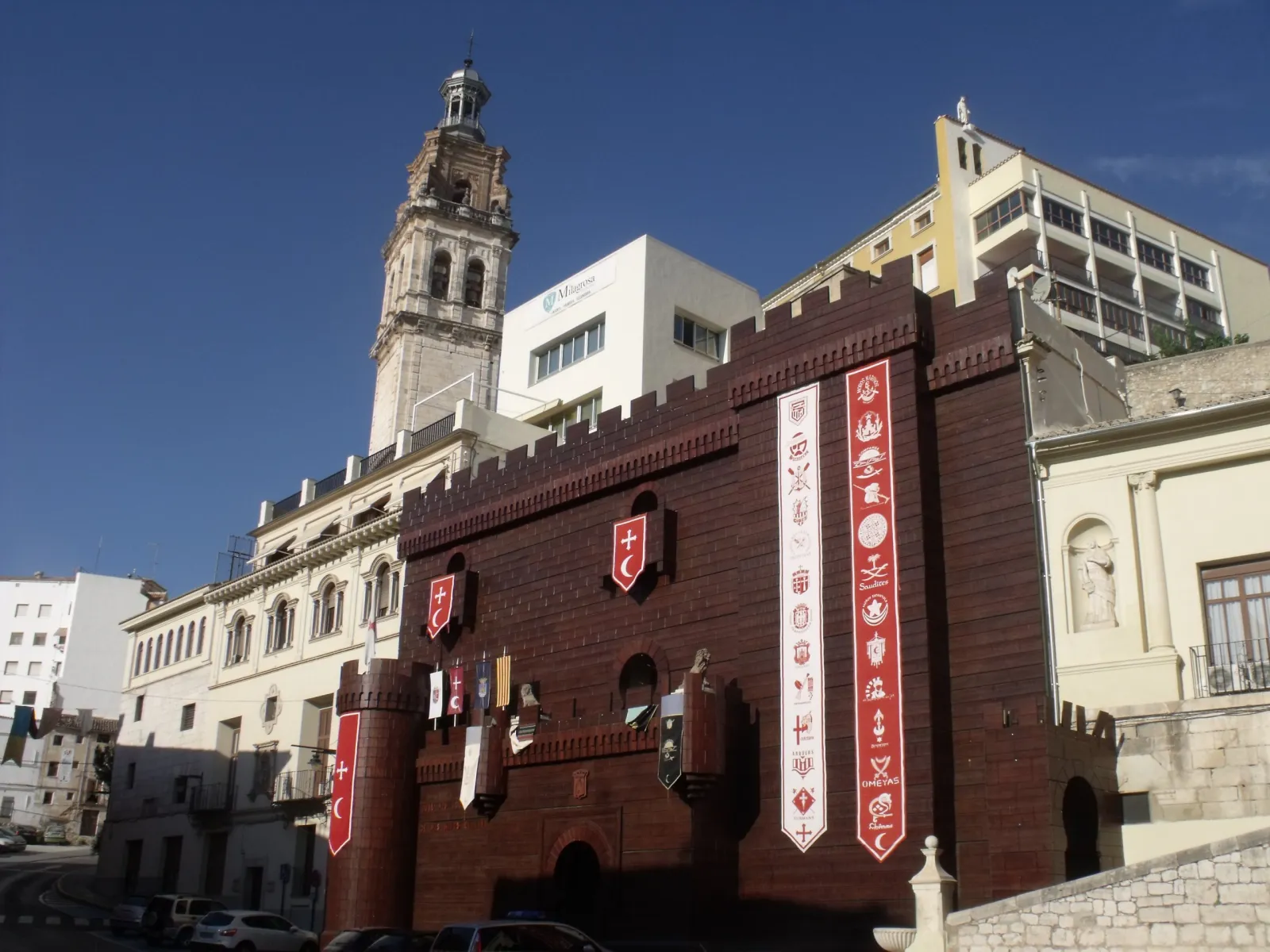
The Embajadas in front of the festival castle on the Monday
Fiesta de Interés Turístico Internacional since 2024
Moros y Cristianos 2027: dates
Ontinyent's Moors and Christians are held around the fourth Sunday of August, from the Thursday before it to the Monday after. In 2027 that means Thursday 19 to Monday 23 August. The Societat de Festers publishes the official programme in summer, and smaller events such as the Ball dels Llauradors start about a week earlier.
A town at war, and at peace
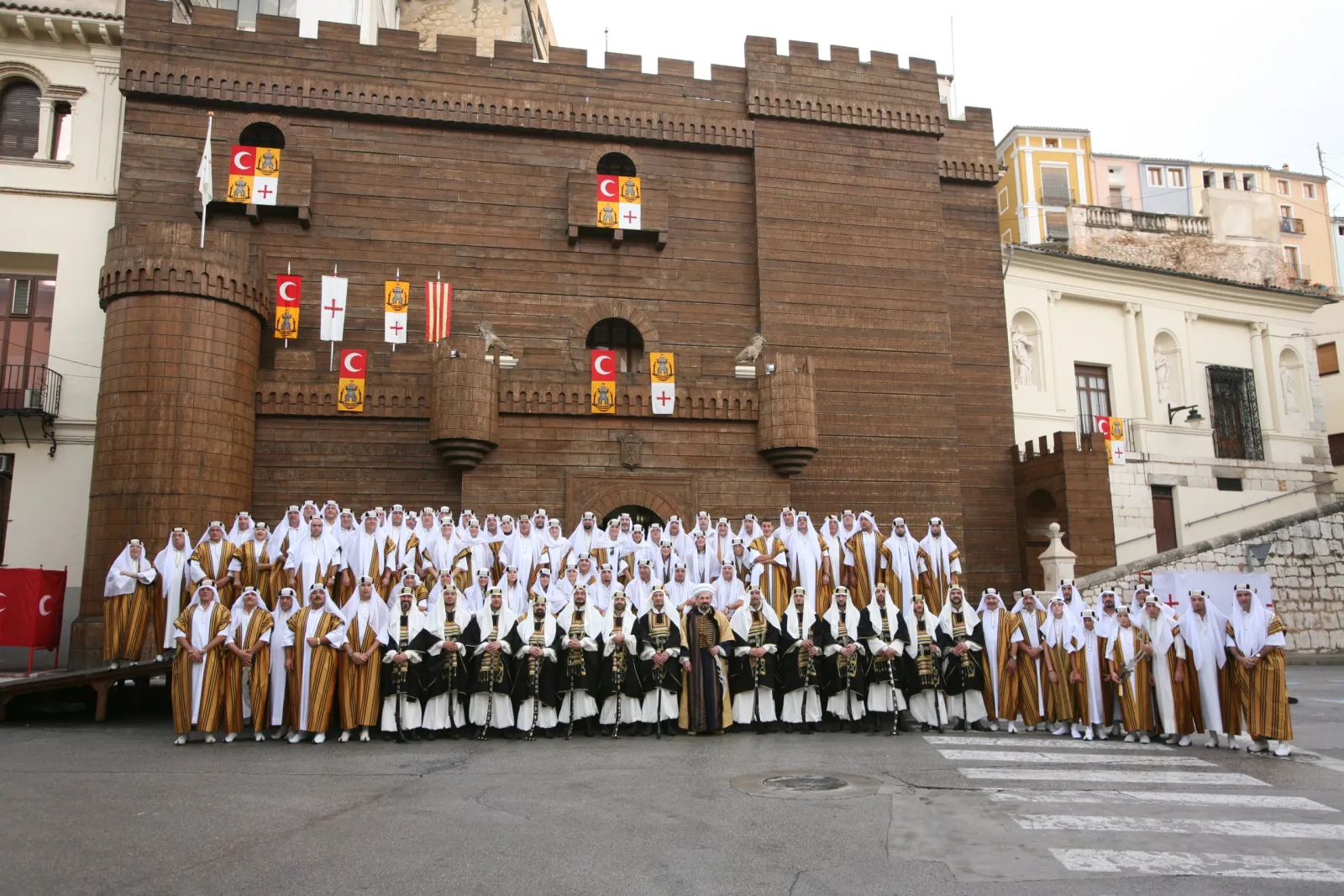
The festivities honour the Santíssim Crist de l'Agonia, patron of the Moors and Christians, and recall the Christian conquest of the town in the 13th century. They are organised by the Societat de Festers del Santíssim Crist de l'Agonia, made up of twelve Christian and twelve Moorish comparsas, each with its own costumes, music and history. Every year a Christian and a Moorish comparsa hold the capitanías and lead their armies.
The big acts
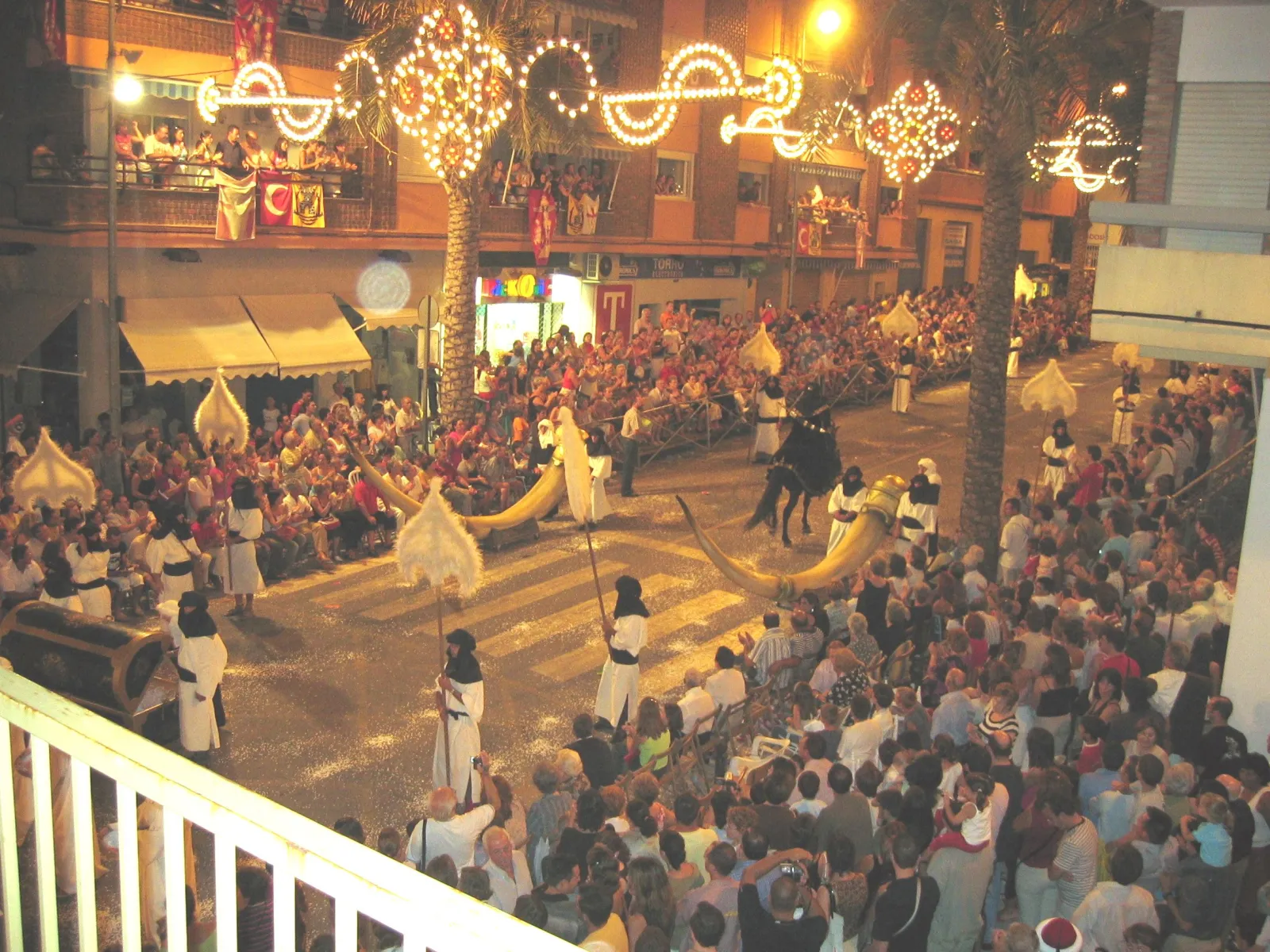
The week opens with the Entrada de Bandas, when dozens of bands march in and then play together the famous Moorish march Chimo in Plaça Major. Then come the Alardos, the children's parade and the two great Entradas, Christian in the afternoon and Moorish at night. On the Saturday the comic Contrabando takes over the morning, and in the afternoon the Baixada del Crist brings the image of the Christ from the hermitage of Santa Anna down to the church of Sant Carles amid arquebus fire. Sunday has the Diana de Gala, mass and the solemn procession; Monday ends with the Embajadas (embassies) in front of the festival castle in Plaça Major.
In September 2024 Spain's Secretary of State for Tourism declared the festivities a Fiesta de Interés Turístico Internacional, and since 2019 the Bajada del Cristo and the Embajadas have been protected as intangible cultural heritage (Bien de Interés Cultural Inmaterial).
Gallery
History & Origins
Devotion to the Christ of Santa Anna, nicknamed the Morenet, grew strongly in the mid-19th century, when townspeople turned to him in times of drought. In 1860 the town council, the members of the El Porvenir casino and the lamp-bearers of the Christ founded the Moors and Christians, following models from other towns, and made the Christ their patron. On 7 August 1860 the embassy texts written by the magistrate and writer Joaquín J. Cervino were declaimed for the first time, and they are still recited today in Plaça Major.
The arquebus volleys echo the old local militias that defended the Valencian coast in the 16th and 17th centuries. Six festival castles have stood in the square since 1860; the current one was first used in 1985, for the 125th anniversary. Cervino's embassies are notable for their tolerance: the Christians win, but the defeated Moors are not forced to renounce their faith, and both sides leave the square marching together.
What to Expect
Expect long, spectacular parades and a lot of noise. The Entradas are the visual highlight: squads of festers in elaborate Moorish and Christian costumes advance slowly to the beat of marches played by dozens of bands, led by their cabos de escuadra. The Moorish Entrada at night is especially atmospheric.
Gunpowder is part of the fiesta. Arquebus and blunderbuss battles bring smoke and thunder, on the Saturday along the way to Santa Anna and on the Monday in Plaça Major, so bring ear protection, especially for children. Between the big acts, the old town is full of music, comparsa headquarters and people in costume. The emotional peak for many locals is the Baixada del Crist, when the image is carried down from Santa Anna through the old streets and across the Pont Vell.
How to Get There
Ontinyent is in the Vall d'Albaida, in the south of Valencia province.
By train: the Xàtiva–Alcoi line through Ontinyent has been closed for works since March 2025, with reopening forecast for September 2027, so don't count on trains during the 2027 fiesta. From Valencia, take the train to Xàtiva and continue by Renfe's replacement bus or by car, and check Renfe nearer the date.
By air: the nearest airports are Valencia and Alicante.
By car: the town is well connected by road with Valencia, Xàtiva and Alcoi. During the fiestas the centre is closed to traffic for the parades, so park on the outskirts and walk in.
Tips & Advice
Plan around the Entradas. The Christian Entrada (afternoon) and the Moorish one (night) are on the Friday; get to the route early to find a good spot.
Protect your ears. Arquebus battles are extremely loud; keep your distance with small children.
Don't miss the Monday. The Embajadas in Plaça Major are the dramatic finale, with the Moorish embassy at midday and the Christian one in the afternoon.
Book early or stay nearby. Accommodation in Ontinyent is limited; Xàtiva and Valencia are alternatives.
Check the official programme. Times change slightly from year to year, and the Societat de Festers publishes the final programme in summer.
Photos: Jasolber / Public domain / Wikimedia Commons; Hijas de Rafael Berna / CC BY-SA 3.0 / Wikimedia Commons; Asbawes / CC BY-SA 3.0 / Wikimedia Commons; 19Tarrestnom65 / CC BY-SA 4.0 / Wikimedia Commons
Las Fallas
Valencia, ValenciaLas Fallas is one of Spain's most spectacular and UNESCO-recognised festivals — a stunning combination of art, fire, music, and Valencian pride. Every March, the city of Valencia fills its streets with hundreds of enormous satirical sculptures (fallas), only to burn them all to the ground in a magnificent midnight inferno on the final night.
Noche de San Juan
Alicante, ValenciaNoche de San Juan (St. John's Eve) is Spain's most magical night. On 23 June, beaches and towns across the country light up with bonfires as millions of Spaniards celebrate the summer solstice with fire, sea, and ancient rituals. It's one of those rare festivals that unites the entire country in celebration.
Moros y Cristianos
Alcoy, ValenciaThe Moros y Cristianos (Moors and Christians) festivals are among Spain's most visually spectacular celebrations — elaborate historical re-enactments of the medieval battles between Christian and Muslim forces, performed with extraordinary costumes, gunpowder, music, and drama across dozens of cities and towns, primarily in the Valencia region and Andalusia.
Hogueras de San Juan Alicante
Alicante, ValenciaThe Hogueras de San Juan (Fogueres de Sant Joan in Valencian) is Alicante's answer to Valencia's Fallas — and it's every bit as spectacular. Each June, the city fills with enormous artistic monuments (hogueras) that are paraded, admired and ultimately burned to ashes on the magical Noche de San Juan. With daily fireworks, parades, bonfires on the beach and the deafening mascletà at noon, it's a festival of fire, art and Mediterranean joy. Declared a Festival of International Tourist Interest.