Encierros de Cuéllar
Five mornings of bull runs in a walled Segovian town, where riders bring the herd across open country and through the pinewoods before the animals charge into the streets.
The days that matter
-
Friday before 18:30 in 2026
Recortes contest
Dodgers and leapers face young bulls in the bullring; the fairground lights are switched on that night.
-
Saturday 19:30 in 2026
Official opening and pregón
The town hall bell calls the town together, the Virgen del Rosario is carried in procession and the fiesta queen and pregón open the week.
-
Sunday to Thursday around 09:30
The five encierros
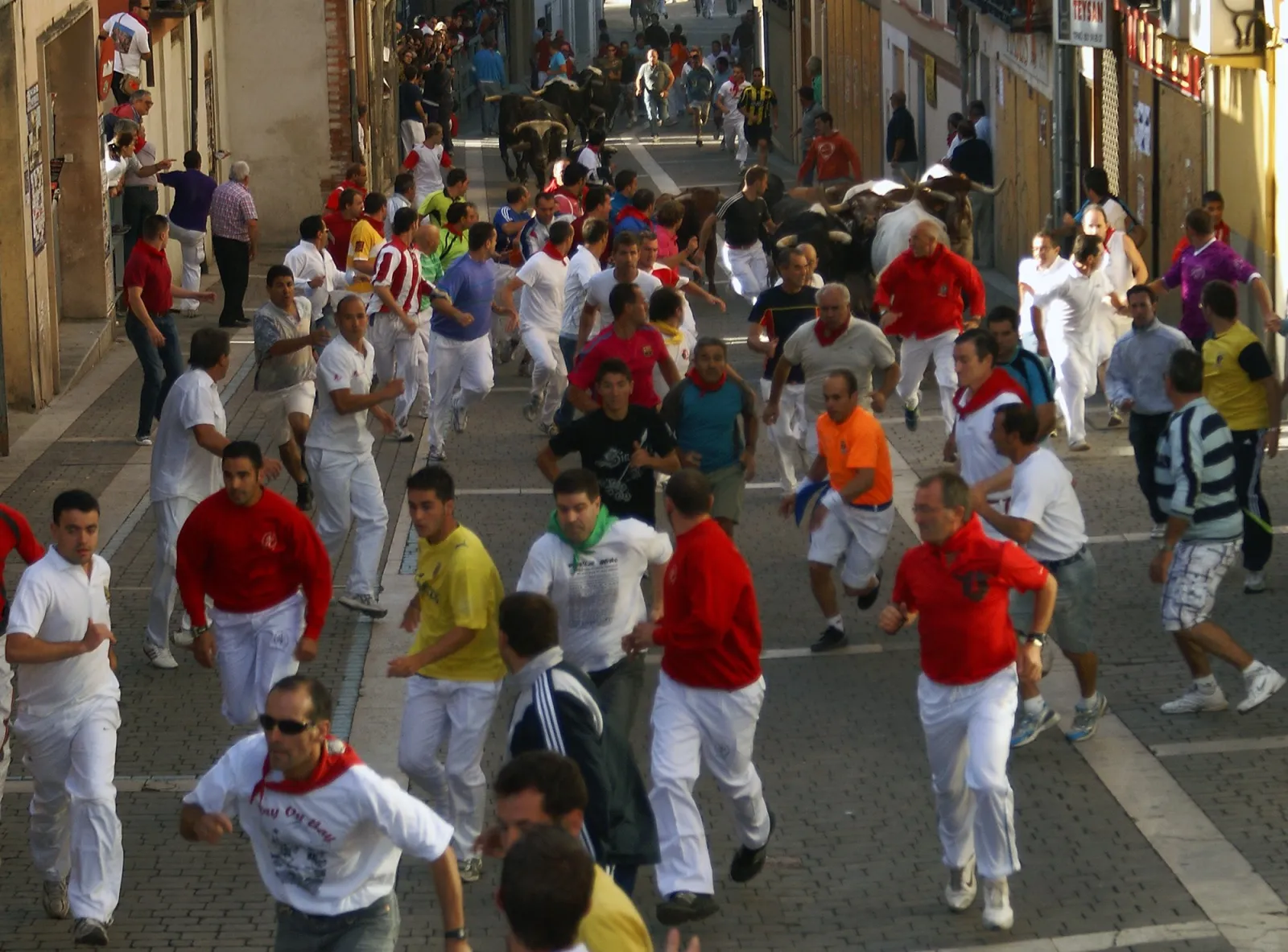
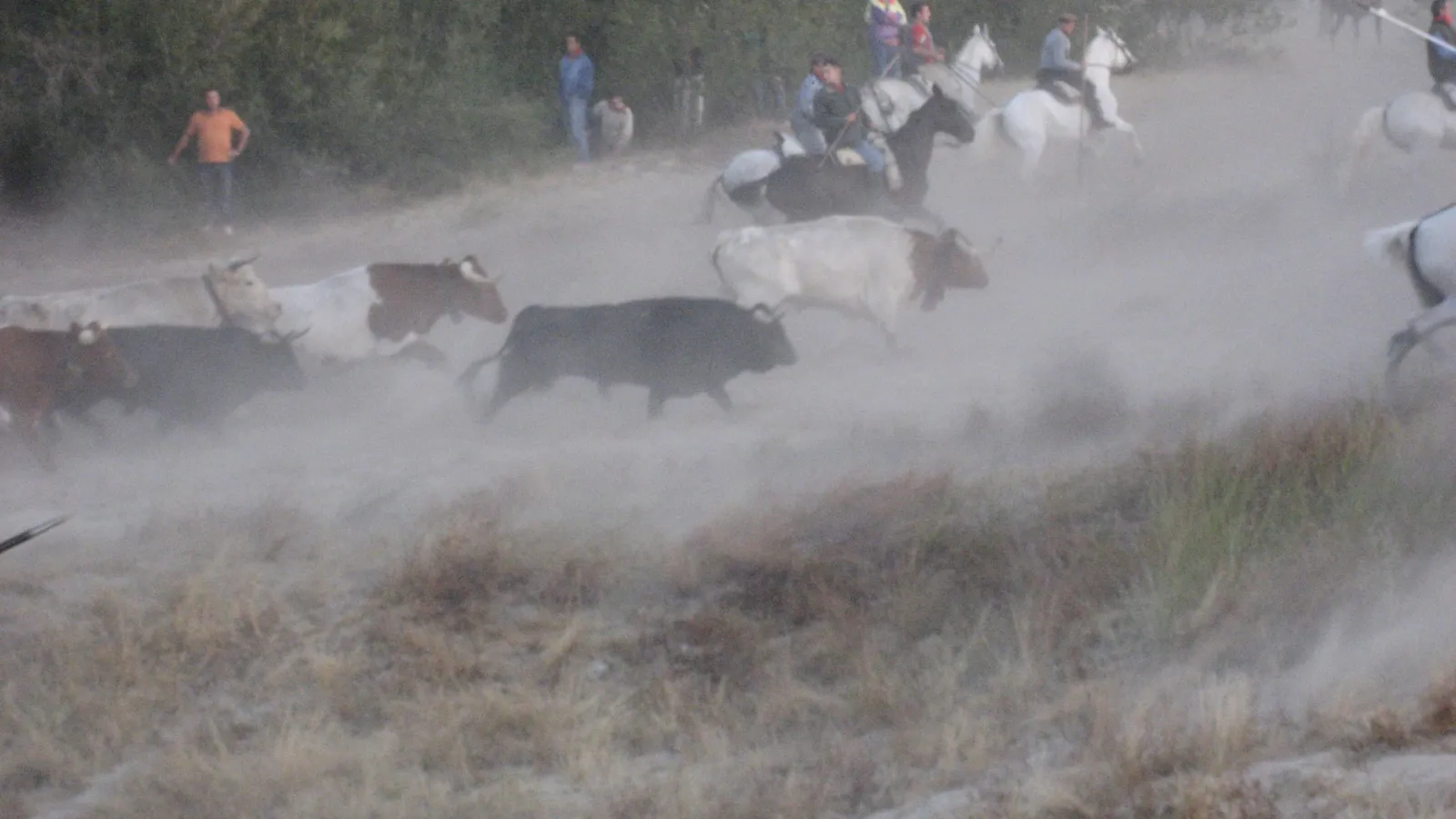
Each morning horsemen drive the herd from the River Cega corrals through the pinewoods and down El Embudo into town and on to the bullring.
-
Sunday to Thursday 18:30 in 2026
Afternoon bullfights
The peñas escort the fiesta queen to the bullring for the afternoon corridas, rejoneo and novillada.
-
Last day (Thursday) 13:00 in 2026
Tronadera and baile de rueda
All the dulzaina groups lead a final circle dance through the streets to the Plaza Mayor.
What Encierros de Cuéllar is like
- Loud
- Night
- Procession
- Noise
- Charangas, dulzainas and late concerts all week
- Crowds
- A small town packed with visitors on run mornings
- Mess
- Dust in the fields, spilled drinks in the streets
- With kids
- Bull runs are for adults; daytime parades and kids' shows help
Highlights
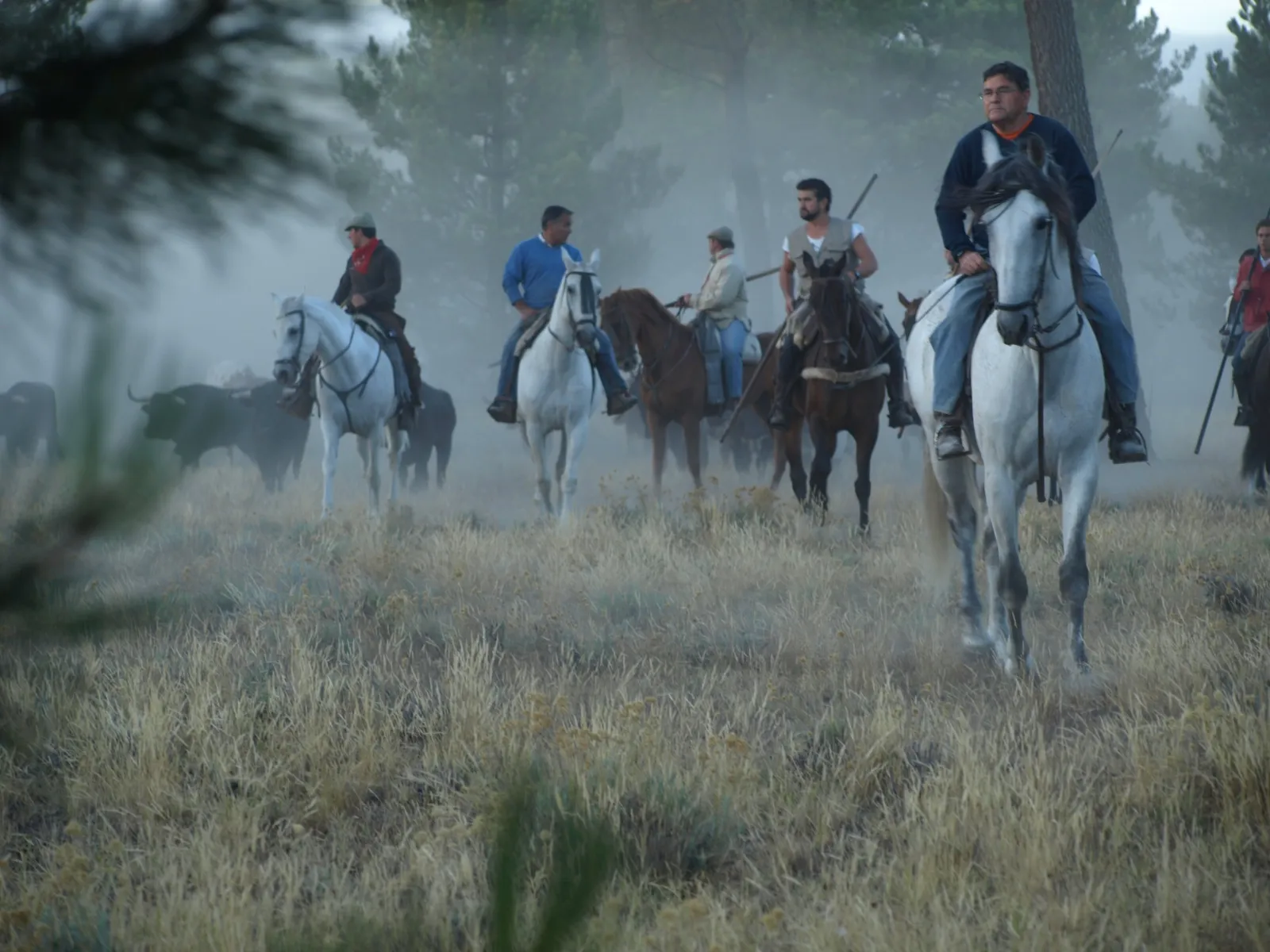
The country stage: the herd leaves the corrals by the River Cega and crosses fields and pinewoods escorted by horsemen
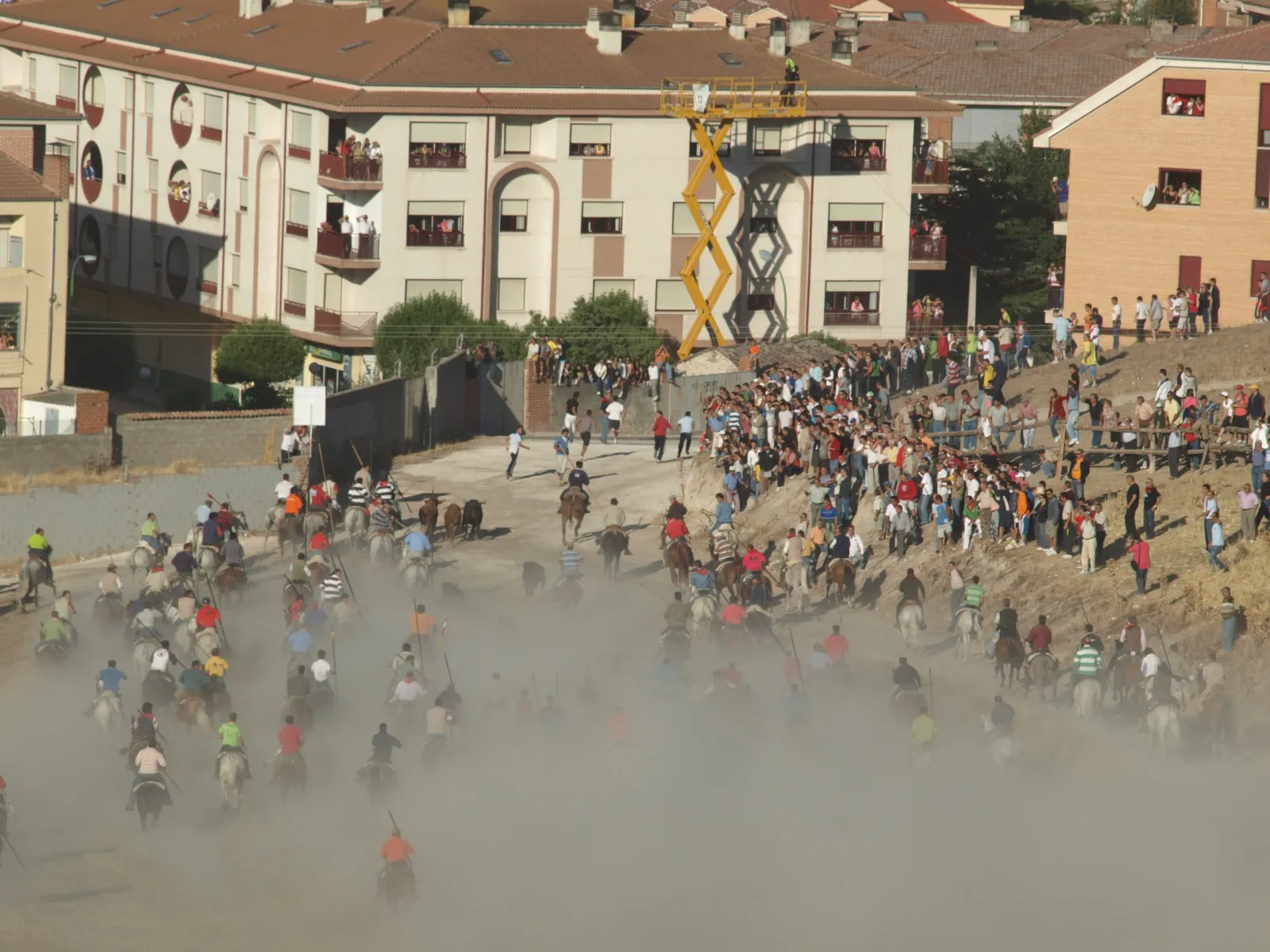
The dusty descent of El Embudo, where riders and bulls come down the slope towards town
Five morning runs through the streets to the bullring, each followed by a "probadilla" with young cattle
The "baile de rueda" and dulzaina bands that lead the town to the encierro every morning
The opening night: procession of the Virgen del Rosario, the pregón and the peñas' parade
Encierros de Cuéllar 2027: when to go
Cuéllar's bull runs are the heart of the fiestas in honour of Nuestra Señora del Rosario, the town's patron. The runs usually start on the last Sunday of August and continue every morning until Thursday: in 2025 they ran from 31 August to 4 September, and in 2026 from 30 August to 3 September. Following that pattern, the 2027 runs should fall on Sunday 29 August to Thursday 2 September 2027, with the fiestas opening on Friday 27 and Saturday 28 August. The Ayuntamiento de Cuéllar publishes the official programme and the mayor's bando in late August, so confirm the dates there before booking.
What makes these encierros different
Unlike the purely urban runs of Pamplona, Cuéllar keeps the old country stage of the encierro. The herd is released from corrals by the River Cega in the pinewoods outside town and driven across open fields by a large troop of authorised horsemen carrying long poles. The animals then pour down the sandy slope known as El Embudo ("the funnel") and enter the town for the urban run to the bullring. The town calls them the oldest bull runs in Spain, and in 2018 the fiesta "Nuestra Señora del Rosario: Los Encierros" was declared a Fiesta de Interés Turístico Internacional.
A whole week of fiesta
Around the runs, the week fills with dulzaina bands, the "baile de rueda" circle dance down the streets every morning, giants and big-heads, brass charangas from the local peñas, afternoon bullfights and night concerts. The town anthem, "¡A por ellos!", is sung and danced constantly. Away from the bulls, Cuéllar has a fine castle, a medieval wall and a cluster of Mudéjar brick churches worth a slow walk between runs.
Gallery
History & Origins
Cuéllar's claim to the oldest documented bull runs in Spain rests on a ruling from a synod of the Diocese of Segovia, dated by local historians to 1215, which forbade clergy from playing dice or attending "bull games". Before any bull game, the animals had to be brought from the pastures into town, and that drive is the origin of the encierro. Some scholars place the synod a year later, but the document still predates the rival claims of other towns.
In the late 14th century, a ruling by Queen Leonor, wife of Juan I of Castile and lady of the town, described running the bulls at Midsummer as an "immemorial custom" in Cuéllar. The runs later moved to the late-summer fiestas of the Virgen del Rosario. They were declared a Fiesta de Interés Turístico Nacional in 2008 and Internacional in 2018.
What to Expect
Mornings start early. In 2026 the dianas and street dancing began at 08:30 and each encierro was scheduled for 09:30, but the exact time the herd reaches town depends on how the country stage goes. Many locals watch the release at the Corrales del Cega or the descent at El Embudo, then race back for the urban run. The town council warns that the area by the corrals is extremely risky as the herd passes, and that the barriers at El Embudo are there to guide the animals, not to shelter spectators.
Afternoons belong to the bullring and to the peñas' street parties with their charangas; nights to concerts and orchestras in the main squares. Expect big crowds, loud brass bands and very late nights all week.
How to Get There
Cuéllar lies in the north of Segovia province, roughly 50 km south-east of Valladolid and about 60 km north of Segovia. It sits on the A-601 dual carriageway (Autovía de Pinares) between the two cities, so a car is the easiest way in. There is no regular passenger train service to Cuéllar: take a train to Valladolid or Segovia and continue by bus. The nearest major airport is Madrid-Barajas, around two hours away by road.
During the runs, roads around the corrals and El Embudo close early in the morning, and horse trailers are sent to a dedicated car park, so leave your car in town and walk.
Tips & Advice
- Check the Ayuntamiento de Cuéllar's official programme and bando in late August: they confirm dates, times and road closures.
- Only authorised riders with an identifying vest may accompany the herd in the countryside; on foot, stay well back from the corrals and the El Embudo barriers.
- If you plan to run, be sober, fit and rested, never stop in front of the herd, and follow the shepherds' instructions. Check the bando for the rules on who may run.
- Book a room early or stay in Valladolid or Segovia; Cuéllar is small and fills up for the fiestas.
- Bring a red neckerchief and layers: the Castilian plateau is chilly at 8 am even in late August.
Photos: Rastrojo (D•ES) / CC BY-SA 3.0 / Wikimedia Commons; Romerin / CC BY 3.0 / Wikimedia Commons; Romerin / CC BY-SA 3.0 / Wikimedia Commons
Paso del Fuego of San Pedro Manrique
San Pedro Manrique, Castilla y LeónOn Midsummer's Eve, in a village in the Soria highlands, locals walk barefoot across a carpet of glowing oak embers, often with someone on their shoulders. The next day belongs to the Móndidas.
Semana Santa de Valladolid
Valladolid, Castilla y LeónValladolid's Semana Santa is the antithesis of Andalusia's exuberant celebrations. Here, silence and sobriety reign. The star of the show is the extraordinary collection of polychrome sculptures by Gregorio Fernández, 17th-century masterpieces of such realism they seem to breathe.
Medieval Market of Ávila
Ávila, Castilla y LeónThe Mercado Medieval de Ávila is one of the largest and most spectacular medieval markets in Europe. Every September, the stunning UNESCO World Heritage walled city of Ávila transforms into a living medieval town with over 200 stalls, jousting tournaments, troubadours, falconry displays and theatrical performances. Set against the backdrop of Ávila's perfectly preserved 11th-century walls — the finest in Spain — it's a magical step back in time.
Semana Santa de Salamanca
Salamanca, Castilla y LeónHooded brotherhoods carry their pasos past golden sandstone cathedrals, a Roman bridge and the oldest university in Spain in a Holy Week of International Tourist Interest.