Holy Week in Zamora
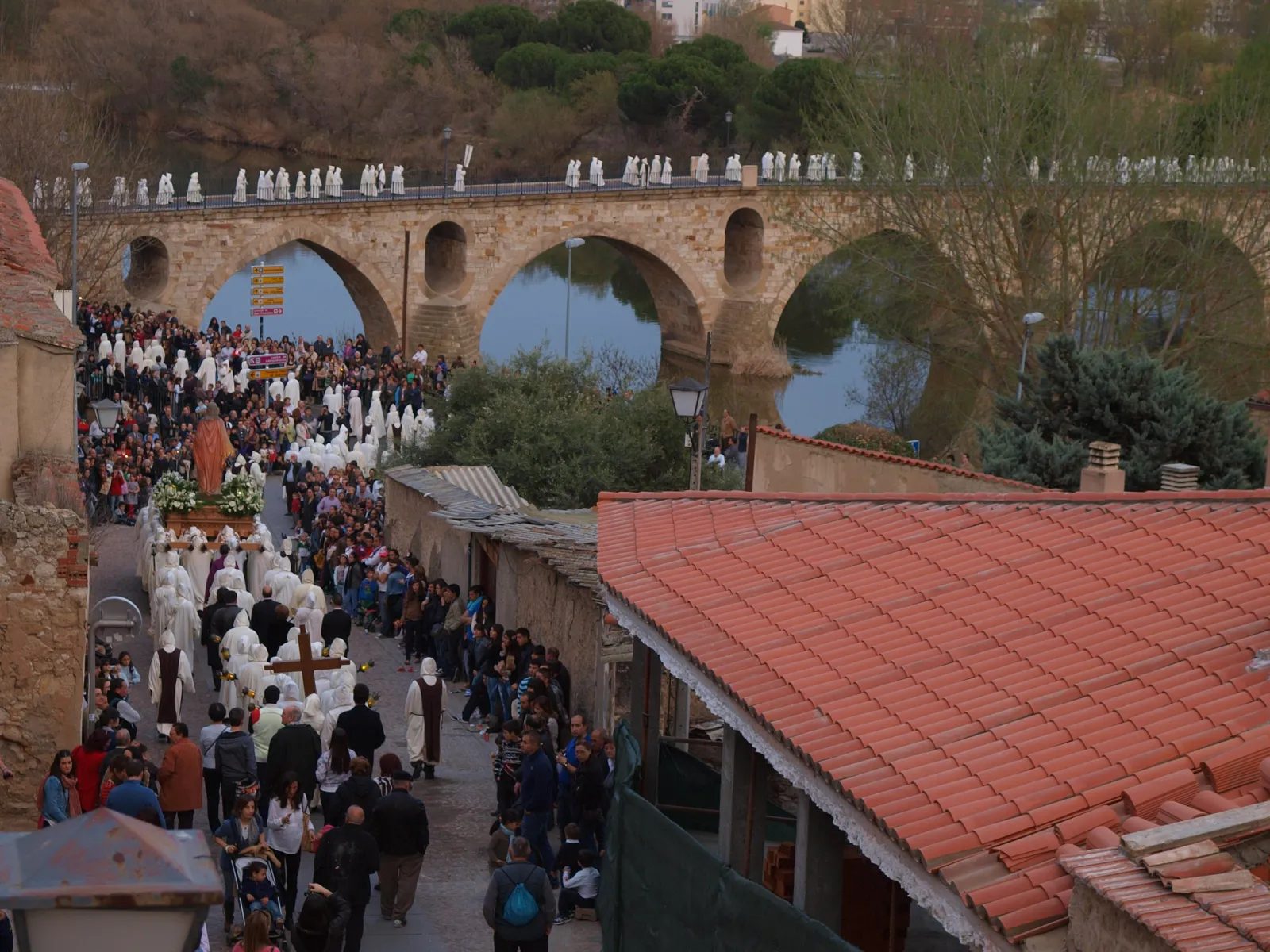
Zamora's austere Castilian Holy Week fills ten days with 17 brotherhoods, more than 40 pasos, barefoot penitents and Miserere chants sung in the small hours in a Romanesque old town.
The days that matter
-
Fri 19 Mar 22:30 in 2026
Espíritu Santo
On Friday of Sorrows the brotherhood walks to the Cathedral square, where its choir sings the Christus factus est.
-
Mon 22 Mar midnight
Buena Muerte
A midnight procession from San Vicente; the choir sings Jerusalem, Jerusalem in Plaza de Santa Lucía.
-
Wed 24 Mar 20:30 and midnight
Oath of Silence and Capas Pardas
The Cristo de las Injurias swears silence before the Cathedral; at midnight the Capas Pardas end with the Miserere.
-
Thu 25 Mar 23:00 in 2026
Jesús Yacente
Late-night procession from the Tránsito that ends with the Miserere in Plaza de Viriato.
-
Fri 26 Mar 05:00
La Congregación
Jesús Nazareno leaves San Juan before dawn and makes the traditional bow at the Tres Cruces.
-
Sun 28 Mar about 11:15 in 2026
El Encuentro
The Risen Christ and the Virgin meet in the middle of Plaza Mayor.
What Holy Week in Zamora is like
- Procession
- Night
- Free
- Noise
- Drums, choirs and long silences
- Crowds
- A small city packed for the big night processions
- Mess
- You stay clean; it is the cold that bites
- With kids
- Most key moments are at midnight or before dawn
Highlights
- The Juramento del Silencio of the Cristo de las Injurias in front of the Cathedral
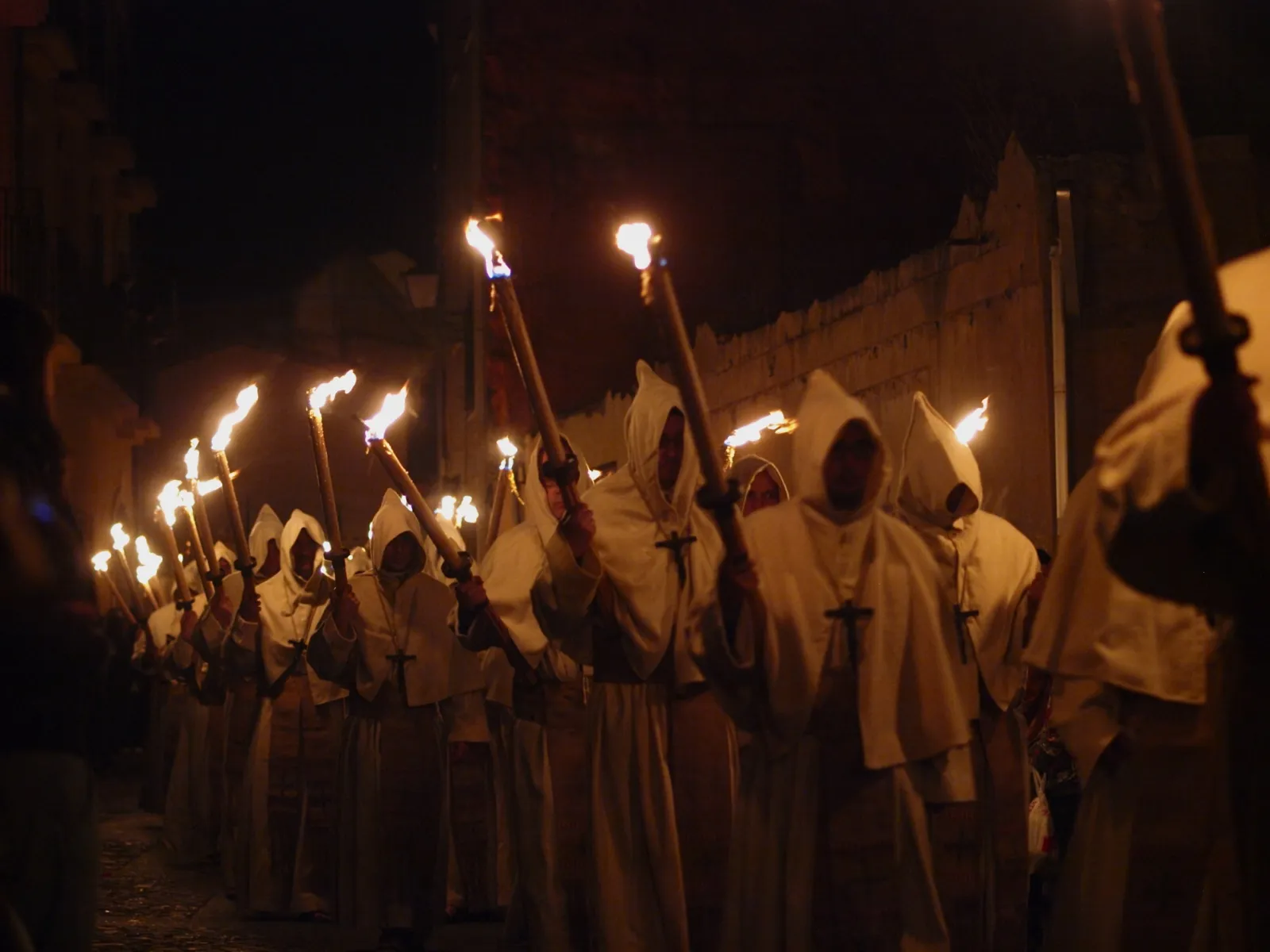
- The Capas Pardas at midnight, with lanterns and the Castilian Miserere
- The Jesús Yacente and the Miserere in Plaza de Viriato
- The 5 a.m. Good Friday Congregación and its bow at the Tres Cruces
- The Easter Sunday Encuentro in Plaza Mayor
- The Holy Week Museum, open all year
Semana Santa de Zamora 2027: dates
Holy Week is Zamora's biggest social and religious event and lasts about ten days, from Friday of Sorrows (19 March 2027) to Easter Sunday (28 March 2027), with Palm Sunday on 21 March. The Junta Pro Semana Santa publishes the official programme and routes each spring; the times below come from the 2026 itineraries and are a good guide to the usual pattern.
Austere, silent and very old
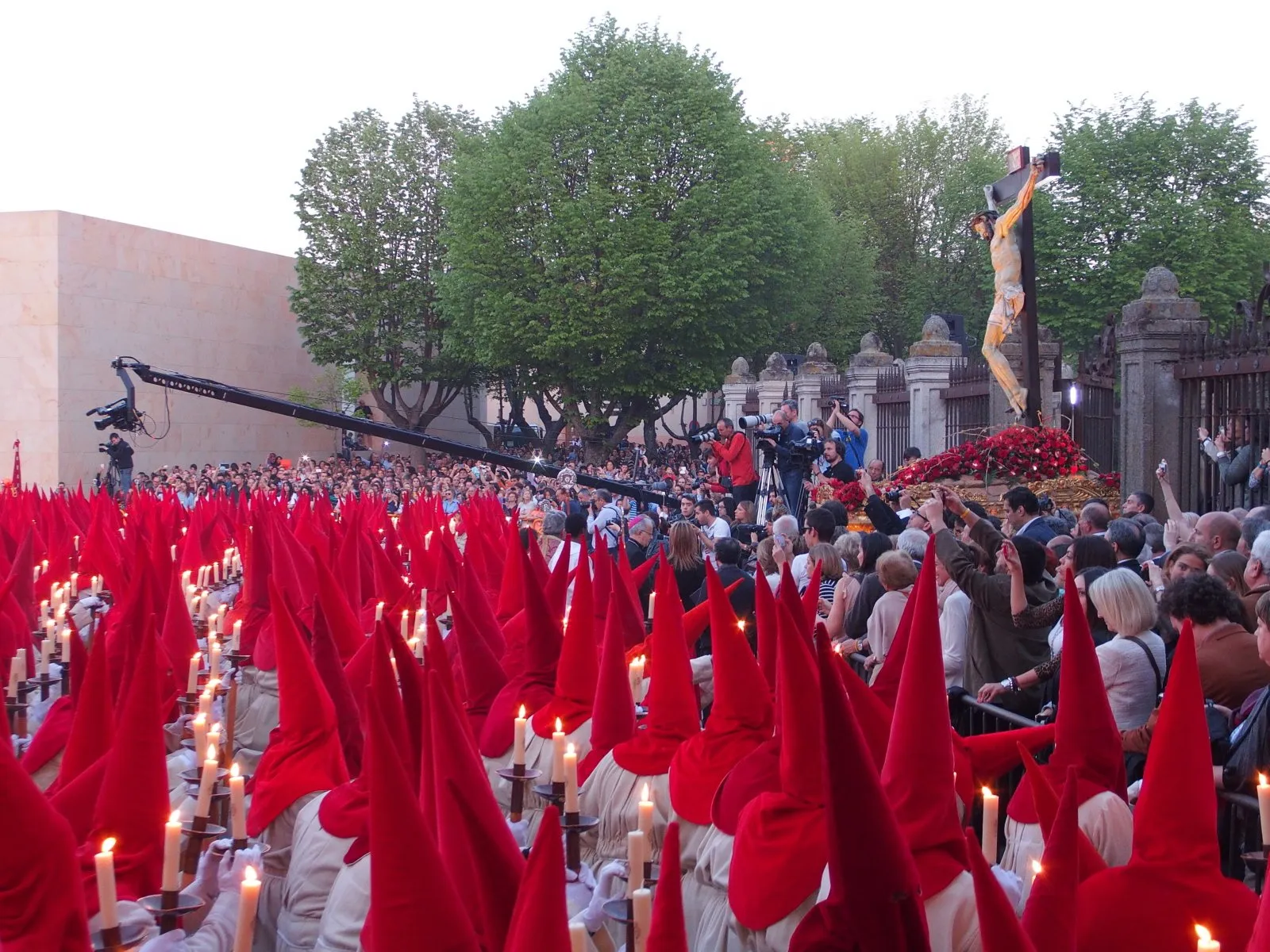
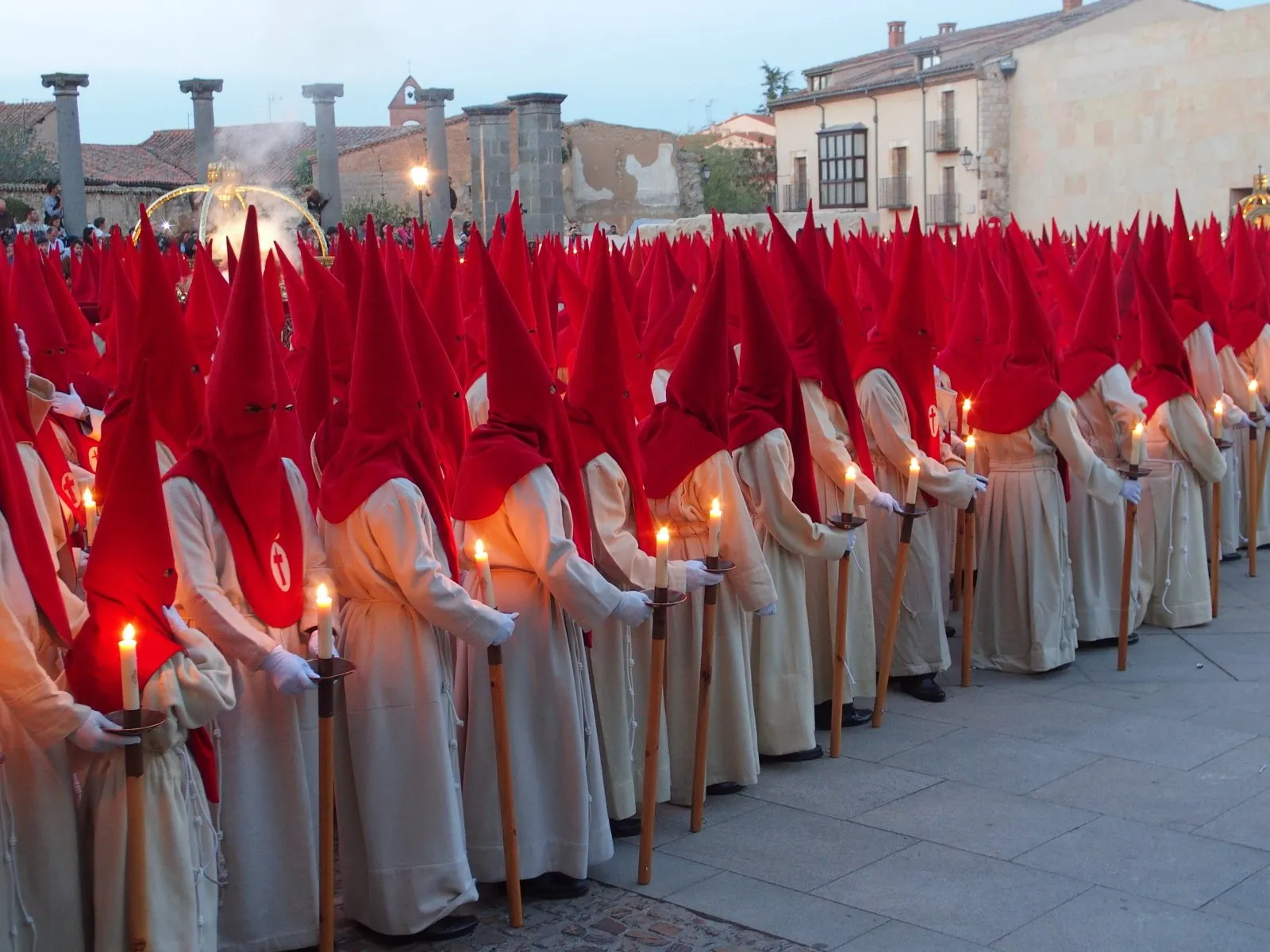
The regional tourism board of Castilla y León traces Zamora's Holy Week back to the 13th century, calling it one of the oldest and most prestigious in Spain. It has been a Festival of International Tourist Interest since 1986, and in 2015 it became the first Holy Week in Spain to be declared a Bien de Interés Cultural. The tourism board counts seventeen brotherhoods taking more than 40 pasos into the streets; the Junta Pro Semana Santa, which coordinates them, lists sixteen member brotherhoods. Penitential brotherhoods walk at night and before dawn, with hundreds of barefoot brothers in complete silence; the daytime processions are brighter and more colourful.
The defining moments are night ones. On Holy Wednesday evening the brothers of the Cristo de las Injurias gather in front of the Cathedral to take the Juramento del Silencio, the oath of silence, before setting off; at midnight the Capas Pardas, in brown Alistanian capes and carrying lanterns, leave San Claudio de Olivares and close with the Castilian Miserere. On Holy Thursday night the Jesús Yacente ends with the Miserere in Plaza de Viriato, sung there since 1953. At 5 a.m. on Good Friday the Cofradía de Jesús Nazareno, known as the Congregación, leaves San Juan, with a long stop and a traditional bow at the Tres Cruces.
The historic processions
Alongside the 20th-century night processions, five go back at least to the 17th century: the Vera Cruz on Holy Thursday afternoon, with a documented history from 1508; the Congregación on Good Friday morning; the Santo Entierro, founded in 1593, on Good Friday afternoon; Nuestra Madre de las Angustias on Good Friday night; and the Resurrección on Easter Sunday, when the Risen Christ and the Virgin meet in Plaza Mayor.
Sounds, nicknames and sweets
Zamora has its own Holy Week vocabulary. The Barandales, a figure born in the Santo Entierro brotherhood, walks ahead ringing a hand bell to announce a procession. The Merlú is the pair of Congregación brothers whose cornet and untuned drum signal when the pasos move or stop. Pasos have nicknames: the Congregación's Camino del Calvario is the "Cinco de Copas", for the symmetrical layout of its figures, which are "danced" in Plaza Mayor as the procession starts. On Good Friday morning Congregación brothers hand out sugared almonds to the crowd; the typical sweets of the week are aceitadas and rosquillas.
Many of the pasos stay all year in the Museo de Semana Santa, which the regional tourism board describes as the only one of its kind in Spain; it shows 37 works, many by the 19th-century sculptor Ramón Álvarez.
Gallery
History & Origins
Zamora's Holy Week has roots in the 13th century, according to the Junta de Castilla y León. Over the centuries the city's brotherhoods built up a processional heritage of carved pasos, many of them by the local sculptor Ramón Álvarez, and the Junta Pro Semana Santa now coordinates the week and runs the Holy Week Museum.
The festival was declared of International Tourist Interest by a resolution of December 1985, published in the BOE in January 1986. In 2015 the Junta de Castilla y León declared it a Bien de Interés Cultural, the first Holy Week in Spain to receive that protection.
What to Expect
Zamora is the opposite of a southern, exuberant Holy Week. Expect hooded brothers walking barefoot, the sound of a single drum or a choir, and thousands of people standing in near silence in a small Romanesque city. Many of the key processions start late at night or before dawn, so plan to sleep in the afternoon.
March nights on the Castilian plateau are cold, often close to freezing in the early hours. The old town is compact and easy to walk, and the processions pass through its squares again and again, so with the official itinerary in hand you can see the same paso in several places.
How to Get There
Train: Zamora station has high-speed services from Madrid Chamartín on the line to Galicia, plus regional trains. The station is a walk or short taxi ride from the old town.
Car or bus: Zamora is on the A-66 (Ruta de la Plata) north of Salamanca and on the A-11 from Valladolid. Buses link it with Madrid, Salamanca and Valladolid.
Tips & Advice
- Book a room early or stay in Salamanca or Valladolid and come in by train.
- Download the official programme and itineraries from the Junta Pro Semana Santa to catch each paso at the best corner.
- Bring a warm coat, hat and gloves for the midnight and 5 a.m. processions.
- Keep total silence in the penitential processions; even phone screens are frowned upon.
- Visit the Holy Week Museum on a quiet morning to see the pasos up close.
Semana Santa de Valladolid
Valladolid, Castilla y LeónValladolid's Semana Santa is the antithesis of Andalusia's exuberant celebrations. Here, silence and sobriety reign. The star of the show is the extraordinary collection of polychrome sculptures by Gregorio Fernández, 17th-century masterpieces of such realism they seem to breathe.
Semana Santa de Salamanca
Salamanca, Castilla y LeónHooded brotherhoods carry their pasos past golden sandstone cathedrals, a Roman bridge and the oldest university in Spain in a Holy Week of International Tourist Interest.
Semana Santa de León
León, Castilla y LeónSixteen brotherhoods, thousands of papones and pasos danced to the music in the Plaza Mayor: León's Holy Week, of International Tourist Interest, is austere in the street and sociable in the bars.
El Colacho (Baby-Jumping Festival)
Castrillo de Murcia, Castilla y LeónIn a small village near Burgos, a masked devil in yellow and red runs through the streets during Corpus week and, on the Sunday, leaps over rows of babies laid on mattresses before they are blessed.