El Colacho (Baby-Jumping Festival)
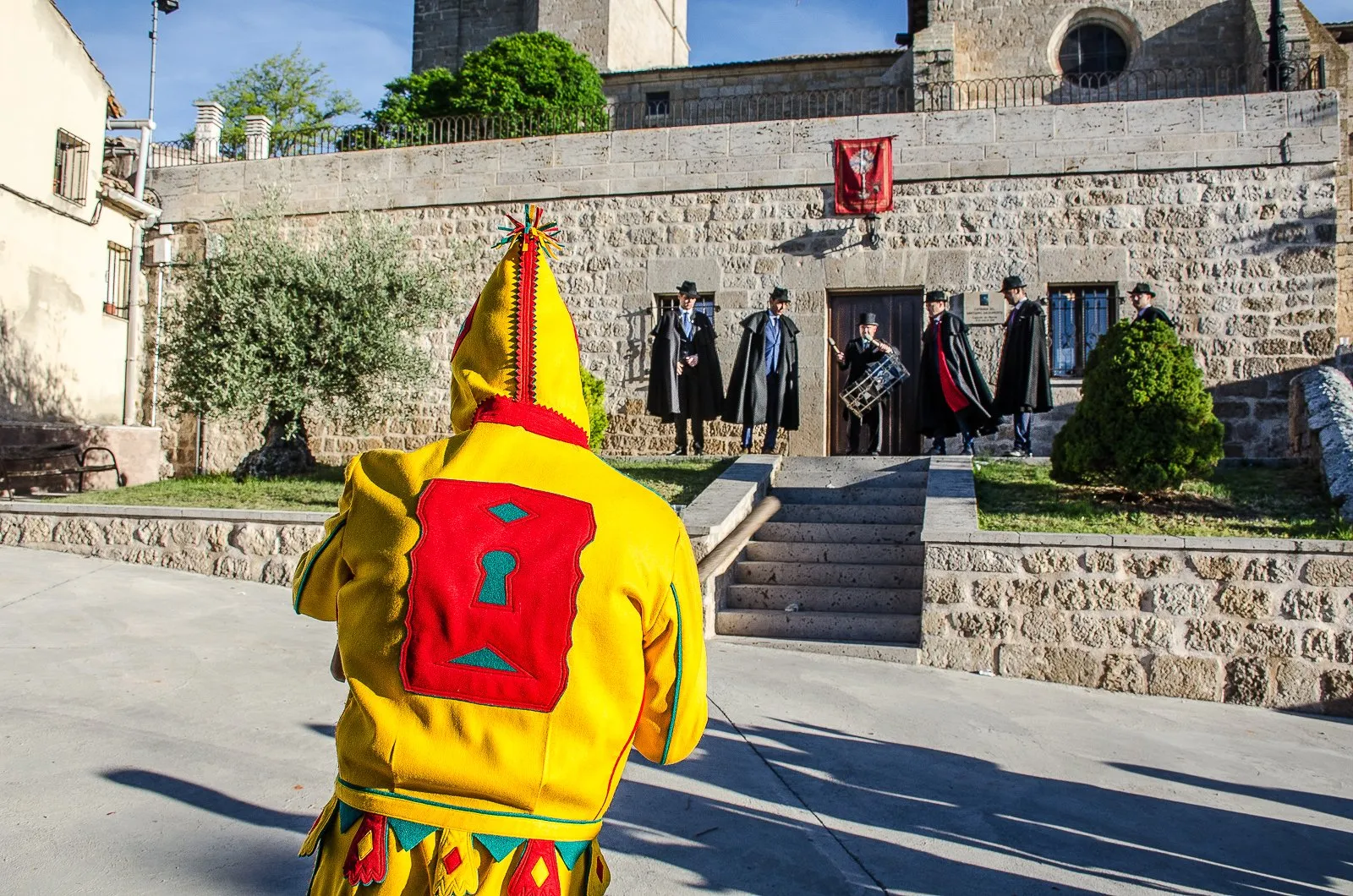
In a small village near Burgos, a masked devil in yellow and red runs through the streets during Corpus week and, on the Sunday, leaps over rows of babies laid on mattresses before they are blessed.
The days that matter
-
Wed 26 May
Vespers and first rounds
Latin Vespers and the first rounds of the village with the Colacho and the Atabalero.
-
Thu 27 May
Corpus Thursday
Rounds of the village from early morning, with Mass and procession at midday.
-
Sun 30 May
Colacho chases and Mass
From early morning the Colacho and Atabalero tour the village while young people taunt the devil.
-
Sun 30 May, afternoon
Procession and leap over the babies
After Vespers, the Colacho leaps over the babies at each street altar and the priest blesses them.
-
Sun 30 May, evening
New officers and proclamation
Next year's officers are named, then a civic procession goes to the era de San Juan for verses and folk music.
-
Mon 31 May
Mass for departed members
A Mass for the brotherhood's dead and the final rounds close the fiesta.
What El Colacho (Baby-Jumping Festival) is like
- Procession
- Family
- Noise
- Castanets, a big drum and shouting at the Colacho
- Crowds
- A tiny village packed on Sunday afternoon
- Mess
- Nothing messy; just stay out of the whip's way
- With kids
- Babies are the stars; older kids love the chases
Highlights
The Colacho's leap over rows of babies on white mattresses
The blessing of the children with the Custodia at street altars
The Colacho chasing taunting teenagers with his horsehair whip
The Atabalero in tailcoat and top hat with his great drum
Dancers moving to the beat of the atabal in the Sunday procession
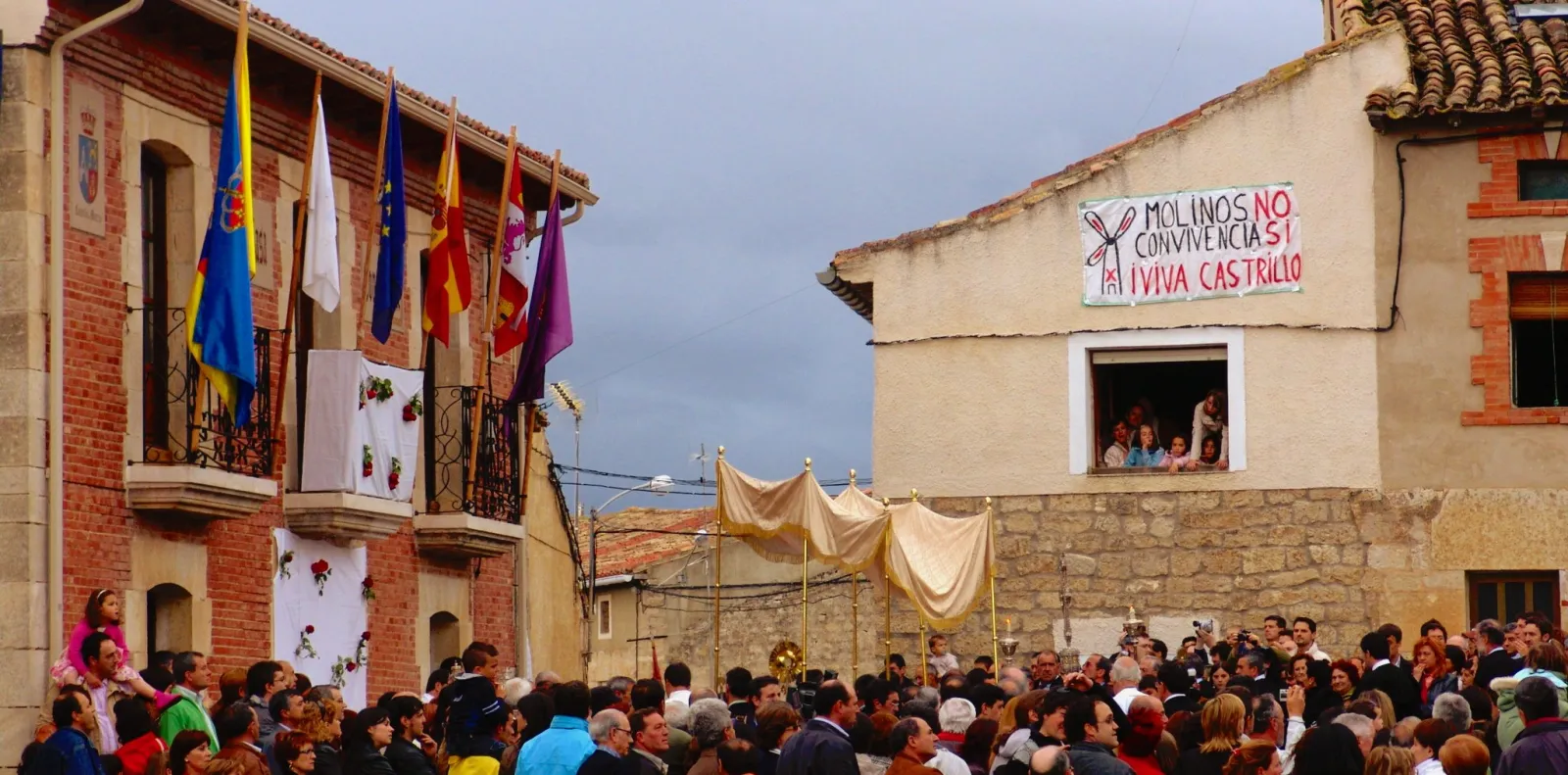
Balconies hung with bedspreads, flags and flowers
El Colacho 2027: the dates
The main day of El Colacho is always the Sunday after Corpus Christi. In 2027 Corpus Christi falls on Thursday 27 May, so the big day is Sunday 30 May. The fiesta actually lasts five days in Corpus week: Wednesday, Thursday, Saturday, Sunday and Monday, so in 2027 it should run from 26 to 31 May. It takes place in Castrillo de Murcia, a village in the municipality of Sasamón (Burgos), and is a Fiesta de Interés Turístico de Castilla y León.
A devil, a drummer and a brotherhood
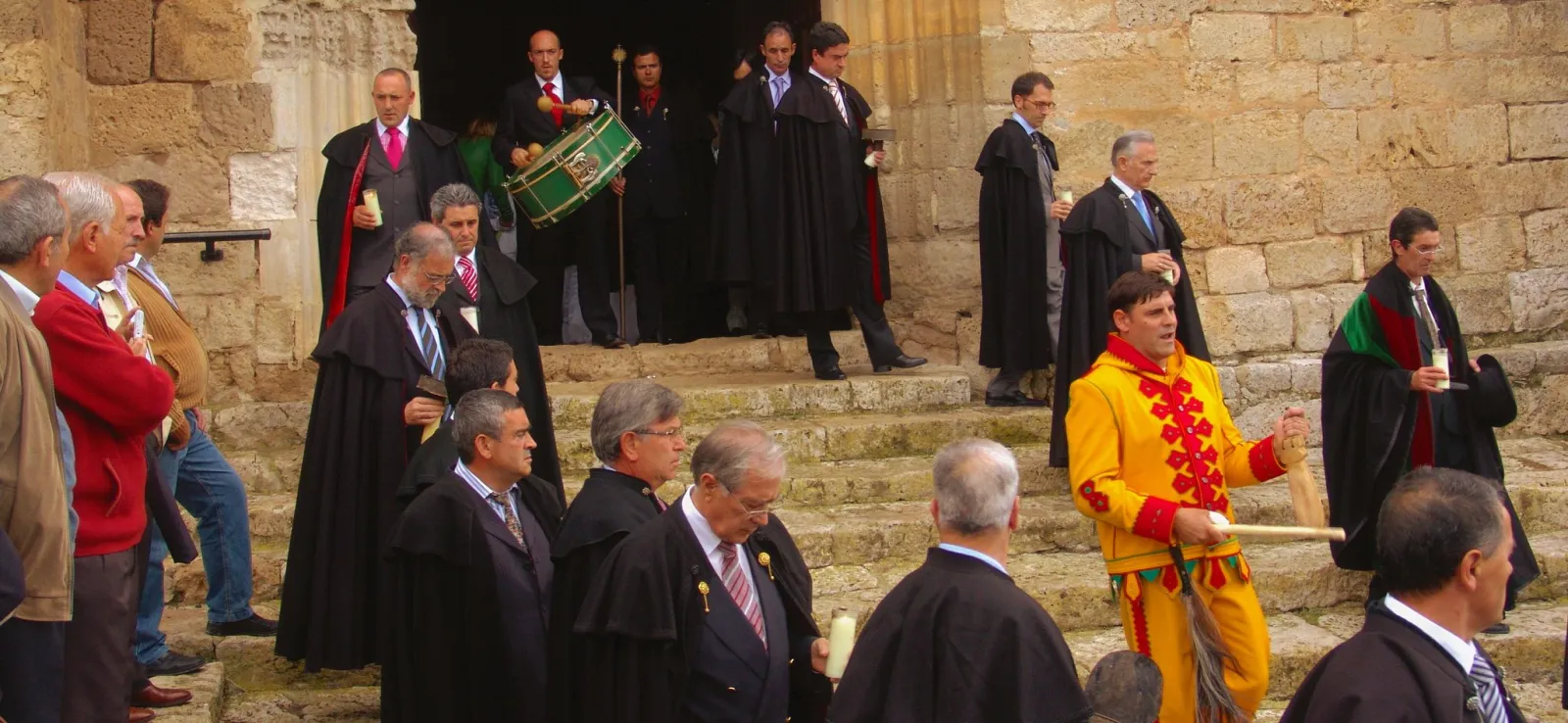
The fiesta is run by the village's Cofradía del Santísimo Sacramento, and its two best-known characters are its two stewards of the year; nobody can play either role more than once. El Colacho, the devil, wears a yellow suit with red trim and a yellow papier-mâché mask with a big nose and chin. He carries the terrañuelas, giant wooden castanets, and a whip made from a horse's tail. El Atabalero wears a black tailcoat and top hat and beats a huge drum, the atabal, which carries a metal relief of a monstrance.
Through the days of the fiesta they lead the brotherhood's officers on vueltas, rounds of the village at the canonical hours of prayer, from the Matins bell at 7 a.m. to the evening bell. The officers walk in silence in black Castilian capes and raise their hats at three spots: the site of the vanished church of Santa María and the niches with images of the Virgin on the village arch and the old pilgrims' hospital. Meanwhile groups of young people taunt the Colacho with the rhyme "Colacho, cara de macho" and he chases them with his whip.
The leap over the babies
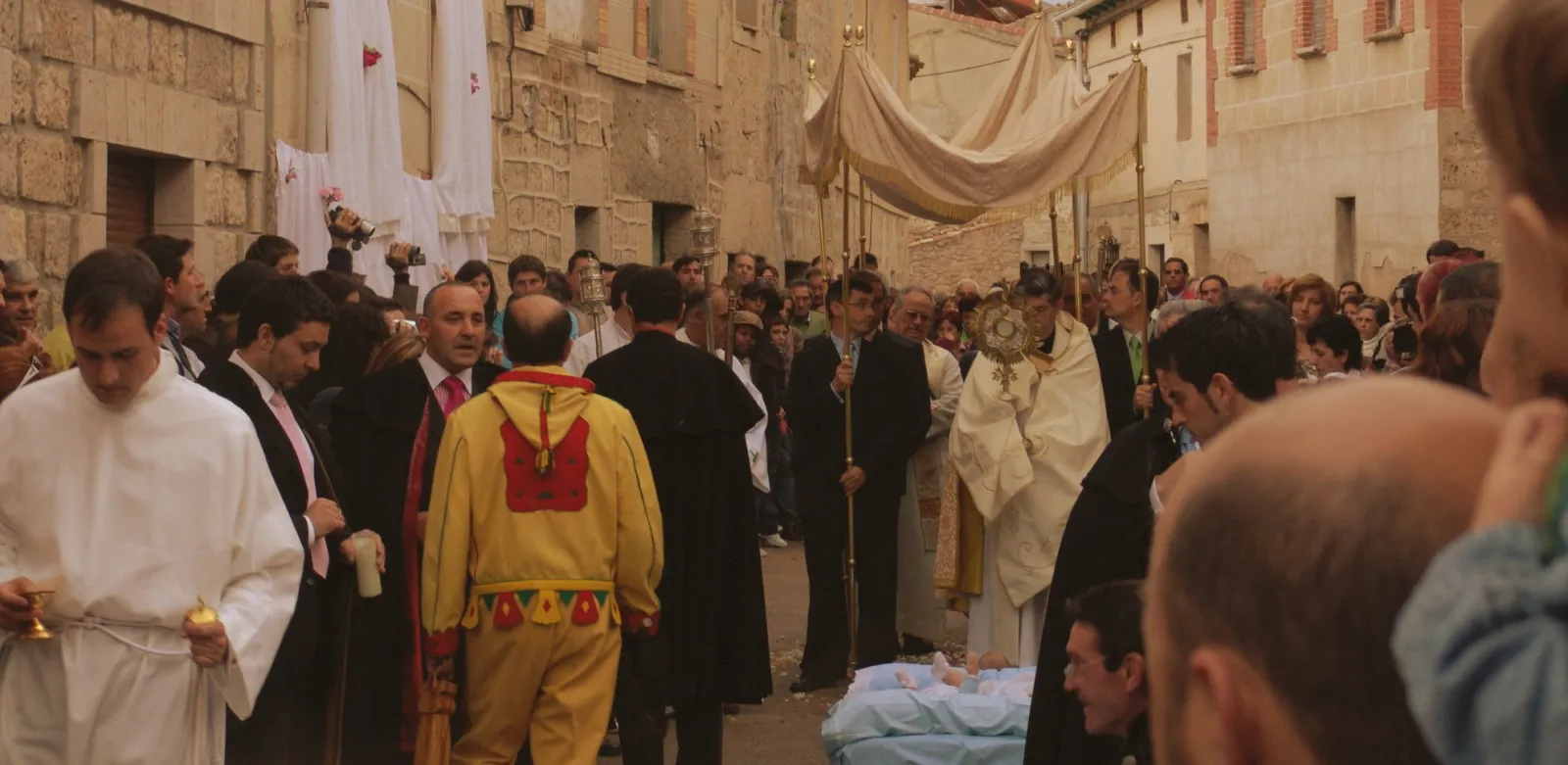
On Sunday the village decorates its balconies with hangings, flags and flowers and sets up small altars along the route, with sheets, flowers, candlesticks and, by tradition, ears of wheat, wine and water. Next to them, on the street, are mattresses with white sheets and pillows, where parents lay their babies born in the past year. After Vespers the procession sets off: a Colacho, the brotherhood's four great banners, devotees with candles, dancers who move to the beat of the atabal with their hands on their hips, first-communion children, the officers, the Atabalero and, last, the Custodia under a canopy. This time there are two Colachos, the year's and next year's, who keeps the crowd back.
The first altar is in the town hall square, right below the church steps. A Colacho runs up and leaps cleanly over the row of babies, and the priest then blesses them with the monstrance, touches the ears of wheat and tastes the wine and water. The scene is repeated at altar after altar. The leap is said to drive evil and illness away from the children.
Gallery
History & Origins
The written history of the fiesta starts with its brotherhood. The rule of the Cofradía del Santísimo Sacramento of Castrillo de Murcia was drawn up in 1621 in the village church of Santiago and approved in Burgos on 10 September that year. It placed the brotherhood within the Archconfraternity of Minerva in Rome, a Counter-Reformation movement devoted to the Eucharist, and charged its officers with organising the Corpus festivities, including dancers and players.
The brotherhood's account books, which begin in 1695, record the costs of dancers, a drummer brought in from nearby villages and masks; in 1717 actors came from Madrid to stage a play. The first mention of the Colacho dates from 1749, when he was called the Birria, and in 1779 the brotherhood ordered a new mask for him in Burgos. Scholars link the character to the masked figures of Castile's winter festivals, absorbed over time into the Corpus celebrations as a devil defeated by the Eucharist; old local belief held that his leap protected babies from illness, especially hernias. The dancers, long forgotten, were revived in 1979. The photographer Cristina García Rodero portrayed the fiesta in 1980 for her book España oculta, and today it draws visitors and television crews from abroad.
What to Expect
Castrillo de Murcia is a small stone village at the foot of the Santa Bárbara hill, and on Sunday afternoon its streets fill with people from all over the province of Burgos and beyond. Most come for the procession and the leaps, which take place at several altars along a fixed route, starting in the square in front of the town hall just below the church. Traditionally, Vespers and the procession begin around half past five.
Earlier in the day and during the rest of the fiesta, the mood is more local: rounds of the village with the Colacho and the Atabalero, Mass, and snacks for the brotherhood, to which practically every villager belongs. After the procession the brotherhood names the officers for the following year, greeted with the formula "Con salud cumplas el cargo" ("May you fulfil the post in good health"), and walks in civic procession to the threshing floor of San Juan, near the wine cellars, where a verse proclamation is read, a folk group performs and bread, wine and cheese are shared out.
How to Get There
By car: the practical option. Castrillo de Murcia lies west of Burgos, close to Sasamón and Olmillos de Sasamón. Parking fills up on Sunday afternoon, so arrive early and expect to walk the last stretch into the village.
By train: the nearest major station is Burgos Rosa Manzano, with high-speed trains from Madrid. From Burgos you will need a car or taxi to reach the village; if you take a taxi, arrange the return trip in advance.
Where to stay: the village has little in the way of hotels or restaurants, so base yourself in Burgos or in nearby towns such as Sasamón or Olmillos de Sasamón, whose 15th-century castle is now a hotel.
Tips & Advice
- Check the date and programme on the Castilla y León tourism website or with Sasamón town council before travelling.
- Arrive well before the Sunday afternoon procession to get a view of an altar; the first leaps happen right by the church.
- Keep behind the mattresses and leave space for the Colacho's run-up; a second Colacho helps keep the route clear.
- Don't use flash near the babies, and remember it is a religious procession.
- Look inside the church of Santiago Apóstol, a late-Gothic building with a 17th-century baroque altarpiece.
- Combine it with Burgos Cathedral and the villages of Castilla y León on the Camino de Santiago.
Photos: MottaW / CC BY-SA 4.0 / Wikimedia Commons; Jtspotau / CC BY 3.0 / Wikimedia Commons
Semana Santa de Valladolid
Valladolid, Castilla y LeónValladolid's Semana Santa is the antithesis of Andalusia's exuberant celebrations. Here, silence and sobriety reign. The star of the show is the extraordinary collection of polychrome sculptures by Gregorio Fernández, 17th-century masterpieces of such realism they seem to breathe.
Semana Santa de Salamanca
Salamanca, Castilla y LeónHooded brotherhoods carry their pasos past golden sandstone cathedrals, a Roman bridge and the oldest university in Spain in a Holy Week of International Tourist Interest.
Semana Santa de León
León, Castilla y LeónSixteen brotherhoods, thousands of papones and pasos danced to the music in the Plaza Mayor: León's Holy Week, of International Tourist Interest, is austere in the street and sociable in the bars.
Holy Week in Zamora
Zamora, Castilla y LeónZamora's austere Castilian Holy Week fills ten days with 17 brotherhoods, more than 40 pasos, barefoot penitents and Miserere chants sung in the small hours in a Romanesque old town.