Semana Santa de León
Sixteen brotherhoods, thousands of papones and pasos danced to the music in the Plaza Mayor: León's Holy Week, of International Tourist Interest, is austere in the street and sociable in the bars.
The days that matter
-
Fri 19 Mar evening
Procesión de la Dolorosa
The week opens on the Friday of Sorrows from the church of Nuestra Señora del Mercado, La Antigua.
-
Sun 21 Mar
Palm Sunday
Palm processions in the morning and, in the evening, the Inmemorial Procesión del Dainos from San Francisco.
-
Wed 24 Mar evening
Procesión del Silencio
One of several Holy Wednesday processions, organised by the Cofradía del Cristo de la Expiración y del Silencio.
-
Thu 25 Mar midday
Pregón a caballo
The Cofradía de las Siete Palabras announces its procession on horseback.
-
Thu 25 Mar midnight
La Ronda
Bell, bugle and drum in Plaza de San Marcelo call León to the Procesión de los Pasos; the Ronda then walks all night.
-
Fri 26 Mar from early morning
Procesión de los Pasos
Thirteen pasos and over 4,000 papones; the Encuentro in the Plaza Mayor is the climax.
-
Fri 26 Mar evening
Santo Entierro
The solemn official Holy Burial procession of the Cofradía de las Angustias y Soledad leaves Santa Nonia.
-
Sun 28 Mar morning
Procesión del Encuentro
Easter Sunday closes the week with the meeting of the risen Christ and the Virgin.
What Semana Santa de León is like
- Procession
- Night
- Food & drink
- Free
- Noise
- Bands, drums, bells and rattles, with moments of total silence
- Crowds
- Packed around the Plaza Mayor on Good Friday morning
- With kids
- Daytime processions work; the Ronda and late nights are for night owls
Highlights
19–28 March 2027, from the Friday of Sorrows to Easter Sunday
The midnight Ronda from Plaza de San Marcelo on Maundy Thursday
Good Friday's Procesión de los Pasos: 13 pasos and more than 4,000 papones
The Encuentro in the Plaza Mayor, with the pasos danced to music
Limonada, torrijas and black olives in the bars of the old town
Holy Week 2027 in León: dates
León's Holy Week runs from the Friday of Sorrows (Viernes de Dolores) to Easter Sunday, which in 2027 means Friday 19 to Sunday 28 March, with Palm Sunday on 21 March and Good Friday on 26 March. It was declared a Fiesta of International Tourist Interest in 2002, with special mention of two acts: the Ronda on the night of Maundy Thursday and the Procesión de los Pasos on Good Friday morning. The Junta Mayor de Cofradías publishes the full programme of times and routes before Lent.
Papones, braceros and pasos
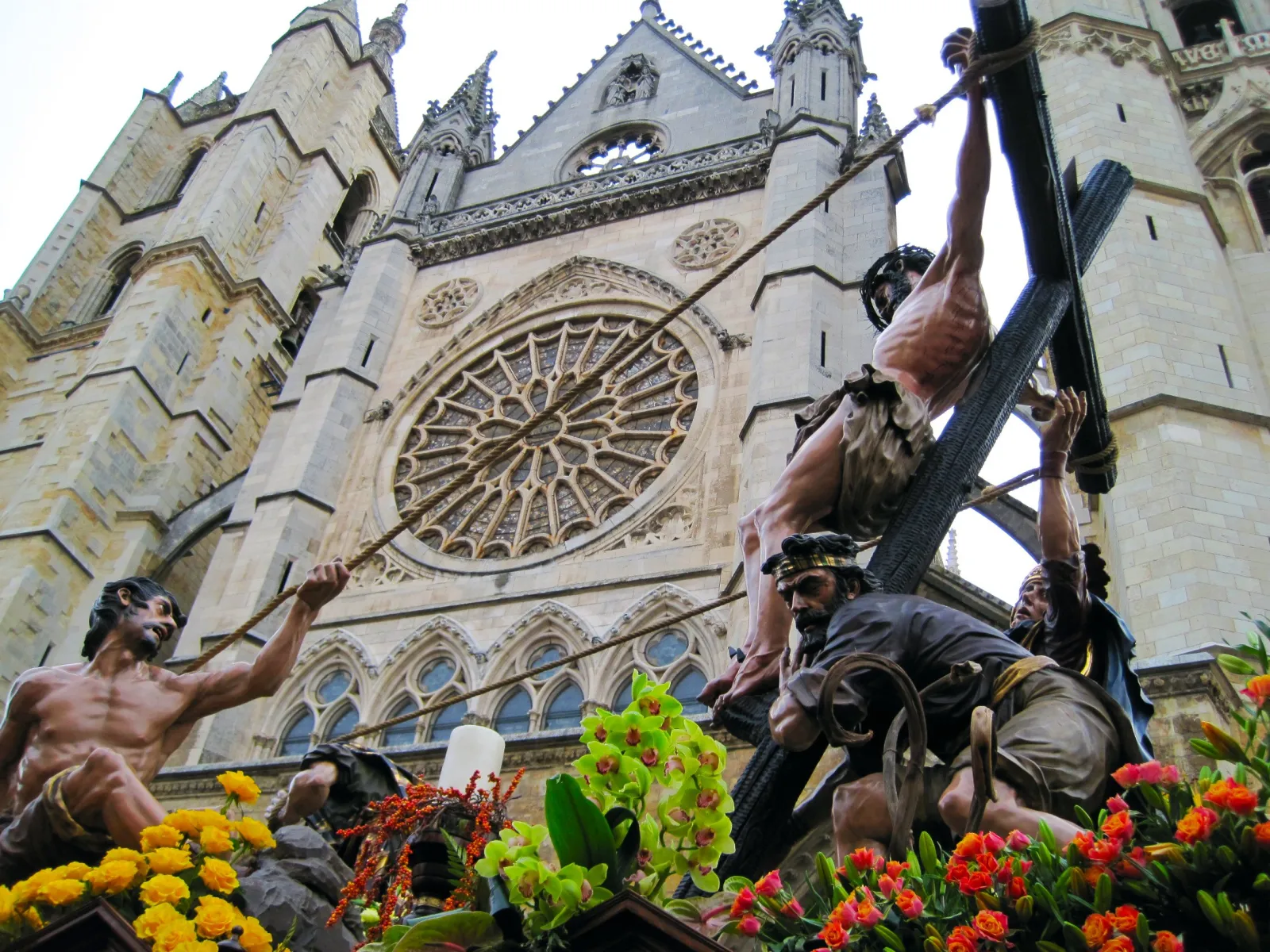
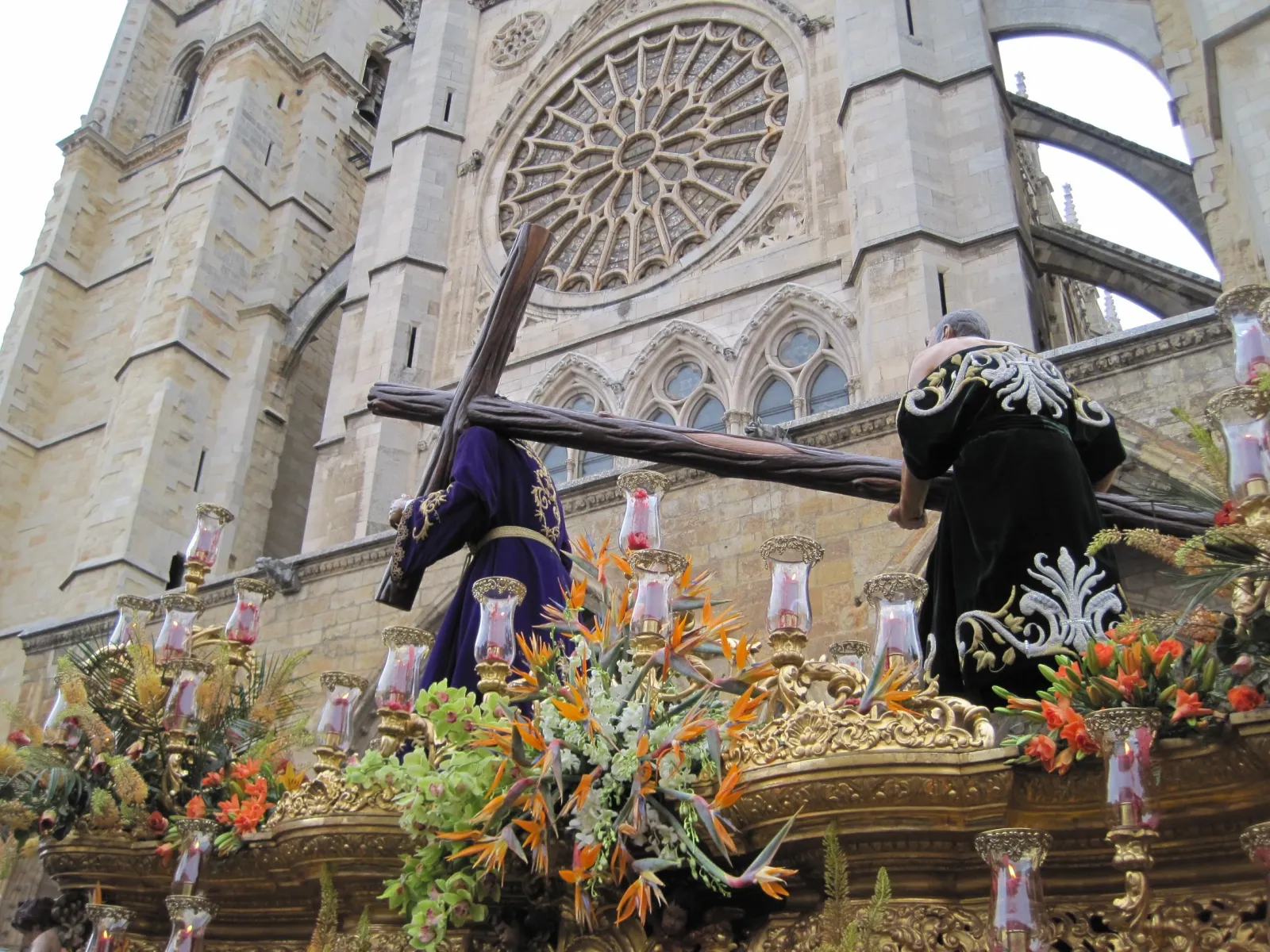
Sixteen brotherhoods take part, some dating back to the 16th and 17th centuries, and between them they put more than thirty processions and around a hundred pasos on the street. In León a brotherhood member is a papón, a word found only in the Holy Week of León province, and the men and women who carry the pasos on their shoulders are braceros. The Junta Mayor stresses that the processions have walked these streets for more than 500 years, and the sculptures include works by Gregorio Fernández, Juan de Juni, Luisa Roldán (La Roldana) and Víctor de los Ríos. The pasos are dressed with carefully chosen flowers, and the sound of the week is distinctive: the thud of the horquetas (carrying poles), bells, rattles, chants, bands and, at times, complete silence.
Voices and a pardon
Some of the most moving moments are sung. On Palm Sunday women sing "Dainos Señor buena muerte", a prayer dating from 1734, in the Inmemorial Procesión del Dainos. On Holy Tuesday the Cofradía del Santo Cristo del Perdón stops before the portico of the Cathedral, where, with the Orfeón Leonés, its abbot asks pardon for a prisoner for whom a pardon has been requested; if it is granted, the freed person joins the procession.
The two great acts
At midnight between Maundy Thursday and Good Friday the Ronda of the Cofradía del Dulce Nombre de Jesús Nazareno starts in Plaza de San Marcelo, in front of the old town hall. Brothers sound a bell, a bugle and a drum while another calls out to the people of León to rise for the procession; the call is received by the mayor and then repeated before the bishop, the provincial council and other authorities, before the Ronda walks the city all night.
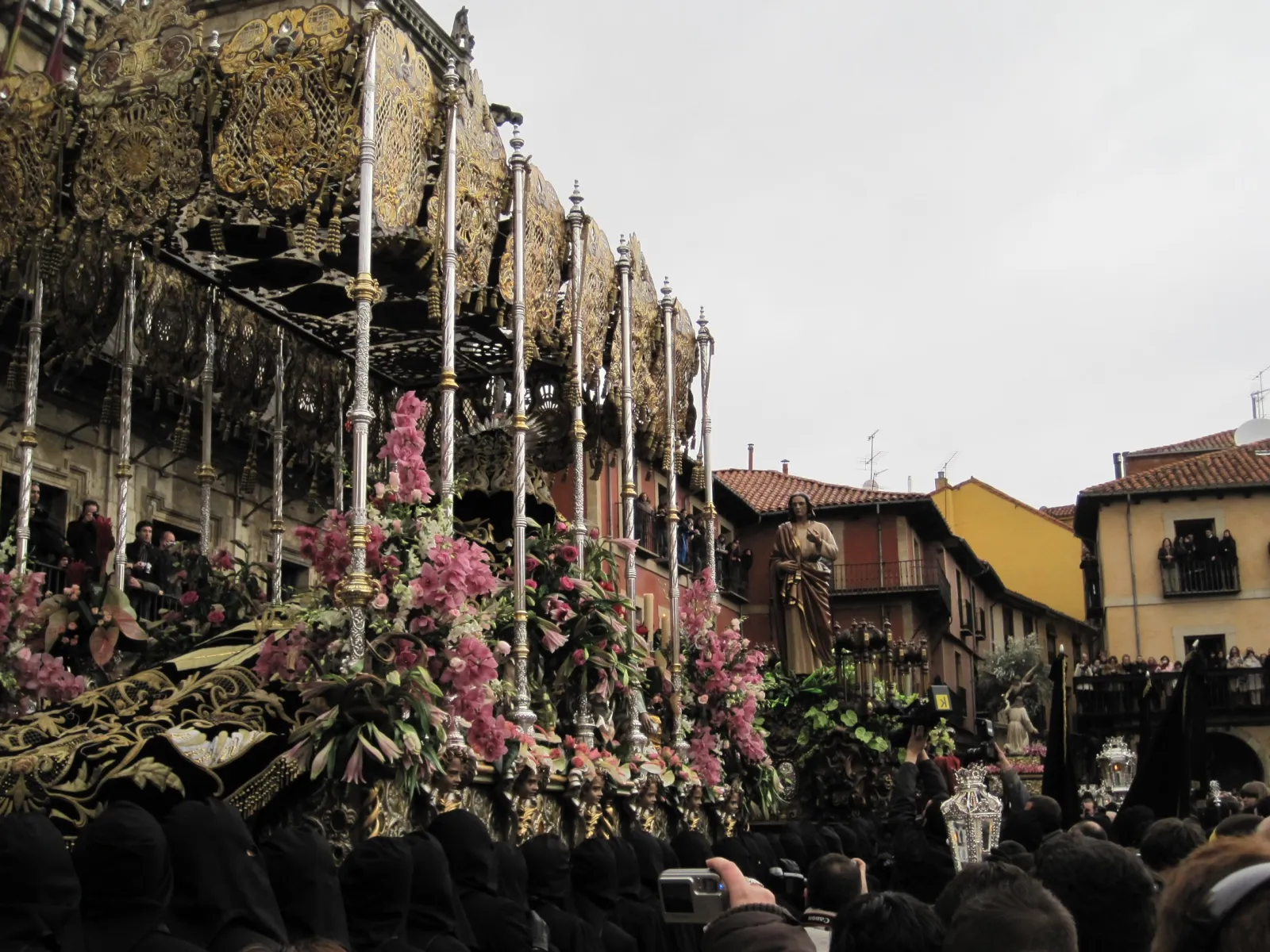
A few hours later the Procesión de los Pasos leaves the Capilla de Santa Nonia early in the morning (07:15 in 2026). More than 4,000 papones accompany thirteen pasos representing the central moments of the Passion through the old town and the Ensanche until well into the afternoon. They range from Gaspar Becerra's 16th-century Flagellation to José Antonio Navarro Arteaga's Crucifixion of 2022, and the cortege closes with Víctor de los Ríos's St John and Dolorosa. Its high point is the Encuentro in the Plaza Mayor, where St John and the Virgin of Sorrows meet before the Nazarene and the pasos are "danced" to the music.
Gallery
History & Origins
Religious acts commemorating the Passion are recorded in León from the 13th century, and the brotherhoods that still organise the processions began to appear in the 16th. The oldest are the Cofradía de Nuestra Señora de las Angustias y Soledad (1578), the Dulce Nombre de Jesús Nazareno (1611) and the Real Cofradía de Minerva y Vera Cruz (1612); most of the others were founded in the 20th century, many in the early 1990s.
Much of the old heritage was lost in the 19th century, when a fire destroyed the Convent of Santo Domingo, the seat of the Angustias and Dulce Nombre brotherhoods, which is why most of the pasos in the Procesión de los Pasos are 20th-century works. In 1947 the bishop created the Junta Mayor to coordinate the processions. The Procesión de los Pasos was declared of regional tourist interest in 1985 and of national interest in 1998, before the whole Holy Week received international status in 2002.
What to Expect
The Junta Mayor sums up the spirit of the week as austerity, seriousness, religiosity and feeling, and asks spectators ("papones de acera", pavement papones) to follow a short code: silence, no applause during the processions, never cross through a procession and respect those taking part. A well-carried paso should sway as if the figures were walking.
Off the route, the mood is much more social. Limonada, a drink made from wine, citrus, sugar and cinnamon, is the classic Holy Week drink in the bars of the old town, served with black olives seasoned with paprika. Torrijas, cod and mistela, a sweet wine, complete the menu. During La Saca, churches and chapels open to show the pasos before they go out, in exchange for a donation.
Locals "atajan": they take side streets to catch the same procession several times at its best points. With a map of the routes you can do the same.
How to Get There
Train: León station has high-speed services from Madrid and links to Asturias, Galicia and Castilla y León.
Bus: regular coaches connect León with Madrid and the main cities of northern Spain.
Car: León is reached by the A-6 and AP-71 from Madrid and the A-66 from Asturias and Zamora. Leave the car outside the centre: the old town and the Ensanche are walkable and many streets close for the processions.
Tips & Advice
- Download the routes and times from the Junta Mayor's website when they are published.
- For the Encuentro, find a place around the Plaza Mayor early on Good Friday morning.
- Stay up for the start of the Ronda at midnight in Plaza de San Marcelo.
- March nights in León are cold; dress in warm layers.
- Follow the spectators' code: silence, no applause, never cross a procession.
- More ideas in our Castilla y León guide.
Semana Santa de Valladolid
Valladolid, Castilla y LeónValladolid's Semana Santa is the antithesis of Andalusia's exuberant celebrations. Here, silence and sobriety reign. The star of the show is the extraordinary collection of polychrome sculptures by Gregorio Fernández, 17th-century masterpieces of such realism they seem to breathe.
Semana Santa de Salamanca
Salamanca, Castilla y LeónHooded brotherhoods carry their pasos past golden sandstone cathedrals, a Roman bridge and the oldest university in Spain in a Holy Week of International Tourist Interest.
Holy Week in Zamora
Zamora, Castilla y LeónZamora's austere Castilian Holy Week fills ten days with 17 brotherhoods, more than 40 pasos, barefoot penitents and Miserere chants sung in the small hours in a Romanesque old town.
El Colacho (Baby-Jumping Festival)
Castrillo de Murcia, Castilla y LeónIn a small village near Burgos, a masked devil in yellow and red runs through the streets during Corpus week and, on the Sunday, leaps over rows of babies laid on mattresses before they are blessed.