Viking Festival of Catoira
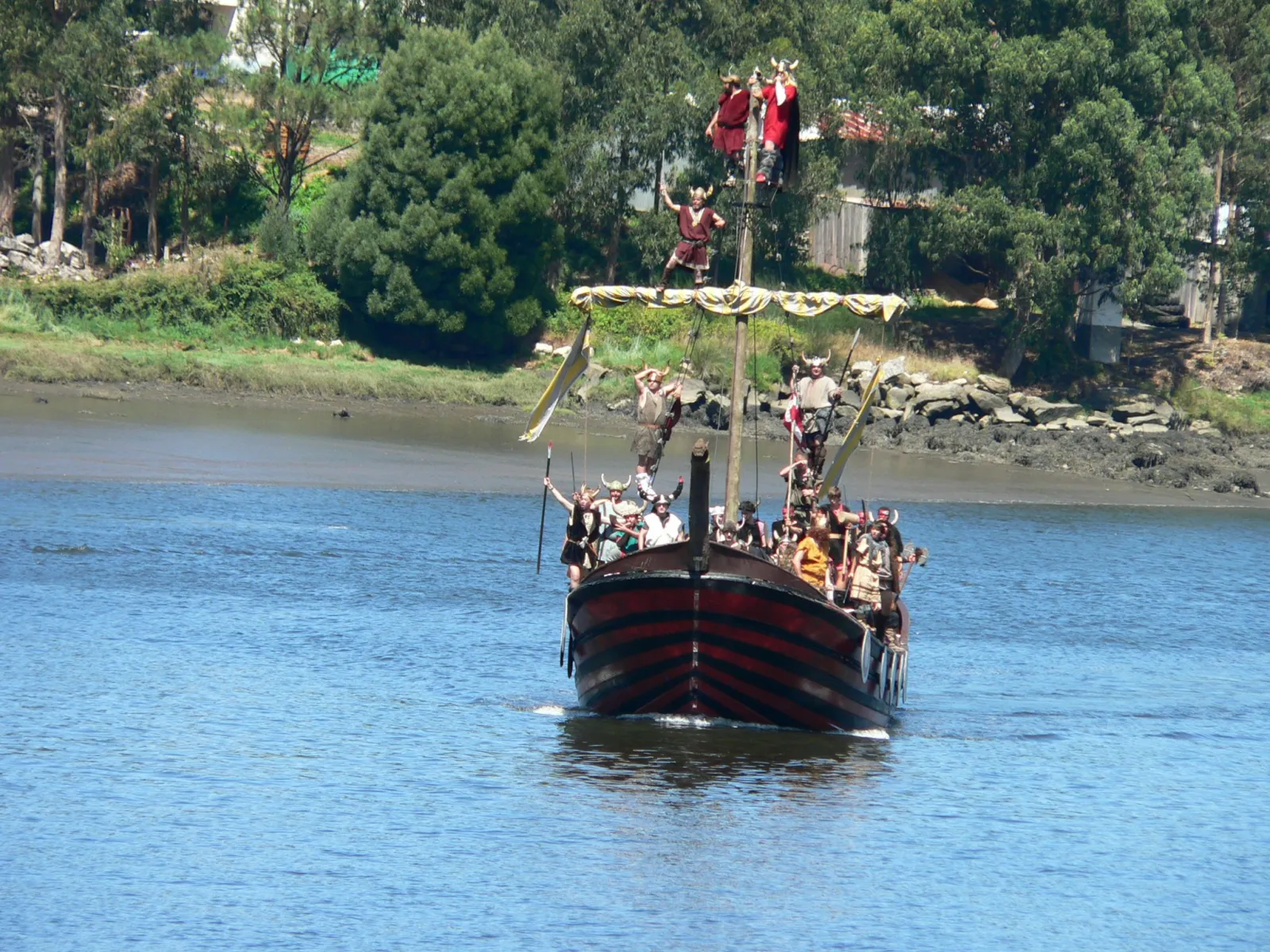
Every first Sunday of August, replica Viking longships row up the river Ulla to "attack" the medieval Torres de Oeste in Catoira, and the whole village turns out to defend them. Then everyone sits down to mussels and local wine.
The days that matter
-
Last week of July
Theatre week and Vikingmusic
Villagers stage an open-air Viking-era play at the Torres de Oeste, and free folk and rock concerts warm up the week.
-
Sat 31 Jul
Xantar Vikingo and market
Around 1,000 diners in medieval dress share a Viking feast in a marquee at the towers; the medieval market runs in the village centre.
-
Sun 1 Aug around midday
The Viking landing
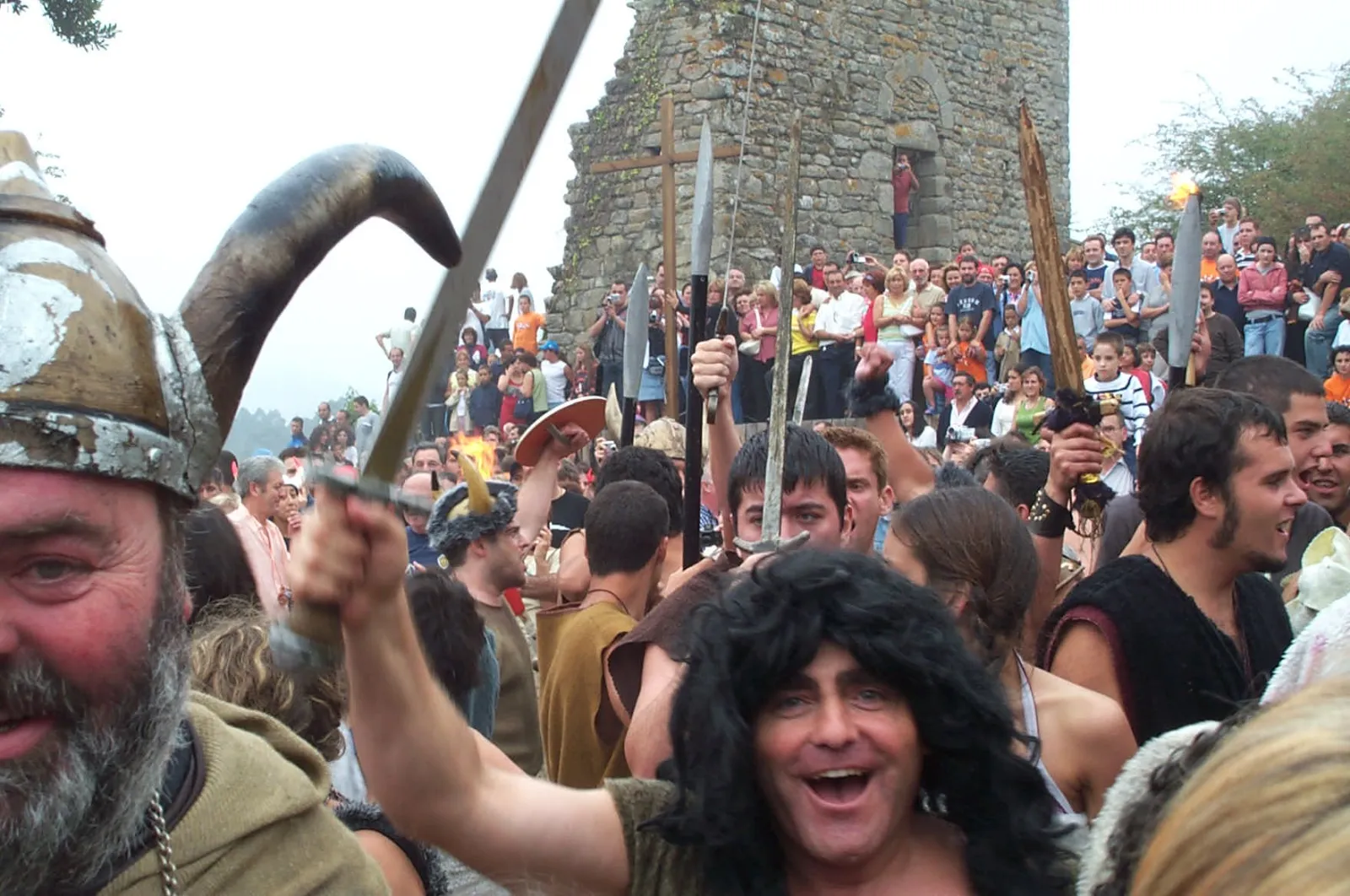
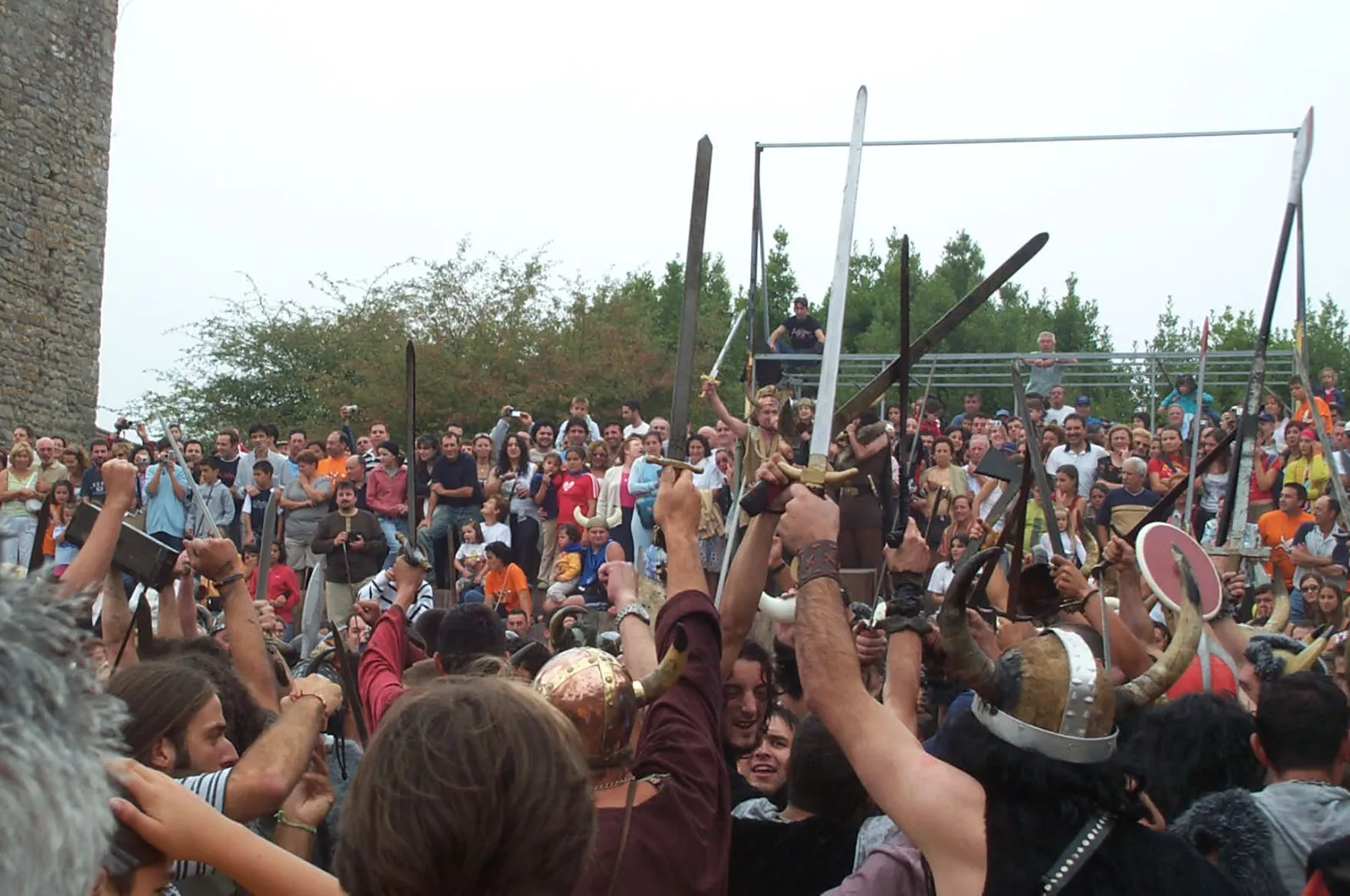
Longships row up the Ulla and storm the Torres de Oeste while locals defend the fortress (12:30 in 2026).
-
Sun 1 Aug
Mussels, wine and dancing
Food stalls at the towers serve mussels, octopus and Ulla wine, with folk groups and an evening verbena.
-
Mon 2 Aug
Desembarco Vikinguinho
Children get their own Viking landing at the Torres de Oeste the day after the main one.
What Viking Festival of Catoira is like
- Food & drink
- Family
- Free
- Loud
- Noise
- Drums, war cries and bagpipes at the landing
- Crowds
- Thousands pack the riverbanks on Sunday morning
- Mess
- A mock battle, but spectators stay mostly clean
- With kids
- Kids love the ships and costumes; stay back from the front line
Highlights
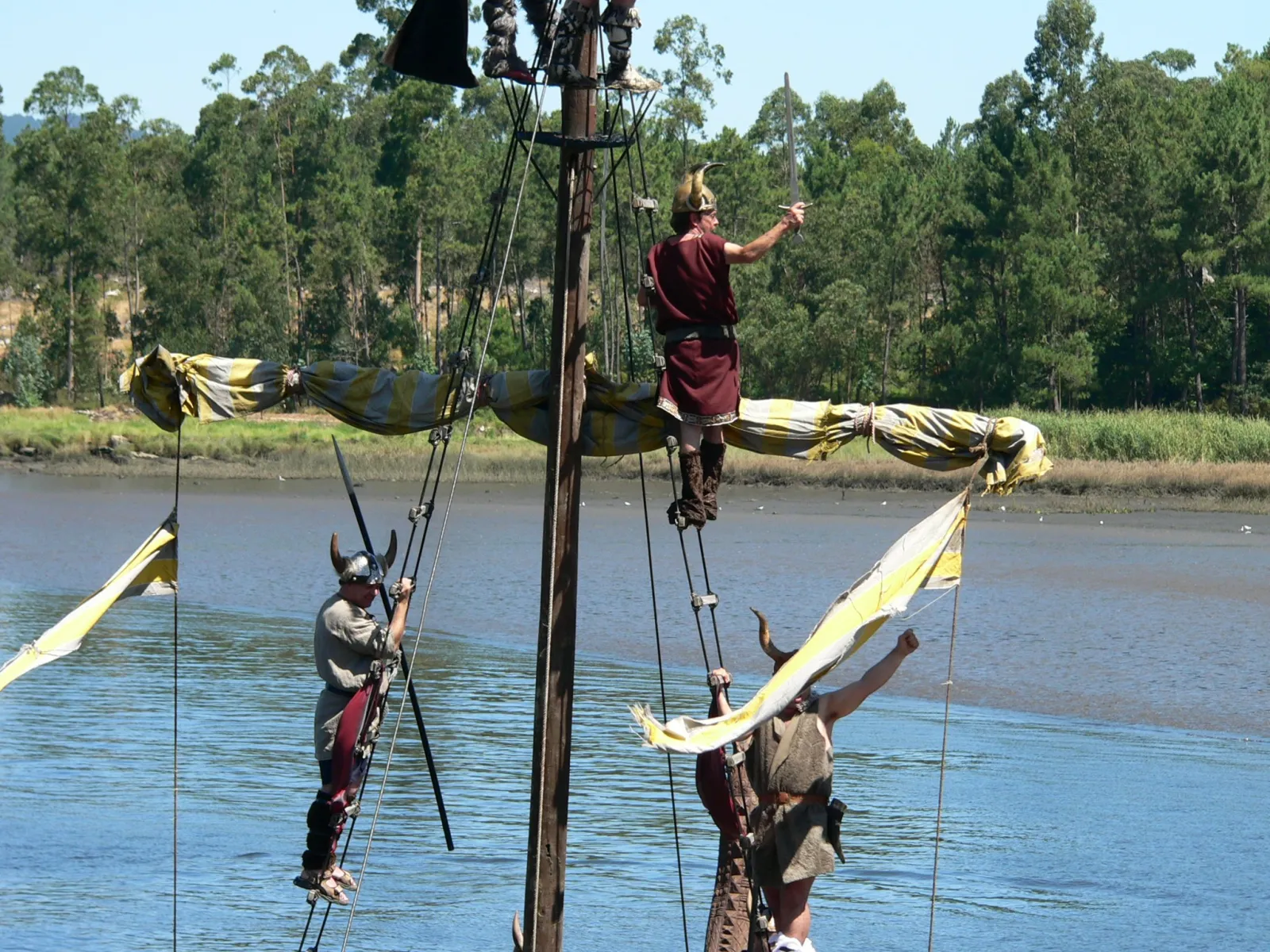
- Replica Viking longships rowing up the Ulla to storm the Torres de Oeste
- Around 200 locals defending the fortress on land
- Mussels, octopus and red wine from the Ulla in a medieval market
- The Xantar Vikingo feast on Saturday, with around 1,000 diners in costume
- An open-air theatre week and free Vikingmusic concerts in the days before
Romaría Vikinga 2027: the date
The landing is held on the first Sunday of August (3 August in 2025, 2 August in 2026), so the next one falls on Sunday 1 August 2027. The town hall's programme fills the week before with theatre, concerts and other events, and a medieval market runs in the village centre over the first weekend of August. The 2026 festival was the 66th edition and ran from 26 July to 3 August, with the landing at 12:30 on the Sunday. Check the Concello de Catoira's website for the confirmed 2027 timetable, usually published in July.
The landing
The highlight is the desembarco on Sunday at the Torres de Oeste, the ruined towers of the old Castellum Honesti on the banks of the river Ulla. In the 9th and 10th centuries its garrison stopped Norse raiders from sailing upriver, and the fortress came to be called the "key and seal of Galicia". Today the roles are reversed: crews dressed as Vikings row in on replica longships and storm the fortress, while around 200 locals play the defenders on land. Places in the longship crews are open to the public: applications go through the council's e-office, usually from early July. The landing has been part of the festival since 1968; at first a sand barge was disguised as a drakkar. On the Monday after, children get their own Desembarco Vikinguinho at the towers.
The ships
Today the attackers arrive on purpose-built replicas. The Torres de Oeste, built in 1993 after local craftsmen studied Viking boatbuilding in Denmark, copies the Skuldelev 5 found in Roskilde fjord: 17.5 metres long, with 13 pairs of oars and room for a crew of 30. The 20-metre Frederikssund joined in 2008, named after the Danish town twinned with Catoira since 1997; it adapts the Norwegian Gokstad ship, with carvings inspired by the Oseberg ship. The Ardglass-Catoira followed in 2019, named after the Ardglass Vikings association of Northern Ireland.
Food, wine and music
Once the battle is over, the fight turns into a party. Food stalls set up around the towers on Sunday, with mussels and octopus as must-eats and red wine from the Ulla valley, plus parades, folk groups and open-air dances. On the Saturday, around 1,000 people in medieval costume sit down to the Xantar Vikingo, a Viking feast in a large marquee at the towers; tickets are sold online in advance. In 2026 the Viking market also filled the Avenida da Ponte, towards the station, with street performers, drummers and fire shows from Friday evening to Sunday night.
Status
The Romaría Vikinga was declared a Festival of National Tourist Interest in 1988 and a Festival of International Tourist Interest in 2002.
Gallery
History & Origins
Catoira stands where the river Ulla meets the Arousa estuary, on the sea route to Santiago de Compostela. In the Middle Ages the fortress of the Castellum Honesti, today the Torres de Oeste, guarded that route, and its garrison held back Norse raiders who sailed up the river in the 9th and 10th centuries looking for the riches of Compostela.
The festival began around 1960–61 with the Ateneo do Ullán, a circle of writers and intellectuals from the Ulla valley who decided to commemorate the Viking landings. From 1965 the workers of a local company took over the organisation for almost 25 years, and in 1989 the town council took charge, adding a theatre week, concerts and international links, including a twinning with the Danish Viking town of Frederikssund. Since 2014 Catoira has been a member of the Destination Viking Association, the network behind the Council of Europe's Viking cultural route.
What to Expect
On Sunday the riverbanks around the Torres de Oeste fill with visitors, many of them dressed up as Vikings. The landing is loud and theatrical: drums, shouting, oars hitting the water and a mock battle among the ruins between the crews and the defenders. Afterwards the mood switches to a long country lunch, with food stalls, bagpipes and an evening verbena.
The week before is calmer and more cultural. Around 200 villagers stage an open-air play at the towers during the Semana de Teatro Romaría Vikinga, which has run since 1994, and the free Vikingmusic festival (called Vikinsons until 2024) brings folk and rock bands in the days before the landing.
How to Get There
The nearest airports are Santiago de Compostela (about 55 km) and Vigo (about 64 km). Catoira has its own railway station on the regional line, so you can take a train from Santiago, Vigo or A Coruña and walk to the towers.
By car, Catoira is a short drive from the AP-9 corridor between Santiago and Pontevedra, but parking near the Torres de Oeste fills up early on festival Sunday. Arriving by train is the easiest option.
Tips & Advice
- Get to the riverbank early on Sunday morning to see the longships arrive.
- Take the regional train to Catoira rather than driving.
- Wear comfortable shoes and old clothes: the riverbank and the ground around the ruins get crowded and muddy.
- Dressing up as a Viking is very much part of the fun.
- Ask the town hall about places at the Saturday Xantar Vikingo if you want to join the feast.
- Check catoira.gal for the 2027 programme, published in the run-up to August.
Photos: m.dolores paderne sa… / CC BY-SA 3.0 / Wikimedia Commons; Reservas de Coches / CC BY 2.0 / Wikimedia Commons
Rapa das Bestas
Sabucedo, GaliciaIn the tiny Galician village of Sabucedo, locals round up wild horses from the mountains and wrestle them with bare hands to trim their manes and tails. This raw, primal 400-year-old tradition is one of Spain's most visceral and unforgettable festivals.
San Juan Bonfires in A Coruña
A Coruña, GaliciaOn the night of 23 June, A Coruña's city beaches fill with hundreds of bonfires, grilled sardines and crowds that stay up until dawn. It is the city's biggest night of the year and a Festival of International Tourist Interest.
Magosto
Ourense, GaliciaOurense's officially confirmed 2026 Magosto runs 7–11 November, ending with free roast chestnuts, Galician food, folk music and dancing for San Martiño.
Octopus Festival of O Carballiño
O Carballiño, GaliciaOn the second Sunday of August, an inland town in Ourense becomes the capital of Galician octopus. Pulpeiras cook pulpo á feira in copper pots under the trees of O Carballiño's Municipal Park, and tens of thousands come to eat it.