Octopus Festival of O Carballiño
On the second Sunday of August, an inland town in Ourense becomes the capital of Galician octopus. Pulpeiras cook pulpo á feira in copper pots under the trees of O Carballiño's Municipal Park, and tens of thousands come to eat it.
The days that matter
-
Late July
Wine show and concerts
The programme opens with a wine show in the Praza Maior, followed by concerts and children's activities (from 24 July in 2026).
-
Tuesday before evening
Giant octopus tapa
The town prepares a tapa xigante of octopus in the Praza Maior, with music.
-
Sat 7 Aug evening
Festa das Camisetas
The peñas show off their matching festival T-shirts in the Praza Maior to the beat of a batucada.
-
Sun 8 Aug from 11:00
Octopus day in the park
Pulpeiras cook pulpo á feira in the Parque Municipal, with bagpipes, folk groups, charangas and long tables under the trees.
-
Sun 8 Aug night
Verbena
The party moves to the Praza Maior for an open-air dance with an orchestra (22:30 in 2026).
What Octopus Festival of O Carballiño is like
- Food & drink
- Family
- Noise
- Bagpipes, bands and a lively lunch crowd
- Crowds
- Tens of thousands in the park at lunchtime
- Mess
- Only olive oil and paprika on your fingers
- With kids
- A family picnic day in a big shady park
Highlights
- Pulpo á feira cooked in copper pots under the trees of the Parque Municipal
- More than 40,000 kg of octopus from around fifty pulpeiros and pulpeiras
- Ribeiro wine, Cea bread, empanada and cañas de crema
- Peñas in matching T-shirts, bagpipes and charangas, and a verbena in the Praza Maior
- The giant octopus tapa and the Festa das Camisetas in the days before
Festa do Pulpo 2027: the date
The festival is held every year on the second Sunday of August (10 August in 2025, 9 August in 2026), so the next edition falls on Sunday 8 August 2027. The 2026 festival was the 64th edition. The big day is the culmination of a little over two weeks of events organised by the Concello do Carballiño; check the council's website for the 2027 programme.
The run-up
In 2026 the programme began on 24 July with a three-day wine show in the Praza Maior and went on with concerts, a children's week in the Praza da Veracruz and a Día da Emigración, a nod to the many emigrants who come home for the summer. Two moments stand out. On the Tuesday before the festival the town prepares a tapa xigante, a giant octopus tapa, in the Praza Maior. On the Saturday evening comes the Festa das Camisetas, when the peñas show off their matching festival T-shirts to the sound of a batucada.
Where it happens
The heart of the festival is the Parque Municipal, opened in 1927 beside the river Arenteiro: more than 32 hectares of woodland, with natural springs, old watermills and a spa that is over a hundred years old. Tables and benches are set out under the trees, and the octopus stalls fill the park, while restaurants all over town cook octopus too. Around fifty pulpeiros and pulpeiras get through more than 40,000 kilos of octopus on the day.
What you eat
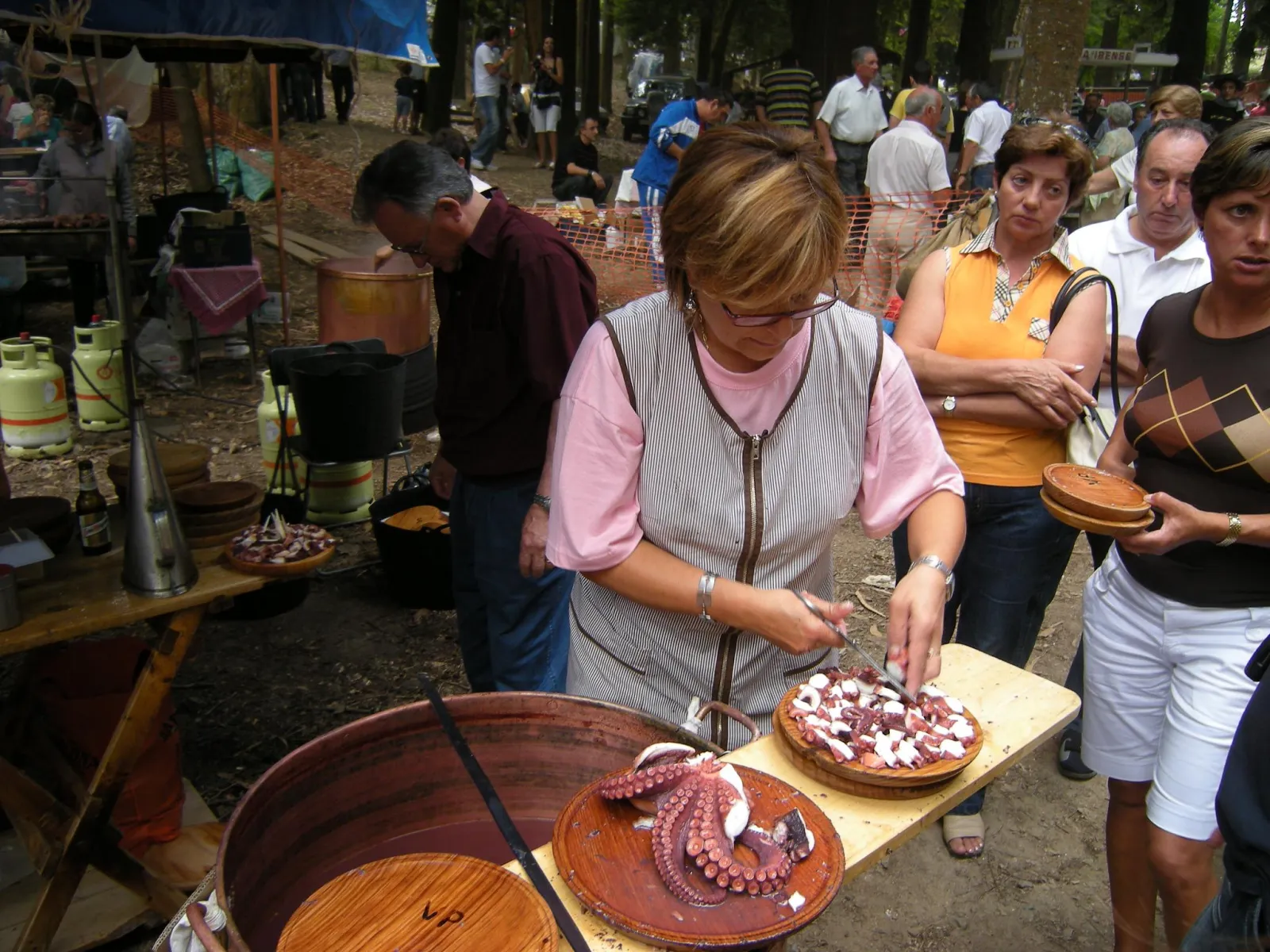
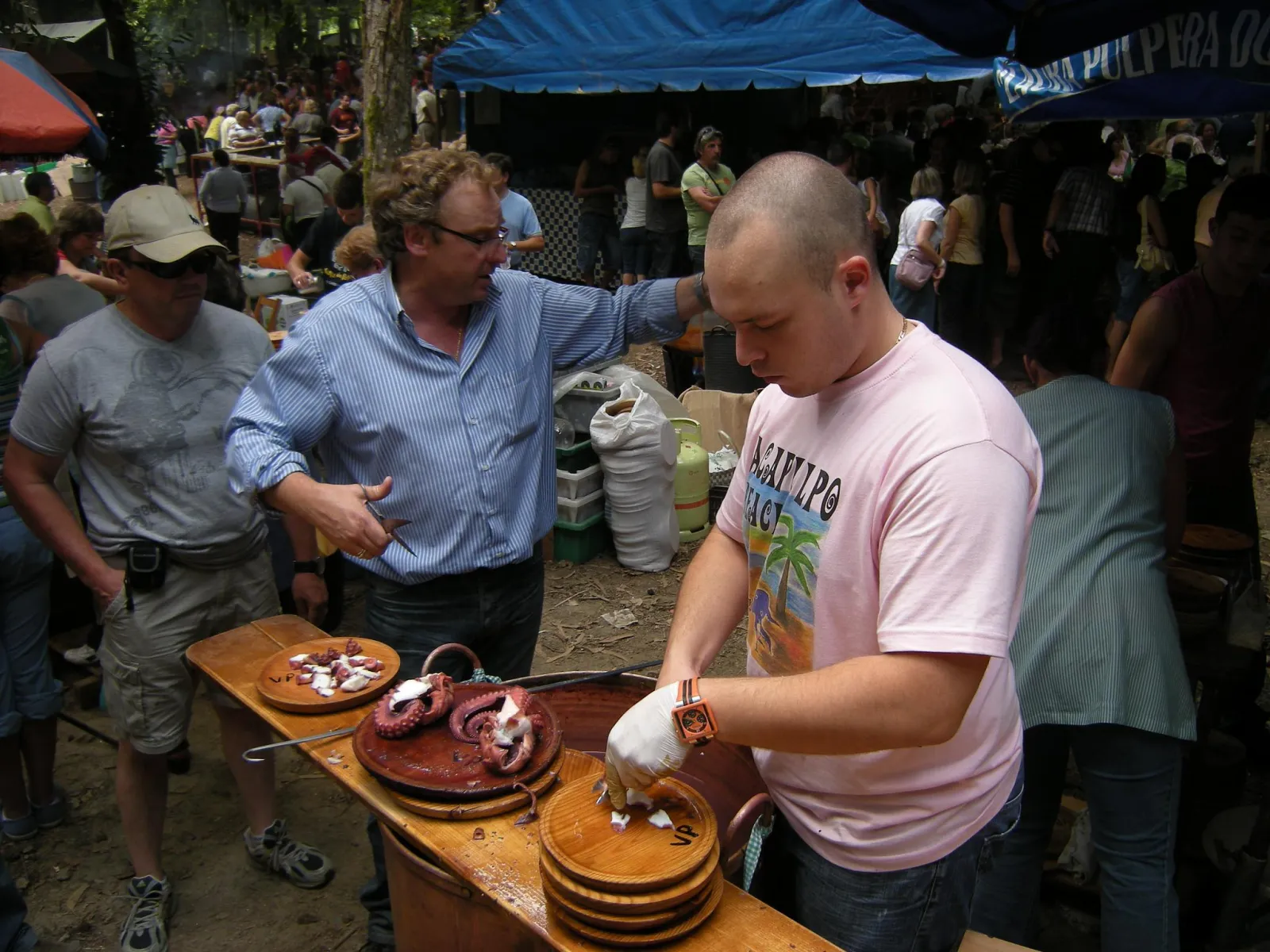
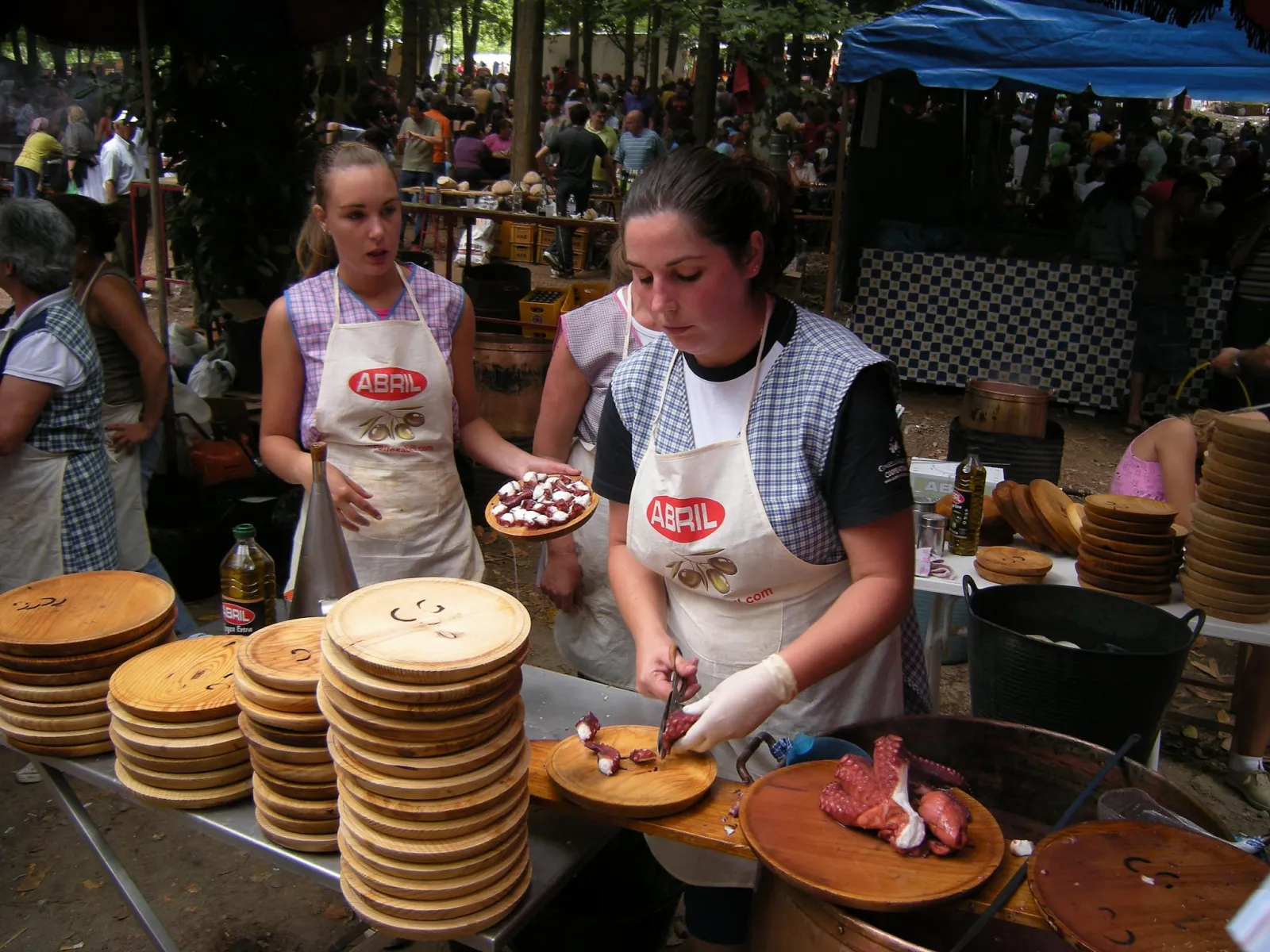
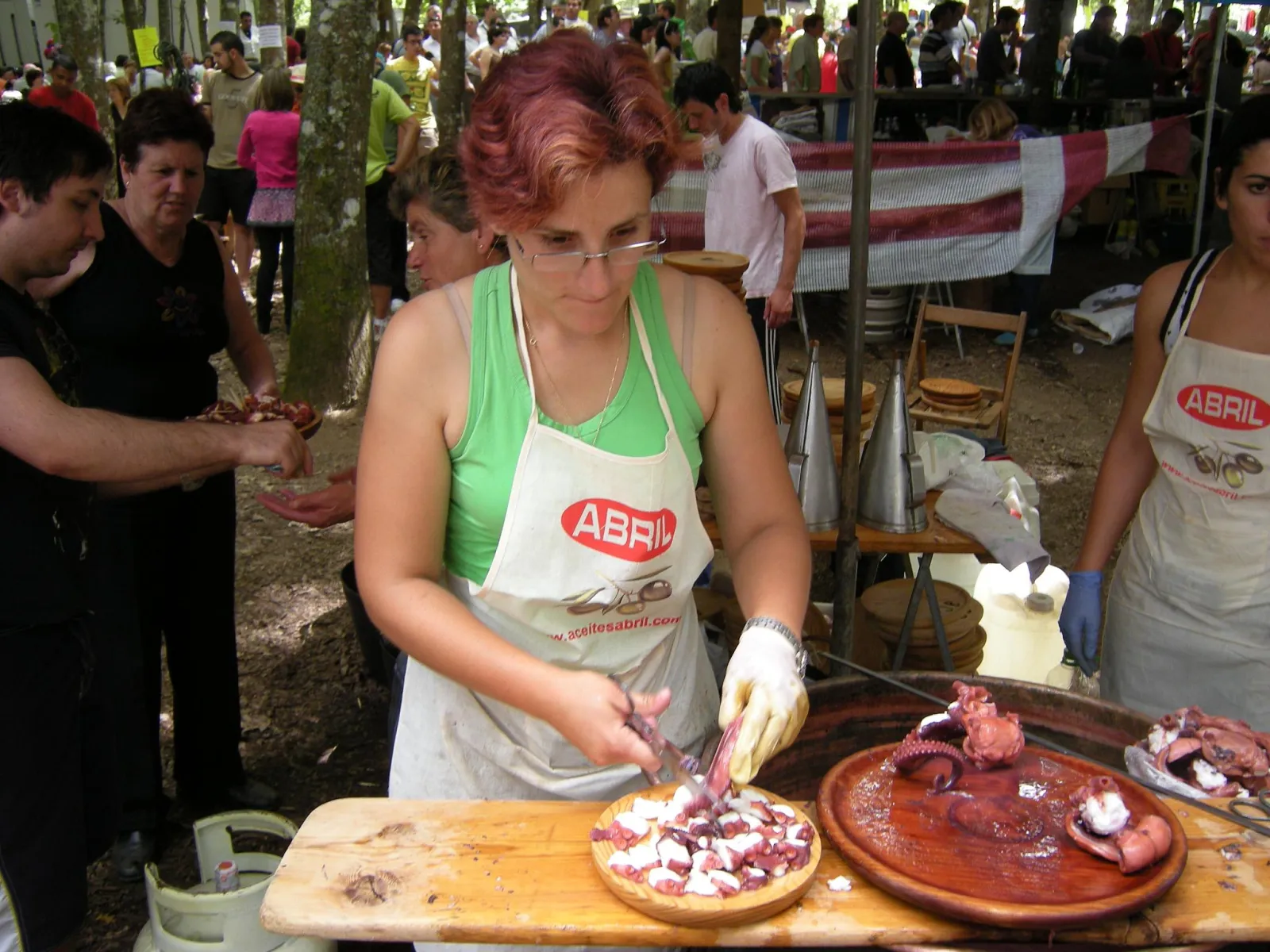
The star is pulpo á feira: octopus dipped three times into boiling salted water, cooked in copper pots, snipped with scissors onto wooden plates and dressed with olive oil, coarse salt and sweet or hot paprika. Around it you will find caldo (Galician broth), carne ao caldeiro (beef and potatoes with oil and paprika), empanada, bread from Cea, wine from the nearby Ribeiro, queimada and cañas de crema, the cream-filled pastries of the area.
The atmosphere
The day feels like a traditional Galician romería. From 11:00 bagpipe bands, folk groups and charangas play through the park and the streets, and the night ends with a verbena in the Praza Maior (at 22:30 in 2026). Each edition is dedicated to a guest place: Noventa Padovana, an Italian town with its own octopus festival, in 2025, and the island of Lanzarote, with which O Carballiño has long-standing ties, in 2026.
Status
The Festa do Pulpo has been a Festival of National Tourist Interest since 2012 and was declared a Festival of International Tourist Interest by Spain's Secretary of State for Tourism in July 2022.
Gallery
History & Origins
It may seem odd that an inland town in Ourense should be Galicia's octopus capital, but the link goes back to the Middle Ages. The monks of the monastery of Oseira received octopus as payment from their tenants on the coast, above all in Marín, which was a priory of Oseira, and they sold off what they did not need. The octopus found its market at the monthly fair held in nearby Cea, and that is where the tradition of pulpo á feira, "fair-style octopus", began. The parish of Santa María de Arcos, in the municipality of O Carballiño, became the heart of the craft: its families turned into specialist pulpeiros who passed the skill down the generations and took it to fairs across Galicia.
The festival itself began in 1962, when a group of friends met informally to pay tribute to octopus and to the way it was prepared in Arcos. They chose the town park as the venue. The first edition was held in September, during the fiestas of San Cibrao, but it soon moved to August, for better weather and to catch the emigrants who return home for the summer. The festival became a Fiesta de Interés Turístico Nacional in 2012, and after a bid backed by the Xunta de Galicia it was declared of International Tourist Interest in 2022.
What to Expect
On Sunday the park fills with families, groups of friends and peñas. At the stalls, pulpeiras lift the octopus out of the copper pots and snip it onto wooden plates, and people settle at the tables and benches under the trees to eat, drink and talk. Restaurants across town serve octopus too, so the whole of O Carballiño smells of it.
The mood is that of a big Galician romería: folk groups, bands, peñas in their festival T-shirts and a lot of eating and conversation. It gets busy around lunchtime, so arrive early if you want a table in the shade. In the evening the party moves to the Praza Maior for the verbena.
How to Get There
O Carballiño is about 28 km north-west of Ourense, roughly half an hour by road on the N-541 or the AG-53. Ourense has high-speed trains to Madrid, Santiago and A Coruña, and the nearest airports are Santiago de Compostela and Vigo. From Ourense, a car or bus is the practical way to reach the town.
On festival Sunday traffic and parking around the town are busy, so arrive early or stay overnight in O Carballiño or Ourense. The Parque Municipal is on the edge of the town centre, a short walk from the Praza Maior, so once you have parked you can do everything on foot.
Tips & Advice
- Arrive before midday to get a table in the shade of the park.
- Bring cash for the octopus stalls, bread and wine.
- Try the cañas de crema and a glass of Ribeiro with your octopus.
- If you are driving, arrange a designated driver before the wine starts flowing.
- Come a few days early for the giant octopus tapa or the Festa das Camisetas, when the town is calmer than on the big day.
- Check the Concello do Carballiño website for the 2027 programme.
Photos: José Antonio Gil Martínez / CC BY 2.0 / Wikimedia Commons
Festa do Albariño
Cambados, GaliciaThe Festa do Albariño in Cambados is Spain's premier white wine festival, celebrating the Rías Baixas region's world-famous grape. Five days of wine tastings, Galician seafood, folk music, and cultural events in a charming coastal town.
Lalín Cocido Festival
Lalín, GaliciaSince 1969 the Galician town of Lalín has dedicated a winter Sunday to cocido, the region's hearty meat-and-vegetable stew, with a pregón, a parade of floats and bands, and full tables everywhere.
O Grove Seafood Festival
O Grove, GaliciaUp to two weeks of seafood by the plate on the Ría de Arousa, in the fishing town that calls itself the seafood capital of Galicia.
Viking Festival of Catoira
Catoira, GaliciaEvery first Sunday of August, replica Viking longships row up the river Ulla to "attack" the medieval Torres de Oeste in Catoira, and the whole village turns out to defend them. Then everyone sits down to mussels and local wine.