La Arribada (Arrival of the Pinta)
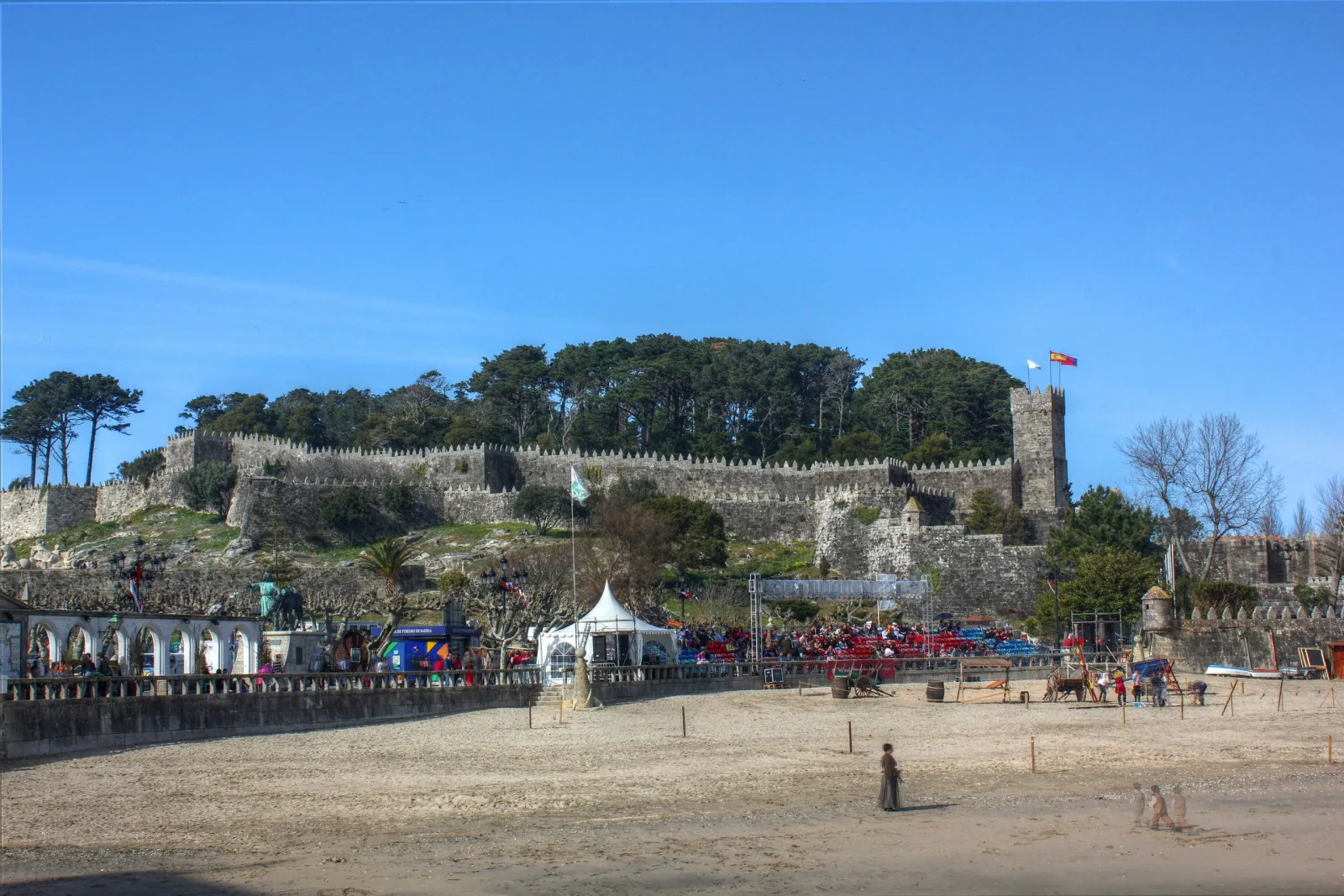
On 1 March 1493 the caravel Pinta sailed into Baiona with the first news of Columbus's voyage. Every year the Galician town turns its old quarter into a medieval market and re-enacts the landing on the beach.
The days that matter
-
Days before
Talks and exhibitions
Lectures and book presentations on Pinzón and the voyage at the Casa de la Navegación.
-
Fri 5 Mar (expected) from 10:00
Cannons and market opening
The fortress cannons open the fiesta, followed by a solemn mass at Santa María and, at night, a fire show on Praia da Ribeira.
-
Sat 6 Mar (expected) around midday
Arribada anniversary act
Authorities walk with the town band to Paseo Pinzón for speeches, wreaths and anthems.
-
Sat 6 Mar (expected) afternoon
Medieval tournament
Jousting, javelin throwing and tilting at the quintain on Praia da Ribeira.
-
Sat 6 Mar (expected) evening
Landing play and fireworks
The play Arribada del Descubrimiento re-enacts the arrival of the Pinta on the beach, followed by fireworks.
-
Sun 7 Mar (expected)
Great Medieval Parade
All the market's musicians parade at the entrance to the Monterreal fortress; the play is repeated in the evening before the market closes.
What La Arribada (Arrival of the Pinta) is like
- Family
- Free
- Food & drink
- Noise
- Drums, batucadas and cannon shots, but a relaxed market feel
- Fire
- A fire show and Saturday's fireworks over the beach
- Crowds
- The narrow old town gets packed at weekend peaks
- Mess
- Clean; just dress for Atlantic rain
- With kids
- Knights, falcons, workshops and a children's park
Highlights
The Real Mercado Medieval filling Baiona's old town for three days
Cannon fire from the Monterreal fortress opening each market day
The play Arribada del Descubrimiento on Praia da Ribeira, with fireworks on Saturday
A mounted medieval tournament, falconry and sword-fighting on the beach
The Great Medieval Parade at the fortress gate on Sunday
Free entry to the Pinta replica museum if you come in period dress
La Arribada 2027: early March
The Festa da Arribada is held in Baiona, on the Rías Baixas coast near Vigo, on the weekend around 1 March, the date the Pinta arrived in 1493; when 1 March falls early in the week, it moves to the first weekend of March. In 2027, 1 March is a Monday, so the fiesta is expected on Friday 5 to Sunday 7 March 2027. The Concello de Baiona confirms the dates and publishes the programme in February, so check before booking.
What it celebrates
On its way back from the first voyage of Columbus, the caravel Pinta, captained by Martín Alonso Pinzón, was separated from the other ships by a storm and made for Baiona, which became the first port in the Iberian Peninsula to hear the news of the lands across the Atlantic. The crew rested and took on supplies before sailing on to Palos de la Frontera on 11 March.
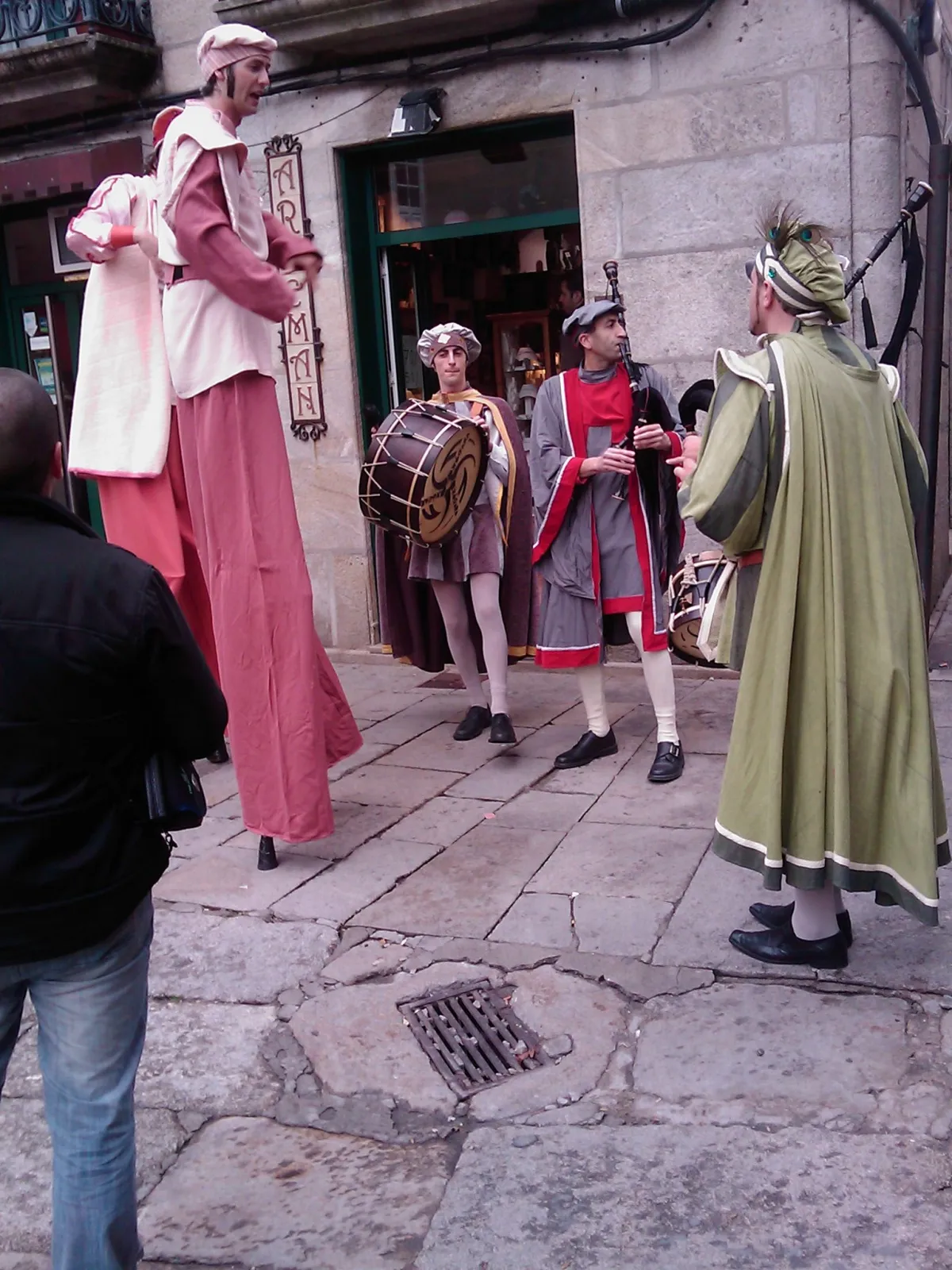
For three days Baiona relives that arrival. The old town becomes the Real Mercado Medieval, with craft stalls, taverns, minstrels, stilt-walkers, drummers and artisans' workshops, and many locals and visitors dress in period costume. On Praia da Ribeira, the beach below the Monterreal fortress, there are archery and falconry displays, sword-fighting shows and a mounted medieval tournament. The highlight is the open-air play Arribada del Descubrimiento, which re-enacts Pinzón and his crew telling the town of their discovery, followed on Saturday night by fireworks.
The fiesta also has an official side: a solemn mass, a commemorative act at the Pinzón monument and visits from Baiona's twin towns, Palos de la Frontera among them. It was declared a Fiesta de Interés Turístico Internacional in 2015.
Gallery
History & Origins
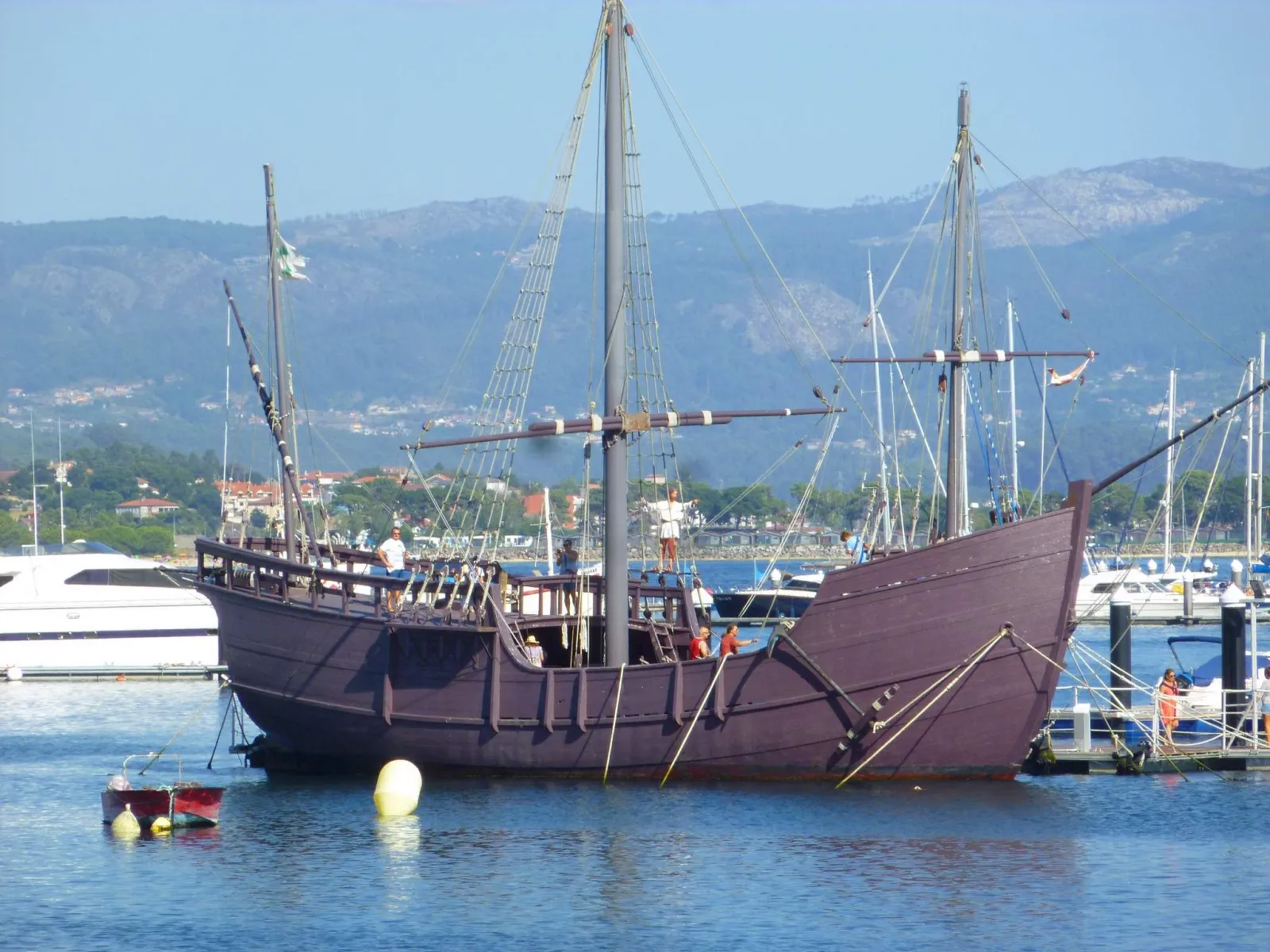
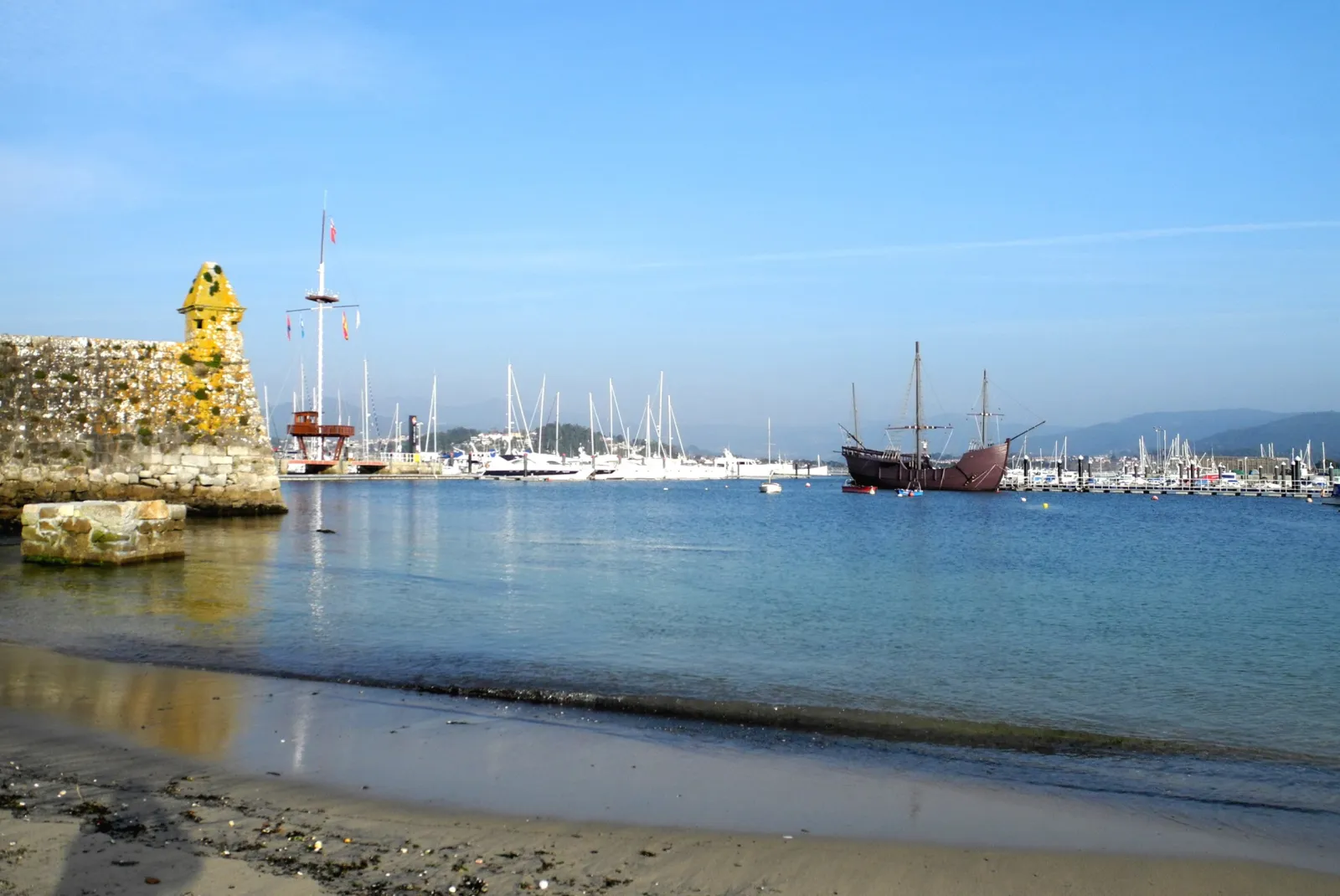
The Pinta reached Baiona on 1 March 1493. Separated from Columbus's Niña by a storm near the Azores, it headed north-east; on board was the ship's pilot, Cristóbal García Sarmiento, a Galician who knew these coasts well. Baiona was the first port in the Iberian Peninsula to welcome the crew and hear the news, and the ship left for Palos on 11 March. A statue of Martín Alonso Pinzón has looked out to sea from the town since 1977, and a replica of the Pinta, built for the fifth centenary, is moored in the harbour as a museum.
The modern fiesta began as a local holiday in 1974 and grew over the following decades into a full historical festival. It was declared of Galician tourist interest in 1999, of national tourist interest in 2010 and, by a resolution of 27 October 2015, a Fiesta de Interés Turístico Internacional.
What to Expect
Each market day starts at 10:00 with cannon fire from the fortress and the 'settling' of merchants and artisans from 'every corner of the kingdom'. The old town's streets, from the Alameda by the harbour to Plaza de Santa Liberata, fill with stalls, period-dressed musicians, stilt-walkers and a batucada; in the town hall square craftspeople work as blacksmiths, potters, basket-makers and clog-makers, and stonemasons work in the street. In 2025 the market ran until midnight on Friday and Saturday and closed at 22:00 on Sunday.
Praia da Ribeira is the stage for the big shows: archery, falconry, sword fights and the medieval tournament with jousting, javelin throwing and tilting at the quintain. On Saturday evening the cast of Arribada del Descubrimiento re-enacts the landing, followed by fireworks, and the play is repeated on Sunday. After dark there is a video-mapping show on the façade of Santa María church.
Families are well served: Parque da Palma becomes a children's area with craft workshops, giant chess, wooden puzzles and medieval-style rides. Food is everywhere, from the Ribeira-Gastro area on the seafront to taverns in the old town.
How to Get There
Baiona is on the south side of the Vigo estuary, about half an hour by road from Vigo.
- By air: Vigo airport is the closest; Santiago de Compostela and Porto airports are alternatives.
- By train: Baiona has no railway. Take a train to Vigo (Urzáiz or Guixar stations) and continue by bus or taxi.
- By bus or boat: regular buses run from Vigo, and in some years extra shuttles and boat trips are organised for the fiesta, weather permitting; check the programme.
- By car: parking near the old town fills fast on Saturday and Sunday, so arrive in the morning.
Tips & Advice
- Check the Concello de Baiona's programme in February to confirm the 2027 weekend and show times.
- Plan Saturday evening around the landing play on Praia da Ribeira and the fireworks; get to the beach early for a good view.
- Dress up: period costume is part of the fun and gets you free entry to the Pinta replica museum and the guided visits at the Casa de la Navegación.
- Bring a raincoat: early March on the Galician coast can be wet and windy, and shows may move or change.
- Use the bus or come early by car; the old town is pedestrianised during the market.
Photos: Xosema / CC BY-SA 3.0 / Wikimedia Commons; Alejandro Arce Herrero / CC BY 2.0 / Wikimedia Commons; Zarateman / CC0 / Wikimedia Commons; LBM1948 / CC BY-SA 4.0 / Wikimedia Commons
Arde Lucus
Lugo, GaliciaFor four days in June, Lugo turns back into Lucus Augusti: Roman legions, Galaic tribes, gladiators and a circus take over the old town inside the only Roman city wall that survives complete.
Festas do Apóstolo
Santiago de Compostela, GaliciaTwo weeks of celebrations honouring St. James, culminating July 25th with the Botafumeiro ceremony, spectacular fireworks, free concerts, and street theatre.
Rapa das Bestas
Sabucedo, GaliciaIn the tiny Galician village of Sabucedo, locals round up wild horses from the mountains and wrestle them with bare hands to trim their manes and tails. This raw, primal 400-year-old tradition is one of Spain's most visceral and unforgettable festivals.
Festa do Albariño
Cambados, GaliciaThe Festa do Albariño in Cambados is Spain's premier white wine festival, celebrating the Rías Baixas region's world-famous grape. Five days of wine tastings, Galician seafood, folk music, and cultural events in a charming coastal town.