San Juan Bonfires in A Coruña
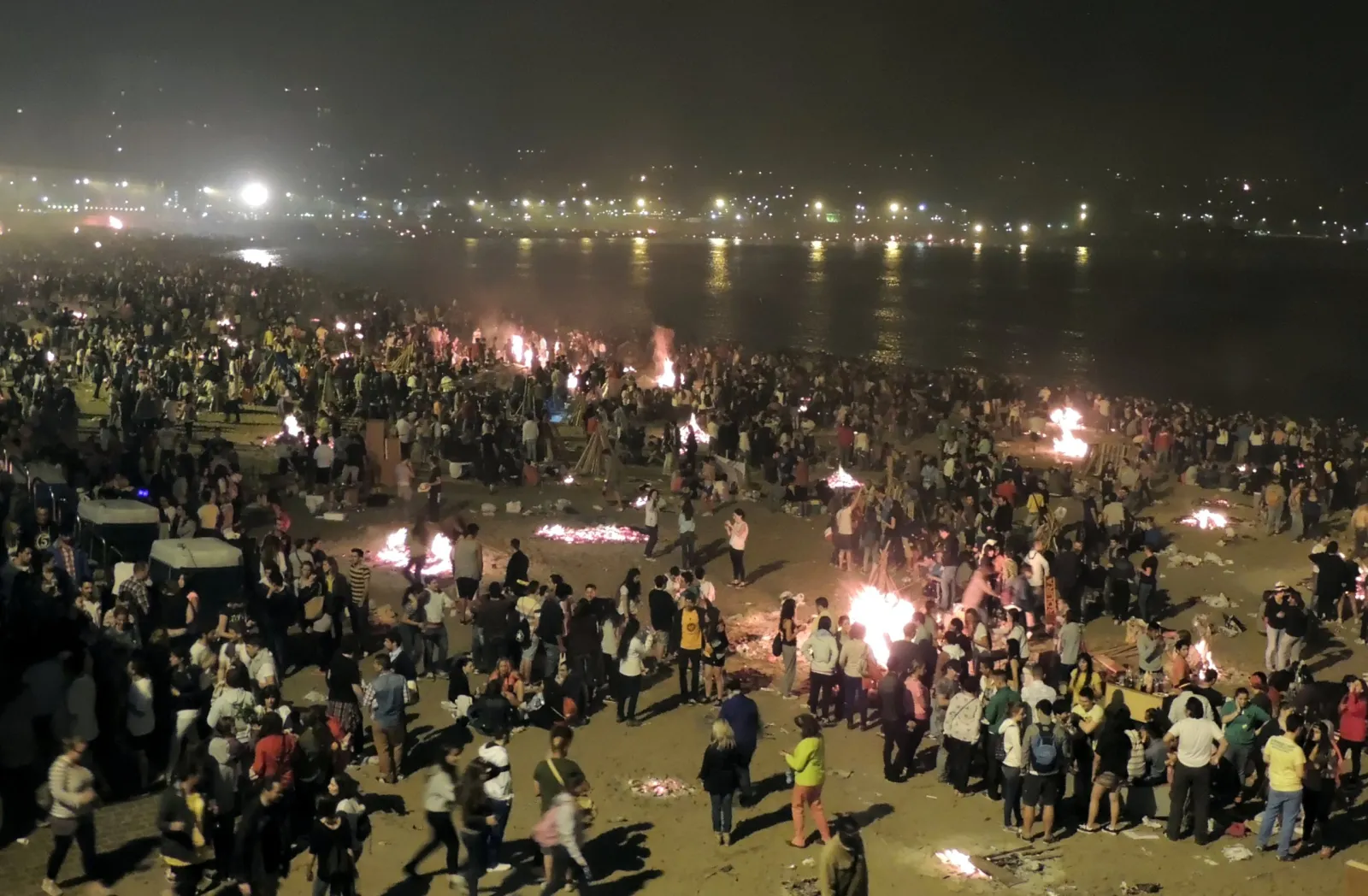
On the night of 23 June, A Coruña's city beaches fill with hundreds of bonfires, grilled sardines and crowds that stay up until dawn. It is the city's biggest night of the year and a Festival of International Tourist Interest.
The days that matter
-
Throughout June
Run-up programme
Concerts, parades and neighbourhood events across the city in the weeks before the night.
-
23 Jun (day)
Parades and sardiñadas
Bands, bagpipes, giants and big-heads in the streets, and sardine grills across the neighbourhoods.
-
23 Jun (evening)
Down to the beaches
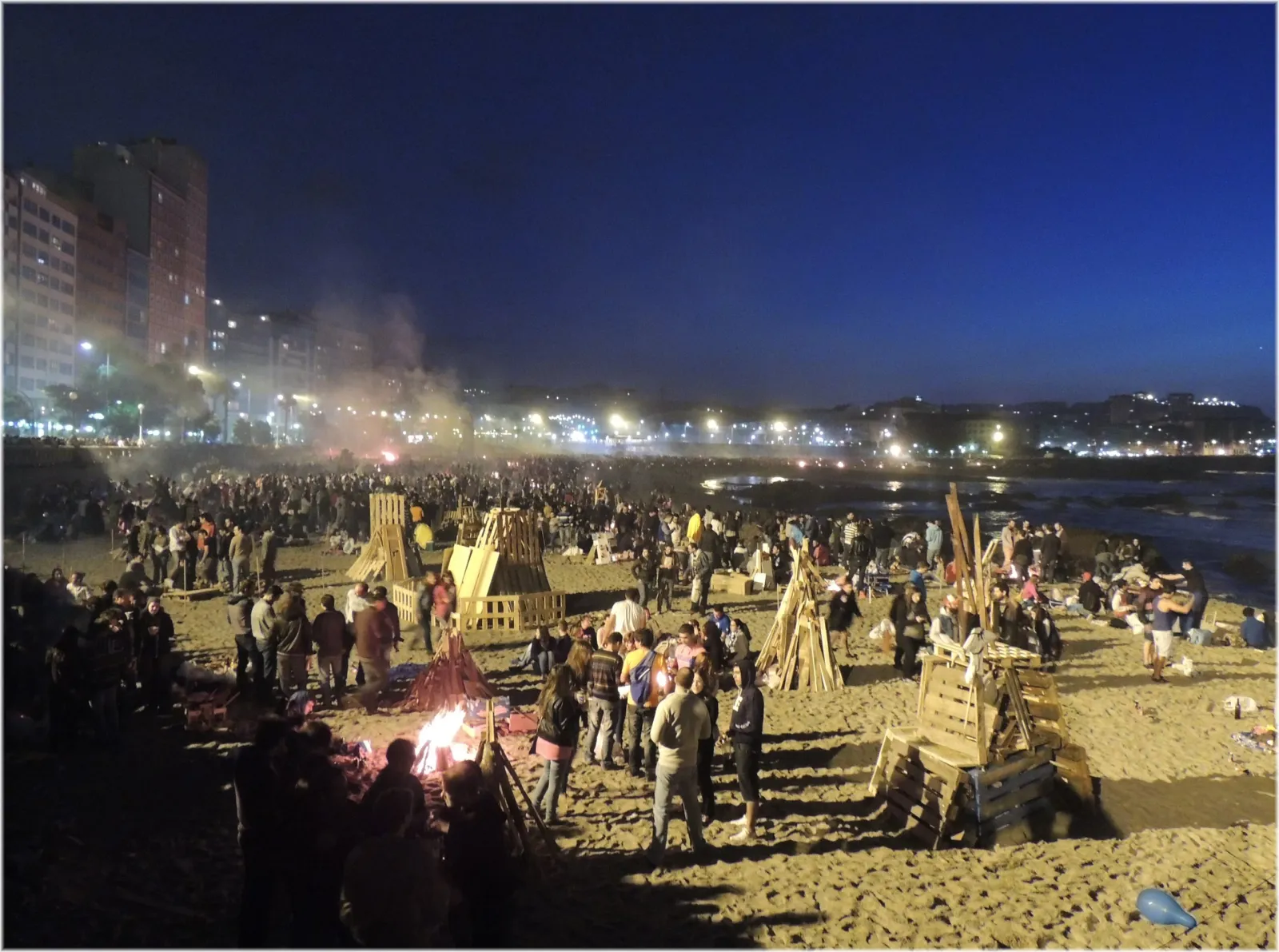
Wood and bonfire material go onto the sand of Riazor and Orzán and the seafront road closes to traffic.
-
23–24 Jun (night)
Bonfire night
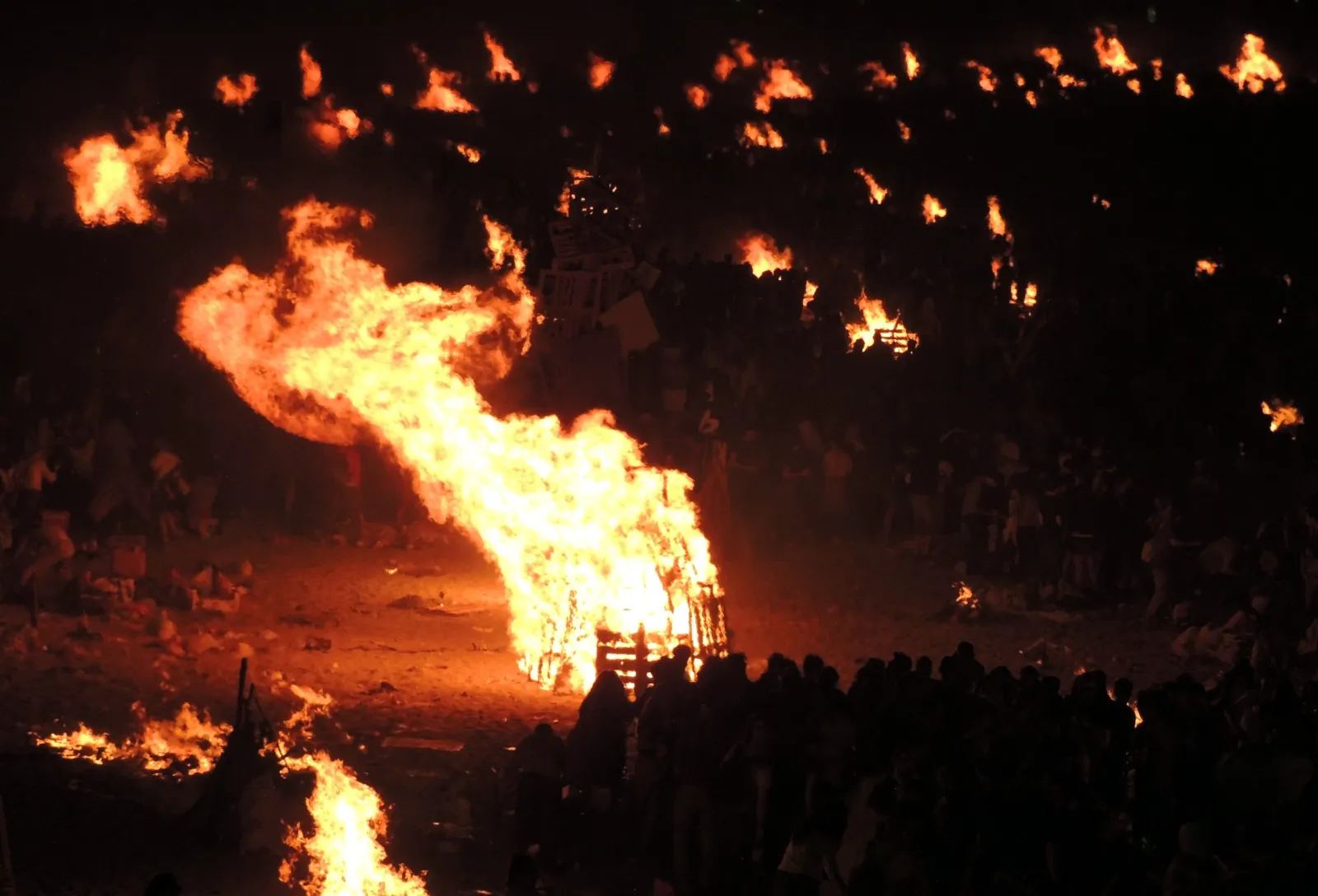
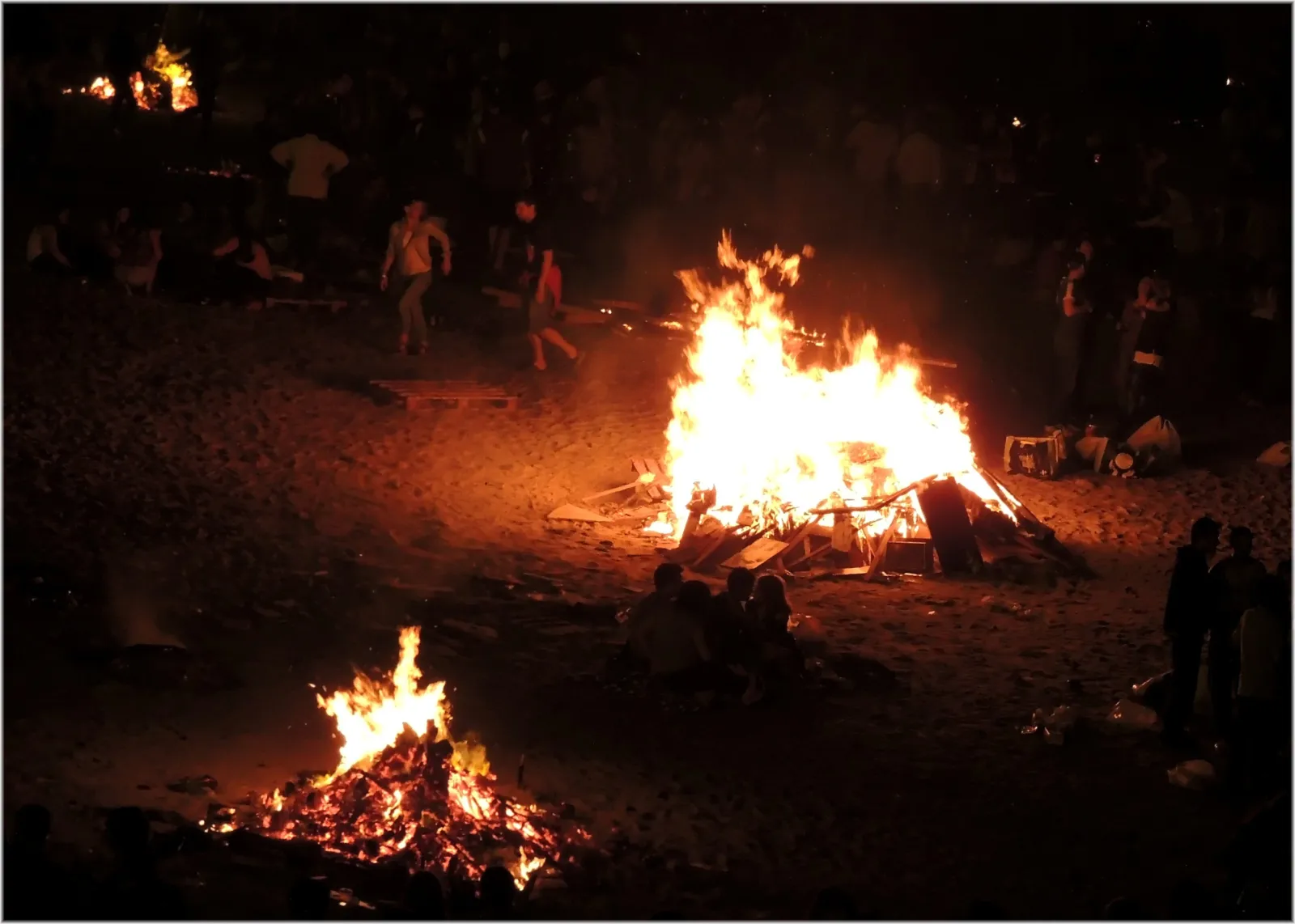
Hundreds of fires light up the bay and the party peaks around midnight, continuing into the early hours.
-
24 Jun by 06:00
Beaches cleared
Under the 2026 rules the beaches had to be empty by 06:00 so cleaning crews could work.
What San Juan Bonfires in A Coruña is like
- Fire
- Night
- Food & drink
- Free
- Noise
- Music and crowds on the beach until the early hours
- Fire
- Hundreds of bonfires on the sand
- Crowds
- The whole city seems to be on Riazor and Orzán
- Mess
- Smoke and sand, nothing thrown at you
- With kids
- Fine early in the evening; late night is for adults
Highlights
- Hundreds of bonfires along Riazor and Orzán beaches on the night of 23 June
- Sardiñadas (sardine barbecues) across the city's neighbourhoods
- Parades with bagpipes, traditional dance, giants and big-heads during the day
- A June programme of concerts and street events leading up to the night
- Festival of International Tourist Interest since 2015
San Juan 2027: the date
The bonfire night always falls on 23 June, the eve of Saint John's Day. In 2027 that is Wednesday 23 June, with the party running into the early hours of Thursday 24 June. The city programme around it usually starts weeks earlier, with concerts, parades and neighbourhood events through June, but the night of the 23rd is the one everybody plans around.
Where it happens
The heart of the night is the long urban beachfront of Riazor and Orzán, with more fires on other city beaches such as Matadoiro. As darkness falls, groups of friends, families and neighbourhood associations light their bonfires on the sand, and from the promenade you look down on a beach dotted with flames from end to end. Spain's official tourism portal describes hundreds of bonfires, sardine grills across the city's neighbourhoods and a party that carries on until morning. In 2026 the council also marked out plots on Riazor, between calle Modesta Goicouría and the Fonte das Catalinas, for neighbourhood, cultural and sports associations. Fires are not allowed around the Tower of Hercules, including the coves of As Lapas, Os Moros and Durmideiras.
Meigas, fire and herbs
San Juan in A Coruña has its own figures, the Meigas. Each year a young woman is chosen as Meiga Mayor to represent the city, and Spain's tourism press office describes her lighting the main bonfire at midnight. The Meigas are presented at the Festa da Danza das Meigas, which reached its 51st edition in 2026, and on the afternoon of 24 June their comitiva sets out from the Cantón Grande. At midday on the 23rd the Fire of San Juan is lit at the Iglesia Castrense de San Andrés, and on the 24th a procession in honour of the saint leaves from the same church. Many people also keep the old custom of leaving wild flowers and herbs in water overnight and washing their faces with it on the morning of the 24th.
Sardines, bonfires and the rules
Sardiñadas (sardine barbecues) are the other half of San Juan. Every year the City Council publishes a bando that sets the rules. In 2026 it allowed bonfires on public spaces only on the night of 23 June, after a prior written notice to the council, and set out safety distances, sand under each fire and a ban on accelerants and burning plastics. Sardine grills were allowed in public spaces from 12 to 29 June, with 48 hours' notice, from 13:00 to 16:00 and from 20:00 to midnight. The same bando banned swimming in the city's beaches from 22:00 on the 23rd until 09:00 on the 24th, banned glass on the beaches and banned sky lanterns and fire balloons. Beaches had to be clear by 06:00 on 24 June so cleaning crews could get in.
Getting around on the night
The seafront road along Riazor, Orzán and Matadoiro closes to traffic from the evening of the 23rd, and in 2026 the city ran special shuttle buses from Praza de Pontevedra every ten minutes until 02:30, followed by the Búho night bus. Expect the 2027 bando to follow the same pattern, but check it when it is published in June.
Status
The Hogueras de San Juan de A Coruña were declared a Festival of International Tourist Interest by Spain's Secretary of State for Tourism in 2015.
Gallery
History & Origins
San Juan in A Coruña is a midsummer fire festival held on the eve of Saint John's Day. The city celebrates it on its own urban beaches: on the night of 23 June, Riazor and Orzán fill with bonfires, sardines on the grill and people who stay out until morning, while the days before bring parades with bagpipes, traditional dance, giants and big-heads.
The City Council now organises a June programme of concerts and street events around the night and regulates the bonfires, sardine grills, beach times and transport through a municipal bando published every year. In 2015 the Secretary of State for Tourism granted the festival the title of Fiesta de Interés Turístico Internacional, the highest level of recognition for a festival in Spain.
What to Expect
During the day on the 23rd the city warms up with parades, music and the smell of sardines on the grill. From early evening people head down to the beaches with wood, food and drinks; in 2026 the council handed out wood at the beaches at 19:00 and allowed bonfire material onto the sand from 19:30. By nightfall the whole bay is lit up.
The scale is considerable. In 2026 the city distributed 120 tonnes of wood at 14 points (six on Riazor, six on Orzán, one at San Amaro and one at Oza), and more than 1,000 people worked on security, cleaning and organisation, with a fixed Punto Violeta (a support point against sexist aggression) and three mobile teams on the promenade and beaches.
Around midnight the night peaks, and the beaches stay busy until the early hours. It is crowded, smoky and very social: groups share food, music plays from every corner and people wander between fires. Swimming is banned overnight under the municipal rules, and the beaches are cleared at dawn for cleaning.
How to Get There
A Coruña has its own airport (Alvedro) and a main railway station, A Coruña, with high-speed and regional trains from Santiago de Compostela, Vigo, Ourense and Madrid. Riazor and Orzán beaches are a walk from the old town and the city centre.
Do not plan to drive to the seafront on the night: the promenade road closes to traffic from the evening of the 23rd. Use the special city bus service if the 2027 bando repeats it (in 2026, shuttles ran from Praza de Pontevedra every ten minutes until 02:30, then the Búho night bus).
Tips & Advice
- Book accommodation early: the 23rd is the busiest night of the year in the city.
- Read the 2027 municipal bando when it is published in June; it sets the bonfire rules, beach times and transport.
- Leave glass at home and do not bring sky lanterns: both were banned on the beaches in 2026.
- Do not swim during the night: it was banned from 22:00 to 09:00 under the 2026 rules.
- Wear clothes you do not mind smelling of smoke and bring a warm layer for the early hours by the Atlantic.
- Agree on a meeting point with your group; phone networks can struggle in the crowds.
Photos: Jose Luis Cernadas Iglesias / CC BY 2.0 / Wikimedia Commons
Rapa das Bestas
Sabucedo, GaliciaIn the tiny Galician village of Sabucedo, locals round up wild horses from the mountains and wrestle them with bare hands to trim their manes and tails. This raw, primal 400-year-old tradition is one of Spain's most visceral and unforgettable festivals.
Viking Festival of Catoira
Catoira, GaliciaEvery first Sunday of August, replica Viking longships row up the river Ulla to "attack" the medieval Torres de Oeste in Catoira, and the whole village turns out to defend them. Then everyone sits down to mussels and local wine.
Magosto
Ourense, GaliciaOurense's officially confirmed 2026 Magosto runs 7–11 November, ending with free roast chestnuts, Galician food, folk music and dancing for San Martiño.
Arde Lucus
Lugo, GaliciaFor four days in June, Lugo turns back into Lucus Augusti: Roman legions, Galaic tribes, gladiators and a circus take over the old town inside the only Roman city wall that survives complete.