Arde Lucus
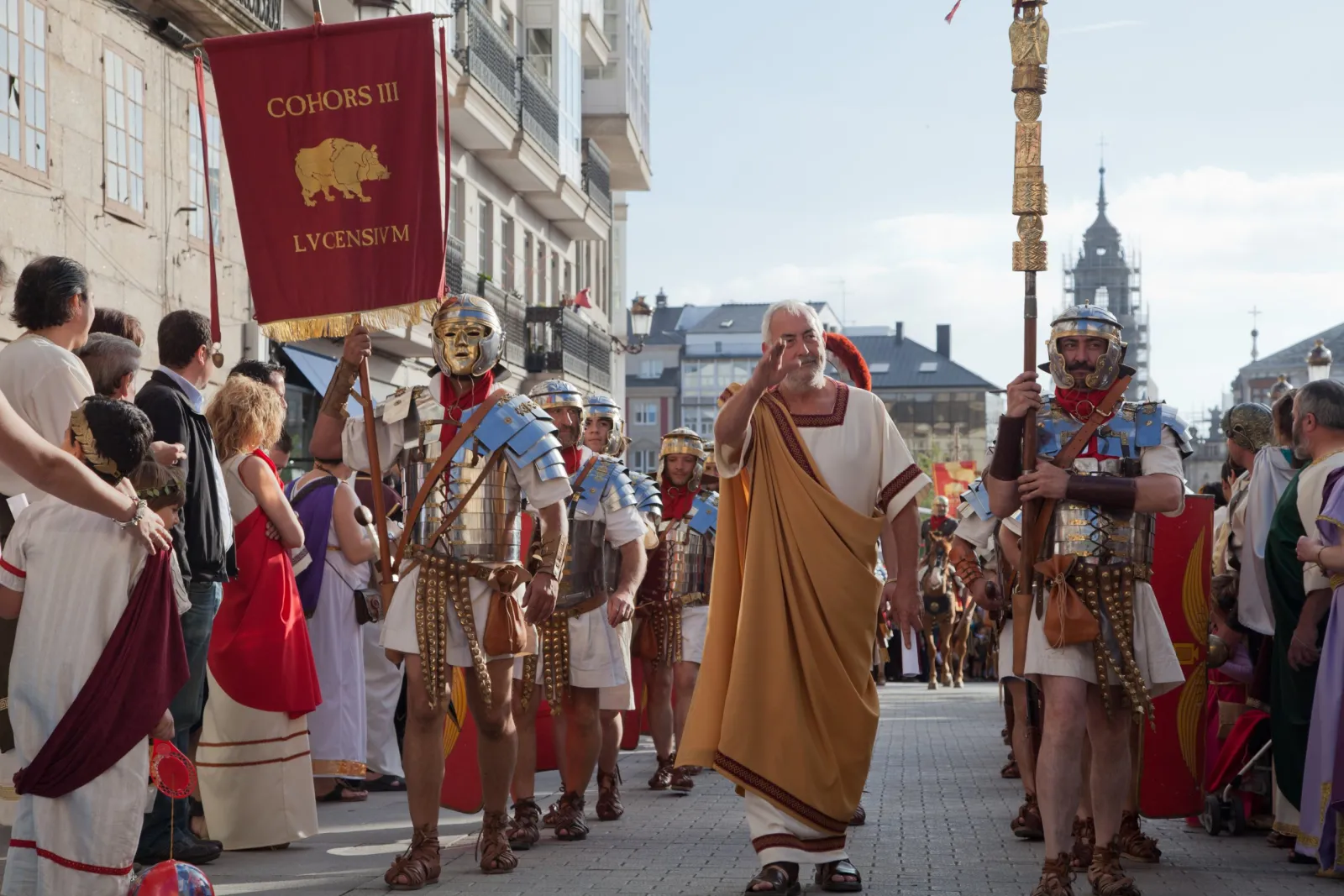
For four days in June, Lugo turns back into Lucus Augusti: Roman legions, Galaic tribes, gladiators and a circus take over the old town inside the only Roman city wall that survives complete.
The days that matter
-
Thu 17 Jun
Arrival of the legions and the fire of Vesta
In 2026 the legions crossed the Roman bridge in the evening and the sacred fire of Vesta was lit in Praza Maior, opening the festival.
-
Fri 18 Jun
Gladiators, Celtic weddings and night shows
A full day of street shows, gladiator fights and Celtic weddings, with fire shows and music after dark.
-
Sat 19 Jun
Circus Maximus and the great parade
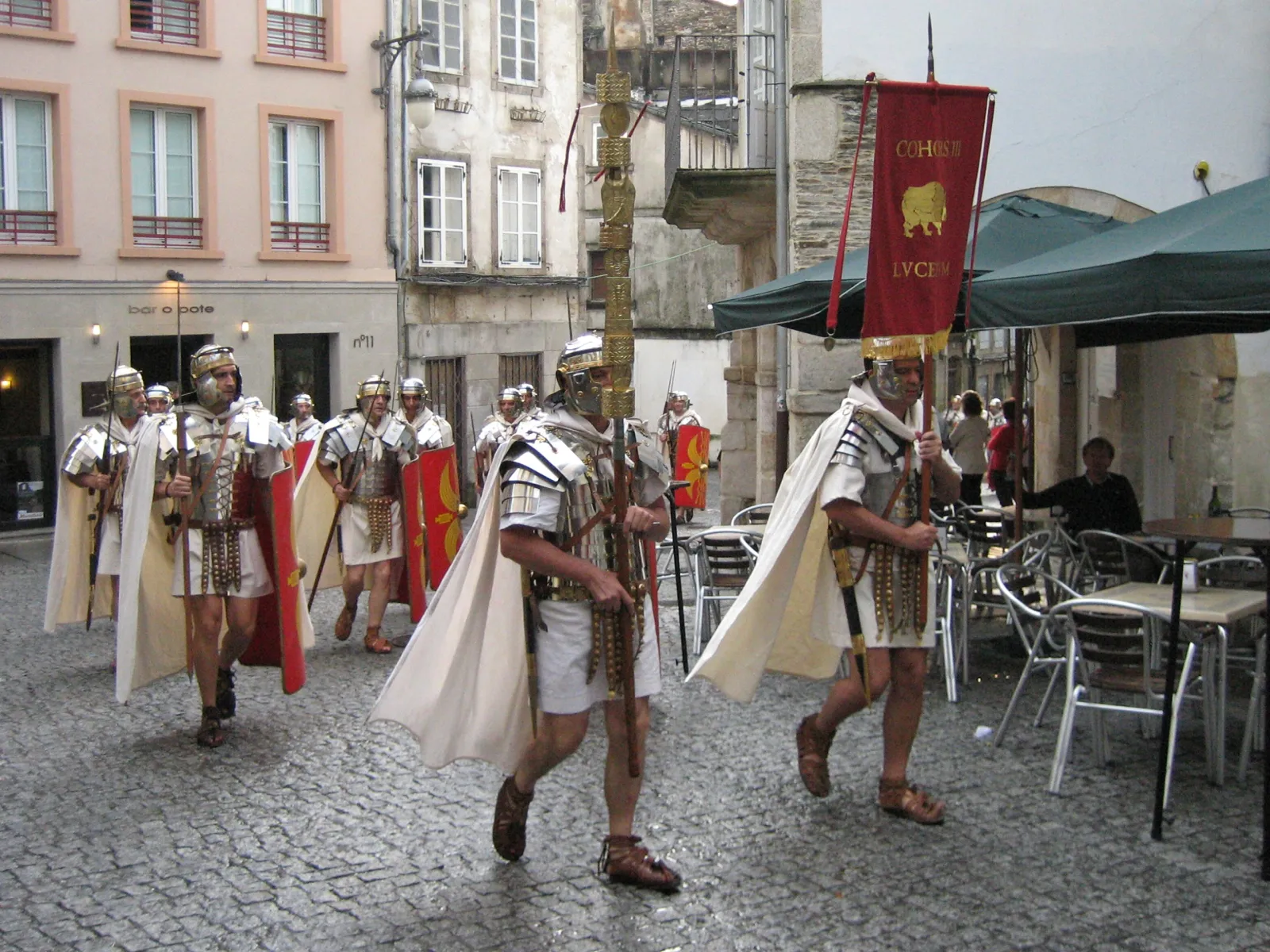
The ticketed Circus Maximus and, in the evening, the parade of Roman troops and castro tribes along the Ronda da Muralla.
-
Sun 20 Jun
Birth of the Galaic-Roman people
Rome and the castro tribes seal their union and the fire of Vesta is put out, closing the festival until next year.
What Arde Lucus is like
- Family
- Free
- Night
- Noise
- Drums, horns and street shows, loudest in the evenings
- Fire
- Vesta's sacred fire, torches and evening fire shows
- Crowds
- The old town is packed, especially for the Saturday parade
- With kids
- Workshops, a schools parade and plenty of costumes to enjoy
Highlights
Confirmed dates: Thursday 17 to Sunday 20 June 2027
The arrival of the Roman legions and the lighting of Vesta's sacred fire on the first evening
The Circus Maximus, with gladiators, riders and fire shows (ticketed)
The parade of Roman troops and castro tribes along the Ronda da Muralla
Celtic weddings, gladiator fights and street theatre in Praza Maior and Praza de Santa María
Fiesta de Interés Turístico Internacional since 2023
Arde Lucus 2027: confirmed dates
The next Arde Lucus runs from Thursday 17 to Sunday 20 June 2027. The date was agreed in September 2026 between Lugo City Council and the associations that stage the festival, and it will again be a four-day edition. The detailed programme is published closer to June on the official Arde Lucus website.
What Arde Lucus is
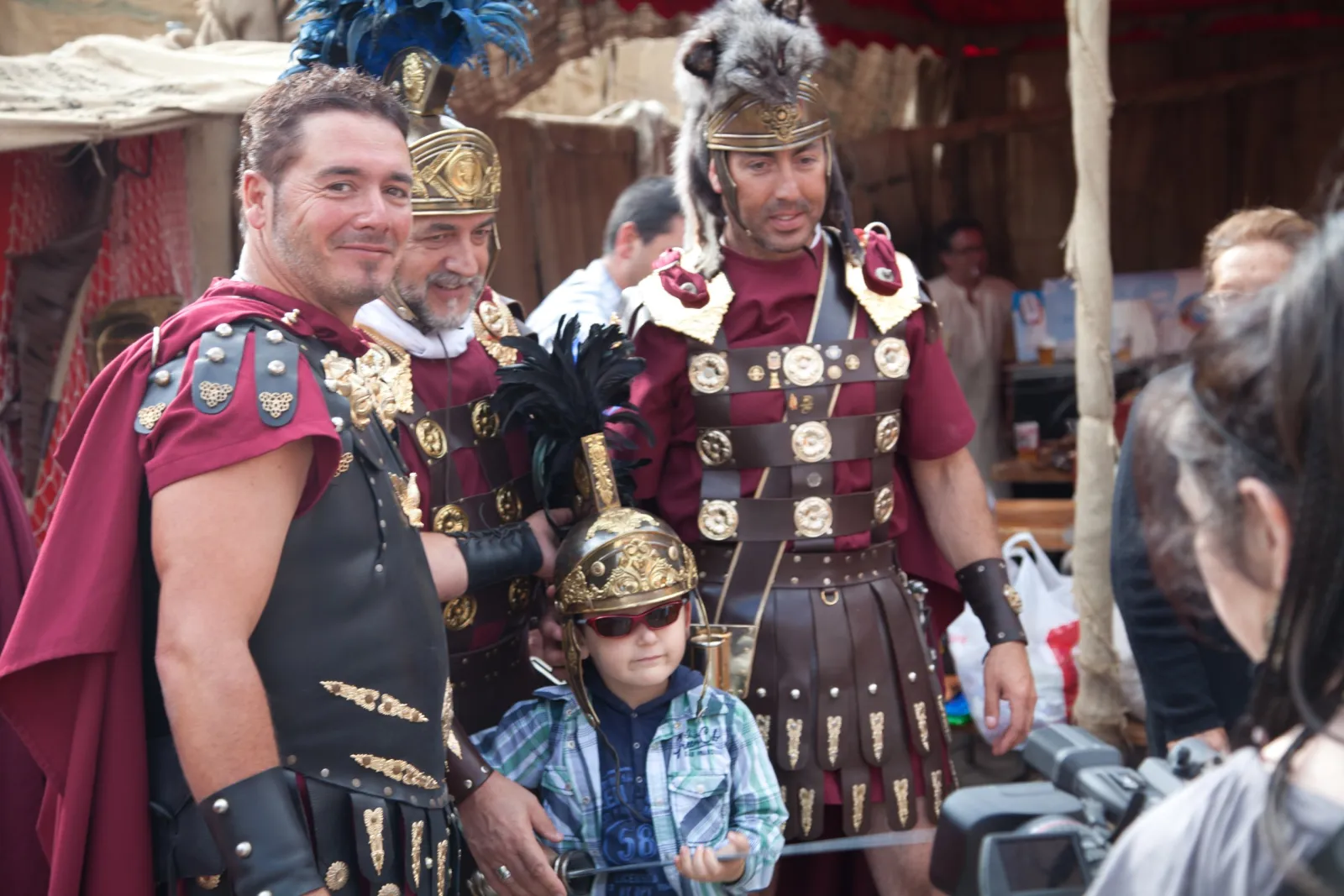
Arde Lucus is Lugo's Roman and Galaic festival. The city goes back to its origins as Lucus Augusti, founded under Augustus in 14 BC, and to the hill-fort (castro) people who lived here before Rome. Re-enactment groups, Roman legions and Galaic tribes fill the historic centre inside the Roman walls, and thousands of locals and visitors dress up in tunics, cloaks and armour.
The setting is the reason it works so well: Lugo's Roman wall, more than two kilometres long with over eighty towers, is the only Roman city wall in the world that survives complete, and it has been a UNESCO World Heritage Site since 2000. The festival began in the early 2000s, after that listing, and in March 2023 Spain's Secretary of State for Tourism granted it the title of Fiesta de Interés Turístico Internacional.
What happens
The programme is built around a few big moments: the arrival of the Roman legions, the lighting of the sacred fire of Vesta, the Circus Maximus with gladiators, riders and fire shows, the great parade of Roman troops and castro tribes around the wall, and the closing ceremony that marks the birth of a shared Galaic-Roman people. Around them run gladiator fights in the squares, street theatre, Senate sessions, Celtic weddings and baptisms, children's workshops, markets and concerts from morning until late at night.
Beyond the big moments
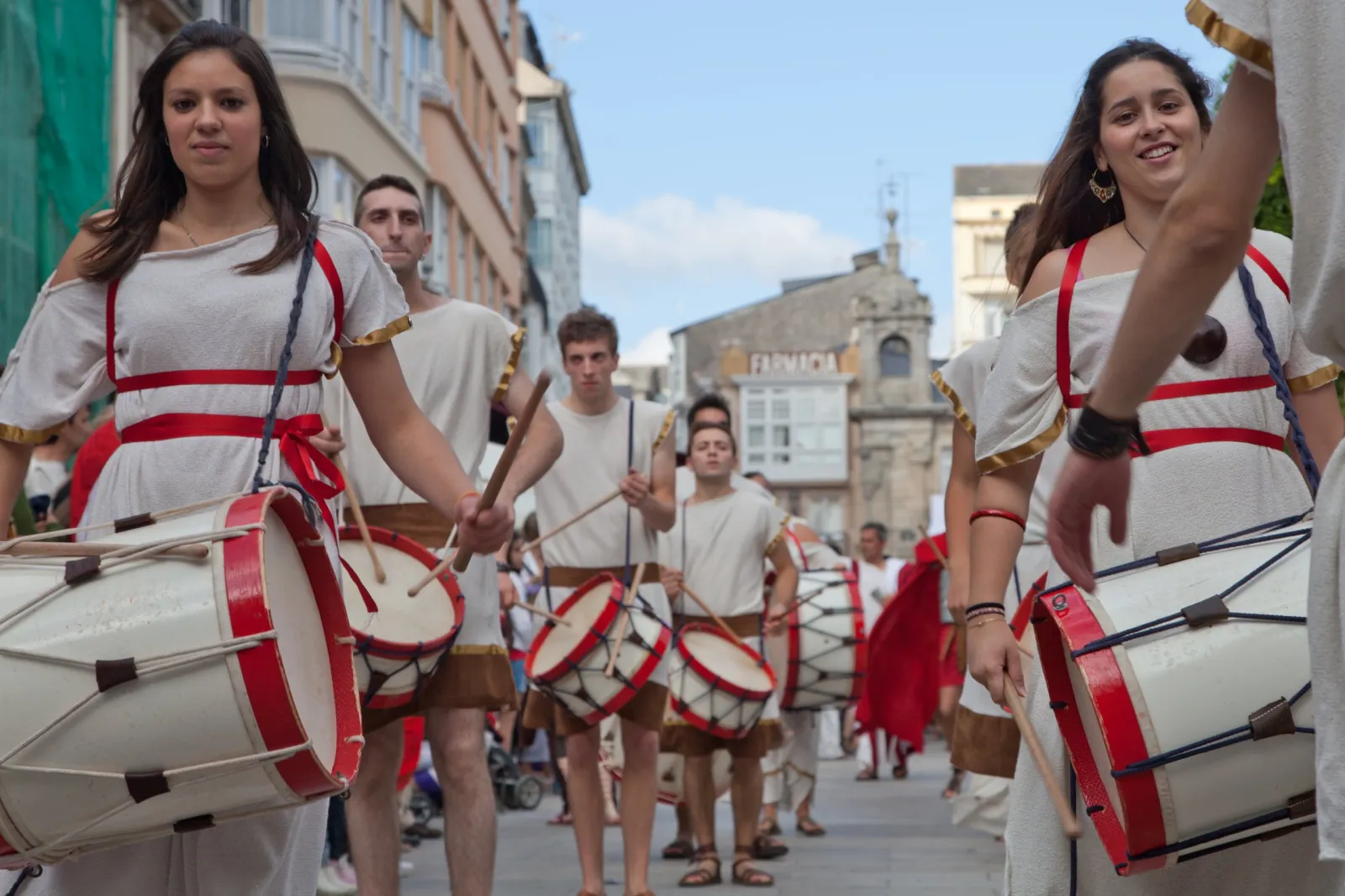
The 2026 programme listed more than 300 activities over the four days, and much of the fun is in the smaller acts. On the Friday afternoon the Tympana Galaica drummers paraded from the Macellum to the Castra, and the Senate met in Praza Maior that night and again at midday on Saturday. Celtic baptisms and weddings were staged in Praza Maior beside the Círculo das Artes every afternoon from Friday to Sunday. On Sunday morning schoolchildren marched in the Scholarvm parade, and a mock slave auction was played out on the steps of the Praza de Abastos market. The festival ended that evening at the Temple of the Vestals, where the sacred fire was put out at 21:30, followed by a concert by Abraham Cupeiro in Praza de Santa María.
Most of it is free and happens in the streets and squares of the old town. The Circus Maximus is the exception: it is staged on the esplanade by the municipal sports hall, and in 2026 it had afternoon and night sessions on Saturday plus a children's session on Sunday, with tickets (6 euros) sold online through the city's ticketing site.
Gallery
History & Origins
Lugo began as a castro settlement on a rise above the Miño. In 14 BC, under Augustus, Paullus Fabius Maximus founded the Roman city of Lucus Augusti here, a military and administrative centre for the far west of the empire. Between the late 3rd and early 4th centuries the city was ringed by the wall that still stands today.
When the wall was declared a UNESCO World Heritage Site in 2000, Lugo looked for a way to celebrate its Roman past, and Arde Lucus was born in the following years. It grew from a local celebration into one of the largest historical re-enactment festivals in Spain, with associations from Galicia, other Spanish regions and abroad. It was declared a Fiesta de Interés Turístico Nacional in 2017 and Internacional in 2023. The 2026 edition was the 25th.
What to Expect
Expect the whole old town to be in costume. Locals dress as Romans or castro dwellers, re-enactment camps and stalls fill the streets, and the squares host one show after another. Praza Maior and Praza de Santa María are the main stages for gladiator fights, Senate sessions and rituals; Parque Rosalía de Castro hosts the Galaic tribes, crafts and children's activities.
Evenings are the liveliest time. In 2026 the first night opened with the legions crossing the Roman bridge and the fire of Vesta being lit in Praza Maior, and there were fire shows and itinerant music late into the night. On the Saturday evening the big parade circles the wall, and a night session of the Circus Maximus followed.
June in Lugo can be hot: the 2026 edition was held in intense heat, so bring water and something for your head if you are in costume all day.
How to Get There
By train: Lugo has a Renfe station a short walk from the walled centre, with connections to A Coruña, Ourense and Madrid.
By air: the nearest airports are Santiago de Compostela and A Coruña; from either, continue by bus, train or hire car.
By car: Lugo sits on the A-6 Madrid–A Coruña motorway. Almost everything happens inside or right around the walls, so leave the car outside the old town and explore on foot.
Tips & Advice
Book early. In 2026 hotel occupancy was around 90% from Thursday to Saturday, so reserve as soon as your dates are fixed.
Dress up. A simple tunic or cloak is enough to blend in, and the organisers encourage period dress, especially for the Circus Maximus.
Buy circus tickets in advance. The Circus Maximus is the one ticketed show; in 2026 tickets went on sale online through the city's ticketing website.
Walk the wall. The walkway on top of the Roman wall is free and gives the best views of the parade route and the camps.
Photos: Álvaro Pérez Vilariño / CC BY-SA 2.0 / Wikimedia Commons; slideshow bob / CC BY-SA 2.0 / Wikimedia Commons
La Arribada (Arrival of the Pinta)
Baiona, GaliciaOn 1 March 1493 the caravel Pinta sailed into Baiona with the first news of Columbus's voyage. Every year the Galician town turns its old quarter into a medieval market and re-enacts the landing on the beach.
San Juan Bonfires in A Coruña
A Coruña, GaliciaOn the night of 23 June, A Coruña's city beaches fill with hundreds of bonfires, grilled sardines and crowds that stay up until dawn. It is the city's biggest night of the year and a Festival of International Tourist Interest.
Festas do Apóstolo
Santiago de Compostela, GaliciaTwo weeks of celebrations honouring St. James, culminating July 25th with the Botafumeiro ceremony, spectacular fireworks, free concerts, and street theatre.
Rapa das Bestas
Sabucedo, GaliciaIn the tiny Galician village of Sabucedo, locals round up wild horses from the mountains and wrestle them with bare hands to trim their manes and tails. This raw, primal 400-year-old tradition is one of Spain's most visceral and unforgettable festivals.