Corpus Christi Fair of Granada
Granada's biggest party of the year: a week of casetas, flamenco and fairground lights in Almanjáyar, wrapped around the Corpus Christi procession and the Tarasca, a dragon-riding figure whose new dress every year is a city-wide secret.
The days that matter
-
Sat 22 May (expected) midday and midnight
Pregón and alumbrao
The opening speech is read at the City Hall at midday; at midnight the fairground gateway in Almanjáyar lights up with thousands of bulbs and fireworks.
-
All week
Carocas in Bib-Rambla
Satirical drawings and verses about the year's news on display in the Plaza de Bib-Rambla.
-
Wed 26 May morning
La Tarasca
The Tarasca rides her dragon through the centre in her new dress, with giants, cabezudos and bands.
-
Thu 27 May morning
Corpus Christi procession
A local holiday: the Custodia leaves the Cathedral and leads the procession through decorated streets in the historic centre.
-
Sat 29 May (expected)
Last night of the fair
The casetas stay open for a final night at Almanjáyar.
What Corpus Christi Fair of Granada is like
- Night
- Food & drink
- Family
- Procession
- Noise
- Music from every caseta until the small hours
- Fire
- Just the fireworks at the opening alumbrao
- Crowds
- Packed fairground at night and busy streets for the Tarasca
- Mess
- Dress up rather than down
- With kids
- Rides, giants and the Tarasca by day; late nights for adults
Highlights
The midnight alumbrao that lights the fairground gateway
The Tarasca and her secret new dress, with giants and cabezudos
The Corpus Christi procession behind the Custodia
Satirical carocas in the Plaza de Bib-Rambla
A week of casetas, sevillanas and fairground nights
Feria del Corpus 2027: when it falls
Granada's biggest fiesta is built around Corpus Christi, the Catholic feast held on a Thursday in late spring, and the fair fills the whole week around it. The pattern is steady: the fair opens on the Saturday before Corpus and runs to the following Saturday. In 2026, with Corpus on 4 June, it ran from Saturday 30 May to Saturday 6 June. Corpus Thursday falls on 27 May 2027, so the fair is expected from Saturday 22 to Saturday 29 May 2027; Spain's official tourism portal also lists the 2027 Corpus for the week starting 22 May. Granada City Council publishes the full programme in spring, so check the timetable before you book.
Opening day: pregón and alumbrao
The first Saturday sets the tone. At midday the pregón, the opening speech, is read in the courtyard of the City Hall; in 2026 it was given by the Granada journalist Mónica Martínez Leyva. At midnight comes the alumbrao: the great gateway of the fairground in the Almanjáyar district, in the north of the city, lights up with thousands of coloured bulbs and fireworks. The same weekend the carocas go up in the Plaza de Bib-Rambla: large satirical drawings with witty verses about the year's local and national news, which stay on show all week.
The fairground
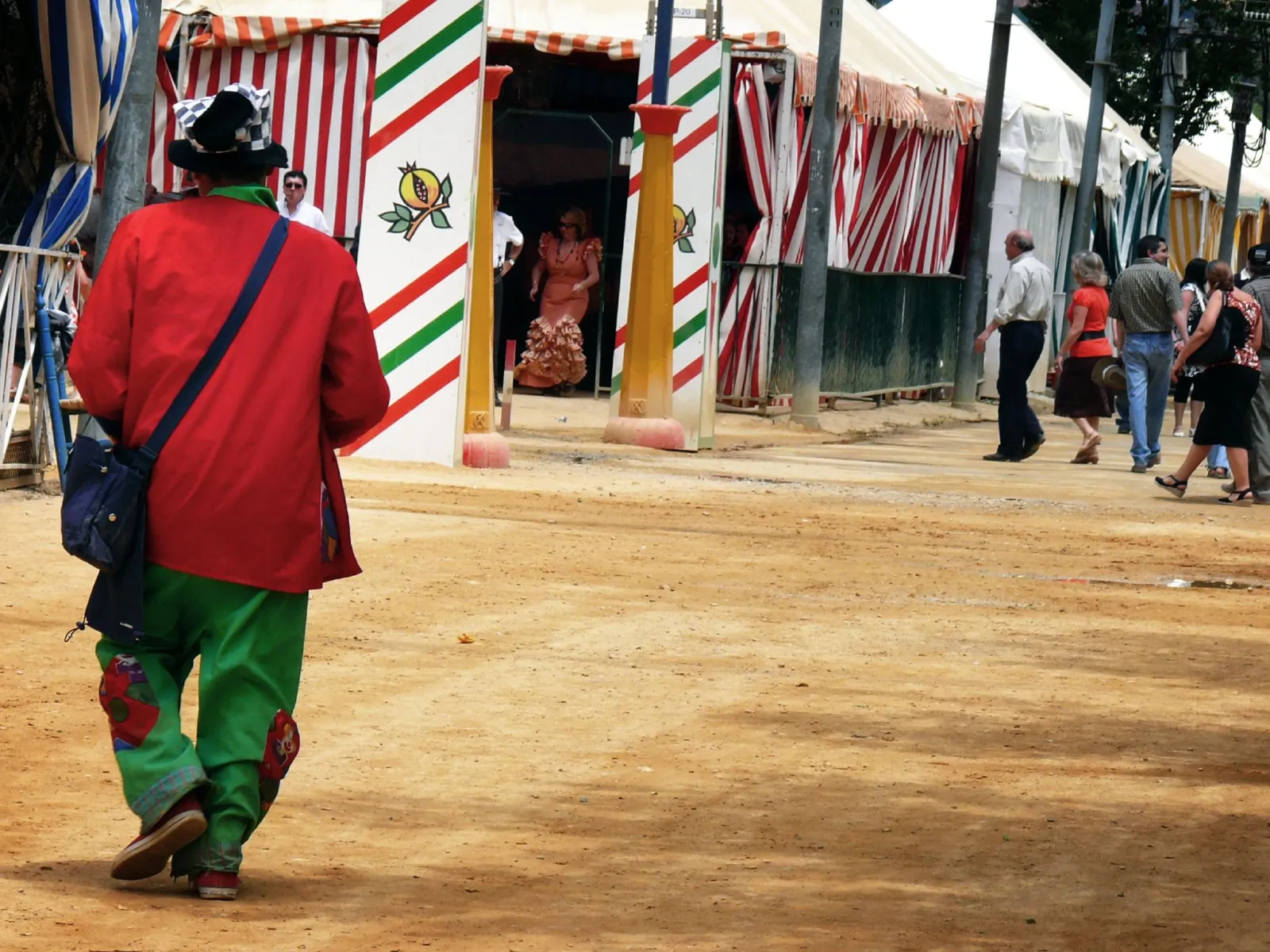
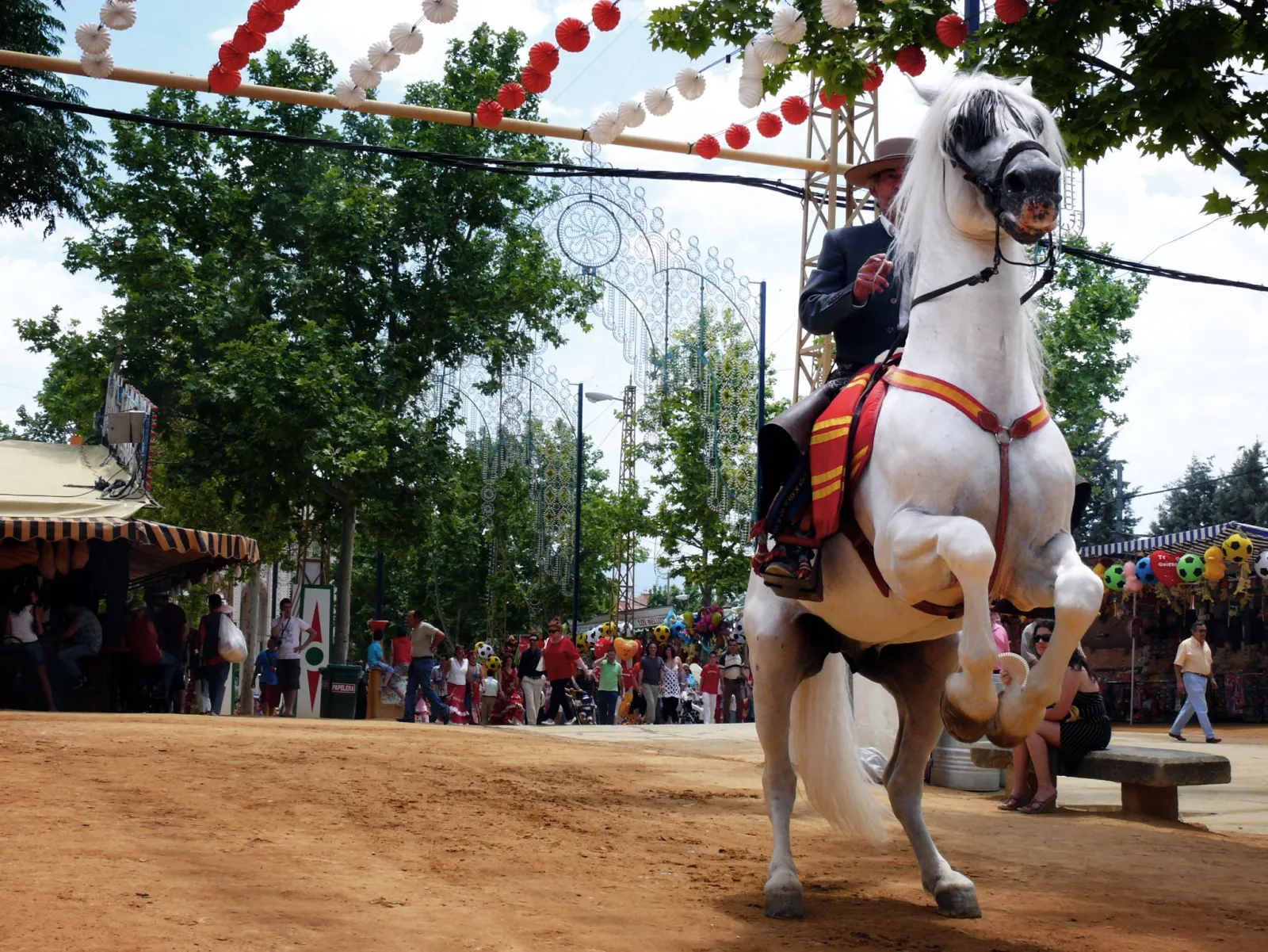
From then on, evenings belong to the real de la feria, laid out like a temporary village of streets and striped marquees. In 2026 there were 72 casetas: 7 institutional ones run by public bodies and 3 commercial ones, all open to anyone, plus 62 traditional casetas run by clubs and associations, some open to all and some by invitation. Inside people share tapas, jamón, fried fish and local wine, and dance sevillanas until late, while the rides and churro stalls keep the rest of the fairground busy. The fair has been held at Almanjáyar since 1982; before that it stood on the Paseo del Salón, in the centre.
The Tarasca and the Corpus procession
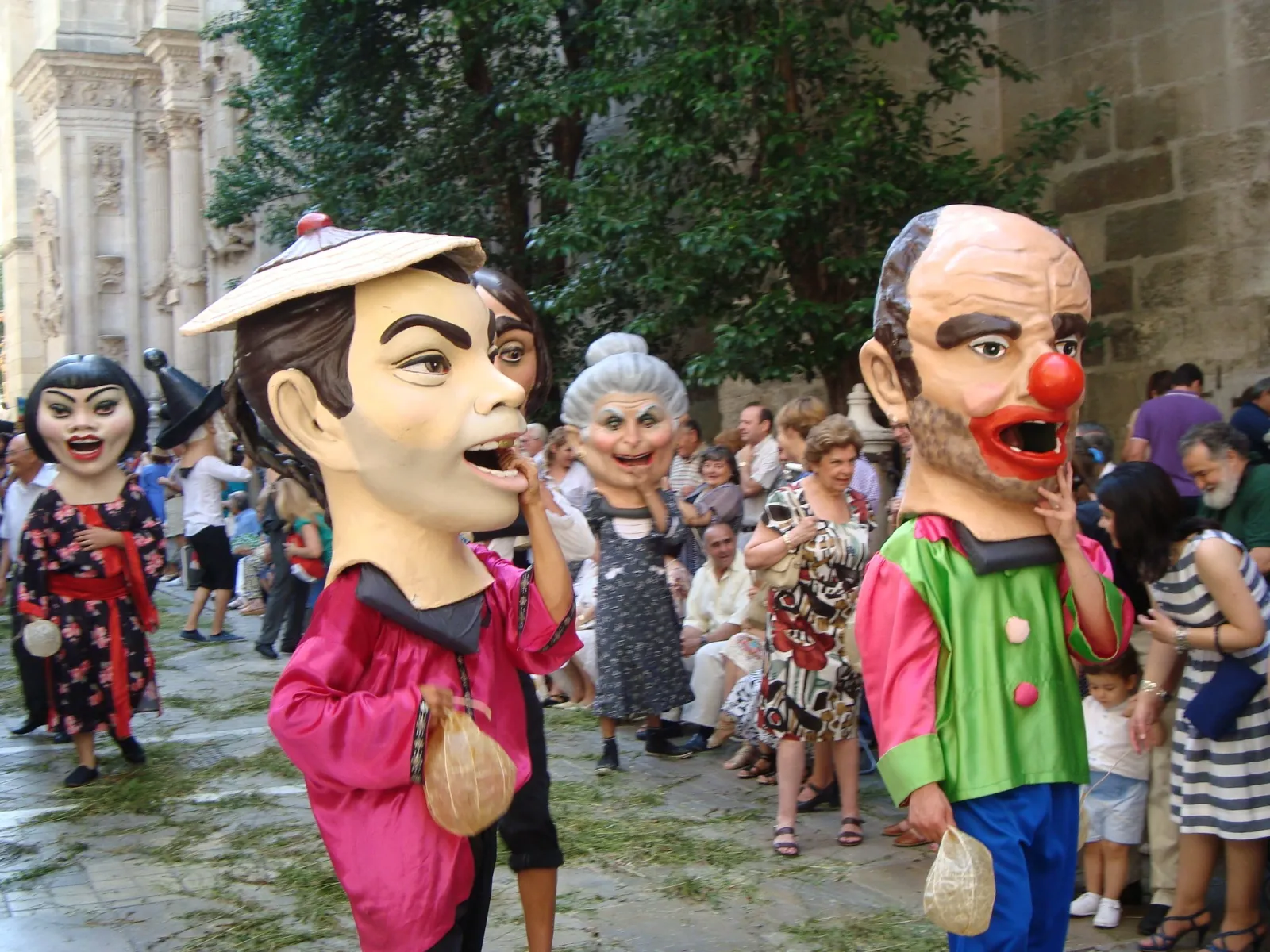
In the city centre the week has two great moments. On Wednesday the Tarasca parades through the streets: a female figure riding a green dragon, escorted by giants of the Catholic Monarchs and of the last Nasrid rulers, Boabdil and Morayma, by big-headed cabezudos, bands and charangas. Her dress changes every year and is kept secret until she sets off, and Granada likes to say she sets the next season's fashion. Afterwards she stays on display at the City Hall for the rest of the week.
On Thursday, a local holiday, the Corpus Christi procession leaves the Cathedral in the morning behind the Custodia, the monstrance whose oldest part, a late-15th-century silver-gilt piece, was a gift from Queen Isabella. Clergy, civic authorities, brotherhoods and children dressed for the occasion walk through streets decorated with plants and awnings. The bullfighting fair runs the same week at the bullring, and in 2026 it also hosted a charity parade of horse-drawn carriages on the first Sunday.
Gallery
History & Origins
Corpus Christi has been celebrated in Granada since the 16th century. After the Catholic Monarchs took the city in 1492, the feast became a showcase for the new Christian order, and from the start it mixed the solemn procession with popular entertainment. In the 17th and 18th centuries the Plaza de Bib-Rambla was its main stage: façades were hung with tapestries and mirrors, triumphal arches stood at the street entrances, and a monumental altar received the procession, while giants, cabezudos, dancers and little devils filled the streets.
The Tarasca was part of those festivities until the late 18th century, when Charles III banned such parades to protect the solemnity of religious ceremonies. She returned in 1883, promoted by local merchants who wanted to boost trade. They commissioned the sculptor Francisco Morales González to make a two-metre figure with a movable arm, riding a dragon; the dragon's head, neck and wings are still the originals. A Granada saying, "vas vestida peor que la Tarasca" (you're dressed worse than the Tarasca), shows how closely the city follows her wardrobe. The fair itself left the Paseo del Salón for the Almanjáyar fairground in 1982.
What to Expect
The fair has two faces. By day the action is in the city centre: the carocas in Bib-Rambla, the Tarasca on Wednesday morning and the procession on Thursday morning, when the best spots along the route fill up early. From the afternoon until the small hours, life moves to the fairground in Almanjáyar, where many locals wear flamenco dress and groups drift from caseta to caseta.
Not every caseta is open to the public, but the institutional and commercial ones always are, and many traditional ones let anyone in; if in doubt, ask at the entrance. Expect music, sevillanas, shared plates of tapas and long, loud nights, with rides and churros for families earlier in the evening. Corpus Thursday is a local holiday, so the centre is busy and many shops close.
How to Get There
To Granada: Granada station has high-speed trains from Madrid and services from other Andalusian cities. Federico García Lorca Granada-Jaén airport is outside the city, with buses into the centre.
To the fairground: the Almanjáyar fairground is in the north of the city, close to an hour's walk from the centre. During the fair the city runs special urban bus lines to the fairground (F1–F6 in 2026, at €2 a trip), and the metro also serves the area. Taxi ranks are set up nearby; parking exists, but traffic builds up badly at night.
Tips & Advice
- Confirm the 2027 dates and the Tarasca's timetable in the official programme on granada.org.
- Get to the Tarasca's route early on Wednesday: everyone wants to see the dress.
- Use the special fair buses or the metro rather than driving to Almanjáyar.
- Book early: Granada is busy in late spring, and rooms across Andalusia fill for fair weeks.
- Combine the fair with the Alhambra, but book Alhambra tickets well in advance.
Photos: Ilibirretano / CC BY-SA 3.0 / Wikimedia Commons; Arkangel / CC BY-SA 2.0 / Wikimedia Commons
Cruces de Mayo de Granada
Granada, AndalusiaOn May 3rd, Granada's plazas and streets fill with giant crosses lavishly decorated with flowers, surrounded by makeshift bars, flamenco music, and the aroma of free tapas. Neighbourhoods compete for the most beautiful cross in one of Andalusia's most joyful spring celebrations.
Feria de Córdoba
Córdoba, AndalusiaThe Feria de Córdoba, held in late May at the El Arenal fairground, is a more intimate and accessible alternative to Seville's Feria de Abril. Open casetas, horse parades, and flamenco make it a quintessential Andalusian experience without the overwhelming crowds.
Cruces de Mayo in Córdoba
Córdoba, AndalusiaFor five days at the turn of April and May, Córdoba's brotherhoods and neighbourhood groups cover crosses in carnations, dress the squares with potted flowers and open a bar beside each one. The Cruces de Mayo run from 28 April to 2 May 2027, between the Batalla de las Flores and the Patios festival.
Feria de Abril
Seville, AndalusiaThe Feria de Abril (April Fair) of Seville is one of the most joyful and glamorous festivals in Spain — a six-day explosion of flamenco, fine horses, manzanilla sherry, and sevillana dancing that transforms the city's fairgrounds into the most colourful party in Andalusia.