Carthaginians and Romans Festival
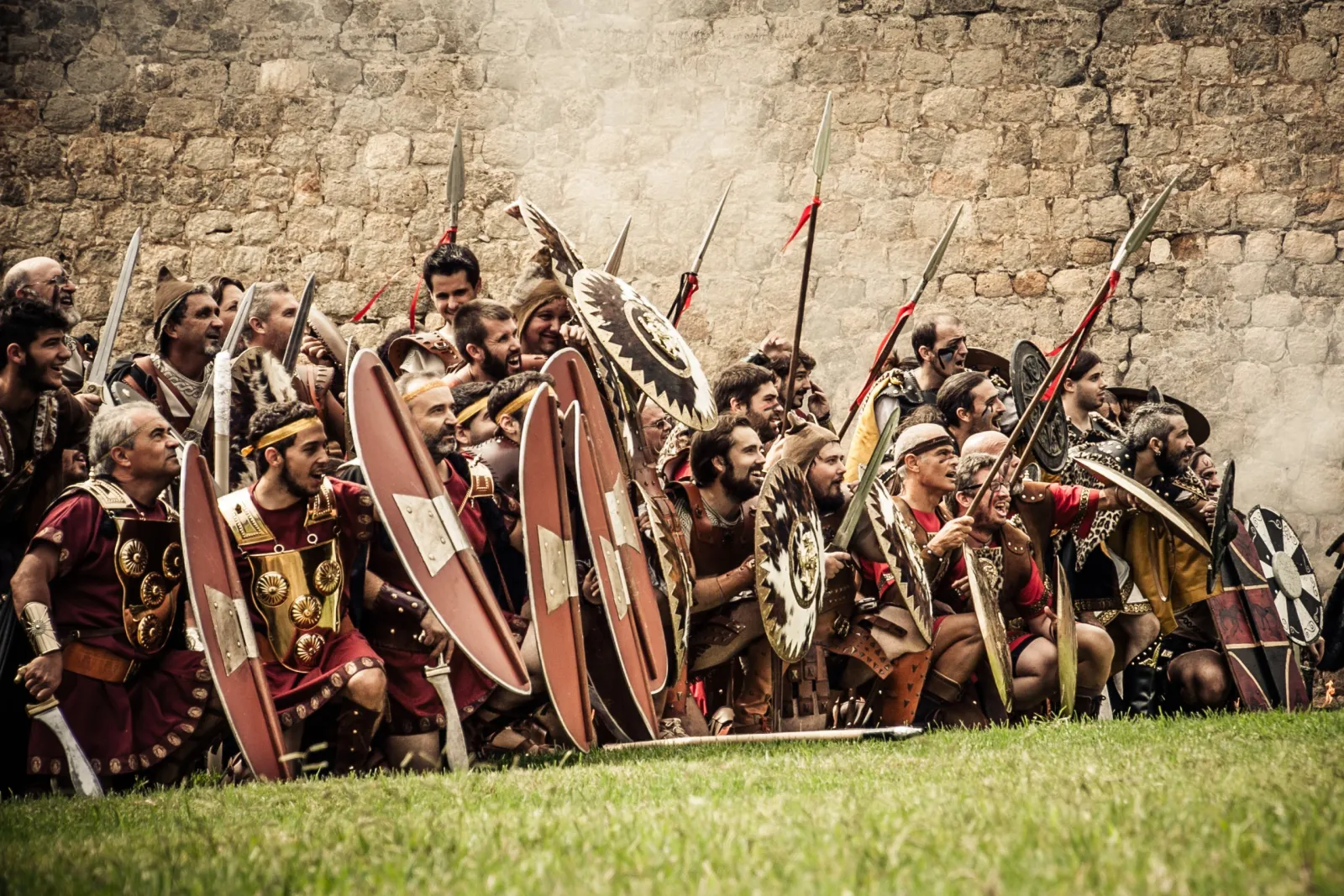
Ten days in which thousands of Cartagena residents become Carthaginian troops and Roman legions to replay the city's history from its founding as Qart Hadasht to Scipio's conquest in 209 BC.
The days that matter
-
First Friday
Sacred fire and pregón
Priestesses and vestals call on the Punic and Roman gods, the sacred fire is lit and the pregón officially opens the fiesta, followed by the march to the camp.
-
First Saturday
Founding of Qart Hadasht
The story of the Barca family and the founding of the city in 227 BC, with a children's act earlier that evening.
-
First Monday 21:00 in 2026
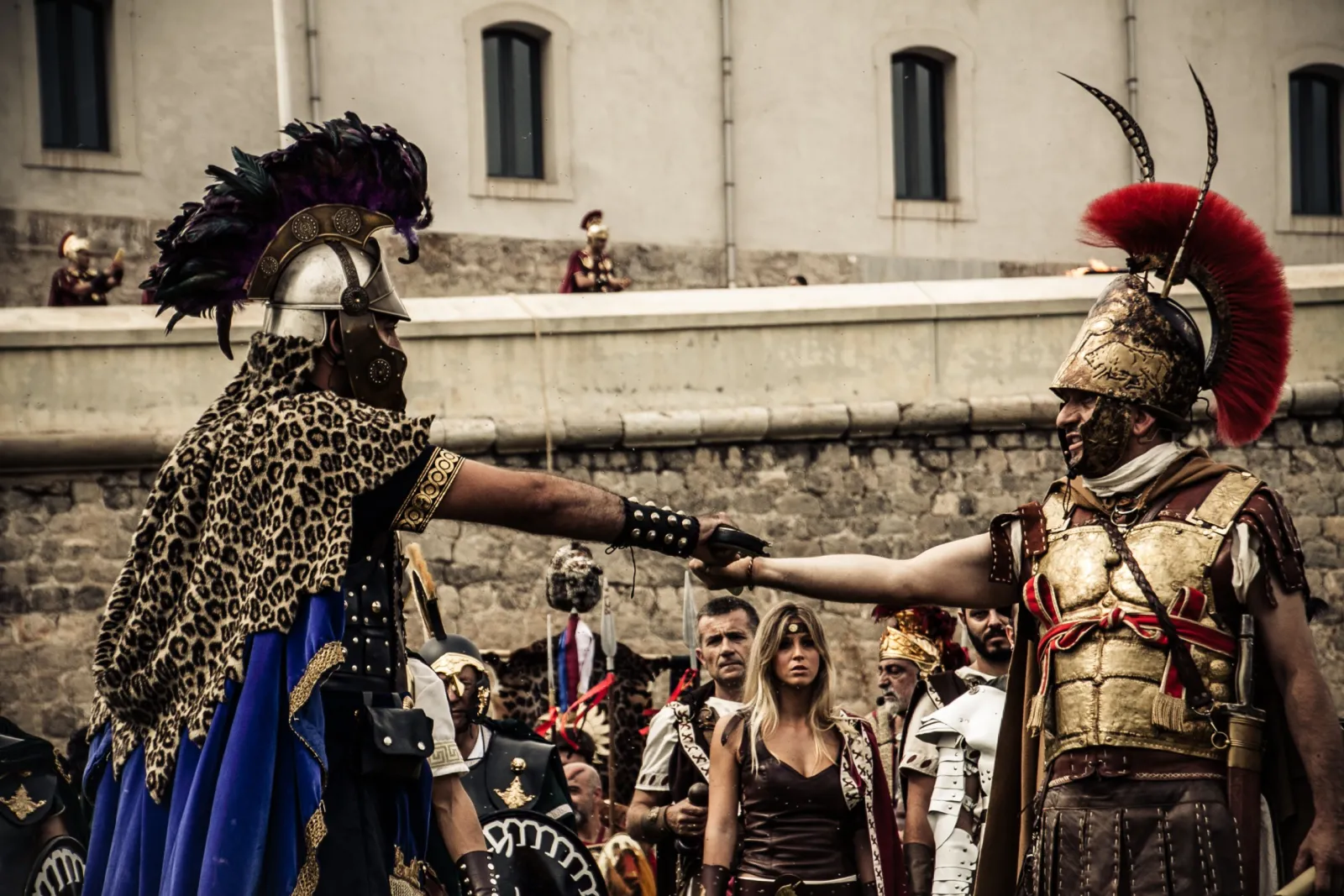
Wedding of Hannibal and Himilce
All the Carthaginian troops attend Hannibal's marriage to the Iberian princess, sealing his alliance with the Iberian peoples.
-
Midweek (Wednesday in 2026)
Roman circus
Gladiators, horses and fire in a ticketed show, in the Estadio Cartagonova in 2026. It is not held every year, so check the programme.
-
Midweek
Carthaginian landing and Hannibal's march
The Carthaginian fleet lands in the port, mercenaries are hired and the troops march through the city towards the camp, as Hannibal sets off for Rome.
-
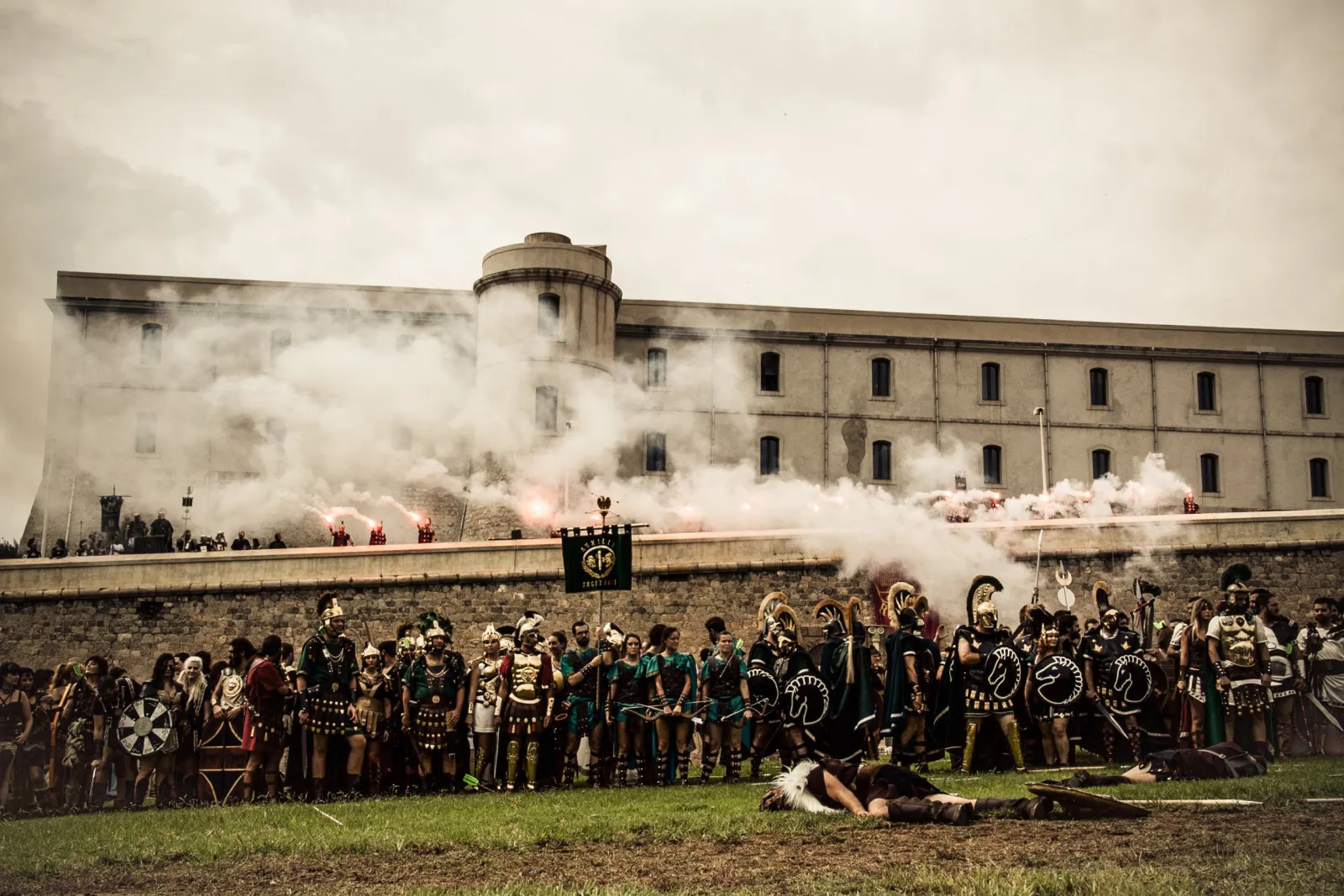
Second Friday battle 18:30 in 2026
Great Battle for Qart Hadasht
Rowing regatta in the port, the Roman landing, the ticketed battle at the Cuesta del Batel and the Roman victory act.
-
Second Saturday parade 18:30 in 2026
Homage and general parade
Homage at the Torre Ciega at midday, then the parade of every troop and legion.
-
Second Sunday
Farewell
The sacred fire goes out and fireworks close the fiesta.
What Carthaginians and Romans Festival is like
- Night
- Family
- Loud
- Noise
- Drums, parades and late nights at the camp
- Fire
- Sacred fire, fire acts at the circus and closing fireworks
- Crowds
- Packed at the battle and the general parade
- Mess
- You stay clean
- With kids
- Children's acts and big spectacles; the camp gets busy late
Highlights
The Great Battle for Qart Hadasht at the Cuesta del Batel, with catapults, rams, cavalry and the whole festival army
The wedding of Hannibal and Himilce, one of the most spectacular acts
The landings of the Carthaginian and Roman fleets in the port
The general parade, the only day when every troop and legion marches together
The Roman circus with gladiators, horses and fire, a ticketed midweek show when it is held, and the closing fireworks on the last Sunday
Carthaginians and Romans 2027: dates
The Fiestas de Carthagineses y Romanos fill Cartagena for ten days in the second half of September, from a Friday to the Sunday of the following week. In 2025 they ran from 19 to 28 September and in 2026 from 18 to 27 September. The 2027 dates had not been announced at the time of writing; on the usual pattern they would fall on Friday 17 to Sunday 26 September 2027. Check the programme published by the Federación de Tropas y Legiones before you travel.
A city that plays its own history
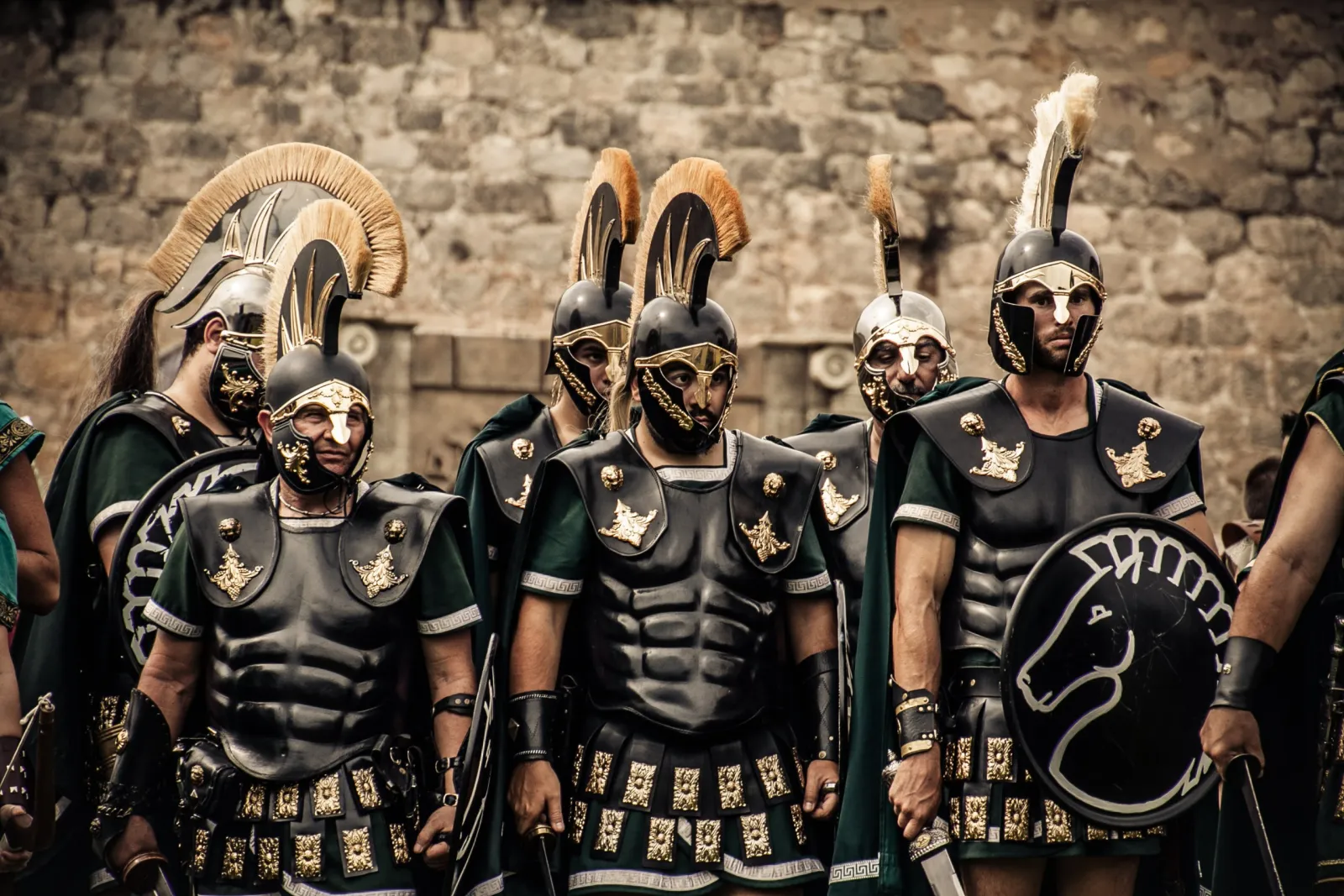
Few Spanish cities have a past as dramatic as Cartagena's. Around 227 BC the Carthaginian general Hasdrubal founded Qart Hadasht here, the base from which the Barca family ruled their Iberian territories and from which Hannibal set out for Italy. In 209 BC the Roman general Publius Cornelius Scipio took the city, which became Carthago Nova. Since 1990, more than four thousand cartageneros have relived those years every September, grouped into Carthaginian troops and Roman legions, with costumes, weapons and war machines built over the year.
What you will see
Each day of the fiesta tells a chapter: the lighting of the sacred fire and the pregón, the founding of Qart Hadasht, the wedding of Hannibal and the Iberian princess Himilce, oracles and senate sessions, the landing of the Carthaginian fleet and Hannibal's march, and finally the Roman landing and the Great Battle for Qart Hadasht at the Cuesta del Batel, followed by the Roman victory march and the general parade. The Roman circus, when it is held, has recently been a ticketed midweek show. At night everyone heads to the festival camp, where the troops and legions run bars, a craft market and more than a hundred free activities. The fiesta was declared a Fiesta de Interés Turístico Internacional in 2017.
Gallery
History & Origins
The fiesta stages real episodes from the Second Punic War. Qart Hadasht ("new city") was founded around 227 BC by Hasdrubal, Hamilcar Barca's son-in-law, and became the Carthaginian capital in Iberia. Hannibal took command of the Carthaginian forces there, married the Iberian princess Himilce from Castulo, near present-day Linares, and in 218 BC led his army across the Pyrenees and the Alps towards Rome. In 209 BC Scipio stormed the city by land and sea. According to the Roman sources, he awarded two mural crowns, to the legionary Quintus Trebellius and the marine Sextus Digitius, who both claimed to have been first over the walls; a mural crown still tops Cartagena's coat of arms.
The modern fiesta began in 1990 and is organised by the Federación de Tropas y Legiones. In 2017 Spain's Secretary of State for Tourism declared it a Fiesta de Interés Turístico Internacional.
What to Expect
Every day has at least one major act, often in the evening, staged in landmark spots around the city such as the port, the Cuesta del Batel, the Roman tomb of the Torre Ciega and the streets of the old town. Parades are long and loud, with drums, music, floats and war machines. The battle on the second Friday is the emblematic act and needs a ticket bought in advance, so buy early.
After dark the action moves to the festival camp, where the Carthaginian and Roman "streets" fill with bars, food stalls, a craft market, shows and games until late; the local tourist bus changes its route during the fiesta to take visitors there. Daytime events include children's games and smaller acts organised by each troop and legion.
How to Get There
Cartagena is on the coast of the Region of Murcia, about 50 km south of Murcia city. Trains run to Cartagena station from Murcia, with connections to Madrid and other cities. The nearest airport is Región de Murcia International at Corvera; Alicante airport is a longer drive but has more flights. By road, the AP-7 and the A-30 link Cartagena with Alicante and Murcia.
The main acts take place in and around the compact historic centre, which is easy to walk; use the tourist bus or a taxi to reach the festival camp at night.
Tips & Advice
- Download the official programme from cartaginesesyromanos.es: venues and times change from year to year.
- If you only have a weekend, come for the second one: the battle and victory march fall on the Friday, the general parade on the Saturday and the closing fireworks on the Sunday.
- Buy tickets early for the battle and the Roman circus.
- All official acts are usually streamed live on the fiesta's YouTube channel, handy for checking the format before you go.
- Book accommodation early for the battle weekend.
- Late September is still warm in Cartagena: bring sun protection and water for daytime acts.
Photos: Emilio Rubio Villanueva / CC BY-SA 4.0 / Wikimedia Commons
Entierro de la Sardina de Murcia
Murcia, MurciaMurcia's Entierro de la Sardina is one of Spain's most unique spring festivals. A surreal parade where thousands of toys are thrown from floats, giant sardine effigies are burned, and fireworks light up the night. Declared a Fiesta of International Tourist Interest.
Bando de la Huerta
Murcia, MurciaOn the Tuesday after Easter the whole of Murcia dresses as market gardeners for the Bando de la Huerta, the big day of the city's Spring Festival, with a flower offering, food stalls and a parade that throws snacks to the crowd.
Wine Horses of Caravaca (Fiestas de la Vera Cruz)
Caravaca de la Cruz, MurciaFrom 1 to 5 May, Caravaca de la Cruz honours its True Cross with Moors and Christians and the UNESCO-listed Wine Horses: some 60 horses in embroidered silk and gold, each racing up the castle slope with four runners clinging on.
Holy Week in Cartagena
Cartagena, MurciaTen days of processions famous for their discipline: penitents marching in step to the drum, thrones blazing with flowers and light, and the old rivalry between Californios and Marrajos.