Semana Santa de Lorca (Biblical Parades)
Pharaohs, Roman emperors and horsemen of the Apocalypse charge down a sand-covered avenue as Lorca's Blue and White brotherhoods compete to stage the most spectacular Holy Week in Spain.
The days that matter
-
Thu 18 Mar midnight
Serenade to the Virgen de los Dolores
Thousands of Blues gather at San Francisco to greet their Virgin as her feast day begins.
-
Fri 19 Mar afternoon
Friday of Sorrows parade
The first biblical parade, led by the Paso Azul, with the Virgen de los Dolores under her embroidered canopy.
-
Sat 20 Mar night
Procesión de la Curia
An austere procession of the Paso Negro through the old streets around San Patricio.
-
Sun 21 Mar afternoon
Palm Sunday parade
Thousands of Whites dressed as the Hebrew People celebrate Jesus' entry into Jerusalem with palms and sweets.
-
Thu 25 Mar evening
Maundy Thursday parade and Silencio
Horses, chariots and floats fill the avenue; afterwards the Paso Encarnado's Silencio procession leaves San Cristóbal.
-
Fri 26 Mar morning
Via Crucis to the Calvario
The Paso Morado's Way of the Cross, prayed by the "rezaores".
-
Fri 26 Mar evening
Good Friday parade
The biggest parade of the week, closed by the Paso Blanco's Virgen de la Amargura.
-
Sun 28 Mar morning
Resurrection procession
The risen Christ leaves the Colegiata de San Patricio through the historic centre.
What Semana Santa de Lorca (Biblical Parades) is like
- Procession
- Loud
- Family
- Night
- Noise
- Bands, hymns, hooves and cheering from the stands
- Crowds
- Stands full for Thursday and Good Friday; buy seats early
- With kids
- Horses, chariots and sweets on Palm Sunday make it a hit with children
Highlights
19–28 March 2027, with four big biblical parades
Horses, chariots and giant floats on a sand-covered avenue
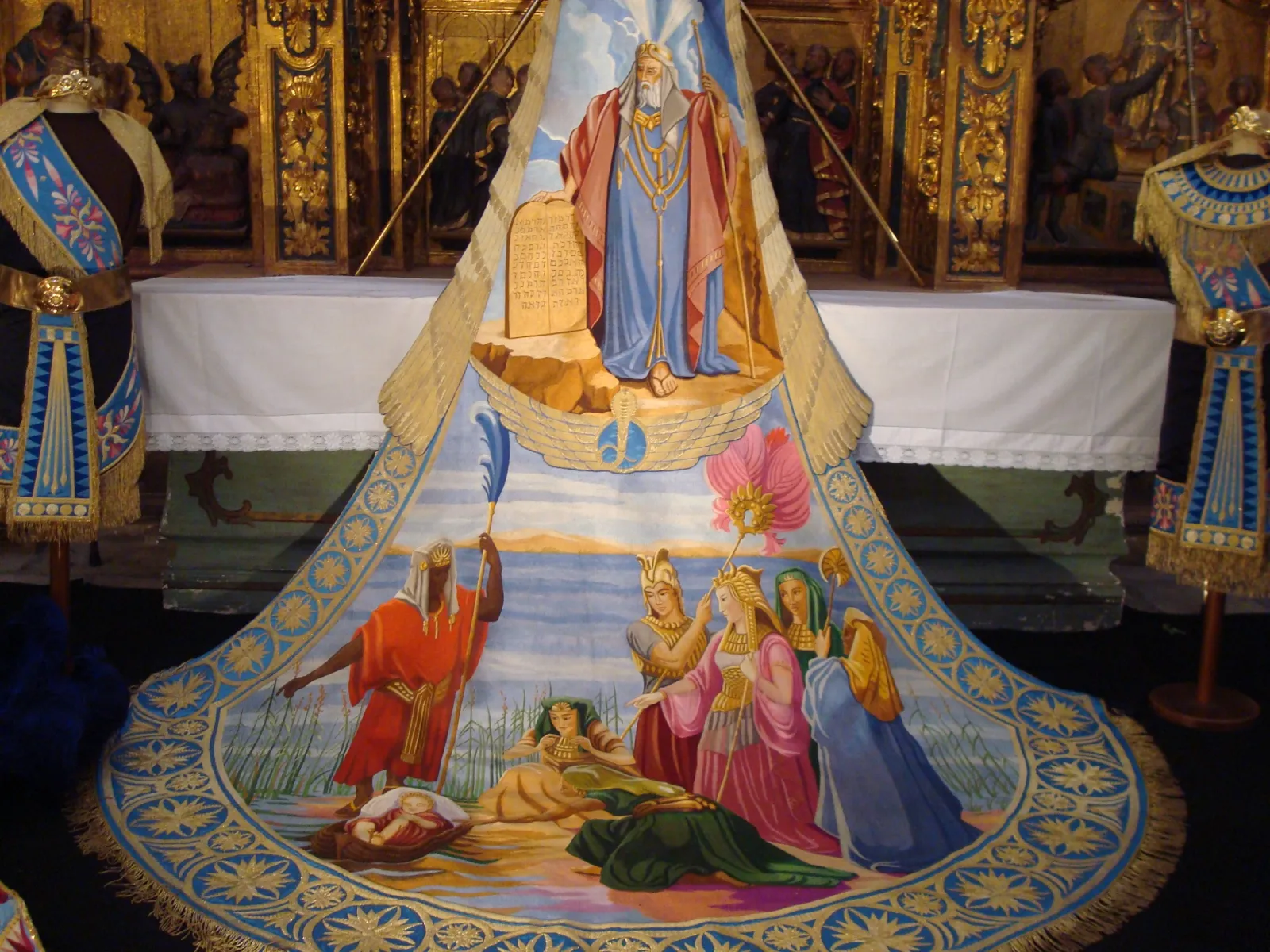
Capes and mantles embroidered in silk and gold, some protected as cultural heritage
The Blue versus White rivalry, with flags, handkerchiefs and hymns
Embroidery museums of the Paso Blanco (MUBBLA) and Paso Azul (MASS)
Holy Week 2027 in Lorca: dates
Lorca's Holy Week, a Fiesta of International Tourist Interest since 2007, runs from the Friday of Sorrows to Easter Sunday: in 2027, Friday 19 to Sunday 28 March. Its four great Desfiles Bíblico-Pasionales (biblical-passion parades) are on the Friday of Sorrows (19 March), Palm Sunday (21 March), Maundy Thursday (25 March) and Good Friday (26 March).
Not a typical Holy Week
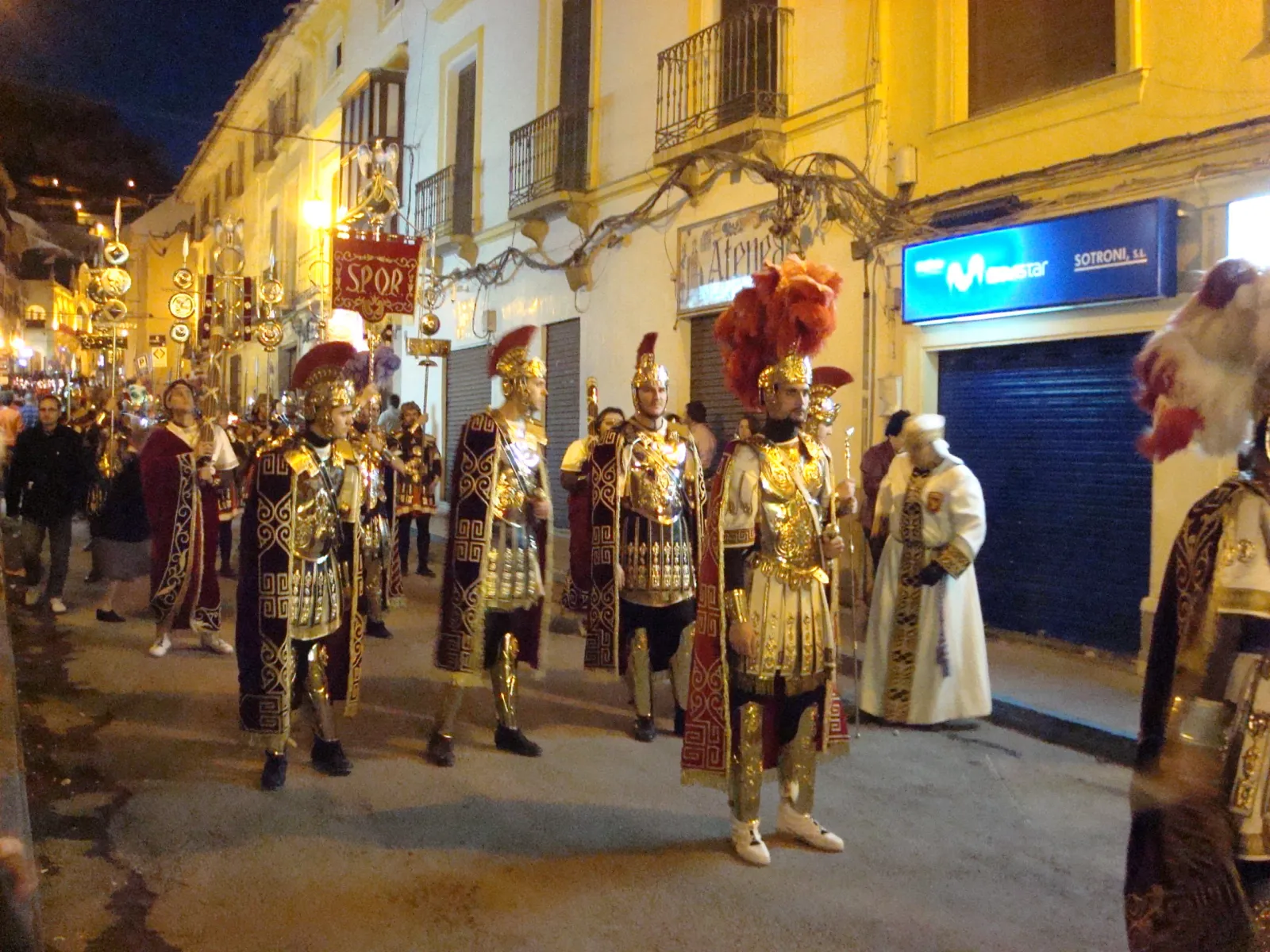
Alongside traditional religious processions, Lorca stages something found nowhere else in Spain: parades that mix the Passion with scenes from the Old Testament and the history of Christianity, performed with horses, chariots and huge floats. Characters from Egypt, Babylon, Persia and Rome ride in bigas and quadrigas or on horseback, dressed in capes and mantles hand-embroidered in silk and gold. Some of these textiles were the first in Spain to be declared Bienes de Interés Cultural (protected heritage).
The four big parades run along the Avenida Juan Carlos I. In the days before Holy Week the asphalt is covered with a layer of earth so the horses can gallop safely, grandstands are built along both sides of the roughly 600-metre route and floodlights are installed. Watching from the stands requires a ticket; in 2026 seats for the Maundy Thursday and Good Friday parades were sold online from €13 through vivelapasion.org, a platform run by the Paso Azul.
Four parades, four moods
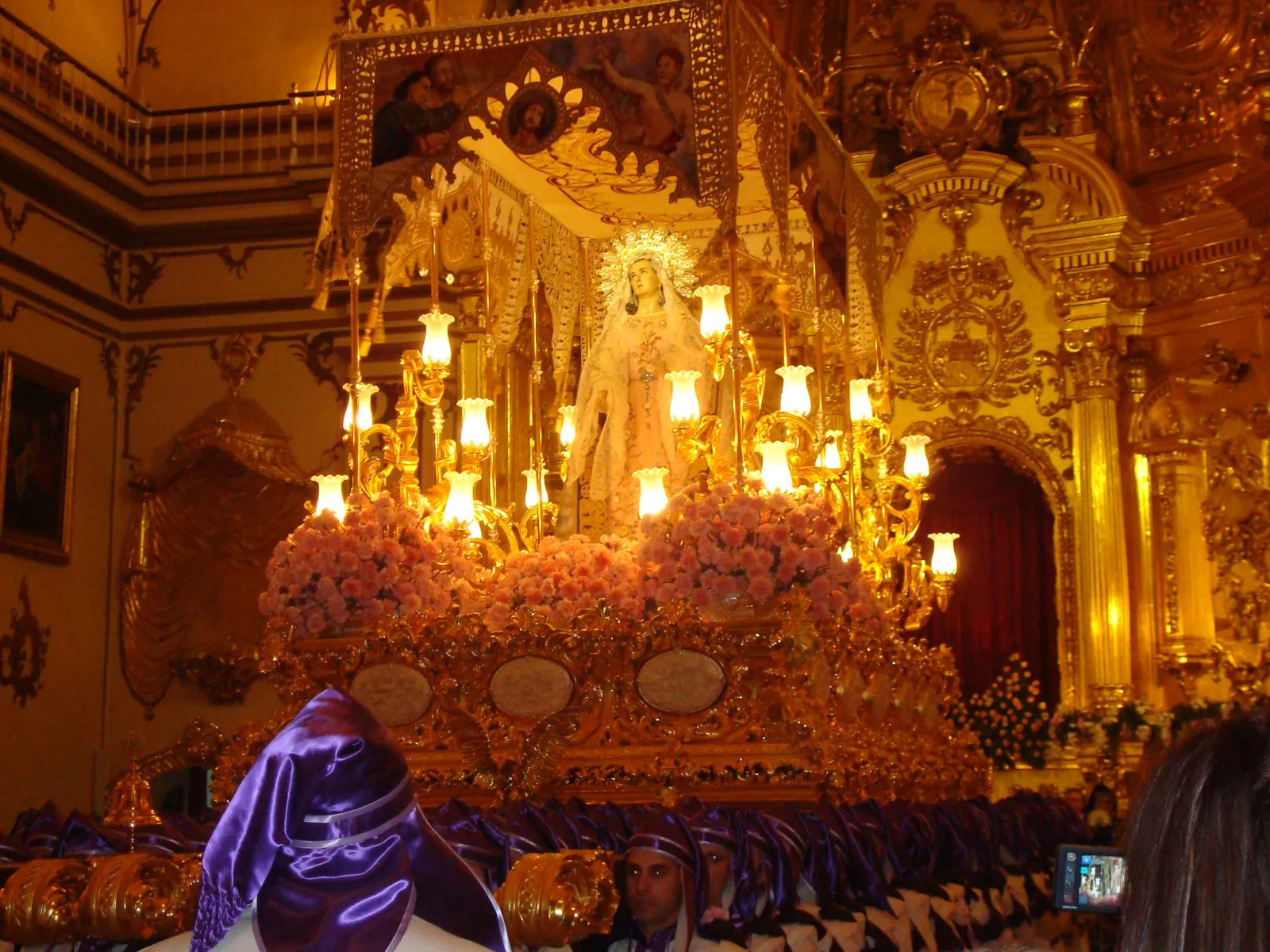
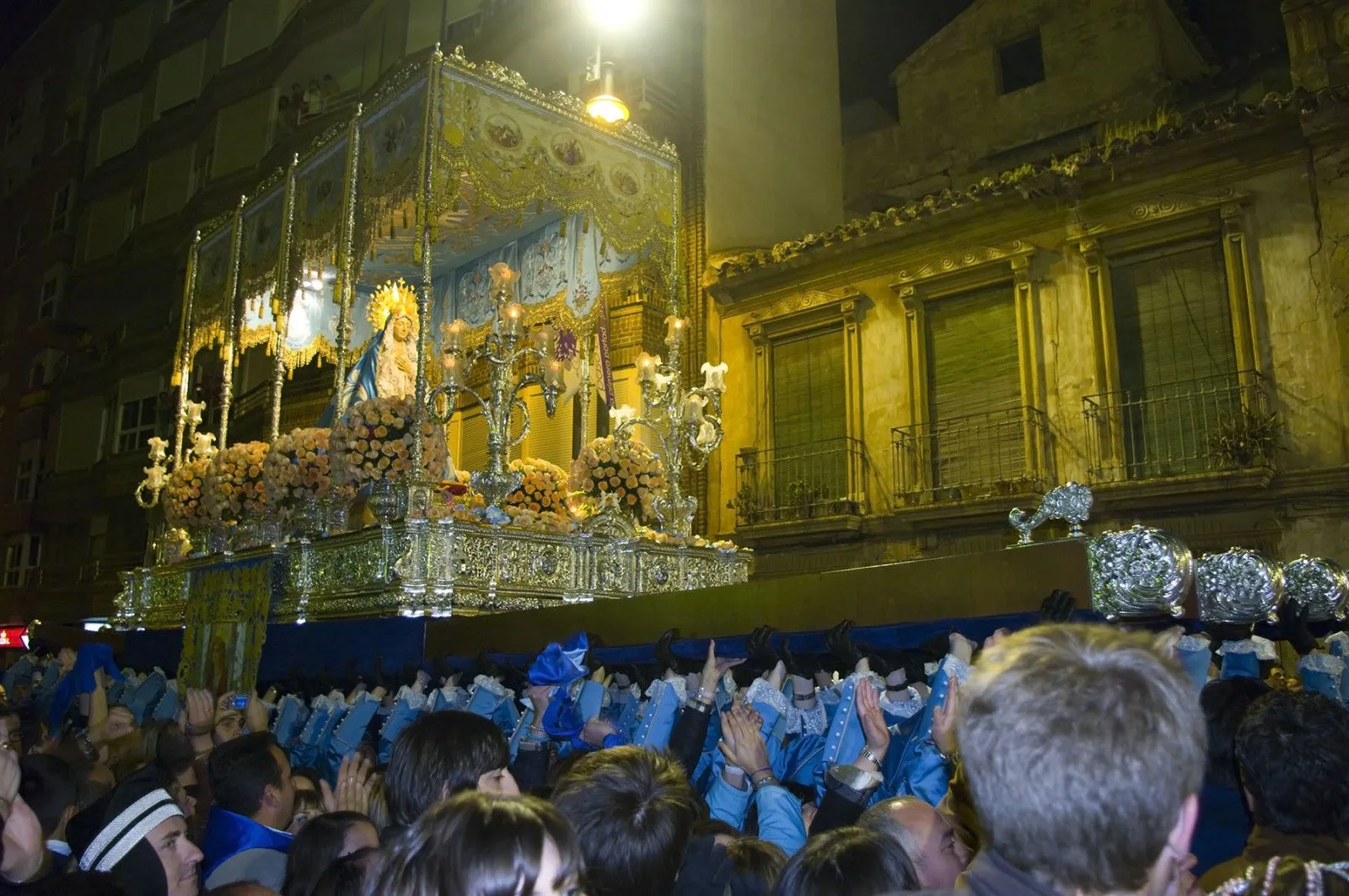
The Friday of Sorrows parade, held since 1800, belongs to the Paso Azul on the feast of its Virgen de los Dolores. Hundreds of women in mantillas and strict mourning walk ahead of her throne, and the image, carved by José Capuz after the original was lost in the Civil War, closes the parade under a canopy embroidered in silk by Francisco Cayuela. On Palm Sunday thousands of Whites dressed as the Hebrew People celebrate the entry into Jerusalem, as they have since 1855, while the Blues answer with the Pharaoh Ramesses II, Princess Meiamén and seven Egyptian chariots. On Maundy Thursday the Paso Morado has presided since 1800, bringing out a Last Supper with apostles carved by Nicolás Salzillo around 1700, while the Blues and Whites fill the avenue with horses and floats. Good Friday brings the biggest parade of all, closed by the Virgen de la Amargura under a mantle embroidered by Emilio Felices in 1928, so densely worked that the cloth beneath cannot be seen; at its centre is the Holy Burial of Christ.
Blue against White
Six brotherhoods, called pasos, organise the week: the Paso Blanco, the Paso Azul, the Paso Encarnado, the Paso Morado, the Paso Negro and the Archicofradía de Jesús Resucitado. The White and the Blue are the only ones with horses and moving biblical groups, and their rivalry splits the town in two. Stands and balconies are hung with white or blue flags, spectators wave handkerchiefs in their colours, and each side sings its own hymn: "El Tres" for the Whites and "Las Caretas" for the Blues.
Gallery
History & Origins
Many of Lorca's processions are older than the biblical parades. The Paso Blanco grew out of the Archicofradía de Nuestra Señora del Rosario, documented from 1574 and considered the oldest brotherhood in Lorca; it took the colour white in 1852. The Paso Azul descends from the Hermandad de Labradores, recorded in 1752 within the Vera Cruz brotherhood; it has led the Friday of Sorrows procession since 1800, formed its blue nazarenes in 1854 and began adding high-quality embroidery to the processions in 1856.
The biblical-passion parades as they are known today date from the late 19th century, when the White brotherhood's Hebrew People first walked on Palm Sunday (1855) and the Blue and White pasos began competing to outdo each other. Much of their heritage, including several titular images, was destroyed in the Civil War and replaced in the 1940s. Today each of the two big brotherhoods runs its own embroidery museum: the MUBBLA of the Paso Blanco at Santo Domingo and the MASS (Museo Azul de la Semana Santa) of the Paso Azul in the former convent of San Francisco.
What to Expect
The biblical parades are a long, loud and colourful show. In the Good Friday parade, the most important of all, the Paso Azul tells the story of Moses and his people through Egypt and Rome, with the Pharaoh and his Ethiopian cavalry, Cleopatra carried on a great litter, Julius Caesar's chariot, Nero on a float that fills the whole avenue and the "Triumph of Christianity". The Paso Blanco answers with Rome, Babylon and Persia, Esther and Ahasuerus, Kings David and Solomon, the Queen of Sheba and the four horsemen of the Apocalypse, before its titular Virgin de la Amargura closes the parade under an embroidered mantle.
Between the parades Lorca keeps the tension going. On the eve of the Friday of Sorrows, thousands of Blues gather at the church of San Francisco to serenade their Virgen de los Dolores at midnight. On the afternoons before each parade, Roman squads and stewards collect the brotherhood flags from the old town to the sound of the hymns, followed by crowds waving handkerchiefs. Quieter moments include the Silencio procession of the Paso Encarnado after the Thursday parade and the Paso Morado's Way of the Cross on Good Friday morning, prayed in the old style by the "rezaores".
How to Get There
Train: Lorca-Sutullena station is on the Cercanías line from Murcia towards Águilas, a short walk from the centre.
Car: Lorca lies on the A-7 motorway between Murcia and Almería. Traffic around the Avenida Juan Carlos I is cut during the parades, so park away from the centre.
Air: the nearest airports are Región de Murcia International and Alicante.
Tips & Advice
- Buy grandstand seats for the Thursday and Friday parades online as soon as sales open.
- If you can only go once, choose Good Friday, the biggest parade.
- Pick a side: wave a white or blue handkerchief, but expect friendly rivalry.
- Visit the MUBBLA and MASS embroidery museums to see the mantles up close.
- On Palm Sunday the Hebrew People hand out sweets, which children love.
- More ideas in our Murcia guide.
Holy Week in Cartagena
Cartagena, MurciaTen days of processions famous for their discipline: penitents marching in step to the drum, thrones blazing with flowers and light, and the old rivalry between Californios and Marrajos.
Bando de la Huerta
Murcia, MurciaOn the Tuesday after Easter the whole of Murcia dresses as market gardeners for the Bando de la Huerta, the big day of the city's Spring Festival, with a flower offering, food stalls and a parade that throws snacks to the crowd.
Entierro de la Sardina de Murcia
Murcia, MurciaMurcia's Entierro de la Sardina is one of Spain's most unique spring festivals. A surreal parade where thousands of toys are thrown from floats, giant sardine effigies are burned, and fireworks light up the night. Declared a Fiesta of International Tourist Interest.
Wine Horses of Caravaca (Fiestas de la Vera Cruz)
Caravaca de la Cruz, MurciaFrom 1 to 5 May, Caravaca de la Cruz honours its True Cross with Moors and Christians and the UNESCO-listed Wine Horses: some 60 horses in embroidered silk and gold, each racing up the castle slope with four runners clinging on.