Bando de la Huerta
On the Tuesday after Easter the whole of Murcia dresses as market gardeners for the Bando de la Huerta, the big day of the city's Spring Festival, with a flower offering, food stalls and a parade that throws snacks to the crowd.
The days that matter
-
Days before
Barracas open
The peñas huertanas set up their barracas in squares and gardens, serving traditional food with folk music.
-
Tue 30 Mar, morning
Flower offering
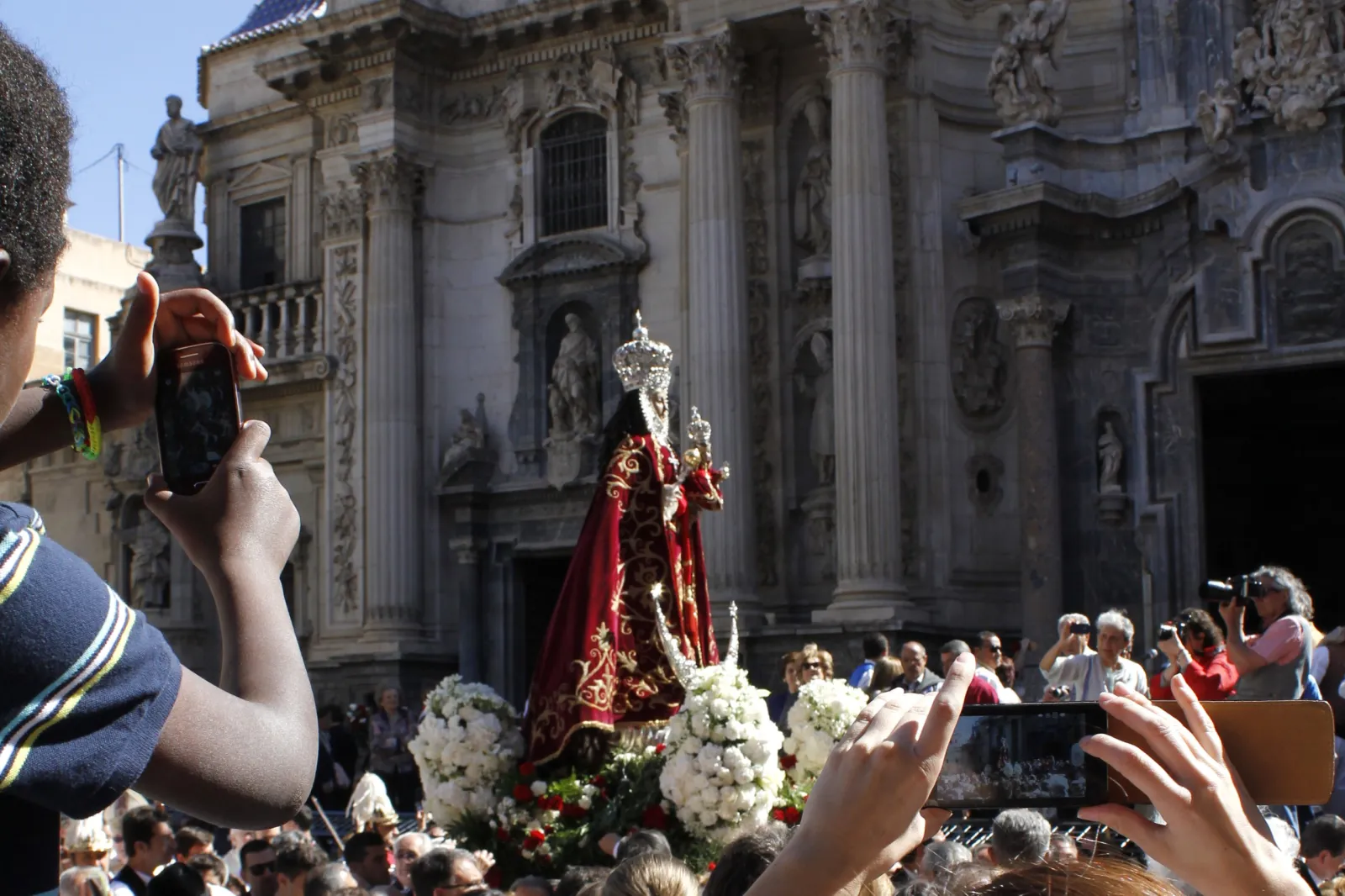
Flowers are offered to the Virgen de la Fuensanta before the cathedral's baroque façade, followed by a short walk with the Virgin.
-
Tue 30 Mar, afternoon
Bando de la Huerta parade
Ox carts, folk groups, bands and rolling barracas that throw beans, black pudding and sandwiches to the crowd.
-
Sat 3 Apr
Entierro de la Sardina
The Spring Festival ends with the night-time parade and the burning of the sardine.
What Bando de la Huerta is like
- Food & drink
- Family
- Free
- Noise
- Bands, folk music and a cheerful crowd all day
- Crowds
- The whole city is out, and the parade route is packed
- Mess
- Flying beans and sandwiches, but nothing that stains
- With kids
- Families in costume and plenty of food, though crowds are dense
Highlights
Thousands of people in traditional huertano costume
The huertano Mass and flower offering to the Virgen de la Fuensanta at the cathedral
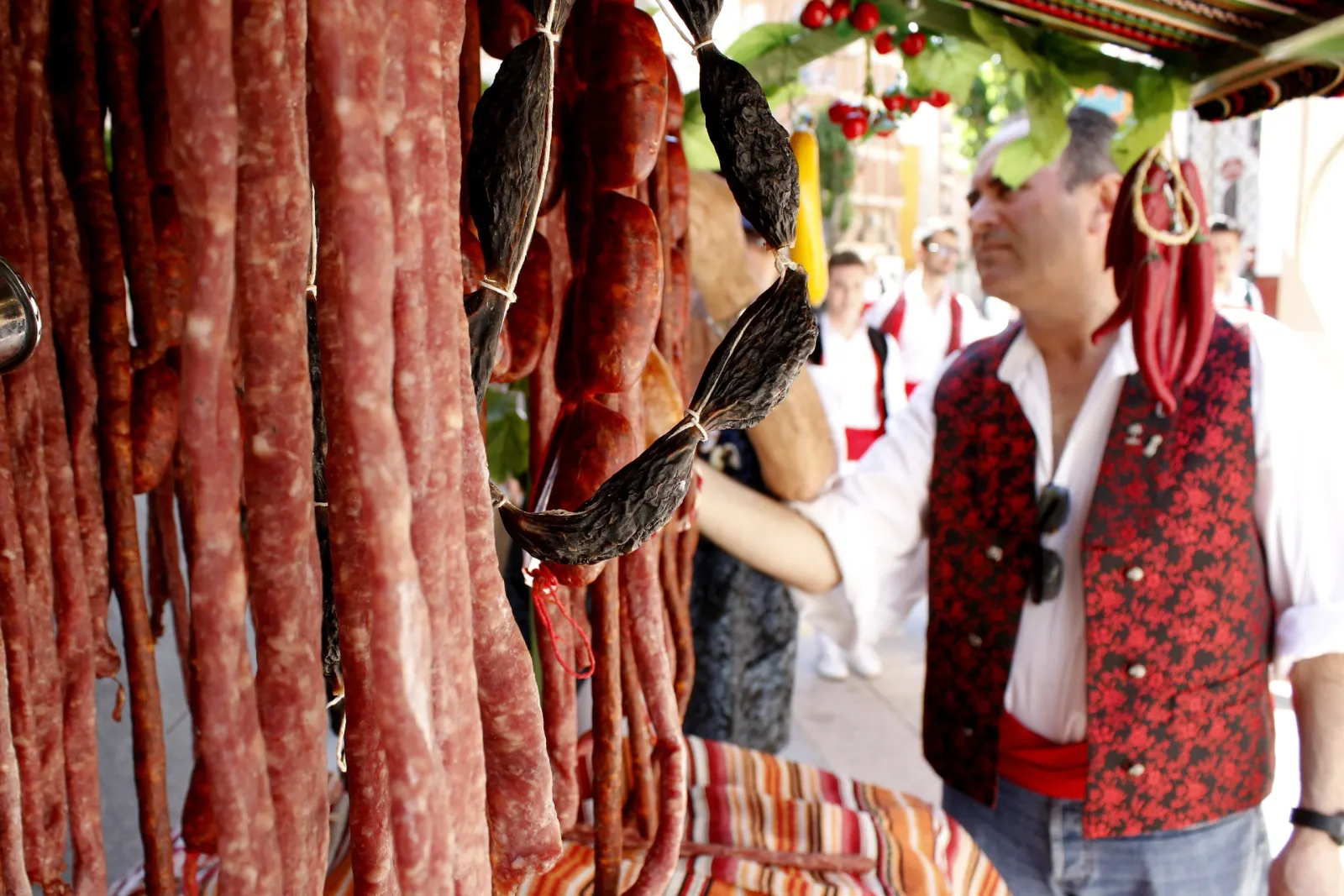
Barracas run by the peñas, with michirones, zarangollo and paparajotes
The afternoon parade, with ox carts, folk groups and more than 80 floats in 2026
Broad beans, black pudding and sandwiches thrown to the crowd
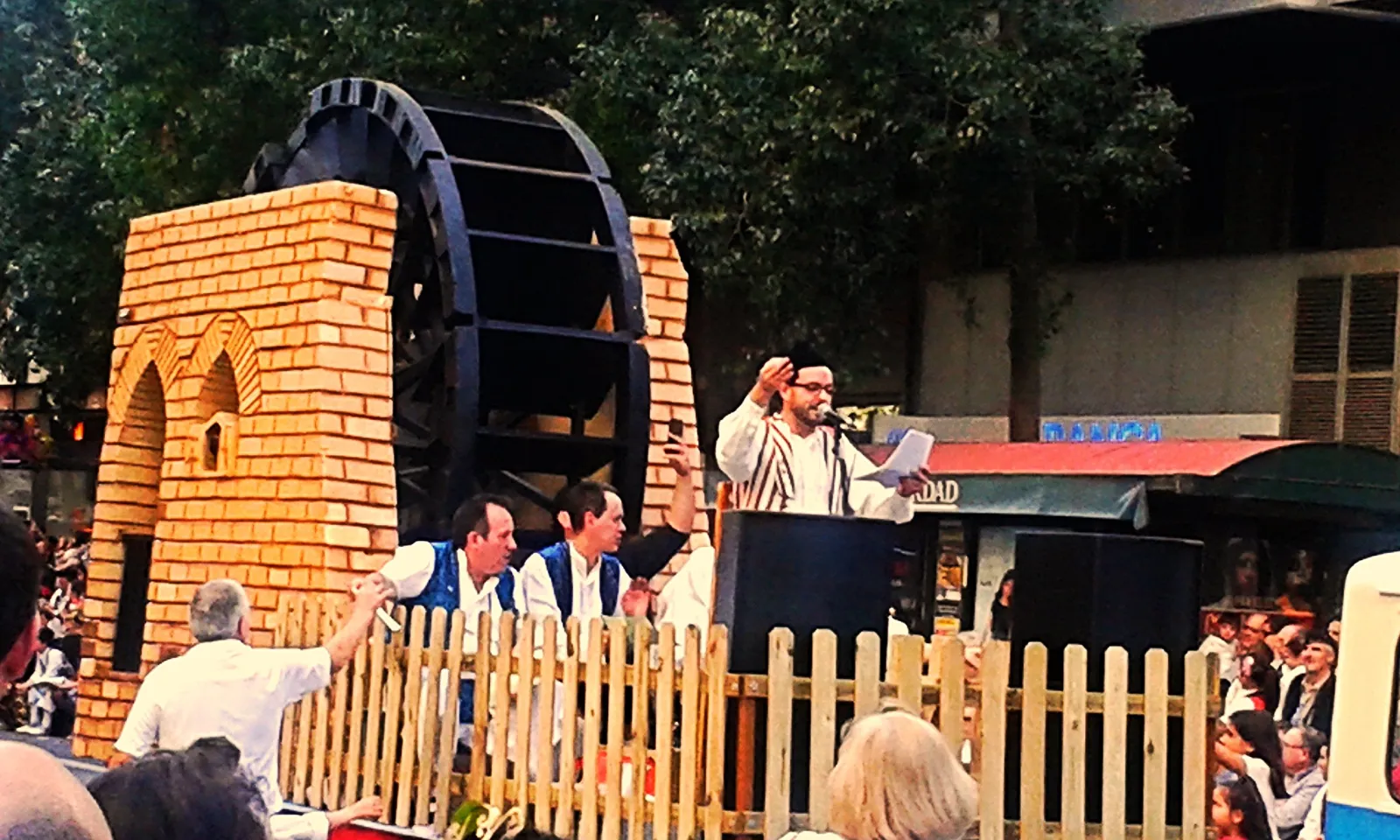
Soflamas panochas: comic verses in the huerta dialect read from the floats
Bando de la Huerta 2027: the date
The Bando de la Huerta is held on the Tuesday after Easter, which in 2027 is Tuesday 30 March, the date listed by the Murcia regional tourism board. It is the central day of Murcia's Fiestas de Primavera (Spring Festival), which begin as soon as Holy Week ends and close on Saturday 3 April with the Entierro de la Sardina. The Bando has been a Fiesta de Interés Turístico Internacional since 2012, and its 2026 edition celebrated the 175th anniversary of the fiesta.
A city in huertano dress
The fiesta celebrates the huerta, the irrigated market gardens that surround Murcia, and the people who worked them. On the day, tens of thousands of locals and visitors wear traditional huertano costume. Men wear zaragüelles, wide white linen breeches, with a sash, a waistcoat and sometimes the montera cap; women wear the refajo skirt with an apron, a shawl and carnations in their hair. Rope-soled esparteñas and the small castanets called postizas, played whenever someone starts a jota, complete the outfit. The finest costumes carry silk, sequin and gold-thread embroidery, a reminder that dress once marked social rank in the huerta.
Barracas and peñas
Throughout the Spring Festival the peñas huertanas, local clubs grouped in a federation, set up barracas in the main squares and gardens of the city. These open-air restaurants recreate the old houses and customs of the huerta, serve traditional food and host folk groups; in 2026 there were 39 of them. The peñas take their names from the panocho dialect or from farm tools and crafts: La Seda, El Tablacho, La Esparteña or El Zaragüel, for example.
How the day unfolds
The celebrations start early. In the morning there is a huertano Mass and an offering of flowers to the Virgen de la Fuensanta, Murcia's patron saint, in Plaza del Cardenal Belluga, in front of the baroque façade of the cathedral, after which crowds in costume walk with the Virgin through the centre. Parks and squares fill up from late morning, Calle Alfonso X becomes one big meeting point, and in 2026 a tronaera, a deafening daytime display of aerial fireworks, went off from the Glorieta de España at 13:00.
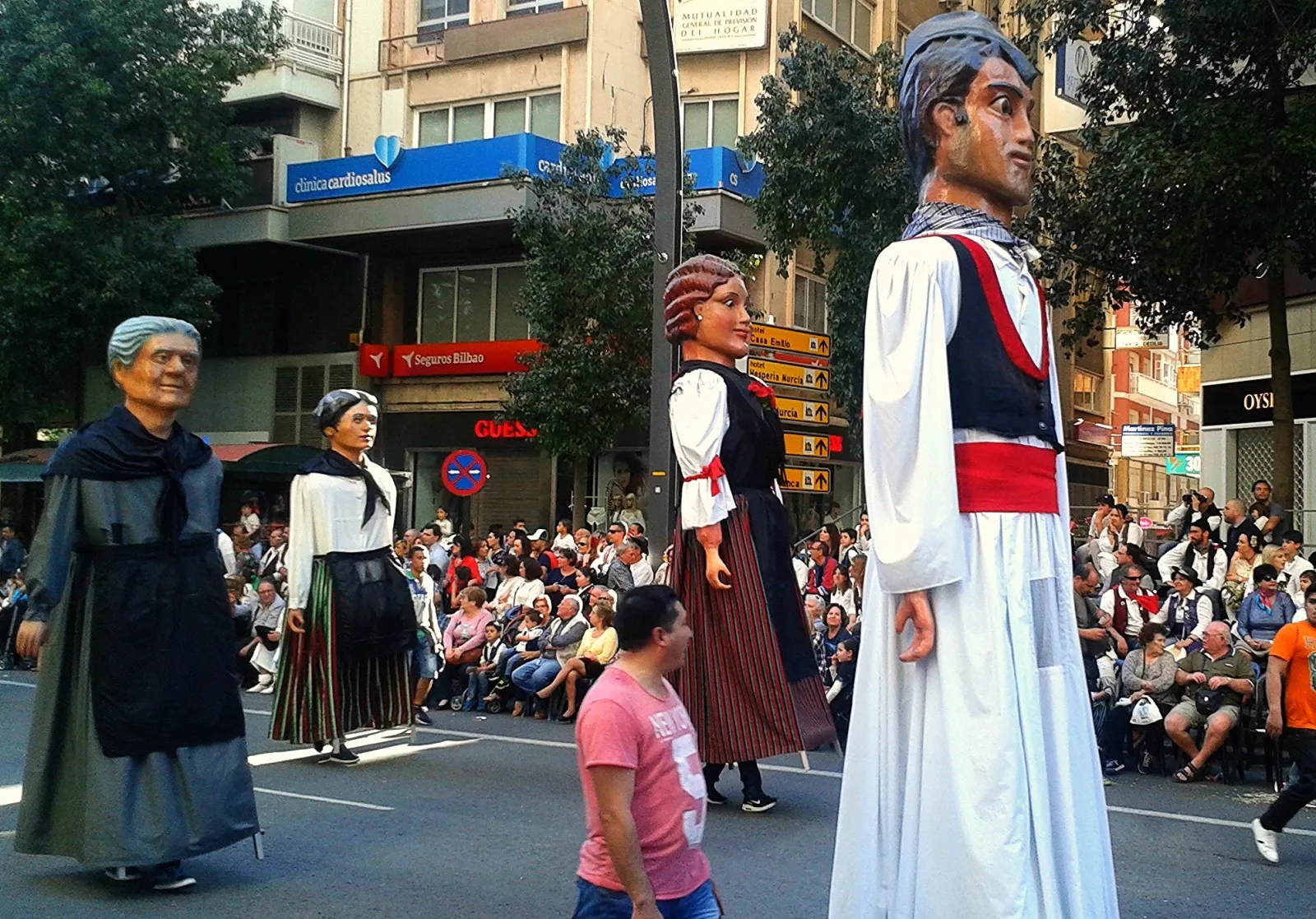
The high point is the afternoon parade, which in 2026 set off at 17:00 with more than 80 floats. Ox-drawn wagons, animals of local breeds, folk groups from the peñas, music bands, giants and big-heads and floats that recreate farm work roll through the centre. From the moving barracas, participants throw broad beans, black pudding, sausages and sandwiches to the spectators, and from some floats readers declaim soflamas panochas: humorous verses in the dialect of the huerta that mix local gossip, pleas to protect the huerta and the odd jab at politicians.
Children get their own celebration too: in 2026 the Bando infantil, a smaller parade of floats whose young participants in costume hand out sweets to the crowd, was held the day before.
Gallery
History & Origins
The Bando seems to date from the mid-19th century: its usual starting point is 1851, when well-off young people organised it on the last day of Carnival, partly to poke fun at the country folk who came into the city to sell their produce. The first parades set off in the morning from the old bullring of San Agustín, led by two majos on horseback and a horse decked with palms, flowers and vegetables. Murcia marked the fiesta's 175th anniversary in 2026.
The Bando has lived through several stages and long gaps. It faded after 1865, returned between 1876 and 1879, when the huertanos began to answer back by mocking city ways, and vanished again after the great Santa Teresa flood of October 1879. Revived in 1900, it became so popular that towns such as Cieza and Molina de Segura copied it, and it was separated from the Entierro de la Sardina. After the Civil War it returned in 1939, and it entered its modern phase in 1967: the yearly magazine Bando followed, the federation of peñas huertanas was founded in 1974–75, and the barracas and the afternoon parade grew into what they are today. The Spanish government declared the Bando a Fiesta de Interés Turístico Internacional in March 2012.
What to Expect
Expect a full day out in a city where almost everyone is in costume and in a festive mood. The centre is packed from the morning, and the barracas are the place to eat and drink: try michirones (stewed broad beans), zarangollo (courgette and onion scrambled with egg), ensalada murciana and, for dessert, paparajotes, lemon leaves fried in batter (eat the batter, not the leaf). Queues at the barracas form early and last all day.
For the parade, claim a spot along the route well in advance and keep your hands free: the food thrown from the floats is part of the fun. Wearing at least a scarf or apron in huertano style helps you feel part of the day.
Many streets are closed to traffic and people walk on the asphalt, but some squares get so crowded that crossing them takes time, and the police run a special operation for the day, so keep an eye on your bag. The party carries on into the evening, with music in the streets and around the barracas.
How to Get There
By train: Murcia del Carmen station has high-speed services from Madrid and regional trains from Alicante and Cartagena. From the station it is a walk across the river to the cathedral and the old town.
By air: the Región de Murcia International Airport (Corvera) is the closest; Alicante-Elche airport is another option with more routes.
By car: avoid driving into the centre on the day. Streets close for the parade, so park outside and walk or take public transport.
On foot: the cathedral, the main barracas and the parade route are all in the compact city centre, so once you arrive you can do the whole day on foot.
Tips & Advice
- Check the Spring Festival programme on turismoregiondemurcia.es and the city's tourism site for parade times and the route.
- Arrive at the cathedral early if you want to see the flower offering up close.
- Eat at the barracas before or after the lunchtime rush: queues form early and last all day.
- Bring a bag for the beans and sandwiches you catch during the parade.
- Stay until Saturday for the Entierro de la Sardina, which closes the Spring Festival, and book early: rooms across Murcia go fast that week.
Photos: Bertobarc90 / CC BY-SA 4.0 / Wikimedia Commons; nesimo / CC BY-SA 2.0 / Wikimedia Commons
Entierro de la Sardina de Murcia
Murcia, MurciaMurcia's Entierro de la Sardina is one of Spain's most unique spring festivals. A surreal parade where thousands of toys are thrown from floats, giant sardine effigies are burned, and fireworks light up the night. Declared a Fiesta of International Tourist Interest.
Wine Horses of Caravaca (Fiestas de la Vera Cruz)
Caravaca de la Cruz, MurciaFrom 1 to 5 May, Caravaca de la Cruz honours its True Cross with Moors and Christians and the UNESCO-listed Wine Horses: some 60 horses in embroidered silk and gold, each racing up the castle slope with four runners clinging on.
Holy Week in Cartagena
Cartagena, MurciaTen days of processions famous for their discipline: penitents marching in step to the drum, thrones blazing with flowers and light, and the old rivalry between Californios and Marrajos.
Semana Santa de Lorca (Biblical Parades)
Lorca, MurciaPharaohs, Roman emperors and horsemen of the Apocalypse charge down a sand-covered avenue as Lorca's Blue and White brotherhoods compete to stage the most spectacular Holy Week in Spain.