Gran Festa de la Calçotada (Valls)
Every last Sunday of January, Valls, the town where the calçotada was born, turns its old centre over to grilled spring onions, romesco-style sauce and a famously messy eating contest.
The days that matter
-
Sun 31 Jan 2027 from 10:00
Grilling demonstrations
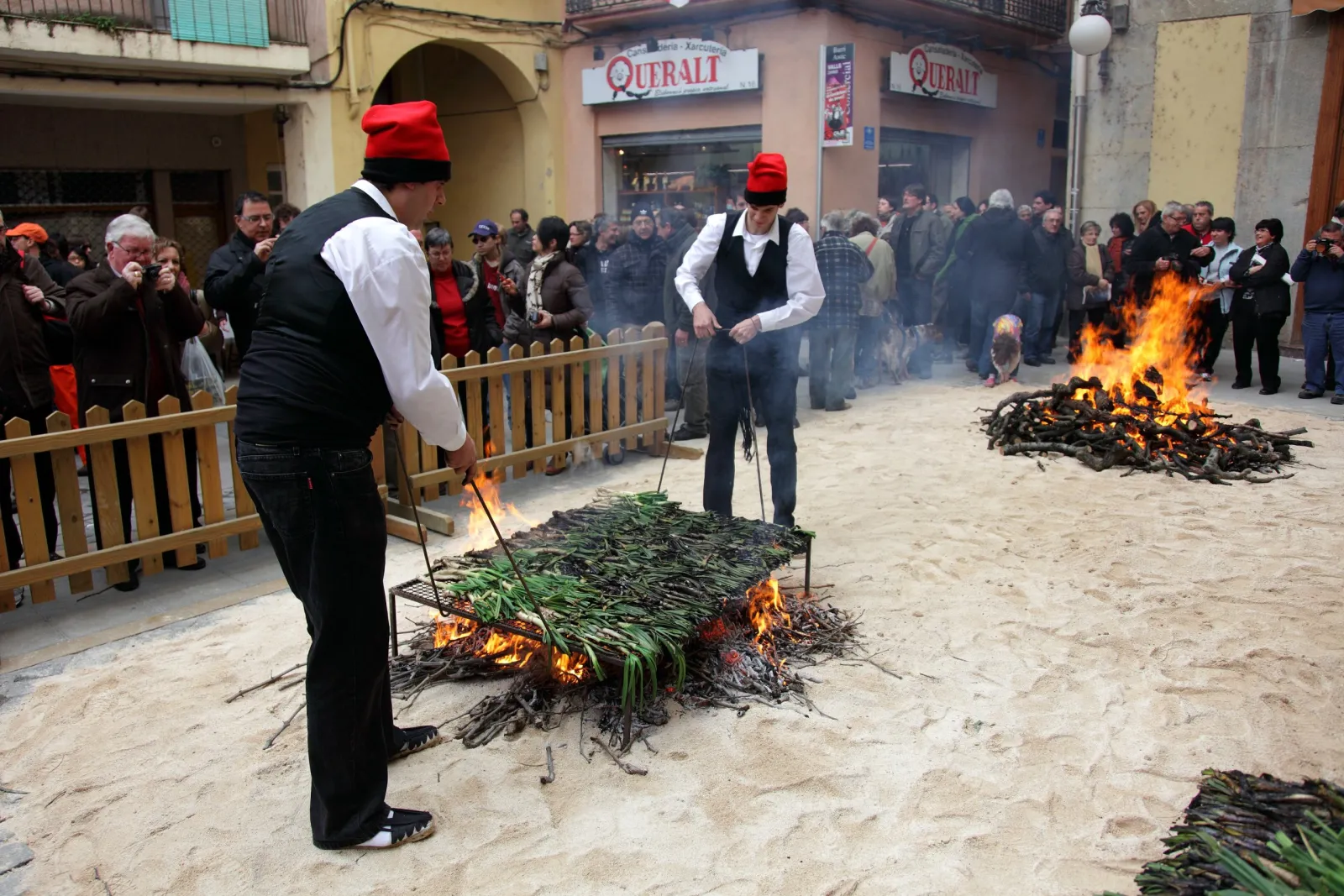
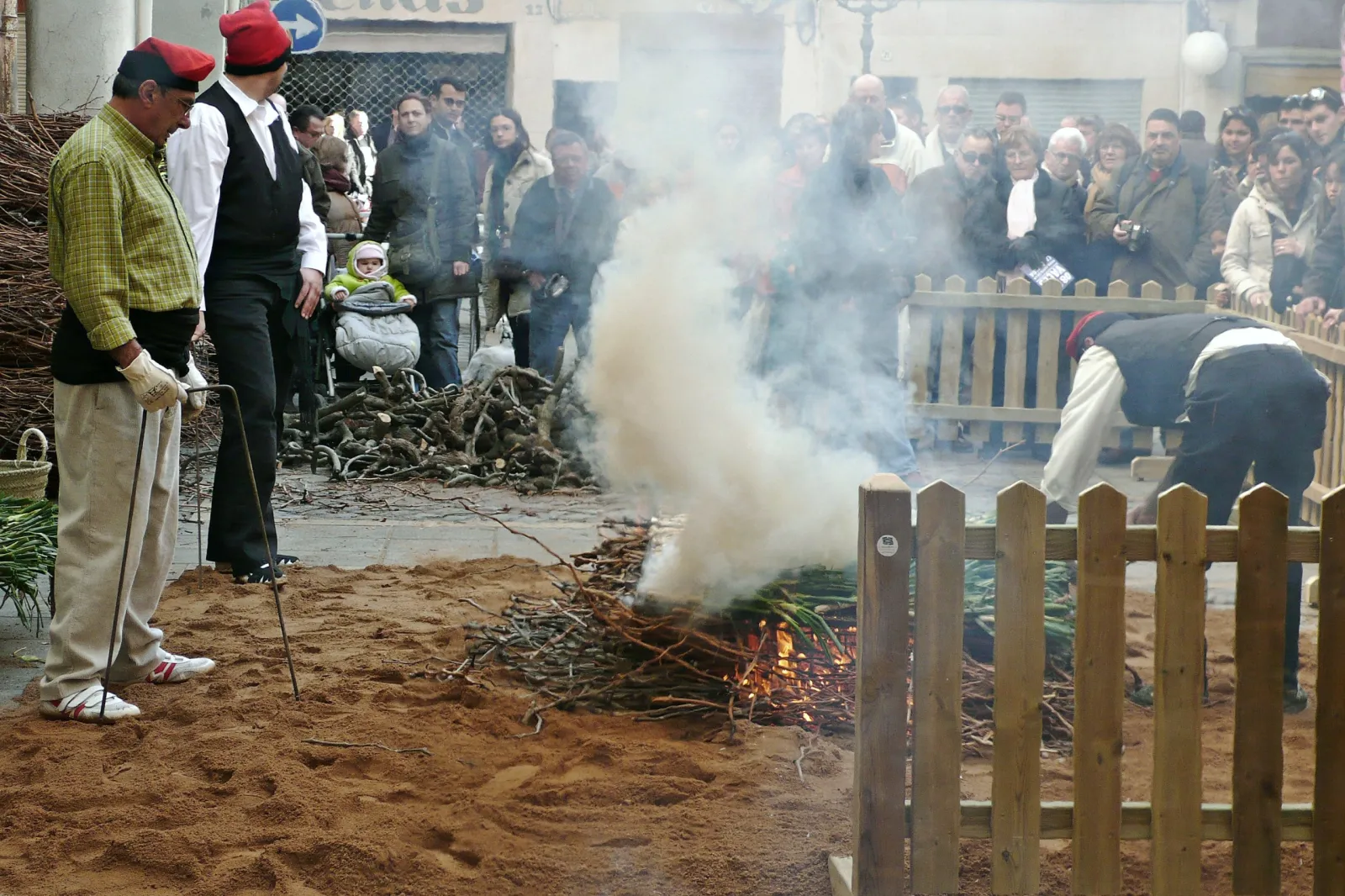
Calçots charred over open fires in the car park on Carrer de Sant Antoni, next to Plaça de l'Oli.
-
Sun 31 Jan 2027 morning
Sauce and growers' contests
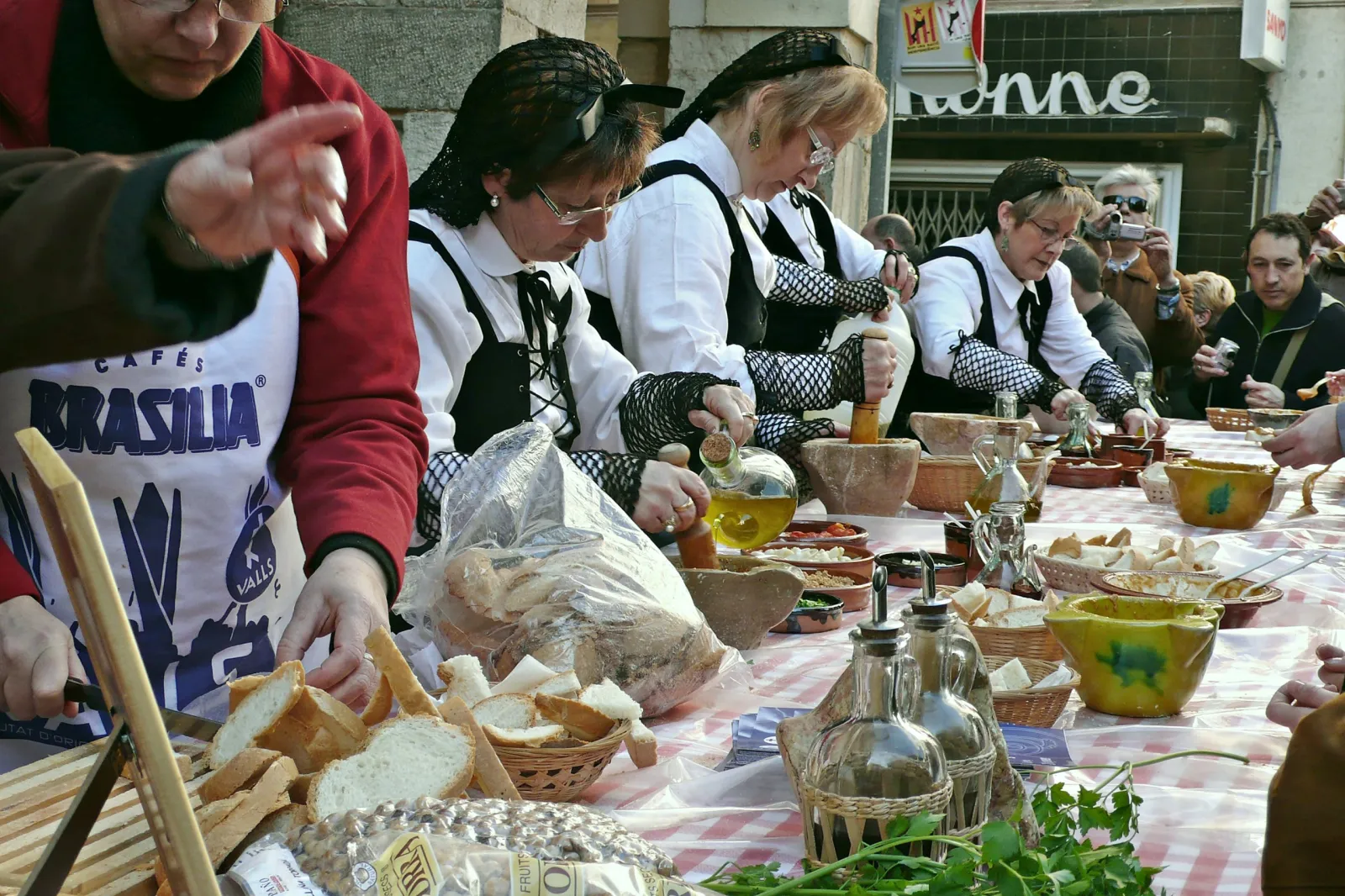
In Plaça del Blat, contestants make the calçotada sauce on the spot and growers show their best calçots.
-
Sun 31 Jan 2027 13:00
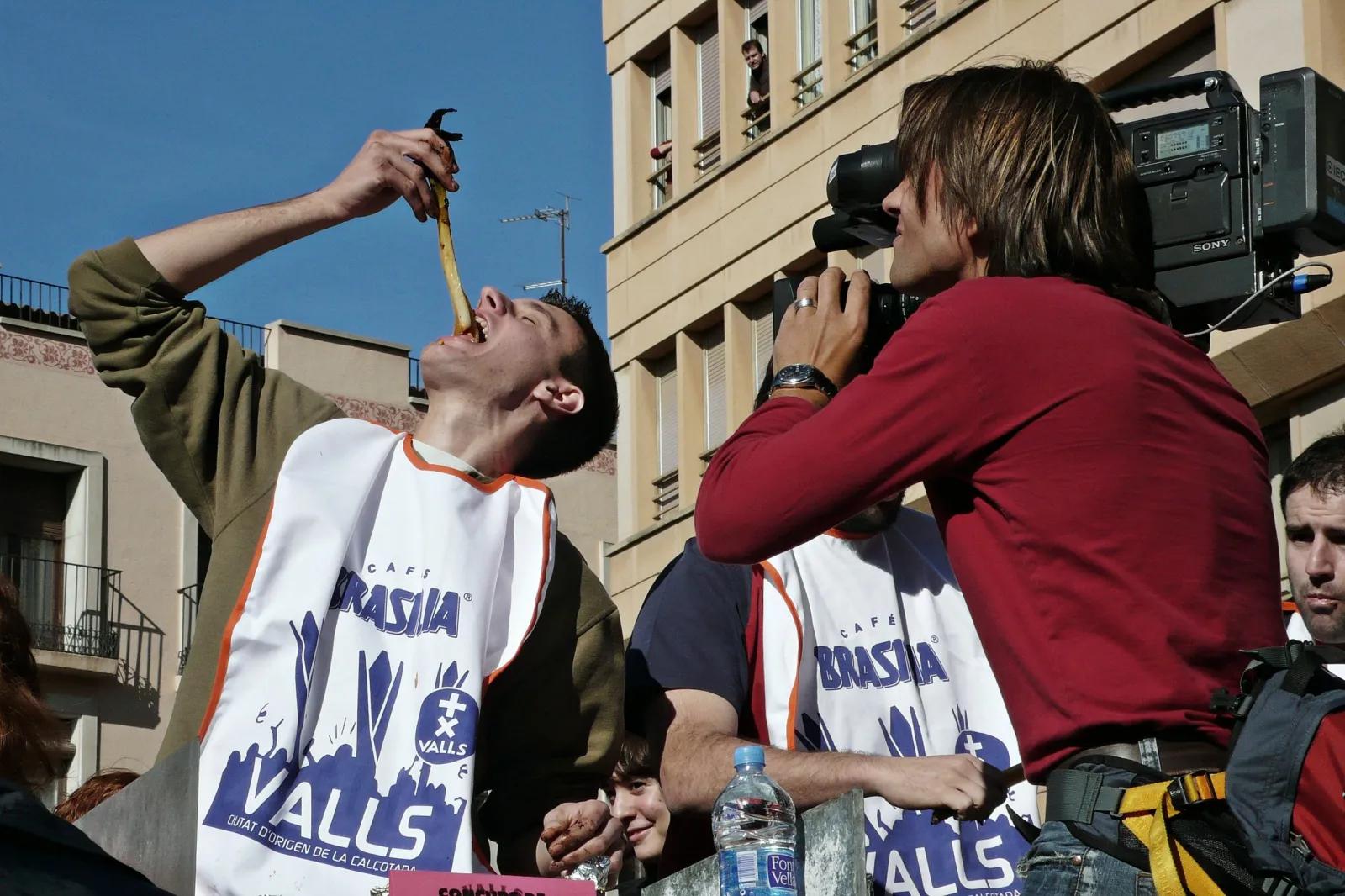
Calçot-eating contest
Plaça del Pati. The Colla Joves and Colla Vella dels Xiquets de Valls raise pilars as it begins.
-
Sun 31 Jan 2027 14:00
Prize-giving
Winners of the growers', sauce and eating contests are announced.
-
Sun 31 Jan 2027 lunchtime
Popular tasting
Collect your tasting lot and eat in the Societat Agrícola car park, with grills for meat, a bar and live music.
What Gran Festa de la Calçotada (Valls) is like
- Food & drink
- Family
- Free
- Noise
- Busy squares, gralla music and cheering at the contest
- Fire
- Open fires for the grilling demos and grills in the tasting area
- Crowds
- Over 35,000 visitors in one day, according to the town council
- Mess
- Charred fingers and sauce drips; wear the bib
- With kids
- Daytime, outdoors, with giants and a parade
Highlights
One day only: Sunday 31 January 2027, the 45th edition
Calçot-eating contest in Plaça del Pati at 13:00, opened by the Xiquets de Valls castell teams
Sauce contest and calçot growers' contest in Plaça del Blat
Live grilling demonstrations from 10:00
Tasting lot with 12 IGP calçots, wine, sauce and a bib for €15 (€14 online)
Gran Festa de la Calçotada 2027: the date
The 45th Gran Festa de la Calçotada takes place on Sunday 31 January 2027 in Valls, the capital of the Alt Camp in Tarragona province. It is always held on the last Sunday of January and is organised by the Cambra de Comerç de Valls together with the town council. Valls Town Council describes it as one of the biggest food festivals in Catalonia, with more than 35,000 visitors in a single day.
What happens on the day
From 10:00 the streets and squares of the old town fill with activity. Next to Plaça de l'Oli, in the car park on Carrer de Sant Antoni, cooks show how calçots are charred over a fierce fire. In Plaça del Blat you can watch the calçot growers' contest and the Concurs de Salsa de la Calçotada de Valls, where contestants make the sauce on the spot, plus a demonstration of a sauce suitable for coeliacs and people with nut allergies.
At 13:00 the crowd gathers in Plaça del Pati for the Concurs de Menjar Calçots, the eating contest that decides who can eat the most calçots in a set time. It opens with pilars (human towers) raised by Valls' two historic castell teams, the Colla Joves and the Colla Vella dels Xiquets de Valls. The rules are strict: up to 20 contestants over 18, 45 minutes, no gloves, and the winner is whoever eats the greatest net weight, worked out by weighing what is left on the plate. In 2026 Xavier Currius won with 3,970 grams; the record, set in 2018, is 5,825 grams, or 310 calçots. Prizes for all three contests are handed out at 14:00. A parade of the town's festive figures, including the giants, the mulassa and grallers (traditional shawm players), also winds through the centre.
How a calçot is grown and eaten
A calçot is the shoot of a replanted white onion. The seed is sown late in the year, the young onion is lifted and replanted, lifted again in summer once it has formed a bulb, stored for a few weeks, trimmed and planted once more half-buried; as the shoots grow, farmers keep banking earth around them, which is what calçar means and where the name comes from. They are picked between November and April. A family calçotada follows a ritual: the charred calçots are wrapped in newspaper to stay hot, brought to the table on a roof tile and eaten standing up, 20 to 35 each, before lamb and sausage go on the embers and a porró of wine goes round. Each family claims its own secret for the sauce.
Eating your own calçotada
Watching is free. To eat, buy a Lot Degustació (€15 on the day, €14 online in advance): 12 grilled calçots with the IGP Calçot de Valls label, a bottle of wine, sauce, bread, water, an orange, dessert, a commemorative bib and a 2-for-1 offer for the Museu Casteller de Catalunya. Tickets are sold in Plaça del Pati, at the town hall and at the Institut d'Estudis Vallencs, and the meal is eaten in the tasting area in the Societat Agrícola car park, where there are grills for sausages and meat, a bar, toilets and live music. The organisers ask visitors not to eat calçots in the street.
Gallery
History & Origins
Valls calls itself the birthplace of the calçotada. According to the festival organisers, the calçot was discovered at the end of the 19th century by a Valls local known as the "Xat de Benaiges", who began grilling the tender shoots that sprout from replanted onions and also came up with the sauce that is still eaten with them today.
From the early 20th century the calçotada became a regular holiday meal for Valls families. It spread across Catalonia from the middle of the century, helped by the Penya Artística de l'Olla, whose calçotades brought in artists and writers from Barcelona. From the 1960s restaurants around Valls built spaces for calçotades and the meal became a winter attraction in its own right.
The Gran Festa de la Calçotada has been held since 1982, with the whole town involved: associations, restaurants, shops and volunteers. The Generalitat granted the "Calçot de Valls" quality label in 1995 and a regulatory council followed in 1996; today it is a protected geographical indication (IGP) covering the Alt Camp, Baix Camp, Tarragonès and Baix Penedès.
What to Expect
Expect smoke, crowds and a lot of black fingers. A calçot is grilled until the outside is charred, then you peel off the burnt layer, dip the white stem in the sauce and lower it into your mouth with your head tilted back. The sauce, as Valls Town Council describes it, is made with almonds, hazelnuts, roasted tomatoes, garlic, oil, vinegar, parsley and salt.
The busiest moment is the eating contest in Plaça del Pati: arrive early if you want to see the pilars and the contestants up close. The tasting area at the Societat Agrícola gets lively at lunchtime, with grills where people cook sausages and other meat after the calçots, as a traditional calçotada does. A bib is not optional; the tasting lot includes one.
If you prefer a sit-down meal, restaurants in and around Valls serve calçotades through the season, which runs roughly from November to April. Book ahead for the festival weekend.
How to Get There
Train: Valls station is on Rodalies line R13 (Barcelona Estació de França – Lleida Pirineus).
Bus: Hispano Igualadina runs Valls–Barcelona and Valls–Reus services; Autocars Plana links Valls with Tarragona and with Camp de Tarragona high-speed station.
Car: from Barcelona take the AP-2 towards Lleida and leave at the Vila-rodona – Valls or El Pla de Santa Maria – Valls exit. From Tarragona take the N-240 or the A-27 towards Valls. Expect heavy traffic and full car parks on the morning of the festival.
Tips & Advice
- Buy the tasting lot online in advance: it is €1 cheaper and saves queueing on the day.
- Get to Plaça del Pati well before 13:00 for a view of the eating contest and the pilars.
- Wear clothes you don't mind getting stained; charred calçots and sauce leave marks.
- Eat your calçots in the tasting area, not in the street, as the organisers ask.
- Look for the blue ribbon and numbered label that mark IGP Calçot de Valls if you buy calçots to take home.
- More ideas for the region in our Catalonia guide.
Photos: flydime / CC BY-SA 2.0 / Wikimedia Commons; Alberto-g-rovi / CC BY-SA 3.0 / Wikimedia Commons
Aplec del Cargol
Lleida, CataloniaThe Aplec del Cargol in Lleida is the world's largest snail-eating festival and a Fiesta of National Tourist Interest. Over three days, 200,000+ visitors consume around 12 tonnes of snails cooked in dozens of styles, while enjoying live music, competitions, and Catalan traditions.
La Mercè
Barcelona, CataloniaLa Mercè (officially Festa Major de Barcelona) is Barcelona's largest annual festival, celebrating the city's patron saint, Our Lady of Mercy. Held every year around 24 September, it transforms the city into a four-day programme of over 600 free events — world-class concerts, traditional Catalan folk displays, fire runs, human towers, and open-air parties across every neighbourhood.
Primavera Sound
Barcelona, CataloniaPrimavera Sound is one of Europe's most acclaimed music festivals, held annually at Parc del Fòrum in Barcelona. Known for its cutting-edge lineup spanning indie, electronic, hip-hop, pop, and experimental music, it attracts over 200,000 visitors from around the world.
Diada de Sant Jordi
Barcelona, CataloniaOn April 23rd, Catalonia celebrates its most romantic tradition. Streets fill with stalls selling books and roses as couples exchange gifts: a rose for her, a book for him.