Temps de Flors (Girona Flower Festival)
For nine days every May, Girona fills its old quarter with flowers: more than a hundred patios, gardens, churches and monuments are dressed with floral installations, many of them usually closed to the public.
The days that matter
-
Sat 8 May
Opening day
The 72nd exhibition opens and the old quarter fills with flowers for nine days.
-
Daily, 8–16 May 9:30–21:00 (2026)
Flowers by day
All spaces open, from the cathedral steps to the patios of the Barri Vell.
-
Evenings, 8–16 May to 23:00, Sat to 24:00 (2026)
Flors de nit
A selection of indoor spaces stays open late, a calmer way to see the exhibition.
-
Sun 16 May
Last day
Final day of the exhibition; some outdoor installations start to come down in the evening.
What Temps de Flors (Girona Flower Festival) is like
- Flowers
- Family
- Noise
- A quiet stroll, apart from busy streets at peak times
- Crowds
- Over 400,000 visits in 2026, with queues at the top spaces
- Mess
- Nothing but flowers; just wear comfortable shoes
- With kids
- Colourful and easy, though the old town's steps are hard with buggies
Highlights
More than a hundred floral installations across the city (141 projects in 113 spaces in 2026)
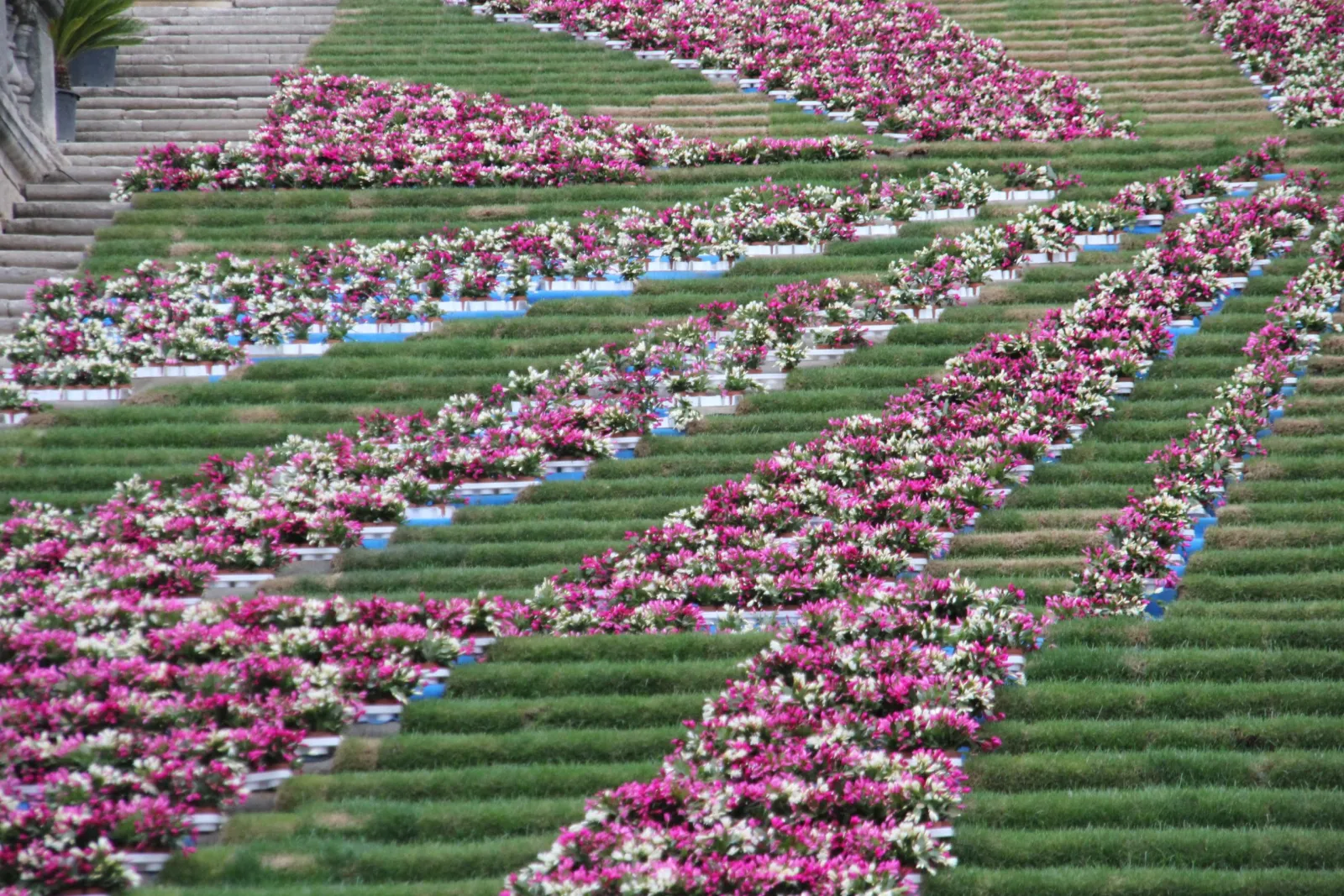
The cathedral steps covered in a new floral design each year
Private patios and gardens of the Barri Vell open for the week
Flors de nit: selected indoor spaces open late in the evening
Floral shop windows all over Girona
Installations in monuments such as the Arab Baths and the church of Sant Martí
Temps de Flors 2027: the dates
The 72nd Girona, Temps de Flors runs from Saturday 8 to Sunday 16 May 2027, as announced on the festival's official website. It is an exhibition of flowers, patios and gardens organised by Girona City Council with the Amics de les Flors association, and it is the city's busiest week of the year: the 2026 edition drew more than 400,000 visitors, and the two before it around 400,000 each. Proposals for the 2027 installations can be submitted until 10 January 2027, so the list of spaces is only published in spring.
What you see
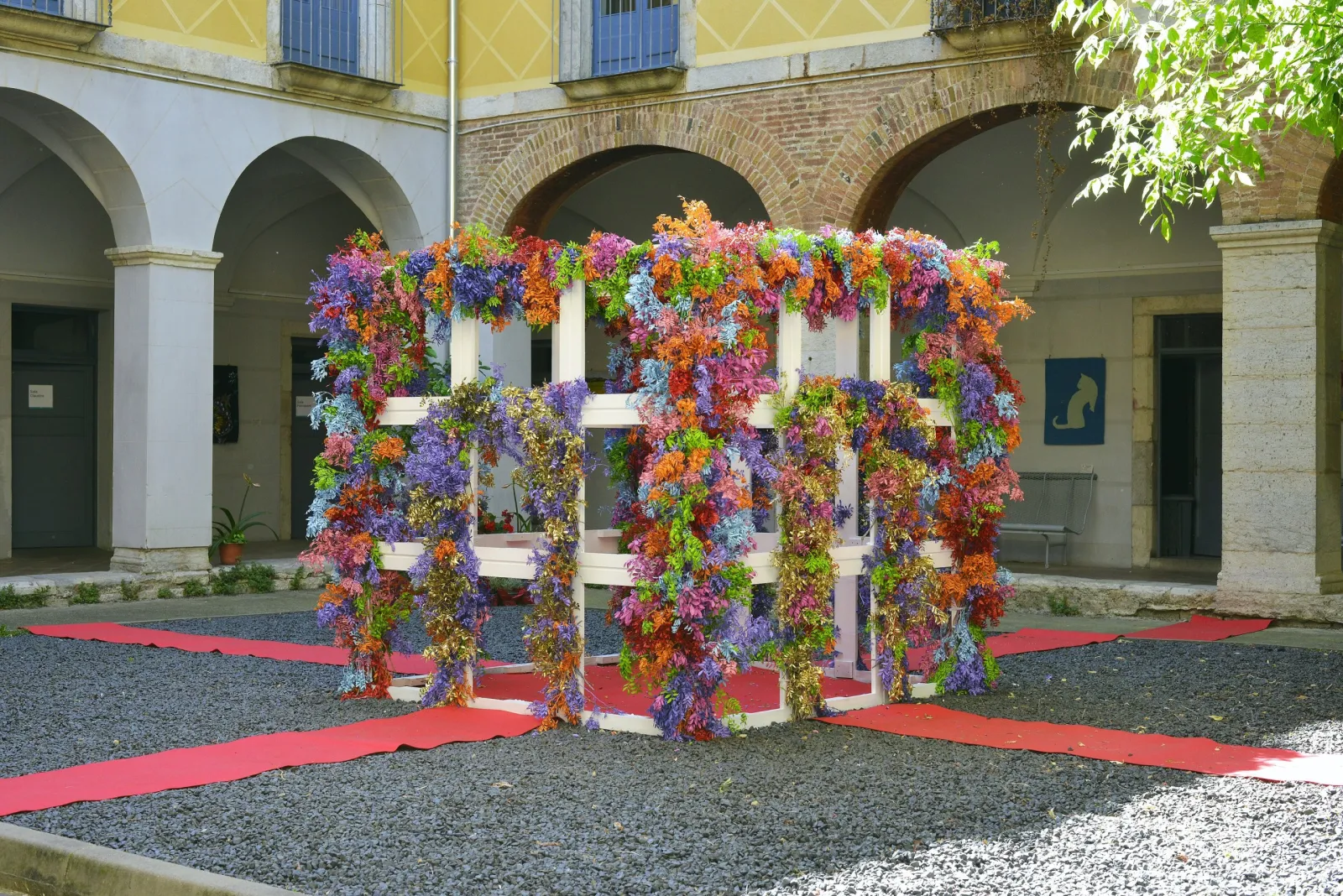
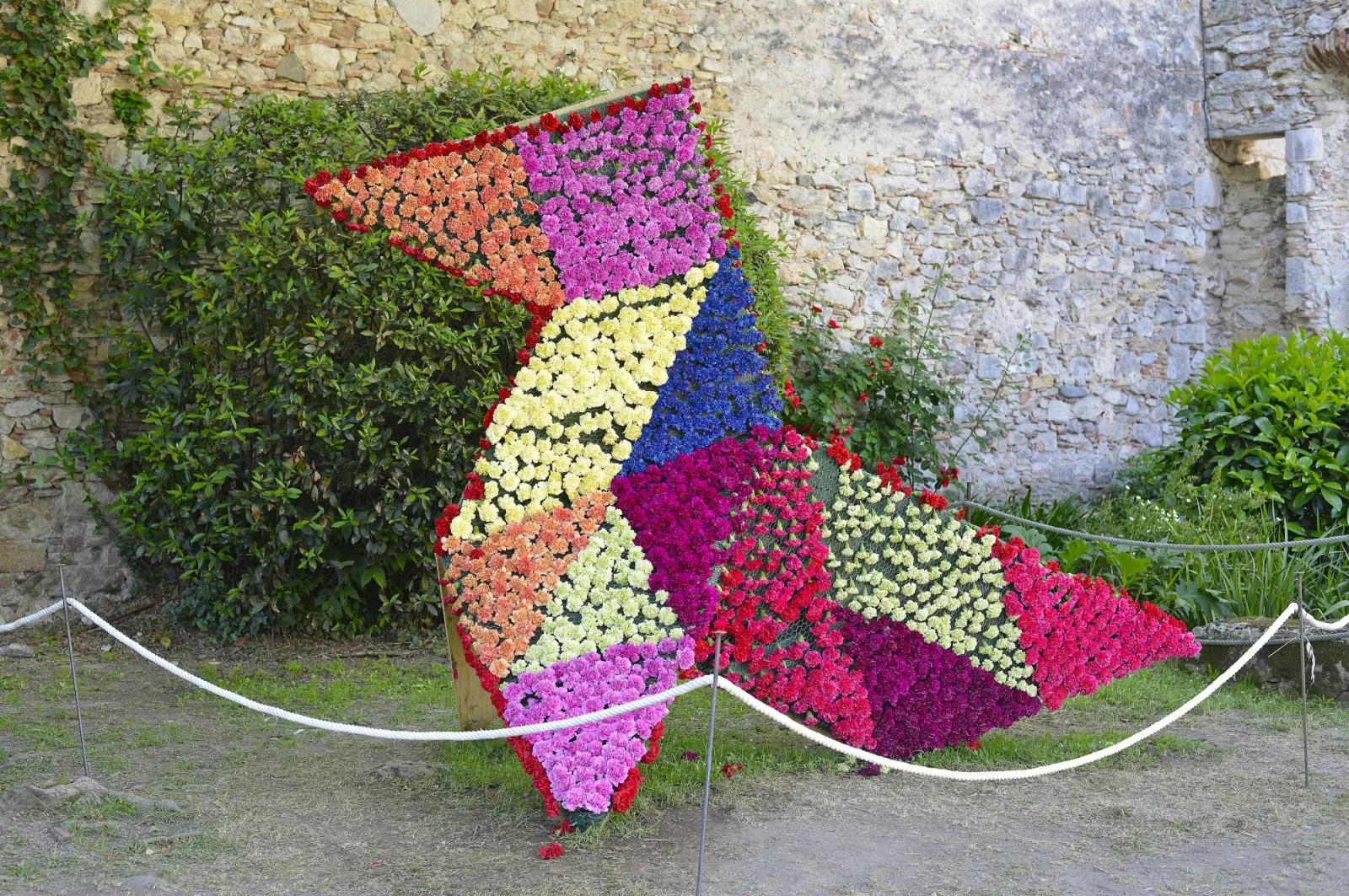
Over nine days, more than a hundred spaces are turned into floral installations by participants who apply to the organisers, with projects in the old town and in the neighbourhoods. In 2026 the route had 141 floral projects in 113 spaces, from the courtyards and private patios of the Barri Vell (old quarter) to cloisters, churches, museums and monumental stairways, and it added the Sant Feliu bridge and stretched as far as the Pont Major neighbourhood. The most photographed space is usually the great flight of steps of Girona Cathedral, covered every year with a different floral design; the 2026 "floral trencadís" there, inspired by the broken-tile mosaics of Gaudí, won a special mention at the Flors d'Honor awards of the Viles Florides movement in Reus.
Other installations come back to well-known monuments with new ideas each year: the Arab Baths, the cathedral basements, or the church of Sant Martí, which in 2026 hosted "L'alè del canvi", a piece about climate change. At Casa Solterra, schoolchildren have helped arrange flowers around the city's traditional giants and big-heads. Many of the patios and gardens are private, so the festival is also a rare chance to step inside the old city's hidden corners.
Day and night
In 2026 every space was open from 9:30 to 21:00. Seventeen indoor spaces stayed open later for Flors de nit (flowers by night): until 23:00 from Sunday to Friday and until midnight on Saturday. On the closing Sunday some outdoor installations start to be dismantled from 19:00. Check the 2027 timetable on the official website once it is published.
Around the exhibition
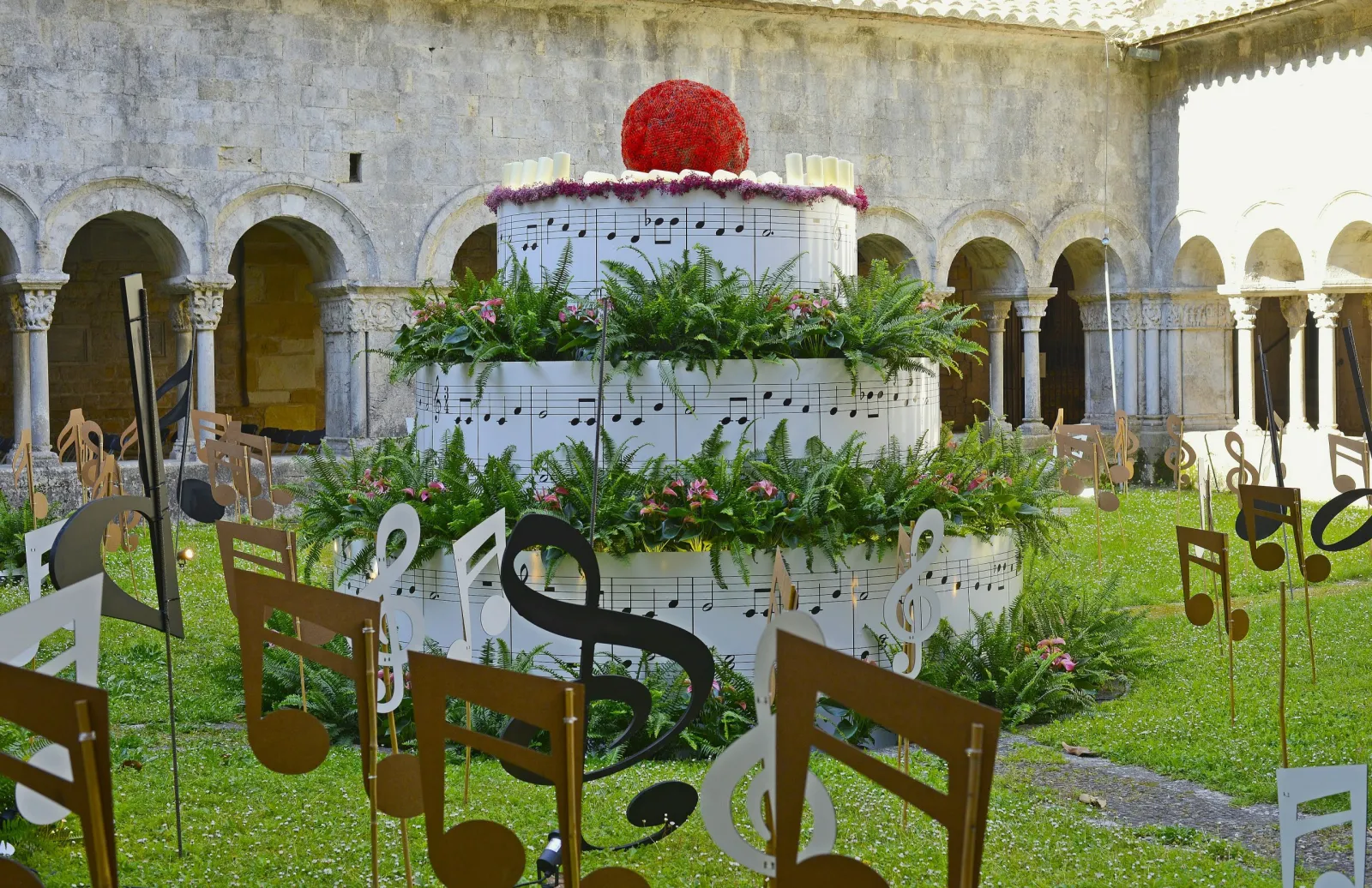
Shop windows across Girona join in through a window-dressing contest, the Mostra d'Aparadorisme, which reached its 22nd edition in 2026, and in recent years the poster has been designed by an art student from the city's Institut Santiago Sobrequés. In 2026 the week also coincided with the Girona A Cappella Festival and the Night of Museums. The festival has added two quiet rooms (Espais Calma) at CaixaForum and the Barri Vell-Mercadal civic centre, rest areas with benches and an adapted route for people with reduced mobility.
Gallery
History & Origins
The festival began in 1954, when a group of young flower lovers, among them Josep Tarrés, Maria Cobarsí and Dr Miquel Oliva, organised a provincial flower contest and exhibition in the foyer of Girona's Teatre Municipal. The room was soon too small, and the show moved to the Biblioteca Pública, then to the monastery of Sant Pere de Galligants and the convent and cloister of Sant Domènec, before spreading out into the patios and gardens of the old quarter, the Plaça dels Jurats and the cathedral cloister.
David Marca and Maria Cobarsí founded the Amics de les Flors association in 1977, and from 1979 the exhibition was organised in its name. In 1982 Sant Domènec became a main venue, and Rosa Maria Labayen of the Amics de la Girona Antiga persuaded neighbours to open their patios along the way to it; from 1983 her association helped open many private patios and gardens that stay closed the rest of the year. In 1992 Girona City Council became fully involved, and the exhibition grew into the city-wide event it is today. It has also adapted to new times: during the 2024 drought, organisers favoured native and dry-climate species and dried flowers and watered only on set-up day with rainwater. The 72nd edition follows in 2027.
What to Expect
Temps de Flors is a walking festival. Pick up the map, start in the Barri Vell and follow the route through narrow medieval streets, stairways and courtyards. Seeing the main spaces takes most of a day; seeing everything takes longer.
Expect queues at the most popular spaces, such as the cathedral steps and the best-known patios. In 2026 the busiest days were the weekends, Mondays and Thursdays, so a Tuesday or Wednesday visit, or an evening visit to the Flors de nit spaces, is calmer. Wear comfortable shoes: the old quarter is hilly and full of steps.
Installations range from traditional flower arrangements to large contemporary pieces with light, sound or a social message, and each year's mix is different. If you need a break, look for the benches and rest areas along the route; in 2026 visitors with a disability certificate could also get an accreditation for priority access to the queues.
How to Get There
By train: the organisers recommend coming by train, high-speed train or bus. Girona station is in the city centre and has high-speed services to Barcelona, Figueres and France; from there it is a walk to the old quarter.
By air: Girona-Costa Brava airport is close to the city, and Barcelona El Prat is connected by high-speed train.
By car: park on the outskirts to avoid queues. During the festival the city adds shuttle buses to stops near the Barri Vell and extends urban bus hours. In 2026 there were also 30 free parking spaces in Carrer de Berenguer Carnicer for drivers with a reduced-mobility badge.
Tips & Advice
- Check the spaces map and timetable on the official Temps de Flors website before you go.
- Visit midweek and start early, or come back in the evening for Flors de nit.
- Start with the cathedral steps first thing in the morning, before the queues build up.
- Day-trip by train from Barcelona if Girona hotels are full; book early if you want to stay in Catalonia's north.
- Be patient in the narrow streets and on stairways, and don't touch the installations.
Photos: Arnaugir / CC BY-SA 3.0 / Wikimedia Commons; Alberto-g-rovi / CC BY 4.0 / Wikimedia Commons
La Mercè
Barcelona, CataloniaLa Mercè (officially Festa Major de Barcelona) is Barcelona's largest annual festival, celebrating the city's patron saint, Our Lady of Mercy. Held every year around 24 September, it transforms the city into a four-day programme of over 600 free events — world-class concerts, traditional Catalan folk displays, fire runs, human towers, and open-air parties across every neighbourhood.
Diada de Sant Jordi
Barcelona, CataloniaOn April 23rd, Catalonia celebrates its most romantic tradition. Streets fill with stalls selling books and roses as couples exchange gifts: a rose for her, a book for him.
Medieval Market of Vic
Vic, CataloniaFrom 5 to 8 December 2026, Vic’s historic centre becomes a medieval town from 10:00 to 20:00 daily. The official 30th-anniversary edition confirms old-trade demonstrations, artisan and food stalls, music, parades, dance, medieval characters and new shows and spaces.
Diada de Catalunya
Barcelona, CataloniaCatalonia's National Day on September 11th commemorates the fall of Barcelona in 1714 with massive demonstrations, cultural events, castells (human towers) and sardana dancing.