Castilla-La Mancha
Don Quixote's land with windmills, vineyards, and deeply rooted traditions
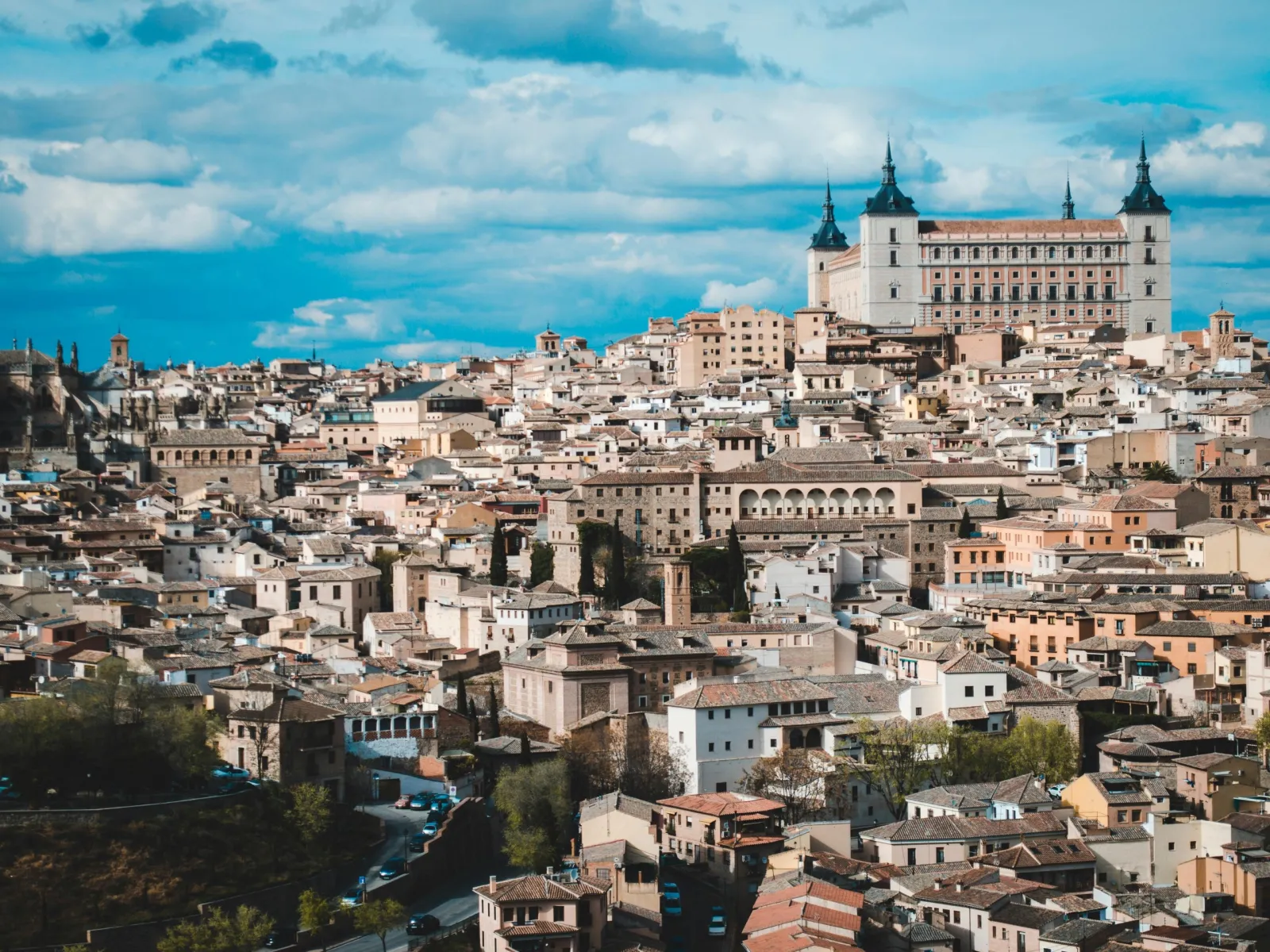
Castilla-La Mancha is Don Quixote country — Cervantes set his novel's adventures across this vast, flat interior plateau, and its windmills, still standing on ridgelines near Consuegra and Campo de Criptana, remain the region's most recognisable image worldwide. Beyond the literary association, this is genuinely one of the largest wine-producing regions on earth by area, and the source of Spain's saffron, grown around Toledo in fields that turn purple each autumn during the harvest.
Toledo itself, the former imperial capital, carries a rare layered history of coexistence between Christian, Muslim and Jewish communities visible in its architecture and earns its UNESCO World Heritage status on that basis. The region's four festivals here — including Corpus Christi celebrations in Toledo among Spain's most elaborate — carry a strong religious and historical character reflecting the deep Catholic tradition of central Spain, set against a landscape of vineyards, olive groves and genuinely vast open horizons.
Highlights
- Don Quixote country — Cervantes set his novel across this landscape, and its windmills remain iconic
- Major wine region — one of the largest wine-growing areas on earth by surface area
- Toledo's layered history — UNESCO status reflects centuries of Christian, Muslim and Jewish coexistence
- Saffron harvest — fields around Toledo turn purple each autumn
Festivals in Castilla-La Mancha
Corpus Christi de Toledo
Toledo, Castilla-La ManchaToledo's Corpus Christi is Spain's most spectacular religious procession. Medieval streets are covered with awnings and aromatic herbs as the golden Custodia de Arfe — a 16th-century masterpiece standing 3 metres tall — processes through the ancient capital.
Feria de Albacete
Albacete, Castilla-La ManchaEleven days and nights of fair in honour of the Virgen de los Llanos, centred on Albacete's unique pan-shaped fairground and its famous iron gate.
Holy Week in Toledo
Toledo, Castilla-La ManchaToledo's Holy Week is known for its sobriety: some twenty brotherhoods carry their images through the narrow lanes of the UNESCO-listed old town, often late at night and in near silence.
Holy Week in Cuenca
Cuenca, Castilla-La ManchaIn Cuenca the whole cliff-top old town becomes the Via Dolorosa, with one procession a day telling the Passion in order, and the drums and bugles of the Turbas announcing Good Friday at dawn.
Medieval Festival of Sigüenza
Sigüenza, Castilla-La ManchaThe Jornadas Medievales de Sigüenza transform this magnificent castle town into a living medieval spectacle every July. With jousting tournaments beneath the imposing castle-parador, a sprawling artisan market, theatrical battles, medieval banquets and hundreds of costumed participants, Sigüenza offers one of Spain's most authentic and atmospheric medieval experiences. Declared a Festival of Regional Tourist Interest.
Fiesta de la Rosa del Azafrán
Consuegra, Castilla-La ManchaThe 2027 edition is expected on 23–24 October (to be confirmed by Consuegra Town Council). The 2026 programme ran 17–25 October, with saffron-flower stripping contests, guided routes, gastronomy, the Molienda de la Paz and folklore.
Fiesta de las Mondas
Talavera de la Reina, Castilla-La ManchaTalavera de la Reina's ancient spring festival combines pre-Roman harvest offerings with Christian processions, bull runs and colourful parades in one of Castilla-La Mancha's oldest celebrations.
Festivals in Castilla-La Mancha by month
- April
- Fiesta de las Mondas (Talavera de la Reina)
- October
- Fiesta de la Rosa del Azafrán (Consuegra)
How to Get There
The region has no major airport of its own; most visitors arrive via Madrid, with high-speed AVE trains reaching Toledo in under 40 minutes and Ciudad Real in under an hour. A car is genuinely useful for reaching the windmill towns and vineyard country beyond the main cities.
Tips & Advice
Toledo makes an easy day trip from Madrid, but staying overnight lets you see the old city after the day-trippers leave, when it's far quieter. Corpus Christi in Toledo draws large crowds — book ahead if visiting for the festival specifically. The region's flat, exposed terrain means summer heat is intense with little shade.