Feria de Albacete
Eleven days and nights of fair in honour of the Virgen de los Llanos, centred on Albacete's unique pan-shaped fairground and its famous iron gate.
The days that matter
-
6 Sep
Pregón and the Manchegos de la Feria
The eve of the fair: the official pregón at the Museo Municipal and the choice of the couples who will represent the city in Manchego dress.
-
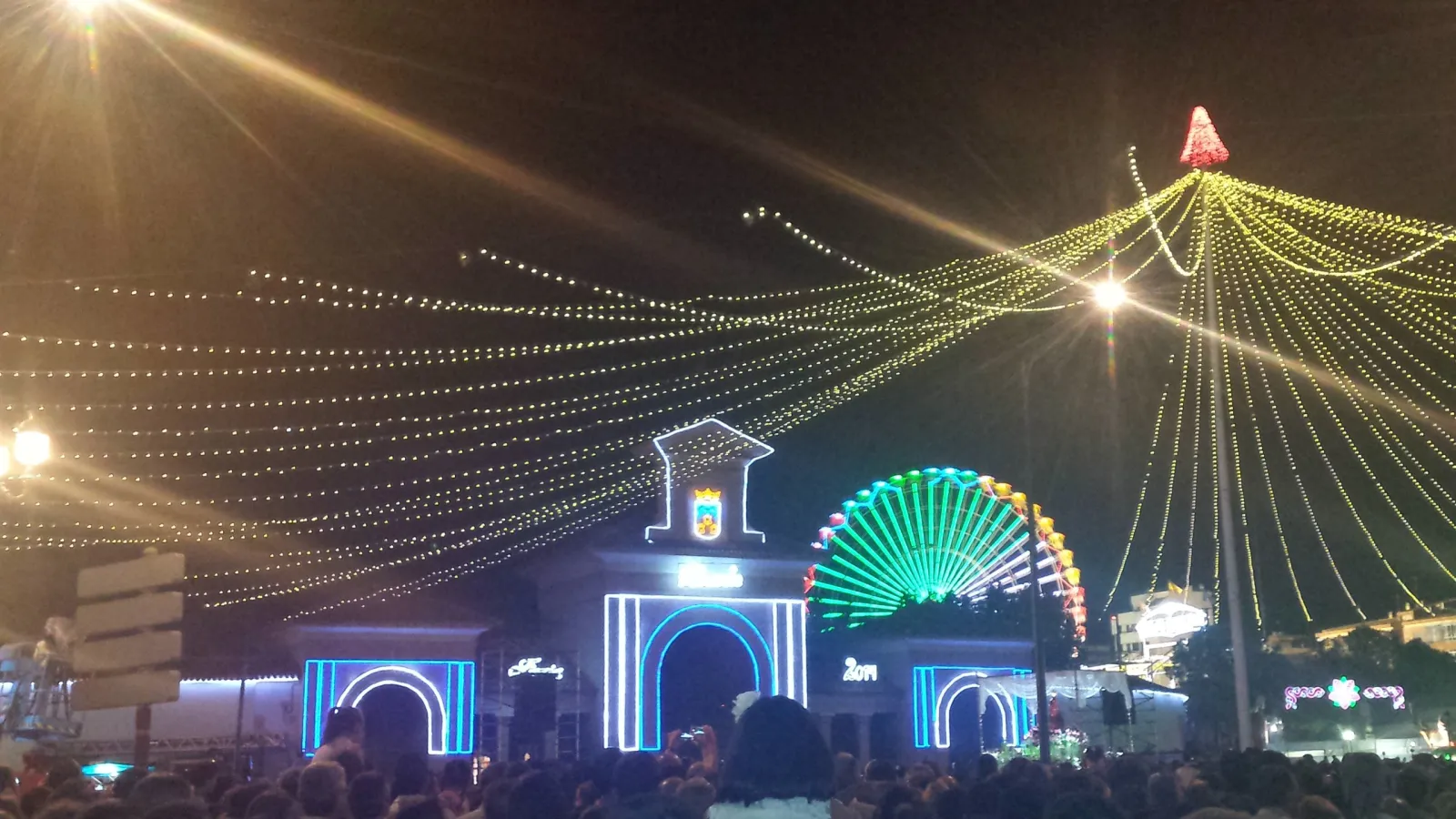
7 Sep evening; gate at night
Cabalgata and opening of the Puerta de Hierros
Floats, peñas and bands take the Virgen de los Llanos to the fairground; Manchego dances precede the mayor unlocking the gate.
-
8 Sep
Virgen de los Llanos
The patron's feast day and a local holiday in Albacete.
-
First Sunday
Flower offering
Thousands walk from the cathedral to the Virgin's chapel at the fairground with flowers.
-
17 Sep
Open-air mass and closing
A mass in front of the Virgin's chapel on the fairground closes the fair before she returns to the city.
What Feria de Albacete is like
- Night
- Family
- Food & drink
- Loud
- Noise
- Music from casetas and marquees late into the night
- Fire
- Fairground lights rather than fire
- Crowds
- Huge on the opening night and the first weekend
- Mess
- Confetti and streamers at parades
- With kids
- Rides, tombola and daytime parades; nights are for adults
Highlights
The opening Cabalgata and the unlocking of the Puerta de Hierros on the night of 7 September
Wandering the rings of La Sartén and drinking under the modernist Templete
The flower offering to the Virgen de los Llanos on the first Sunday of the fair
Night concerts at the Caseta de los Jardinillos and the casetas around the fairground
The bullfighting fair at the Plaza de Toros de Albacete
Feria de Albacete 2027: fixed dates
The Feria de Albacete always runs from 7 to 17 September, so the 2027 edition goes from Tuesday 7 to Friday 17 September 2027; Spain's official tourism portal lists these dates. It is held in honour of the Virgen de los Llanos, the city's patron, and is Albacete's great annual fiesta. It was declared a Fiesta de Interés Turístico Internacional on 1 September 2008. The night before, on 6 September, the official pregón is read at the Museo Municipal in the Plaza del Altozano, and the couples who will represent the city in Manchego dress, the Manchegos de la Feria, are chosen.
The fairground: La Sartén
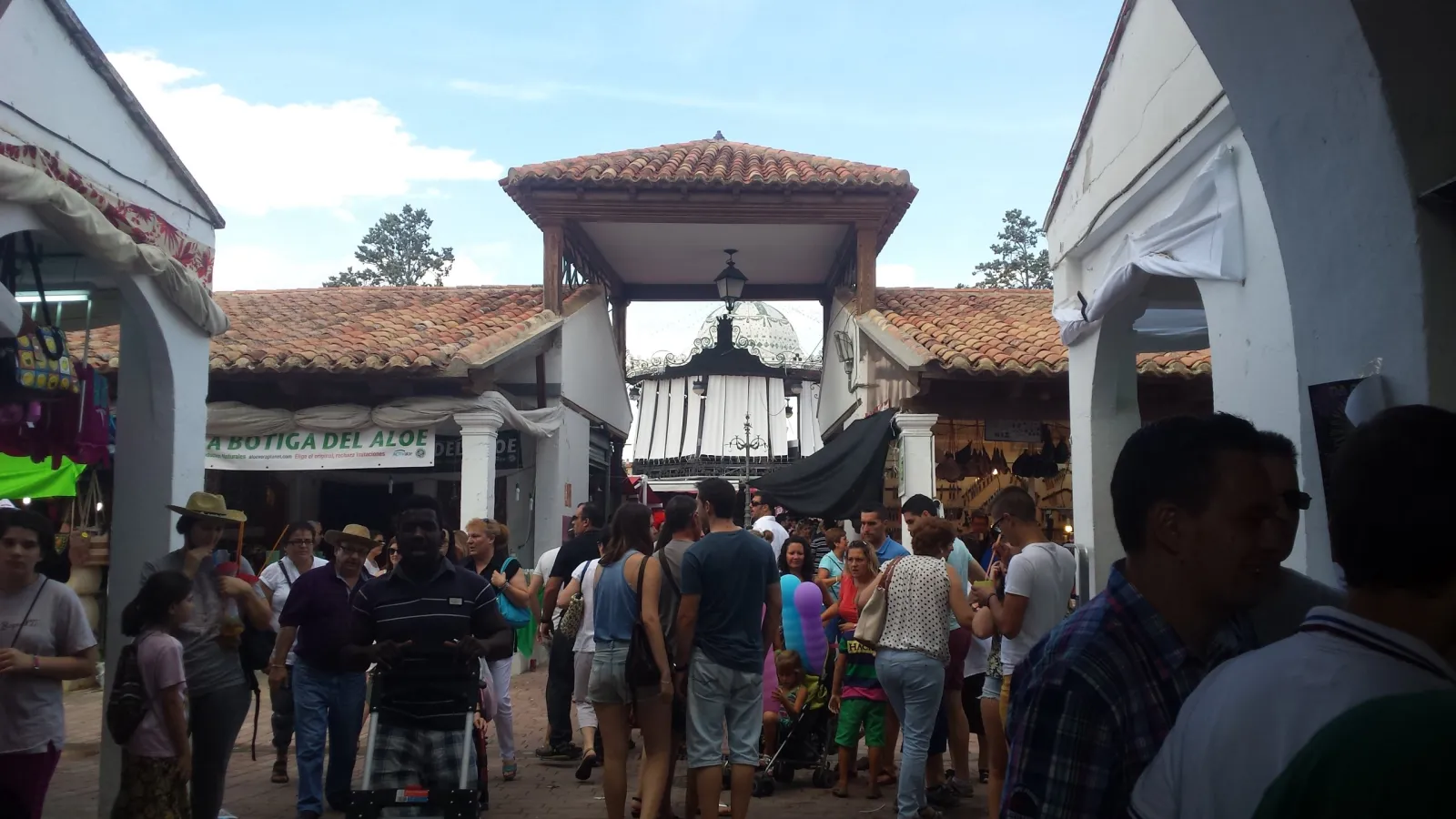
What makes this fair unique is its home. The Recinto Ferial, built in 1783 on the old threshing grounds of Santa Catalina, is a listed monument shaped like a frying pan: concentric rings of arcaded stalls (the "pan") and a long entrance avenue (the "handle"). Locals call it La Sartén or Los Redondeles. At its centre stands a modernist bandstand, the Templete, built in 1912, and the entrance is the white-brick Puerta de Hierros, the symbol of the fair: 36 metres wide and 25 high, lit up in different colours every year. Each ring has its own character: the Templete becomes an open-air dance floor, the second ring is lined with toy, craft and ceramics stalls and Albacete's famous knives, and the third ring is packed with bars.
The Cabalgata and the gate
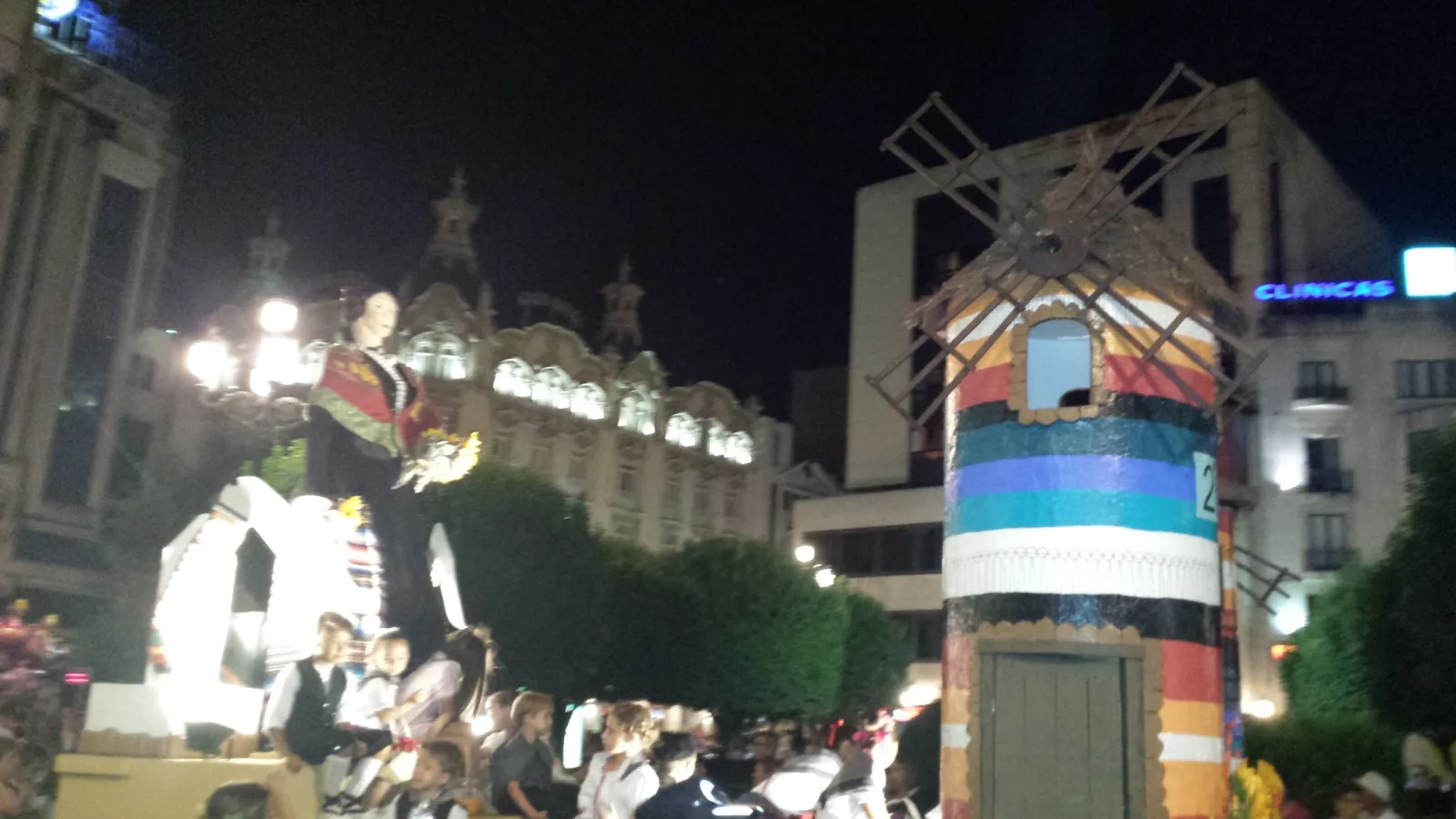
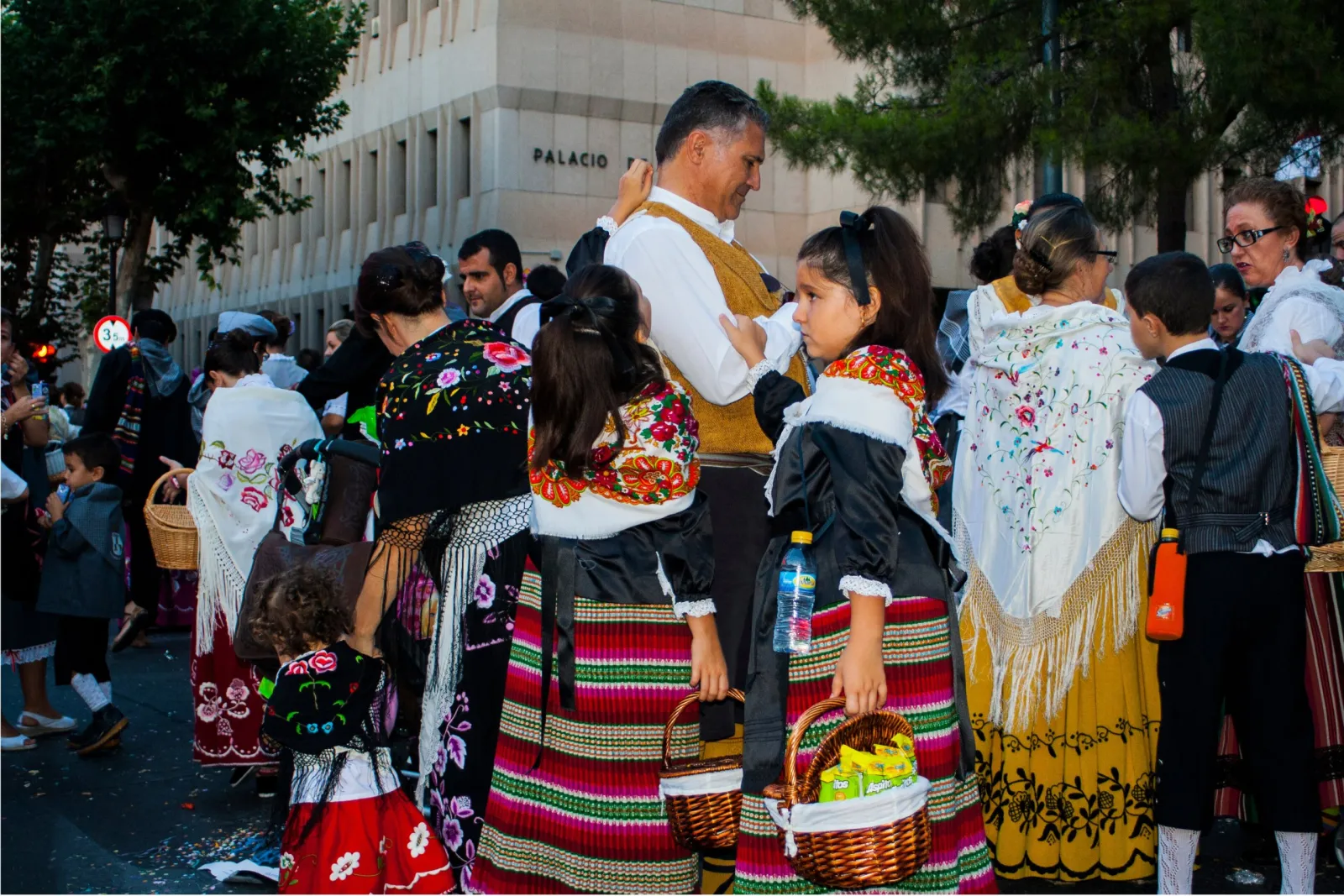
The fair opens on the evening of 7 September with the Cabalgata, a long parade of around a hundred floats, peñas, brass bands and people in Manchego dress that sets off from the Avenida de España and takes the image of the Virgen de los Llanos to the fairground. At 22:00, after the Manchegos de la Feria dance in front of it, the mayor turns the key in the Puerta de Hierros, and then carries the Virgin to her chapel inside the fairground, where she presides over the fair. The next day the same floats return for the Batalla de Flores, showering the crowd with streamers and confetti.
Eleven days of fiesta
From then on the city barely sleeps: the Paseo de la Feria with rides and the Cáritas charity tombola, running since 1953; free-entry casetas and marquees around the fairground with Manchego dances, flamenco, rock or DJs; a Feria de la Tapa and a regional crafts fair on the esplanade; big-name concerts every night at the Caseta de los Jardinillos, which holds over 6,000 people; and one of Spain's leading bullfighting fairs in the bullring next door, opened in 1917. On the first Sunday, more than 30,000 people carry flowers from the cathedral to the Virgin's chapel, and on 17 September an open-air mass on the fairground closes the fair.
Gallery
History & Origins
Albacete's fair is one of the oldest in Spain. A document from 1325 already mentions the fairs of Albacete, and in 1375, when Albacete became a town (villa) separate from Chinchilla, it received the right to hold an annual fair. On 6 March 1710, in the middle of the War of the Spanish Succession, Philip V granted the privilege of a four-day tax-free fair from 7 to 11 September, linked to the feast of the Virgen de los Llanos.
For years the fair was split between the town and the Franciscan convent at Los Llanos, until the council built a dedicated fairground on the threshing grounds of Santa Catalina. It opened on 7 September 1783 and has been extended many times since: iron columns in 1876, the modernist Templete in 1912, a third ring in 1944 and the present Puerta de Hierros in 1974. The fair has only been suspended in 1937–1938, during the Civil War, and in 2020 because of the pandemic.
What to Expect
Expect a city-wide party that runs around the clock for eleven days. By day the fairground is relaxed: families stroll the rings, eat at the stalls and casetas and ride the attractions on the Paseo. From late afternoon the bullfights fill the plaza next door, and at night the casetas and the Templete turn into open-air dance floors, with music until dawn in some marquees.
The busiest moments are the opening Cabalgata on the evening of 7 September, the first weekend, with the flower offering to the Virgen de los Llanos, and the closing day, 17 September, when an open-air mass is held at the fairground before the Virgin returns to the city. Wear comfortable shoes: the fairground and its surroundings cover a large area.
How to Get There
Albacete is on the high-speed line between Madrid and Alicante. AVE and other long-distance trains stop at Albacete-Los Llanos station, about 1.5 hours from Madrid, and the station is within walking distance of the centre. By road, the A-31 links Albacete with Madrid and Alicante and the A-30 with Murcia. The nearest large airports are Valencia, Alicante and Madrid.
The fairground is next to the city centre, beside the bullring and the Jardinillos park, so once in town you can walk everywhere. An underground car park under the Paseo de la Feria helps, but expect it to fill on the busy nights.
Tips & Advice
- Find a spot on the Cabalgata route early on 7 September; the parade lasts several hours and ends at the Puerta de Hierros.
- Book accommodation well ahead: the city fills for the whole fair, especially the first weekend.
- Check the official programme published by the Ayuntamiento de Albacete before the fair for concert line-ups and bullfight tickets.
- Try the fair classics: a cold beer with prawns in a caseta, and miguelitos with a drink at the stalls.
- Bring a light jacket: September nights on the La Mancha plateau can be cool after hot days.
Photos: JPOK / CC BY-SA 4.0 / Wikimedia Commons; Angel Aroca Escámez / CC BY-SA 3.0 / Wikimedia Commons
Fiesta de la Rosa del Azafrán
Consuegra, Castilla-La ManchaThe 2027 edition is expected on 23–24 October (to be confirmed by Consuegra Town Council). The 2026 programme ran 17–25 October, with saffron-flower stripping contests, guided routes, gastronomy, the Molienda de la Paz and folklore.
Fiesta de las Mondas
Talavera de la Reina, Castilla-La ManchaTalavera de la Reina's ancient spring festival combines pre-Roman harvest offerings with Christian processions, bull runs and colourful parades in one of Castilla-La Mancha's oldest celebrations.
Corpus Christi de Toledo
Toledo, Castilla-La ManchaToledo's Corpus Christi is Spain's most spectacular religious procession. Medieval streets are covered with awnings and aromatic herbs as the golden Custodia de Arfe — a 16th-century masterpiece standing 3 metres tall — processes through the ancient capital.
Holy Week in Toledo
Toledo, Castilla-La ManchaToledo's Holy Week is known for its sobriety: some twenty brotherhoods carry their images through the narrow lanes of the UNESCO-listed old town, often late at night and in near silence.