Andalusia
Southern Spain, home to flamenco, tapas, and the most passionate fiestas
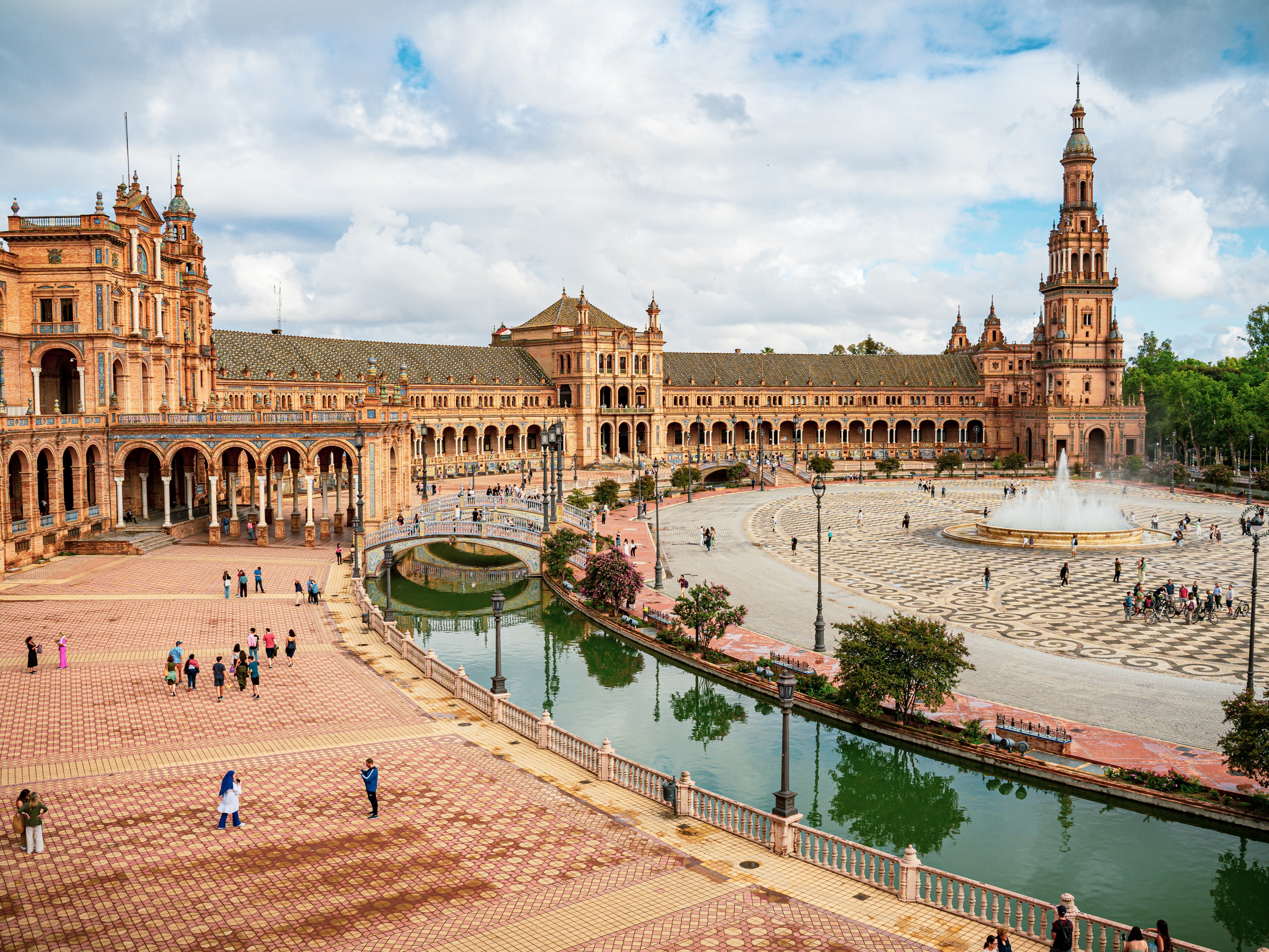
Andalusia carries more festival weight than any other region in Spain, and it shows: 19 festivals on this site alone, from Seville's Feria de Abril to Cádiz's Carnival to the silent processions of Semana Santa. The region's eight provinces — Seville, Málaga, Granada, Córdoba, Cádiz, Huelva, Jaén and Almería — share a common thread of Moorish heritage layered under nearly eight centuries of Al-Andalus rule, visible today in the Alhambra, the Mezquita of Córdoba and the Giralda of Seville, and audible in flamenco, a musical tradition born from the fusion of Andalusian, Romani, Jewish and North African influences.
What sets Andalusia apart is how completely festivals are woven into daily life rather than confined to a single week. Spring alone brings Semana Santa's hooded penitents, the flower-filled patios of Córdoba, and the sherry-soaked Feria del Caballo in Jerez before Seville's own April Fair closes out the season. Whitewashed hill towns, olive groves running to the horizon and a genuinely hot, dry summer climate make Andalusia feel distinct from the rest of Spain — closer in spirit, some say, to North Africa than to Madrid.
Highlights
- Flamenco's birthplace — Seville, Jerez and Cádiz all claim deep roots in the art form
- Moorish architecture — the Alhambra, the Mezquita and the Giralda rank among Spain's most visited monuments
- Spain's hottest region — summer temperatures regularly pass 40°C inland, so festival season concentrates in spring and autumn
- Sherry and tapas culture — Jerez, Cádiz and Seville anchor Spain's tapas-bar tradition
Festivals in Andalusia
Fiesta de la Virgen del Carmen
On July 16th, every fishing village and coastal town in Spain honours the Virgen del Carmen, patron saint of fishermen and sailors. Statues of the Virgin are carried in procession to the sea and placed on decorated boats for a maritime parade — one of Spain's most photogenic summer traditions.
 September
Bienal de Flamenco
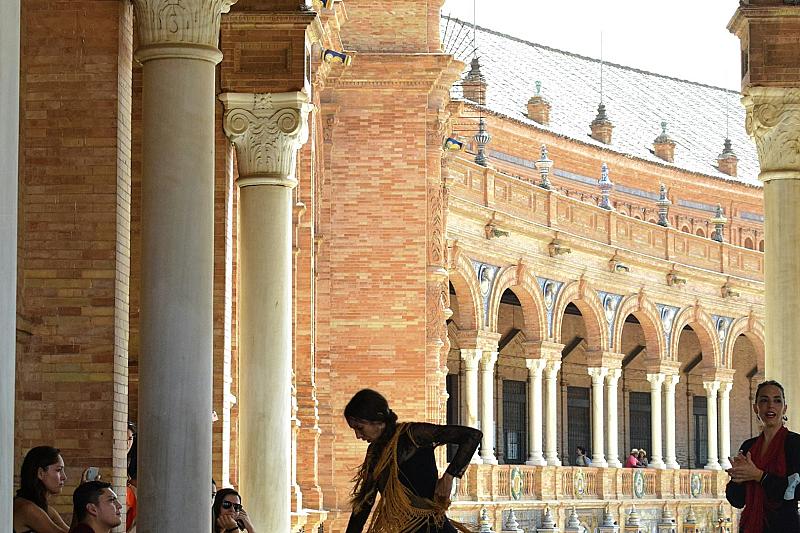
The Bienal de Flamenco de Sevilla is the most important flamenco event in the world. Held every two years in the spiritual home of flamenco, this month-long festival brings together the finest artists in cante (singing), baile (dance) and toque (guitar) for dozens of performances across Seville's most atmospheric venues. From legendary masters to boundary-pushing newcomers, the Bienal is where flamenco's past, present and future converge.
Romería de la Virgen de la Cabeza
Spain's oldest pilgrimage brings over 500,000 devotees to the sanctuary atop the Sierra Morena mountains near Andújar every April, with decorated wagons, horseback riders and flamenco.
 May
May
Patios Festival (Córdoba)
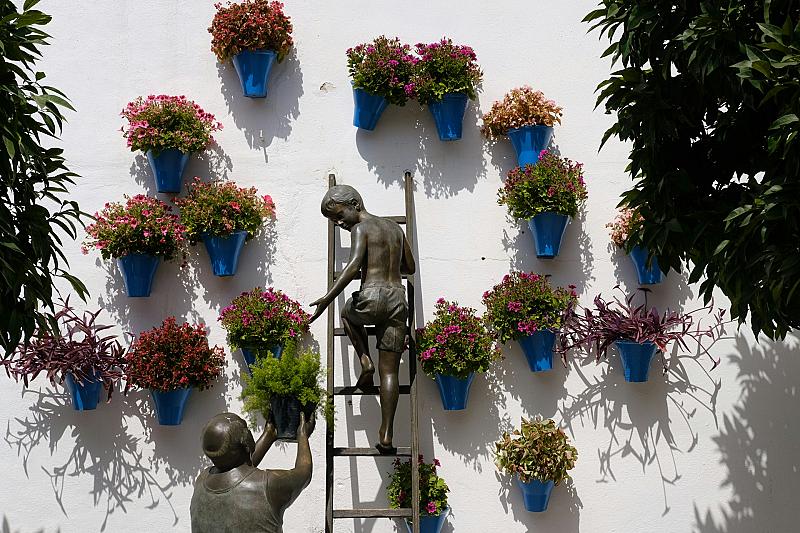
The Córdoba Patios Festival (Fiesta de los Patios) is held each May, when private courtyards open to the public and compete for prizes based on floral decoration and traditional design.
 August
Feria de Málaga
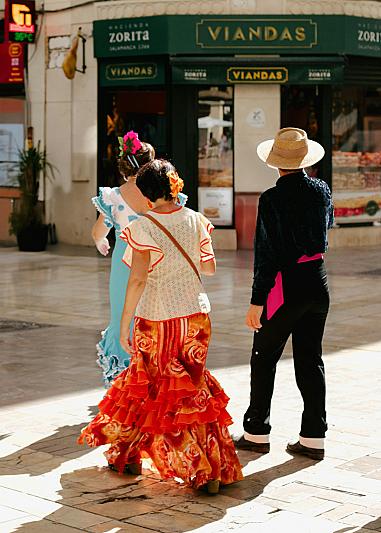
Feria de Málaga is the city’s major August fair, combining daytime celebrations in the historic center with nighttime festivities at the fairground (Real de la Feria).
 September
Fiesta del Cascamorras
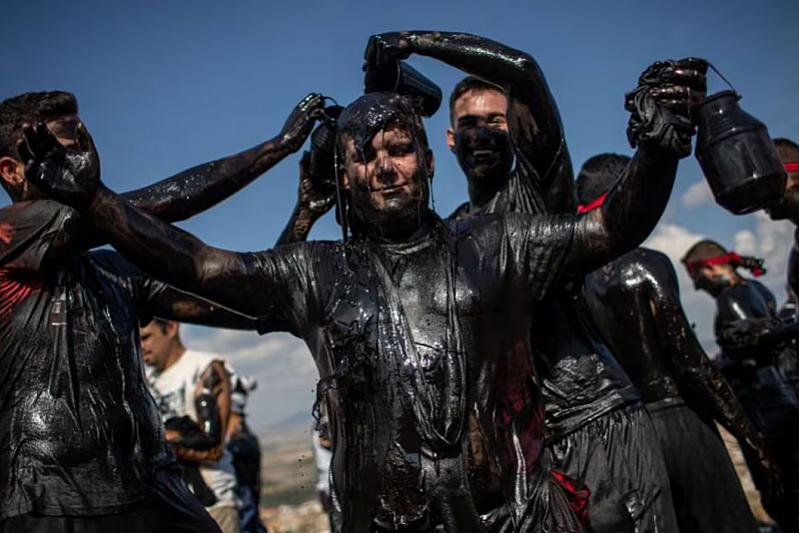
The Fiesta del Cascamorras is one of Spain's most extraordinary and bizarre festivals. Every 6 September, a man covered in black grease (the Cascamorras) attempts to run from the town of Guadix to Baza to reclaim a statue of the Virgin of Piedad — while thousands of equally grease-covered locals try to stop him. The result is a spectacular, chaotic, oil-black mass of humanity. Declared a Festival of International Tourist Interest, it's an ancient rivalry turned into joyful, slippery mayhem.
 October
Romería de Valme
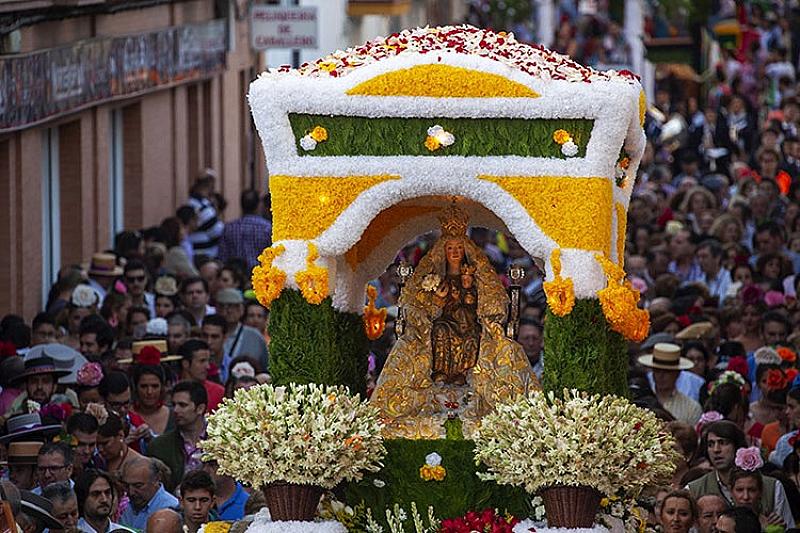
One of Andalusia's grandest pilgrimages brings thousands of decorated carts, horseback riders and flamenco singers from Dos Hermanas to the Valme hacienda on the third Sunday of October.
How to Get There
Andalusia is served by four main airports: Málaga (the busiest, with extensive European budget-carrier routes), Seville, Granada and Jerez. High-speed AVE trains connect Madrid to Seville in under 2.5 hours and to Málaga in under 3, making the region easily reachable without flying. Within Andalusia, trains and buses link the main cities well, though a car is useful for reaching smaller festival towns and the white villages of the interior.
Tips & Advice
Book well ahead for Semana Santa and Feria de Abril in Seville — these are the region's two biggest draws and hotel prices multiply accordingly. Inland Andalusia is genuinely one of the hottest places in Europe in July and August, so spring (March–May) and autumn (September–October) are the more comfortable times to combine festival-going with sightseeing. Many festivals are religious processions rather than parties — dress and behave accordingly if attending Semana Santa.