Ortigueira Celtic World Festival
Founded by a pipe school in 1978, Ortigueira's Celtic World Festival fills this small Galician harbour town with folk concerts, pipe bands and campers every July. Free, and of International Tourist Interest since 2005.
The days that matter
-
Wed 7 Jul
Festival opens
The five-day 2027 edition begins. Campers start arriving at Morouzos and the town fills with music.
-
7–11 Jul, afternoons
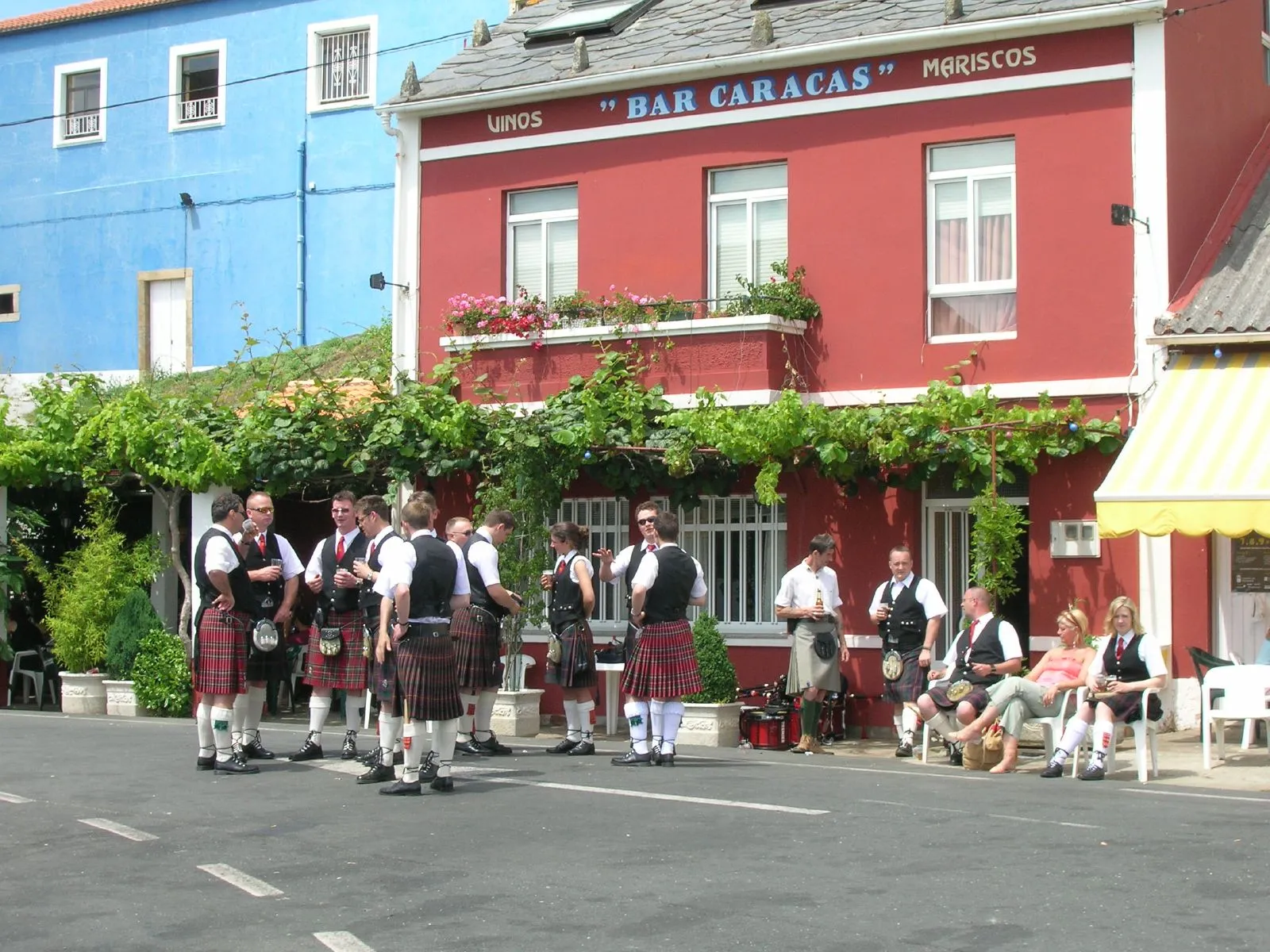
Pipe bands at the Casa do Concello
Pipe bands perform in front of the town hall, one of the most traditional moments of the festival.
-
7–11 Jul, nights
Main stage concerts
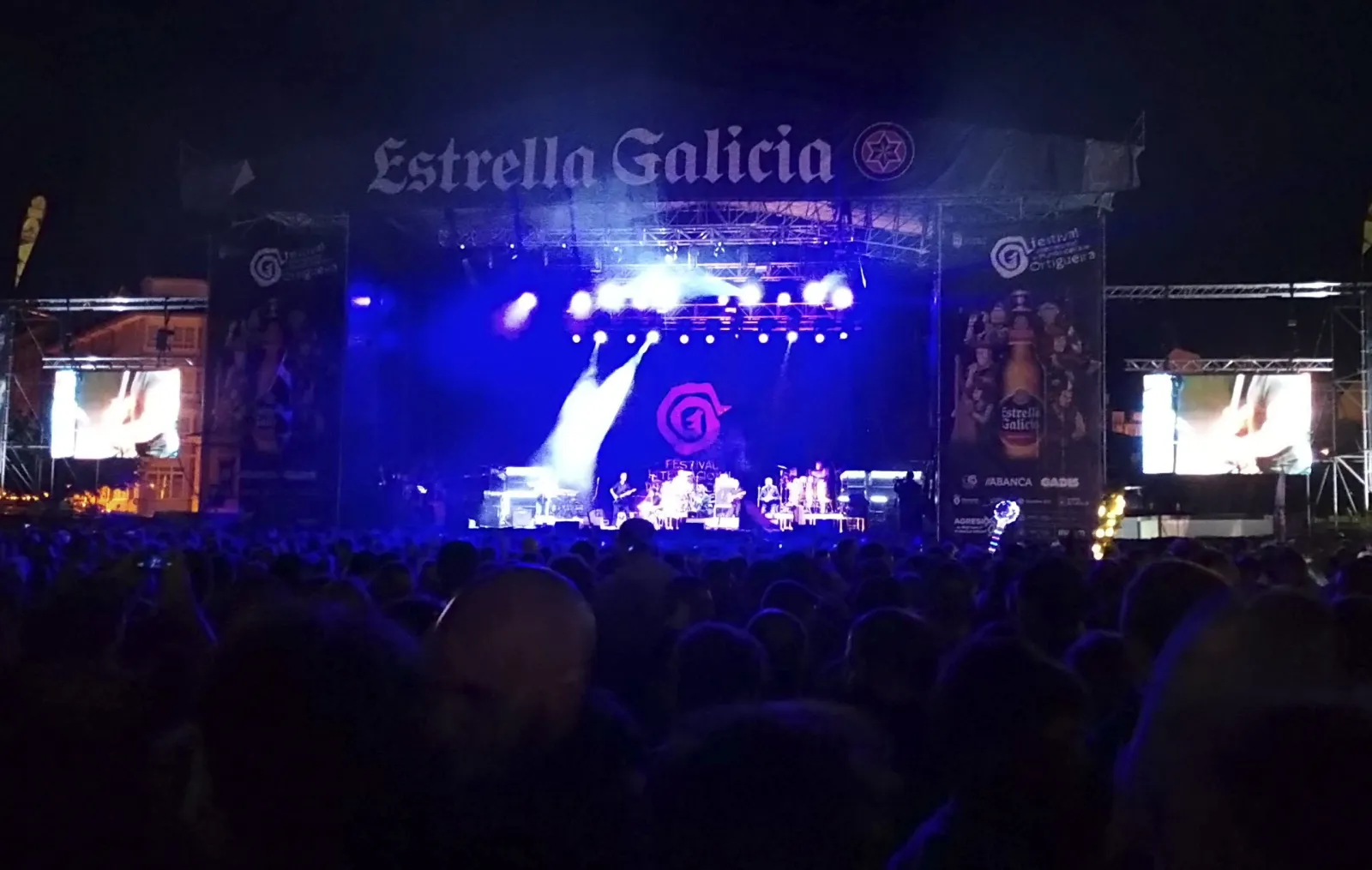
Headline folk acts play on the main stage on the marina esplanade, followed by music in the streets.
-
Sun 11 Jul
Pipe band parade
The traditional parade of pipe bands through the streets of Ortigueira on the final day.
What Ortigueira Celtic World Festival is like
- Free
- Loud
- Night
- Noise
- Pipes and drums by day, concerts and street music late into the night
- Crowds
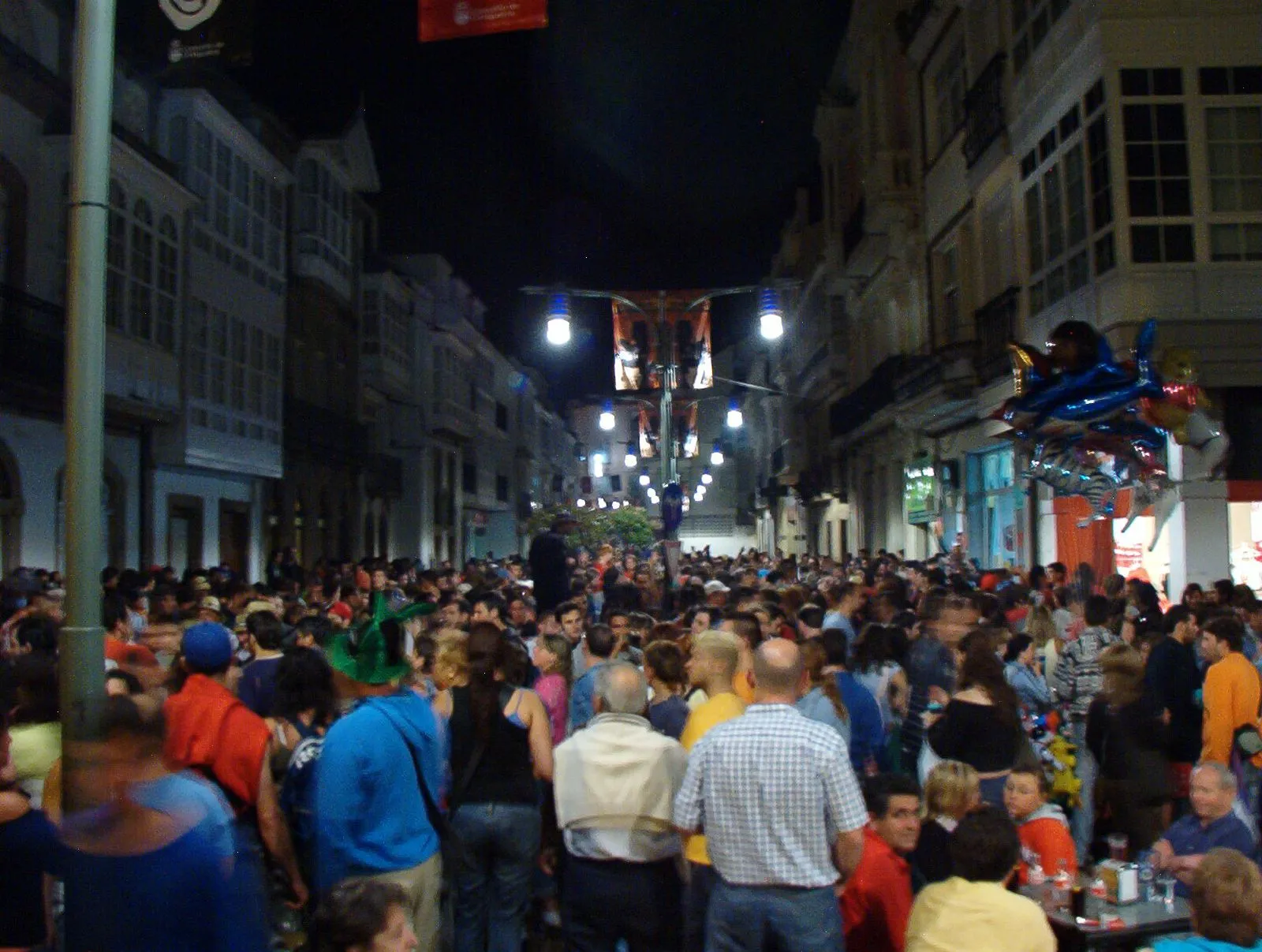
- A small town packed with festivalgoers and campers
- Mess
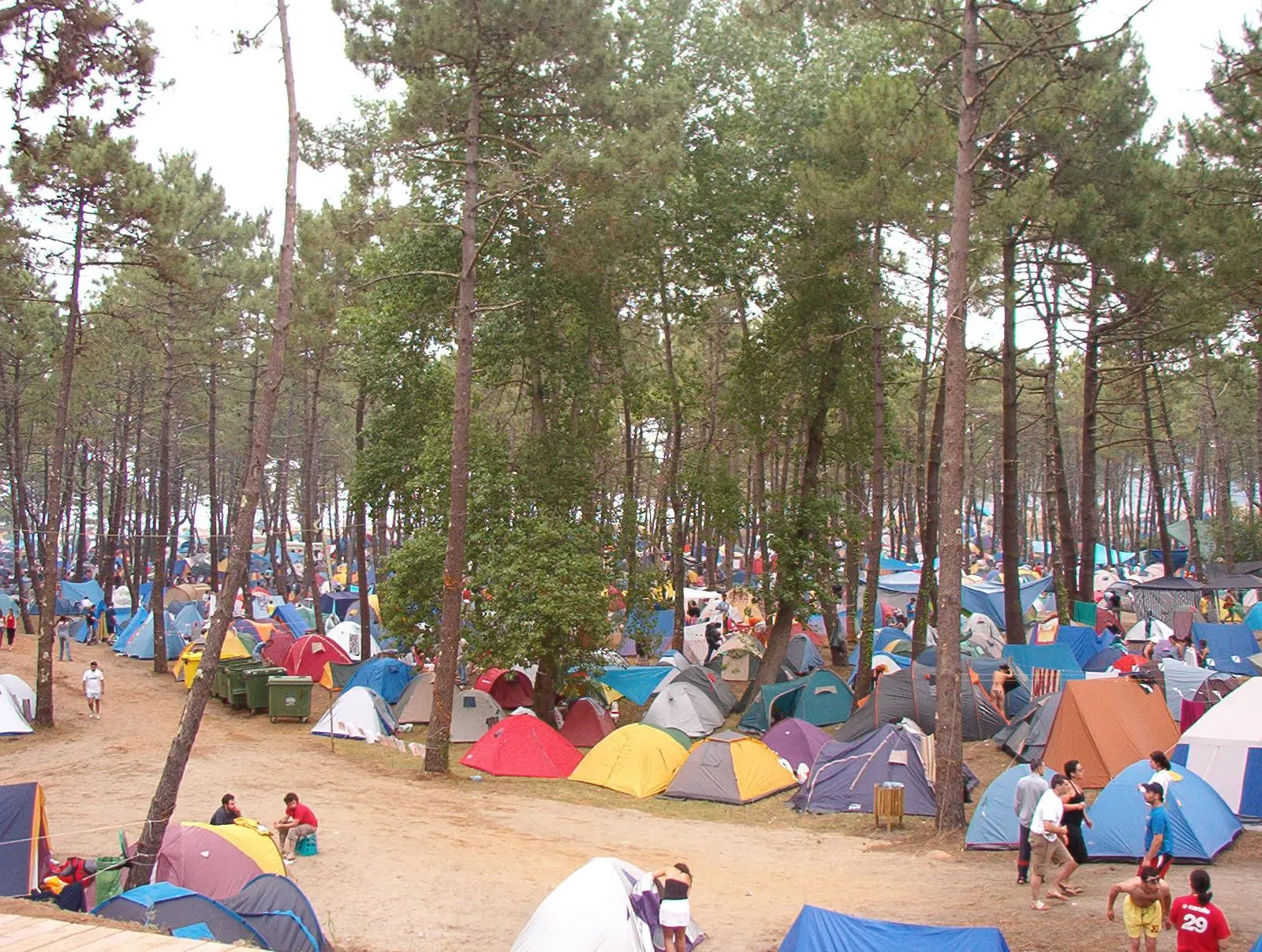
- Camping life: sand, pine needles and rain showers
- With kids
- Daytime pipe bands and beach suit families; nights are for adults
Highlights
- Night concerts on the main stage by the marina, with the estuary behind the bands
- The Sunday pipe band parade through the streets
- Afternoon pipe band performances in front of the Casa do Concello
- Street musicians and sessions after the main concerts
- Camping in the pine wood next to the long, dark-sand Morouzos beach
Every July, Ortigueira, a small town on an estuary on the north coast of A Coruña, becomes the meeting point of Celtic music in Spain. The Festival Internacional do Mundo Celta brings folk bands from Galicia, Asturias, Brittany, Ireland, Scotland and beyond to a stage by the sea. The 2027 edition runs from Wednesday 7 to Sunday 11 July, as the organisers announced on the official website in October 2026.
The festival is organised by the Concello de Ortigueira and the concerts are free. According to the festival, recent editions have drawn around 100,000 people, many of whom camp in the pine wood by Morouzos beach.
Stages and streets
- Main stage: on the esplanade of the marina, by the water, with big video screens on both sides. The big-name folk concerts are held here at night.
- Pipe bands: bands play in front of the Casa do Concello in the afternoons, and on Sunday the traditional pipe band parade crosses the town.
- Teatro de Beneficencia: a 19th-century theatre that hosts parallel activities.
- Street life: street musicians play after the main concerts, and there is a craft fair, the Vila Celta and the Festival na Rúa programme.
The kind of line-up to expect
The 2027 line-up has not been announced yet, but the 2026 edition, held from 8 to 12 July, gives a fair idea. The Estrella Galicia main stage hosted the Irish band Lúnasa, the Irish-American Solas, Yves Lambert Band from Quebec, the Breton Bagad de Vannes and the Galician piper Anxo Lorenzo, alongside Xara from Madrid, winners of the previous year's Runas contest. That year the night concerts began around 23:00 and the headliners went on after midnight. According to the music site La Ganzúa, the 2025 edition drew 110,000 people and sold 32,000 bus tickets.
Runas: the new-band contest
Ortigueira also runs Runas, a contest for emerging folk bands that has been going for almost 30 years. The finalists play the main stage and the winner earns a slot the following year. Past winners include the Basque trikitixa player Xabi Aburruzaga (2014), Böj from Ferrol (2016) and the Polish band Beltaine (2018). The 2026 contest was won by the Belgian trio Aérokorda, by unanimous decision of the jury, so they are confirmed for the 2027 festival.
Recognition
The festival was declared of National Tourist Interest in 2003 and of International Tourist Interest in 2005 (BOE, 28 April 2005).
The full 2027 line-up and timetable will be published on the official website in the months before the festival.
Gallery
History & Origins
The festival was born in 1978, created by the people behind the Escola de Gaitas de Ortigueira, the town's pipe school, then led by Xavier Garrote. For its first years it ran almost without institutional help, kept alive by local volunteers. Concerts were held in a fenced area with paid entry until 1985, when the festival became free.
Money problems and fatigue led to a break after 1987. The festival returned in 1995 with support from the Xunta de Galicia, the provincial council and the town council, which took over the organisation. From 2000 it grew into a much larger event and opened up to folk styles beyond strictly Celtic music. After the pandemic cancellations of 2020 and 2021 it came back in 2022.
What to Expect
Ortigueira is a small town, and during the festival it is packed. Days are relaxed: the beach, pipe bands in the afternoon, food stalls and the craft fair. Nights belong to the main stage and to the streets, where music goes on long after the last concert.
Many visitors camp in the pine wood by Morouzos beach, a 2-km Blue Flag beach in a protected wetland area. The festival asks campers to use the barbecue grills provided, never light fires in the pine wood, keep vehicles out of the dunes and leave their spot clean. There are civil protection teams and ambulances on hand near the camping area, and a health centre open 24 hours in town.
The weather on the north coast changes quickly, even in July: pack warm layers for the nights and a rain jacket.
How to Get There
- Car: the AC-862 coast road links Ortigueira with Ferrol (53 km) and, via the AP-9, with A Coruña (99 km). From Madrid, take the A-6 and then the AC-101 via Vilalba and As Pontes, which ends at the festival's official car park. Supervised parking is free.
- Train: the narrow-gauge Ferrol–Gijón line stops in Ortigueira.
- Bus: Arriva links Ortigueira with the main Galician cities. During the festival a circular bus line has connected the car park, the town bus station and Morouzos.
- Air: A Coruña airport is about 90 km away and Santiago de Compostela about 130 km.
Tips & Advice
- Rooms in Ortigueira are scarce in festival week. Book early, camp at Morouzos, or stay in Ferrol and drive or take the train.
- Do not rely only on your phone to meet friends: mobile networks can saturate around the camping area.
- Pack sunscreen, a swimsuit and a towel for the beach, plus a warm layer and a rain jacket for the nights.
- Never drive after drinking. If you are tired, wait or sleep before setting off.
- Check the official programme in late spring for the line-up and the bus timetables.
Photos: Quique-ast / CC BY-SA 4.0 / Wikimedia Commons; José Antonio Gil Martínez / CC BY 2.0 / Wikimedia Commons; k-naia / CC BY-SA 2.0 / Wikimedia Commons
Festas do Apóstolo
Santiago de Compostela, GaliciaTwo weeks of celebrations honouring St. James, culminating July 25th with the Botafumeiro ceremony, spectacular fireworks, free concerts, and street theatre.
Rapa das Bestas
Sabucedo, GaliciaIn the tiny Galician village of Sabucedo, locals round up wild horses from the mountains and wrestle them with bare hands to trim their manes and tails. This raw, primal 400-year-old tradition is one of Spain's most visceral and unforgettable festivals.
Festa do Albariño
Cambados, GaliciaThe Festa do Albariño in Cambados is Spain's premier white wine festival, celebrating the Rías Baixas region's world-famous grape. Five days of wine tastings, Galician seafood, folk music, and cultural events in a charming coastal town.
Fiesta de Santa Marta de Ribarteme
As Neves, GaliciaThose who survived a near-death experience are carried in open coffins through the streets as thanksgiving to Santa Marta. One of Europe's most unique celebrations.