Sant Joan Festival in Ciutadella (Menorca)
Menorca's most traditional fiesta fills Ciutadella with black Menorcan horses, riders in tailcoats and dense, cheering crowds. It runs on 23 and 24 June, opened by the Diumenge des Be on the Sunday before.
The days that matter
-
Sun 20 Jun
Diumenge des Be
A barefoot man in sheepskins carries a lamb through the old town with the caixers and the fabioler, inviting everyone to the fiesta.
-
Wed 23 Jun 14:00
The ride begins
The riders gather at the Caixer Senyor's house and set off; the ride continues almost without a break until dawn on the 25th.
-
Wed 23 Jun afternoon
Caragol des Born
The riders circle the Born square through the crowd, then head out to the hermitage of Sant Joan de Missa.
-
Thu 24 Jun evening
Jaleo and Jocs des Pla
Horses rear to the jaleo, then the medieval games by the harbour: s'ensortilla, ses carotes and córrer abraçats.
What Sant Joan Festival in Ciutadella (Menorca) is like
- Procession
- Loud
- Free
- Noise
- Band, fabiol and a roaring crowd around the horses
- Crowds
- Squares packed shoulder to shoulder on the 23rd and 24th
- Mess
- Hazelnuts fly on Sa Contramurada on the 23rd; otherwise heat and crowds
- With kids
- Watch from the edges; the jaleo is no place for small children
Highlights
- The Diumenge des Be: a man in sheepskins carries a lamb through the streets
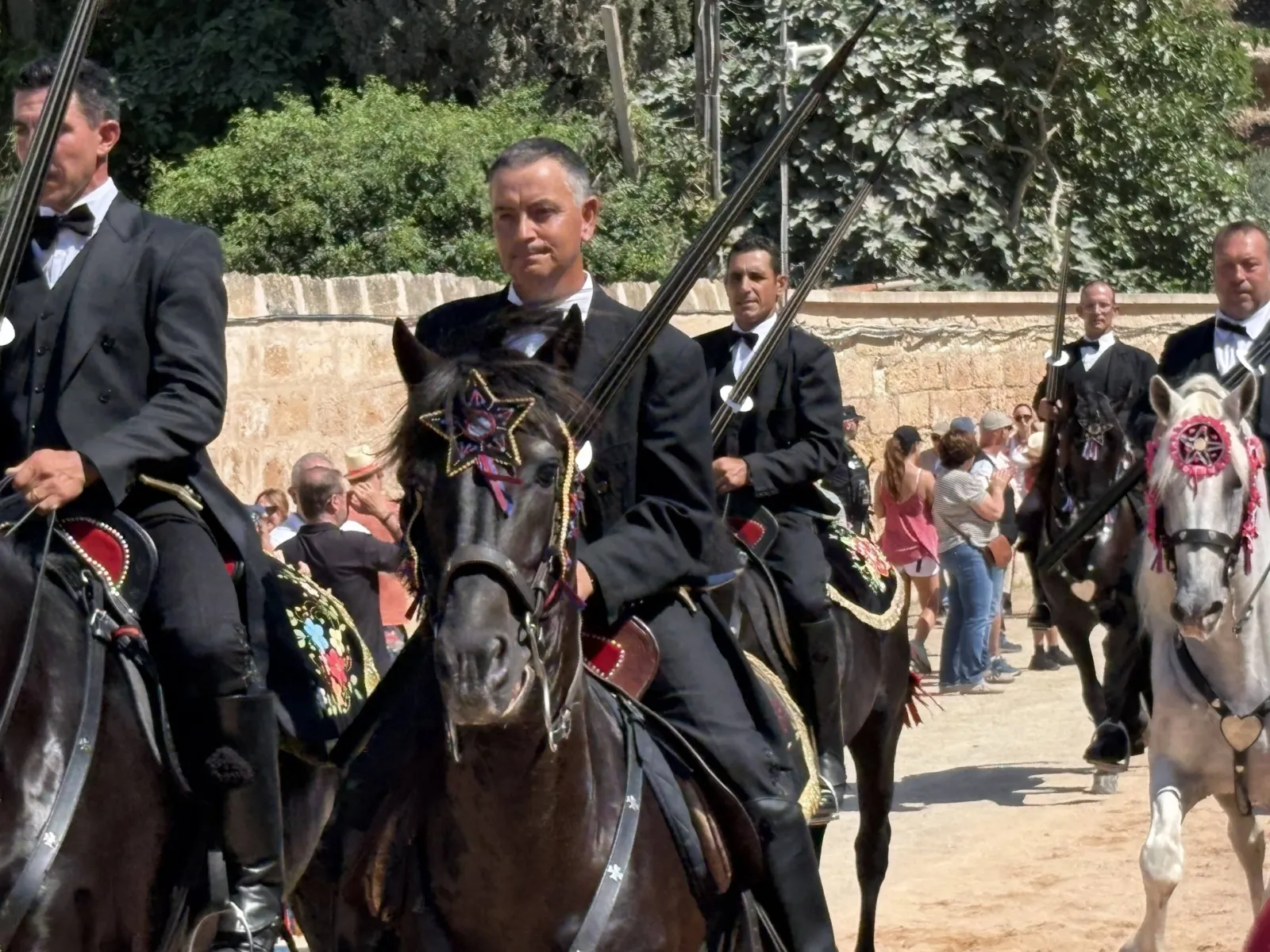
- The qualcada of black Menorcan horses and riders in traditional dress
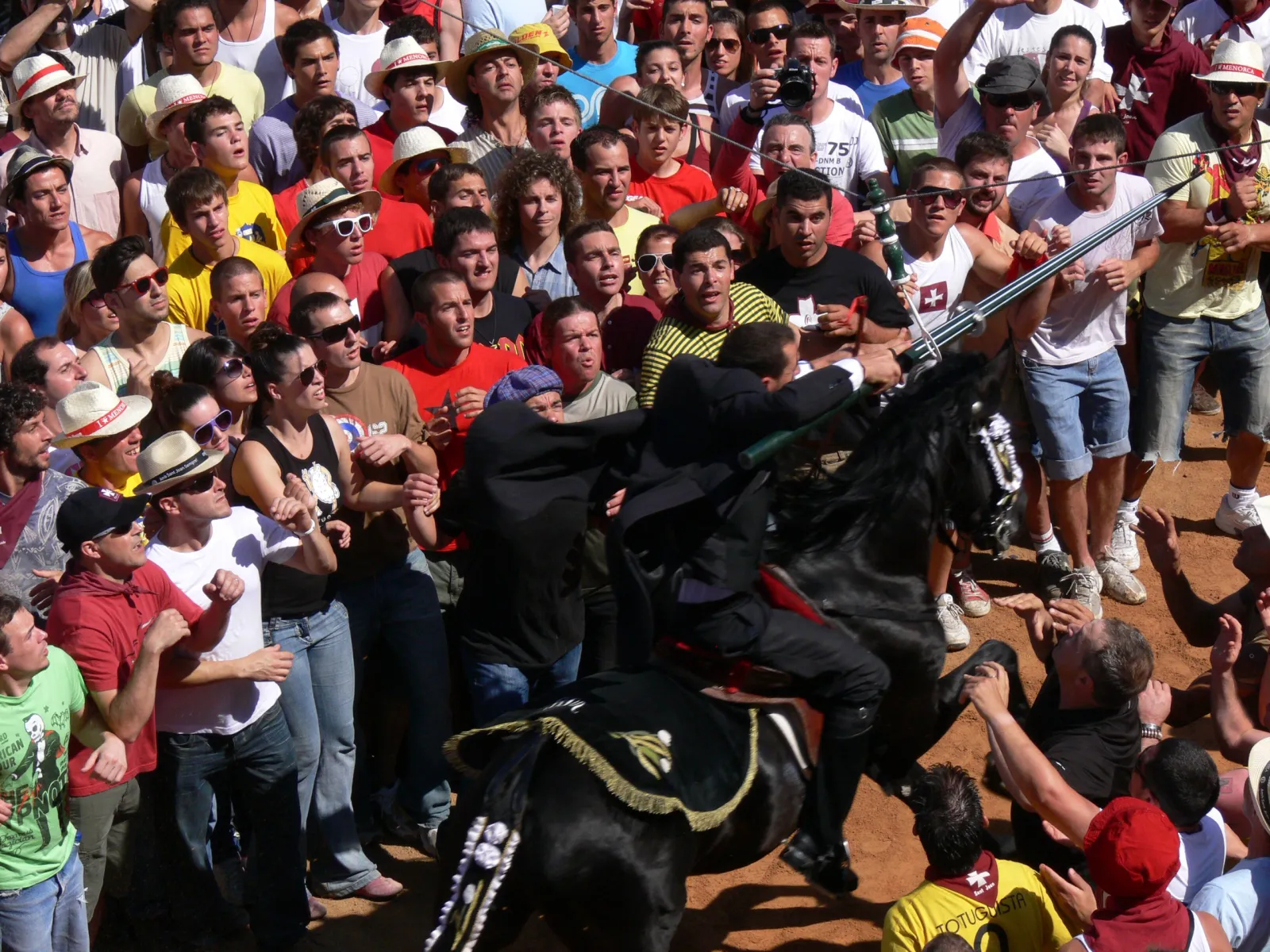
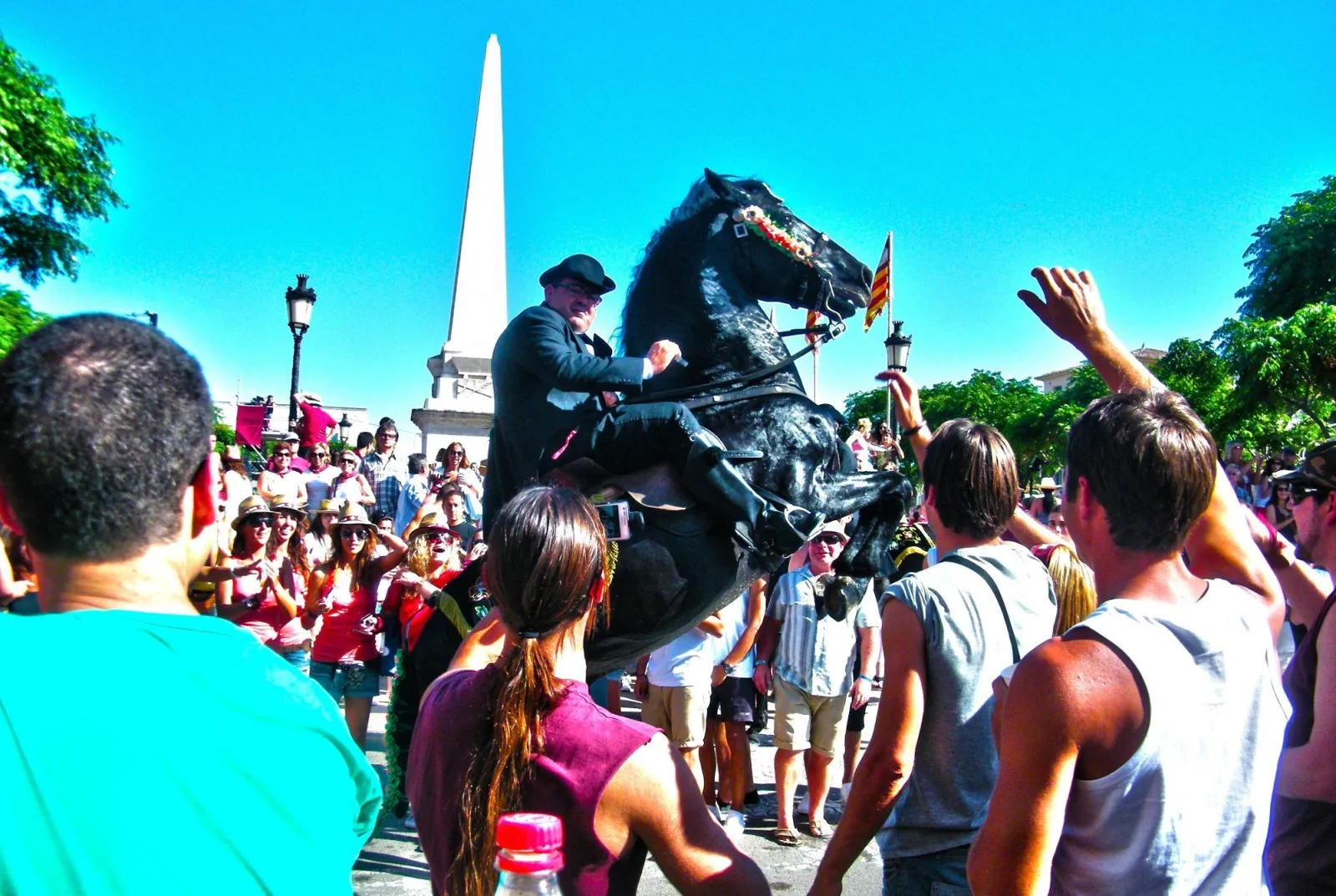
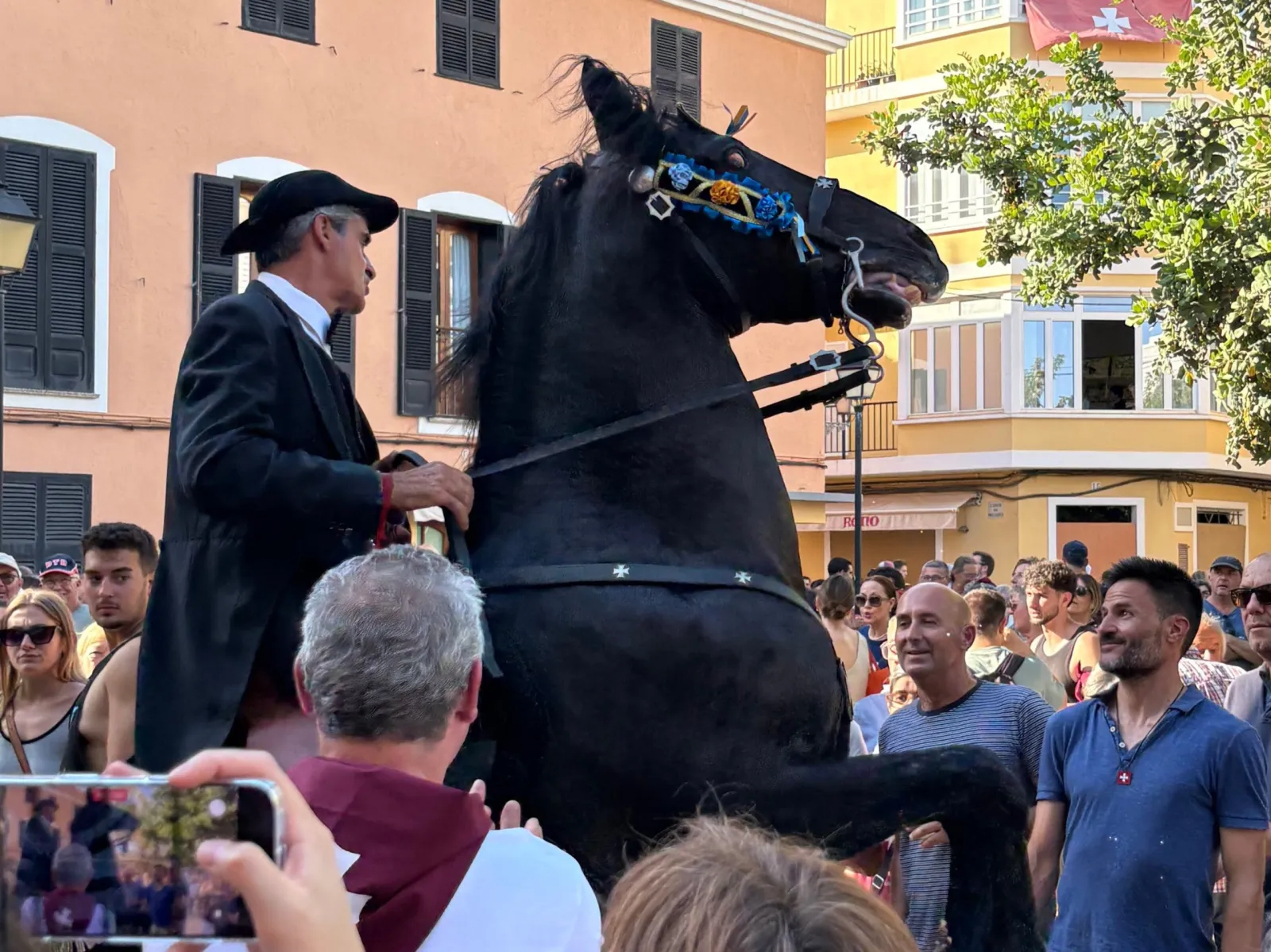
- The jaleo, with horses rearing up among the crowd
- The Caragol des Born on the afternoon of 23 June
- The Jocs des Pla, medieval horseback games, on the evening of 24 June
Sant Joan 2027: the dates
The festival is held on 23 and 24 June and on the Sunday before, the Diumenge des Be. In 2027 that means Sunday 20 June for the opening day and Wednesday 23 and Thursday 24 June for the main days. Menorca's tourism board describes the ride as starting at 14:00 on 23 June at the house of the Caixer Senyor and continuing almost without a break until dawn on 25 June.
Who rides
The heart of the festival is the qualcada, the mounted cortege. Most riders are cavallers, farmers of all ages from Ciutadella's countryside; in 2026 there were 136 of them. The caixers represent the four estates of the medieval brotherhood that first organised the feast: the church (Caixer Capellà), the nobility (Caixer Senyor), the artisans (Caixer Casat and Caixer Fadrí) and the farmers (Caixers Pagesos). The fabioler leads them on a donkey, playing a drum and the fabiol, a small flute, whose simple tune is heard all over town.
The big moments
On the Sunday, the Diumenge des Be, a barefoot man dressed in sheepskins carries a lamb on his shoulders through the streets with the caixers and the fabioler, inviting the town to the fiesta. In 2026 the walk lasted from 09:00 to 22:00 and made 89 visits to public buildings and private homes. On the afternoon of 23 June the riders perform the Caragol des Born, circling the Born square through the crowd, then ride out to the hermitage of Sant Joan de Missa. On the evening of 24 June the Jocs des Pla by the harbour bring medieval horseback games: s'ensortilla (spearing a ring at the gallop), ses carotes and córrer abraçats, two riders galloping side by side in an embrace.
From the first note to the last caragol
Everything starts with the first toc of the fabiol: at 14:00 on the 23rd the Caixer Senyor gives the fabioler permission to play, and the riders set off. After the Caragol des Born the cortege rides to Sant Joan de Missa to sing compline (completes), and back in town the caragols of Ses Voltes and Santa Clara carry on through the old streets until the early hours. Meanwhile, on Sa Contramurada, crowds pelt each other in the traditional hazelnut battle. On the morning of the 24th there are more caragols and a mass in the cathedral attended by the caixers, and the day ends with the Jocs des Pla and fireworks.
The jaleo
Before the games, the band strikes up the jaleo and the horses enter the square, rearing up on their hind legs as people press in to touch them. It is the image everyone associates with Sant Joan, and it is genuinely close contact with large animals in a dense crowd.
A crowd many times the size of the town
Ciutadella has about 32,000 registered residents, and for 2026 the local police expected 120,000 to 150,000 people over the fiesta. A safety plan sets capacity limits (27,600 people at the Caragol des Born and 25,261 at the Jocs des Pla in 2026) and up to 450 security staff were deployed. Volunteers open a corridor for the horses, and the police ask everyone to keep it clear. Menorca's tourism board calls Sant Joan the island's most traditional and emblematic fiesta.
Gallery
History & Origins
Sant Joan in Ciutadella grew out of the medieval obreria, the brotherhood that looked after the rural hermitage of Sant Joan de Missa, a few kilometres outside town. Menorca's tourism board dates its origins to the 14th century. Because the hermitage was out in the countryside, members rode there on horseback to honour their patron saint, and riding is still at the centre of the feast today.
The make-up of the caixers mirrors the estates of that brotherhood: clergy, nobility, artisans and farmers. The horseback games on the Pla are thought to have been added later, around the early 17th century. The festival has been suspended or postponed on a number of occasions over the centuries, most recently in 2020 and 2021 because of the COVID-19 pandemic.
What to Expect
Ciutadella's old town fills to bursting on the 23rd and 24th. The riders move through narrow streets and squares packed with people, and the crowd surges around the horses during the jaleo. The atmosphere is loud, joyful and intensely local: this is a fiesta that Ciutadella celebrates for itself, with visitors welcome to watch.
The Sunday before is gentler: the Diumenge des Be is a day-long walk through the historic centre, visiting houses and institutions to invite them to the fiesta. If you prefer to see the horses without being in the thick of the crowd, look for a spot at the edge of a square or on a raised step well before the riders arrive.
How to Get There
Menorca Airport is near Maó, at the opposite end of the island from Ciutadella; the two towns are linked by the island's main road and by bus. There are no trains on Menorca. Ferries also arrive at Ciutadella's port from Mallorca.
Accommodation in Ciutadella and the nearby coast fills up very early for Sant Joan. If you stay elsewhere on the island, plan your return carefully, as the festival runs late into the night on both main days.
Tips & Advice
- Book flights and beds months ahead: Ciutadella is full for Sant Joan.
- During the jaleo, keep clear of the horses' hind legs and do not bring small children into the densest part of the crowd.
- Wear closed shoes you can move in; the squares get packed and uneven underfoot.
- Pick your spot early for the Caragol des Born (23 June) and the Jocs des Pla (24 June evening).
- Respect the riders and the ritual: this is a living local tradition, not a show.
- Check the Ciutadella council's programme for the exact 2027 times.
Photos: Wmorella / CC BY-SA 3.0 / Wikimedia Commons; Strykess / CC BY-SA 4.0 / Wikimedia Commons; Antoni Salvà / CC BY-SA 4.0 / Wikimedia Commons
Sant Antoni in sa Pobla
Sa Pobla, Balearic IslandsMallorca's most famous Sant Antoni: on the night of 16 January sa Pobla lights its bonfires, the devils dance around the saint and the town sings to the ximbomba until morning.
Noche de San Juan
Alicante, ValenciaNoche de San Juan (St. John's Eve) is Spain's most magical night. On 23 June, beaches and towns across the country light up with bonfires as millions of Spaniards celebrate the summer solstice with fire, sea, and ancient rituals. It's one of those rare festivals that unites the entire country in celebration.
Hogueras de San Juan Alicante
Alicante, ValenciaThe Hogueras de San Juan (Fogueres de Sant Joan in Valencian) is Alicante's answer to Valencia's Fallas — and it's every bit as spectacular. Each June, the city fills with enormous artistic monuments (hogueras) that are paraded, admired and ultimately burned to ashes on the magical Noche de San Juan. With daily fireworks, parades, bonfires on the beach and the deafening mascletà at noon, it's a festival of fire, art and Mediterranean joy. Declared a Festival of International Tourist Interest.
San Juan Bonfires in A Coruña
A Coruña, GaliciaOn the night of 23 June, A Coruña's city beaches fill with hundreds of bonfires, grilled sardines and crowds that stay up until dawn. It is the city's biggest night of the year and a Festival of International Tourist Interest.