Sant Antoni in sa Pobla
Mallorca's most famous Sant Antoni: on the night of 16 January sa Pobla lights its bonfires, the devils dance around the saint and the town sings to the ximbomba until morning.
The days that matter
-
Days before
Novena and warm-up acts
The novena of Sant Antoni and cultural and sporting acts lead up to the vigil.
-
Sat 16 Jan, morning
Firewood from Son Llebre
A group leaves the town hall to fetch wood for the parish and town hall bonfires, recalling an old custom.
-
Sat 16 Jan, afternoon
Dimonis and Sant Antoni parade
The devils dance around and mock the saint as they tour the town with singers.
-
Sat 16 Jan, evening
Completes and 'Visca Sant Antoni!'
Authorities walk to the church with caparrots, giants, the Grif and devils; the Clamater closes with the traditional cry.
-
Sat 16 Jan, night
Dances, correfoc and bonfires
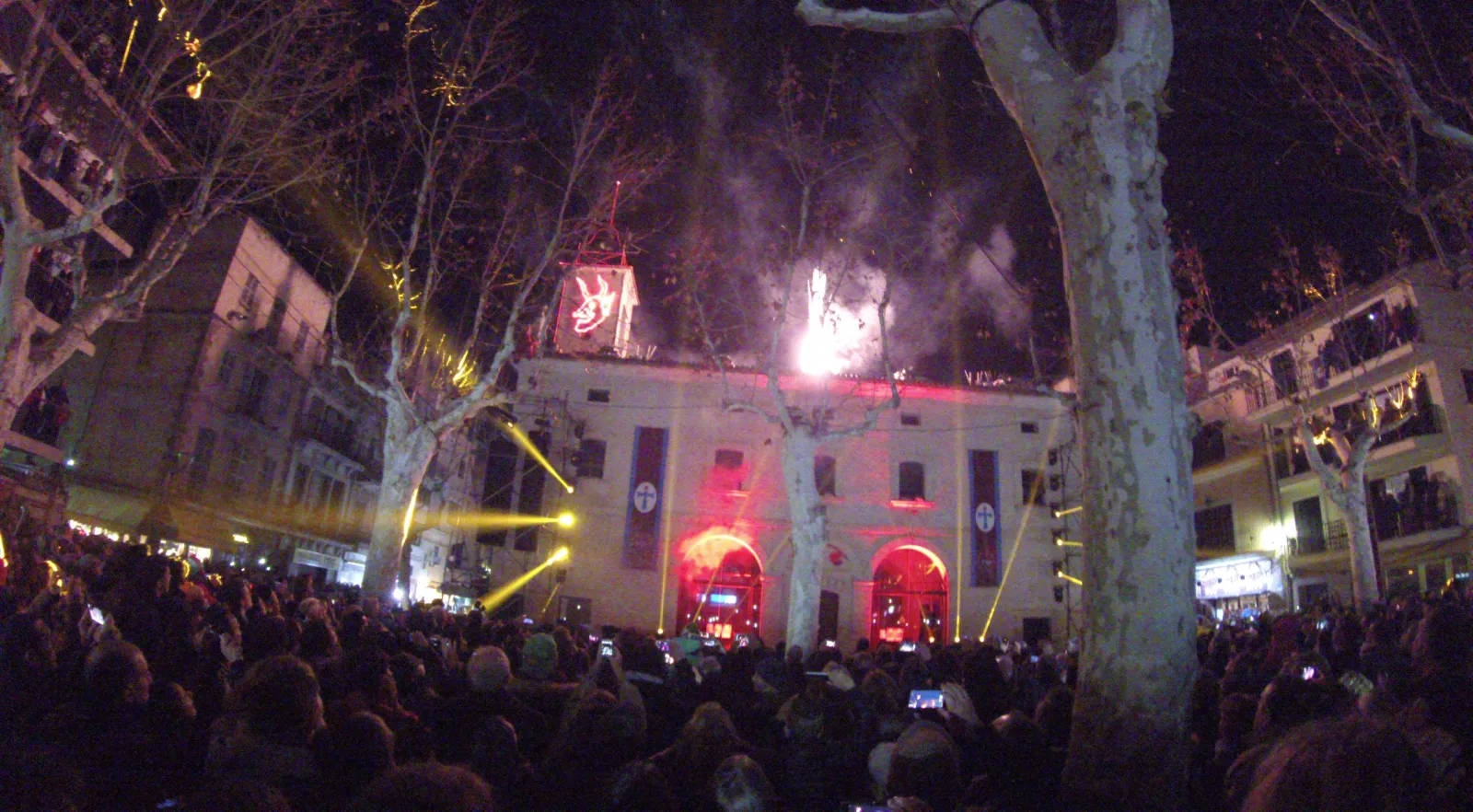
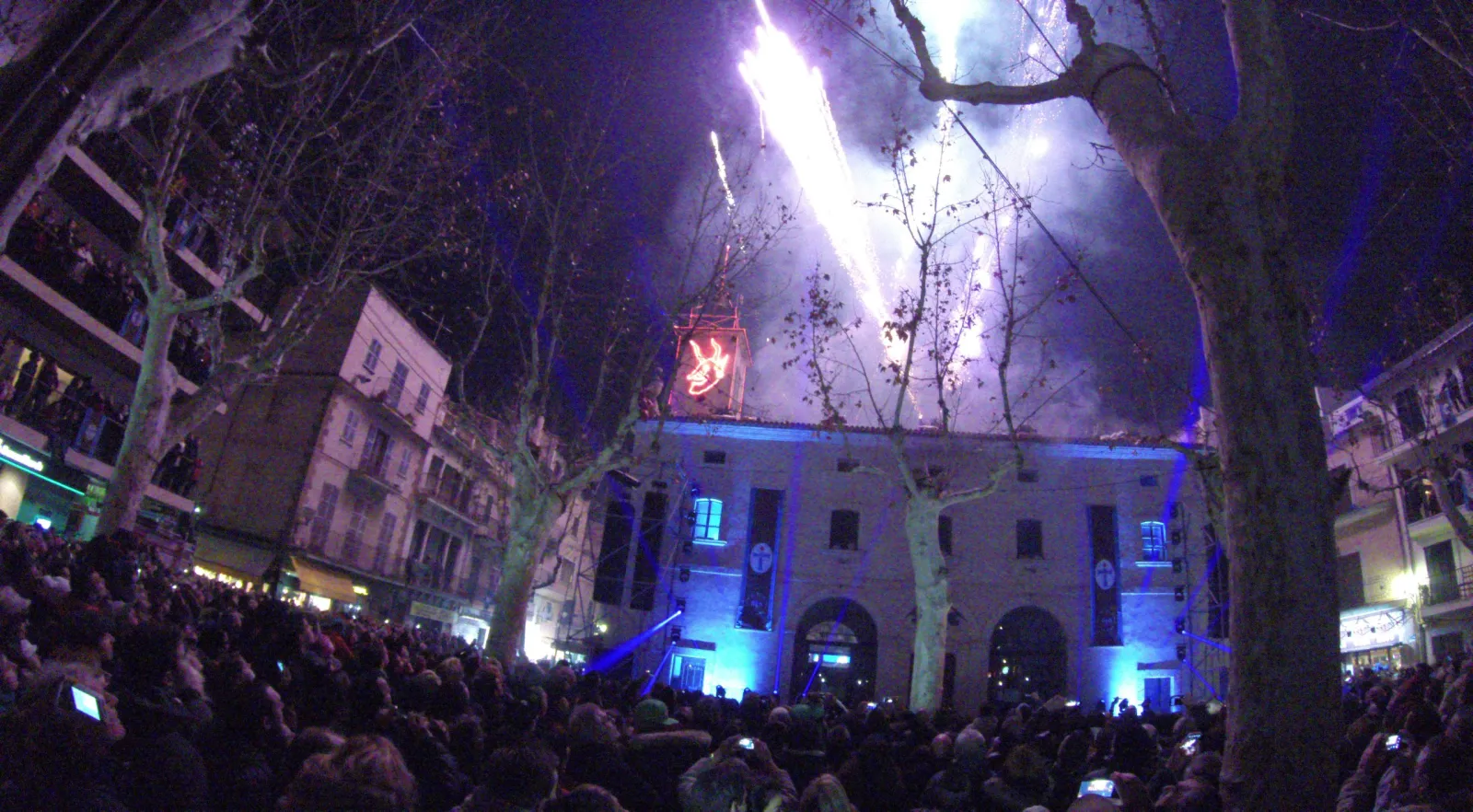
Caparrots and devils dance in Plaça Major, fire and music light up the town hall, then the bonfires are lit and the singing starts.
-
Sun 17 Jan, morning
Mass and caparrots
Street parades and the solemn mass, followed by another caparrots dance in Plaça Major.
-
Sun 17 Jan, afternoon
Beneïdes
The blessing of animals, with floats and comparsas parading past the saint.
What Sant Antoni in sa Pobla is like
- Fire
- Night
- Loud
- Food & drink
- Noise
- Ximbombes, singing, correfoc bangs and fireworks into the night
- Fire
- Bonfires everywhere, a fire-breathing griffin and a correfoc
- Crowds
- Plaça Major is packed on the night of the 16th
- Mess
- Smoke and sparks rather than mess; clothes will smell of it
- With kids
- Devils and big-heads delight children; the late night is for adults
Highlights
The vigil on Saturday 16 January 2027, with bonfires lit across town
Dimonis dancing and mocking Sant Antoni in the afternoon parade
Caparrots, giants, the fire-breathing Grif and a correfoc after the Completes
A fire-and-music show on the town hall in Plaça Major
Ximbomba songs and gloses around the foguerons until dawn
Blessing of animals and floats on Sunday 17 January
Sant Antoni 2027 in sa Pobla: 16–17 January
Every January the farming town of sa Pobla, in the north of Mallorca, throws the island's best-known party for Saint Anthony the Abbot, protector of animals. The big night is the vigil on 16 January, which in 2027 falls on a Saturday; the saint's day itself is Sunday 17 January. The Ajuntament and the Obreria de Sant Antoni publish the detailed programme in the weeks before, and the novena and other acts start several days earlier: in 2026 the town hall's programme ran from 7 to 24 January.
What the fiesta is about
Sant Antoni in sa Pobla mixes two worlds. One is religious and ceremonial: the Completes service in the parish church, the civic procession of authorities and, on the 17th, the blessing of animals. The other belongs to the street: bonfires (foguerons) lit all over town, families eating around them, and groups singing improvised, often cheeky verses (gloses) to the rasping beat of the ximbomba, the Mallorcan friction drum.
The devotion has deep local roots. Sa Pobla's parish is the only one in Mallorca with Sant Antoni as its titular saint, and in the Middle Ages the town lived largely from livestock grazed on the common pastures of the Marjal and s'Albufera, so a protector of animals mattered.
Devils, big-heads and the Grif
Tying it together are the fiesta's characters. The dimonis, the devils, dance around the saint and mock him; the troupe has 14 devils, among them the big Dimoni Gros, and they come out only on the vigil. The caparrots, big-headed figures created in 1952, dance in Plaça Major; two giants and the fire-breathing Grif, the griffin from the town's coat of arms, join the parade with the red-clad Dimonis d'Albopàs, whose name is “sa Pobla” spelled backwards.
After the Completes on the 16th, the caparrots and devils dance in Plaça Major, a correfoc runs through the streets and the piromusical lights up the town hall. Staged since 1998, it sets fireworks on the roof and façade so that the building seems to burn, to a soundtrack that moves from ximbomba songs through devilish music to a triumphant ending: good beats evil.
The bonfire night
Then around a hundred bonfires are lit in streets and squares at residents' request. Families dine in their portasses, the old coach houses, on coques, espinagades, pork loin and sausages, and the night, which locals now call the Nit Bruixa (witch's night), carries on until dawn. The 17th is calmer: street parades, solemn mass, another caparrots dance and, in the afternoon, the traditional beneïdes with animals, floats and comparsas. Two nights later, on the eve of Sant Sebastià, some bonfires are lit again for a smaller, more intimate repeat outside the official programme.
The fiesta has even travelled: since 1992 people from sa Pobla living in Barcelona have lit their own foguerons in the Gràcia district on the last Saturday of January, with the caparrots, the Dimonis d'Albopàs and Mallorcan pipers coming over from the island.
Gallery
History & Origins
Sant Antoni is documented in sa Pobla since 1365, when a royal official wrote to the local bailiff about a sword confiscated from a man out with two women on the night of the feast. The parish is dedicated to the saint, and from 1561 until the first half of the 18th century the town fought long legal battles with the Antonian friars to keep his image and its own celebrations. The cry of Visca Sant Antoni! after the Completes is recorded from 1643; today the Clamater, a figure introduced in the early 2000s, recalls that dispute with a short speech that ends with the same shout.
Many of the characters are more recent. The devils' troupe is documented from the late 18th century and the current dimonis date from 1958. The caparrots arrived in 1952 (seven figures at first, eleven from the following year) and dance to the tune Jo i un pastor; the Caparrots Minyons followed in 1983, the giants in the 1980s and the Grif and the Dimonis d'Albopàs in 1998. The fiesta was declared of tourist interest by the State tourism authorities in 1966, and in 2014 the Consell de Mallorca opened the procedure to declare it a Festa d'Interès Cultural.
What to Expect
On the 16th the day starts early: in the morning a group leaves the town hall for the Son Llebre estate to fetch wood for the parish and town hall bonfires, a nod to an old custom. In the early afternoon the dimonis and Sant Antoni parade through the streets with singers, the devils leaping around the saint. In the evening the authorities walk from the Ajuntament to the church for the Completes, escorted by caparrots, giants, the Grif and the devils.
The public part explodes when the service ends. Plaça Major fills for the dances, the correfoc and the fire show, so expect dense crowds, smoke and sparks. Afterwards the night spreads out: residents eat around their bonfires, grilling sausages and eating espinagades, savoury pasties traditionally filled with eel, and singers go from fire to fire with the ximbomba. Visitors without an invitation gather in the centre, where bars, restaurants and stalls serve similar food. Songs are often bawdy and the drinking is serious, so it is a long, loud, adult night.
The 17th has a family feel, with the mass, the caparrots' last dance and the afternoon blessings, when animals and decorated floats parade past the saint.
How to Get There
Sa Pobla is in the north of Mallorca, inland from the bay of Alcúdia. Palma de Son Sant Joan airport is the gateway to the island, with flights from mainland Spain and much of Europe.
- Train: the SFM line from Palma's Estació Intermodal ends at sa Pobla, so you can arrive without a car. Check the last return train before you plan a late night.
- Car: the Ma-13 motorway between Palma and Alcúdia passes close to sa Pobla. Streets in the centre are closed for the fiesta, so park on the edge of town.
- Where to stay: beds in sa Pobla are few; Alcúdia, Pollença and Palma are practical bases.
Tips & Advice
- Check the Ajuntament de sa Pobla's programme in early January for the exact times of the parade, the Completes and the correfoc.
- Find your spot in Plaça Major well before the Completes end; the square is packed for the dances and the fire show.
- For the correfoc, wear cotton or wool, cover your head and keep children at a safe distance from the sparks.
- Your clothes will smell of smoke for days: dress for it, and bring a warm layer for a January night.
- If you are not invited to a bonfire, eat in the centre around the town hall, where stalls and bars serve the fiesta food.
- Plan your return before you start: trains do not run all night and taxis are scarce.
Sant Joan Festival in Ciutadella (Menorca)
Ciutadella de Menorca, Balearic IslandsMenorca's most traditional fiesta fills Ciutadella with black Menorcan horses, riders in tailcoats and dense, cheering crowds. It runs on 23 and 24 June, opened by the Diumenge des Be on the Sunday before.
Tamborrada de San Sebastián
San Sebastián, Basque CountryOn 20 January 2027, San Sebastián celebrates its patron saint with 24 hours of drums and barrels. The official city tourism page says the Tamborrada starts at 00:00 with the flag-raising in Plaza de la Constitución, continues with more than 147 companies across the city and ends with the flag-lowering at 24:00.
Jarramplas (Piornal)
Plasencia, ExtremaduraJarramplas is a traditional winter festival in Piornal (Extremadura), typically around 19–20 January, where a masked character is pelted with turnips in a ritual tied to local identity and devotion to San Sebastián.
Las Fallas
Valencia, ValenciaLas Fallas is one of Spain's most spectacular and UNESCO-recognised festivals — a stunning combination of art, fire, music, and Valencian pride. Every March, the city of Valencia fills its streets with hundreds of enormous satirical sculptures (fallas), only to burn them all to the ground in a magnificent midnight inferno on the final night.