Carnaval de Ceuta
Ceuta's carnival is a little sister of Cádiz across the Strait: weeks of comparsas and chirigotas singing satirical coplas at the Teatro Auditorio del Revellín, a costume parade through the centre and, to close, the Entierro de la Caballa, the burial of a mackerel, the fish that gives Ceutans their nickname.
The days that matter
-
Late Jan–early Feb
Mejilloná and COAC
The mussel tasting opens the carnival; comparsas and chirigotas compete at the Revellín.
-
Sunday after the final
Dominguito
The groups sing in the street at Plaza Vieja.
-
13 Feb (expected) evening
Gran Cabalgata
Costume parade with groups and floats from Maestranza to Plaza de la Constitución.
-
14 Feb (expected) midday
Entierro de la Caballa
The mock funeral of a mackerel, with free paella and the prize-giving, closes the carnival.
What Carnaval de Ceuta is like
- Carnival
- Family
- Food & drink
- Free
- Noise
- Singing and street music, but no all-night mega-party
- Fire
- At most a mackerel on a small pyre
- Crowds
- Busy on parade day, the theatre sells out for the final
- Mess
- Confetti and streamers, nothing worse
- With kids
- A children's costume party and contest
Highlights
Comparsas and chirigotas in the song contest at the Teatro Auditorio del Revellín
The Mejilloná, a mussel tasting that opens the carnival
Gran Cabalgata of costumes and floats through the centre
Entierro de la Caballa: Ceuta buries a mackerel, not a sardine
Date & Schedule
| Detail | Info |
|---|---|
| Carnival 2027 | February 2027; the programme is not published yet |
| Final weekend (expected) | 13–14 February 2027: Gran Cabalgata on Saturday, Entierro de la Caballa on Sunday |
| Song contest (COAC) | Semifinal and final at the Teatro Auditorio del Revellín, on the weeks before |
| Where | Revellín theatre, Plaza Vieja, the streets between Maestranza and Constitución, Auditorio de la Marina |
| Cost | Street events free; tickets for the COAC sessions at the theatre |
The city publishes the dates in its official bulletin (BOCCE) in January. In recent years the carnival has closed on the weekend after Ash Wednesday: in 2026 it ran from 8 to 22 February, with the costume parade on Saturday 21 February; in 2025 it ran from 23 February to 9 March. Ash Wednesday 2027 falls on 10 February, which puts the final weekend on 13–14 February. Treat those dates as provisional until the programme is out.
The song contest at the Revellín
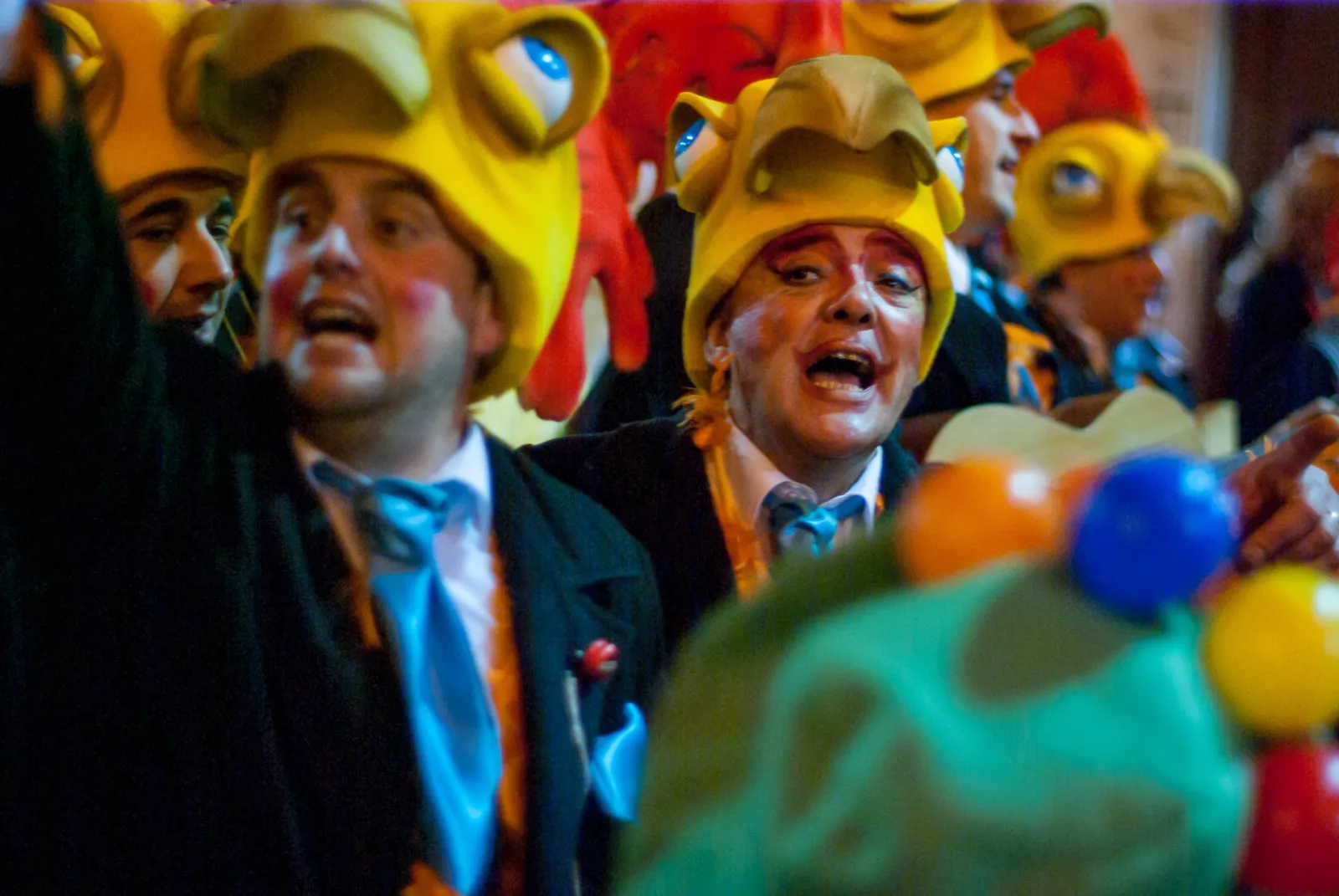
The heart of the carnival is the Concurso Oficial de Agrupaciones Carnavalescas (COAC) at the Teatro Auditorio del Revellín, on the model of the contest at the Gran Teatro Falla in Cádiz. Groups of comparsas (more lyrical, with elaborate costumes) and chirigotas (comic, with sharp local humour) sing pasodobles and cuplés about the year in Ceuta. Ceuta has a strong carnival scene of its own: the Coro de Ceuta competes every year in the Cádiz contest itself. Before the final the city hands out the Caballa de Oro awards to people who have done most for the carnival.
Street carnival
- Mejilloná: a mussel tasting that traditionally opens the carnival.
- Dominguito: the Sunday after the final, when the groups sing in the street at Plaza Vieja.
- Pregón and Concurso de Coplas: the opening speech, followed by a contest of songs dedicated to Ceuta, at the Revellín.
- Fiesta infantil and Fiesta de Mayores: costume parties for children and for older residents.
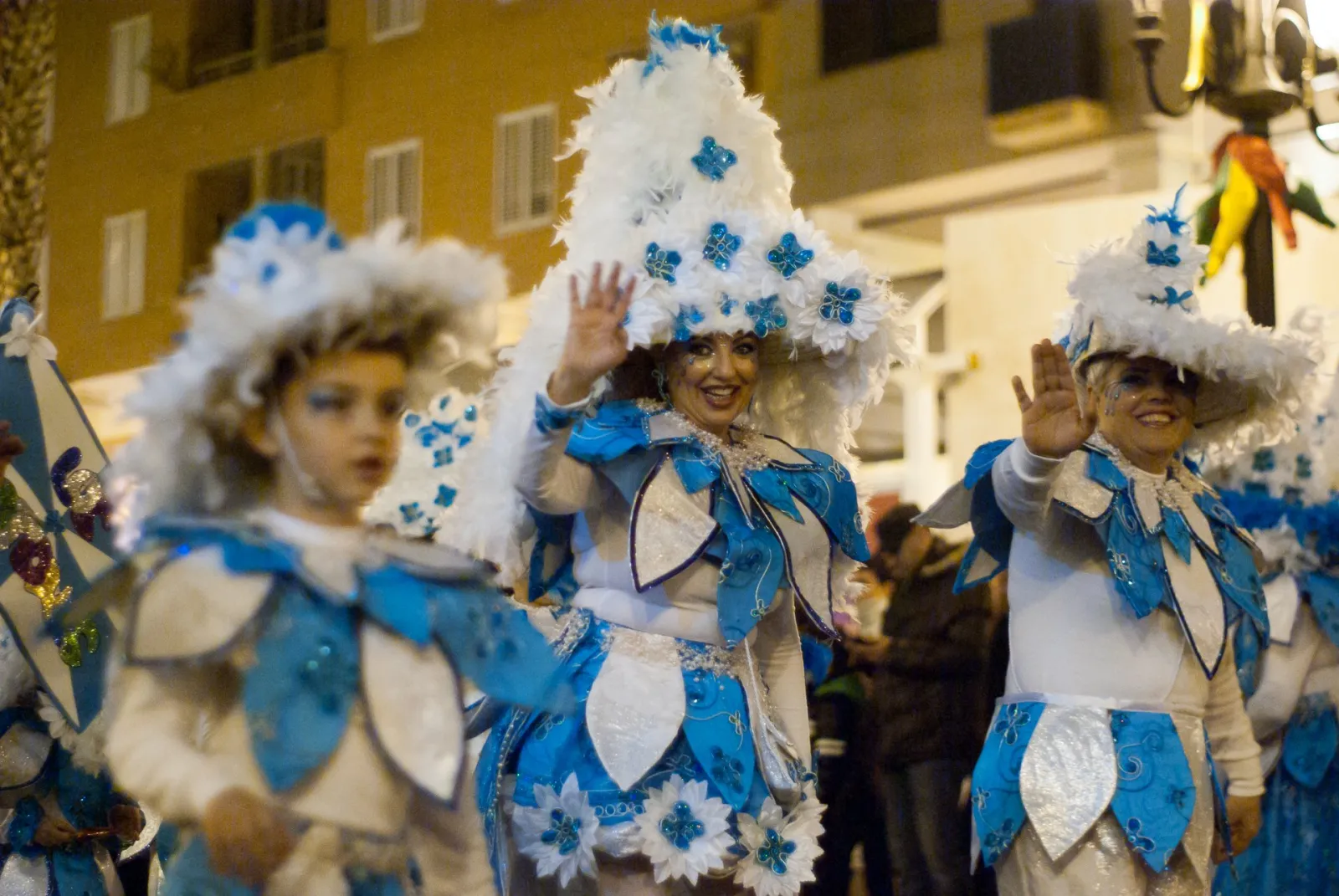
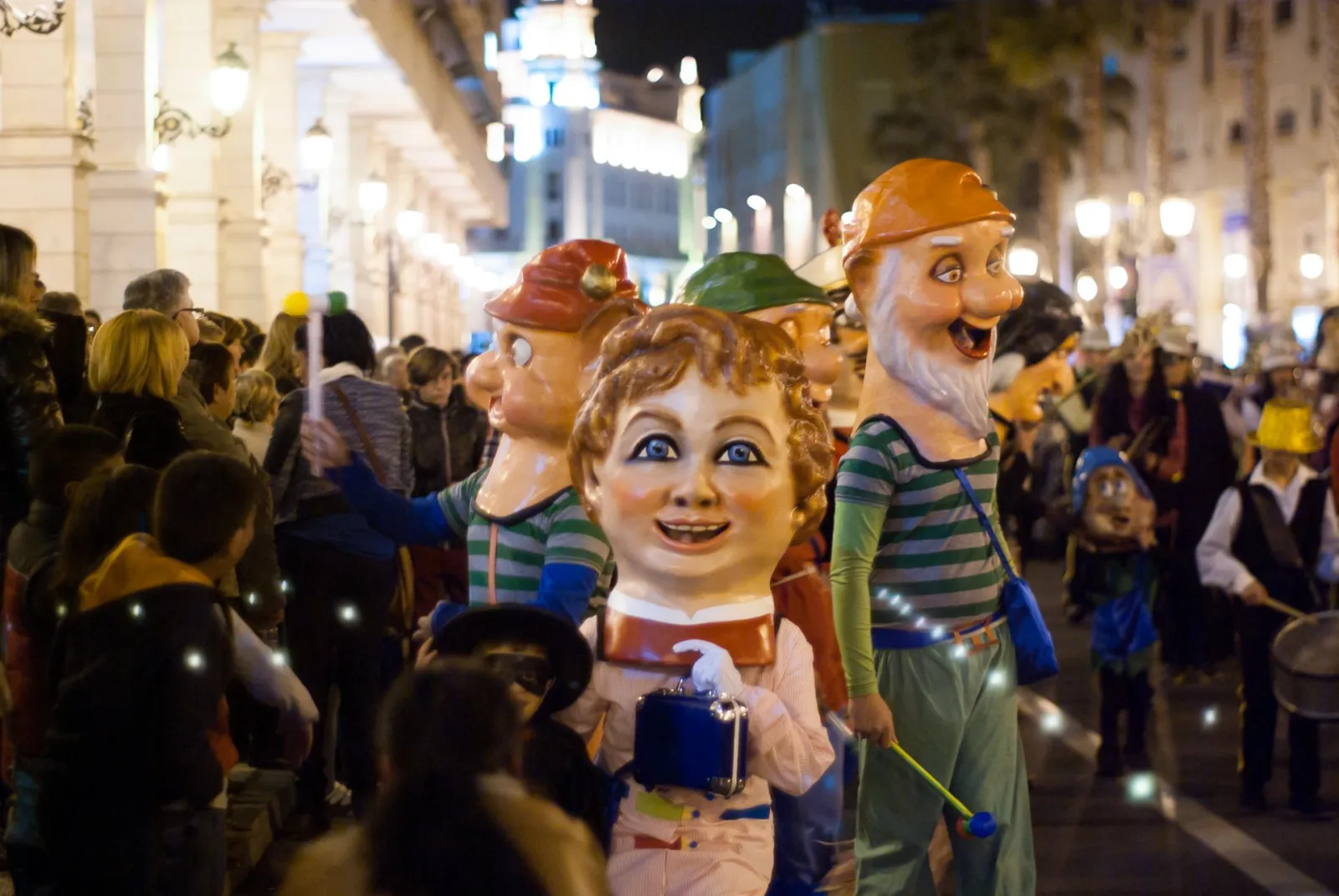
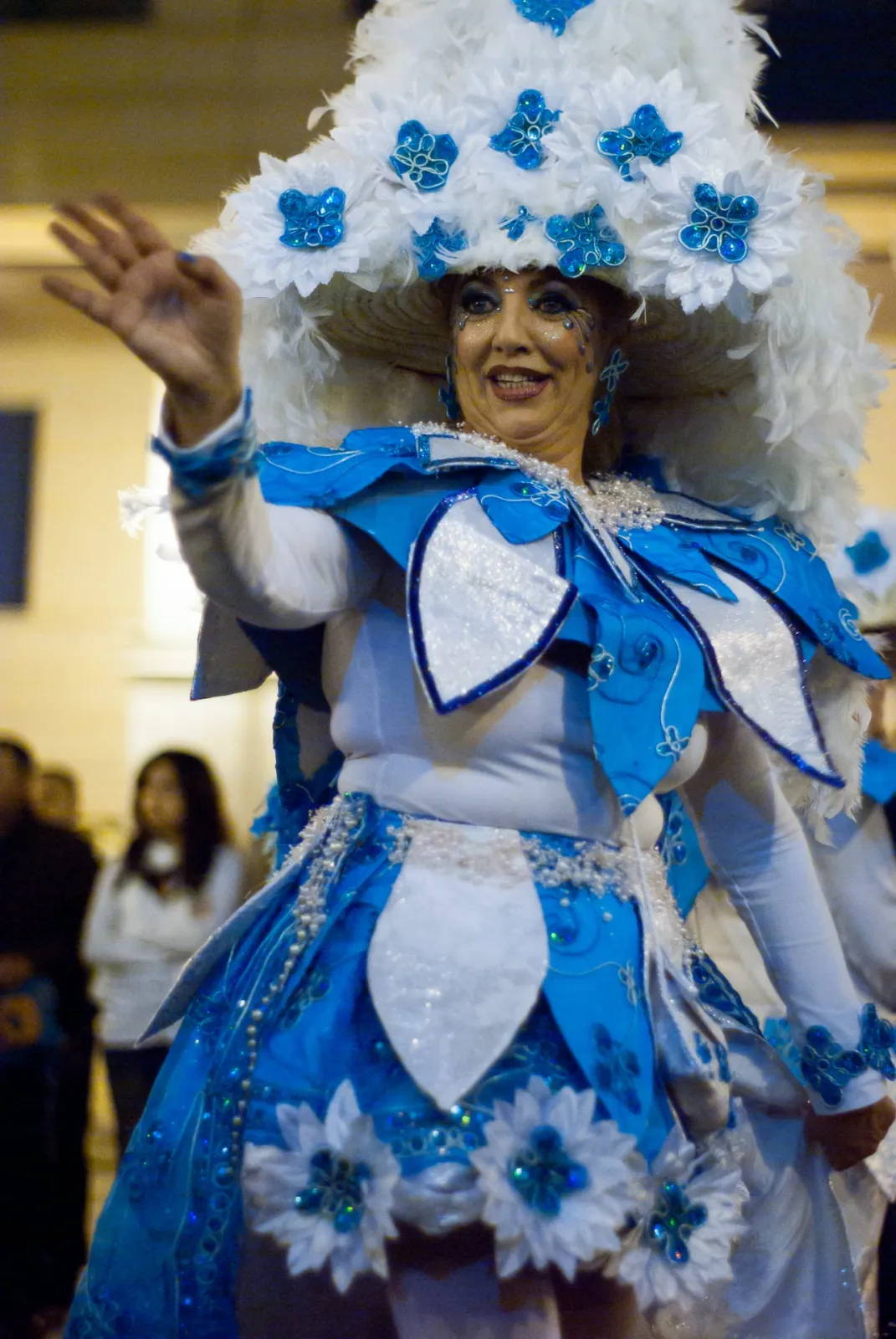
- Gran Cabalgata: the costume parade, with groups, floats (bateas) and the carnival queen, from Maestranza to Plaza de la Constitución; in 2025 it started at 18:00. Prizes are given for adult, historical and float costumes.
Entierro de la Caballa
Where much of Spain buries a sardine, Ceuta buries a caballa (mackerel), the fish behind the nickname caballas for the people of Ceuta. The mock funeral closes the carnival on the last Sunday at midday, with music, free paella and the prize-giving; in 2025 it was at the Auditorio de la Marina at 13:00. When it rains the burial can be postponed: one year the fish was burnt on the night of San Juan instead.
Weather in Ceuta in February
- Mild by day, around 15–17 °C, cooler at night
- Rain and wind can cancel or move street events, so check the city's announcements on the day
Sources
Gallery
History & Origins
Ceuta's carnival grew out of the same tradition as Cádiz, just across the Strait, and the two cities still share groups, authors and audiences: Ceutí groups perform at the Gran Teatro Falla and Cádiz groups come to sing in Ceuta. The contest of agrupaciones at the Revellín, the Mejilloná and the burial of the caballa are the local touches on a Cádiz model.
What to Expect
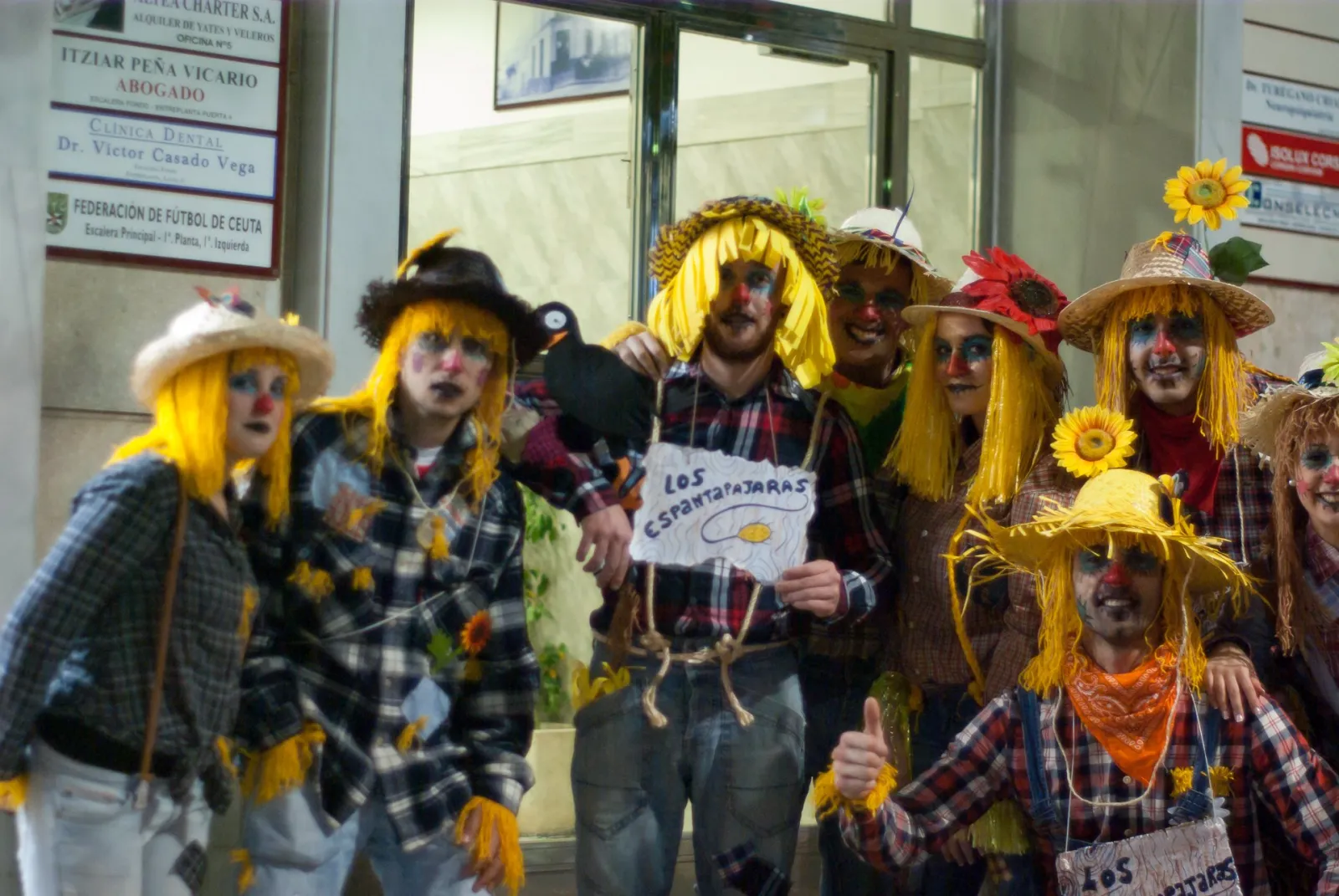
A carnival you listen to as much as watch. The best nights are at the Revellín, where the audience knows the groups and laughs at every local reference; if your Spanish is good, the chirigotas are the funniest part. In the street it is relaxed and local: families in costume, groups singing at Plaza Vieja, a parade of floats and fancy dress on the last Saturday and a long paella lunch to bury the mackerel on Sunday.
How to Get There
By ferry: from Algeciras, about an hour; winter storms in the Strait sometimes cancel sailings, so leave a margin. By helicopter: scheduled flights from Algeciras and Málaga. By train: Renfe to Algeciras, then walk to the ferry terminal. The Revellín theatre, Plaza Vieja and the parade route are all in the centre, within walking distance of the port.
Tips & Advice
- Watch for the programme in the BOCCE and local press in January; the dates move with Ash Wednesday.
- Get COAC tickets as soon as they go on sale: the final at the Revellín is the hottest seat of the carnival.
- Bring a costume: plenty of locals dress up for the parade.
- Keep an eye on the weather: rain has moved the parade indoors and postponed the burial of the caballa before.
- Carry ID for the ferry.
- More festivals and places to stay: our Ceuta guide.
Feria de Ceuta & Virgen de África
Ceuta, CeutaEvery August Ceuta honours its patron saint, Santa María de África, with a flower offering on 4 August, a procession through the city on 5 August and about a week of feria with casetas, rides and concerts at La Marina, a few steps from the port.
Día de la Mochila
Ceuta, CeutaOn 1 November, All Saints' Day, Ceuta does something no other Spanish city does: families and friends fill a mochila (bag) with chestnuts, walnuts, hazelnuts and seasonal fruit and spend the day in the hills, the picnic areas and on the beaches, singing a song every Ceutí child knows.
Carnival of Tenerife
Santa Cruz de Tenerife, Canary IslandsThe Carnival of Santa Cruz de Tenerife is the second-largest carnival in the world, rivalled only by Rio de Janeiro. Every February, the Canarian capital explodes into a dazzling spectacle of costumes, music, dance and street parties that last over two weeks. Declared a Festival of International Tourist Interest, this carnival draws hundreds of thousands of visitors each year.
Carnaval de Cádiz
Cádiz, AndalusiaThe Carnaval de Cádiz is widely considered Spain's greatest and most original carnival — not for its parade floats or samba schools, but for something uniquely gaditano: the chirigotas, comparsas, and coros — satirical singing groups who spend months composing sharp, political, and hilarious songs performed on the streets and in competition at the Gran Teatro Falla.