Carnival of Tenerife
The Carnival of Santa Cruz de Tenerife is the second-largest carnival in the world, rivalled only by Rio de Janeiro. Every February, the Canarian capital explodes into a dazzling spectacle of costumes, music, dance and street parties that last over two weeks. Declared a Festival of International Tourist Interest, this carnival draws hundreds of thousands of visitors each year.
The days that matter
-
Late January
Galas and contests
The programme opens with galas and contests weeks before the street carnival.
-
Before the street carnival
Queen's Gala
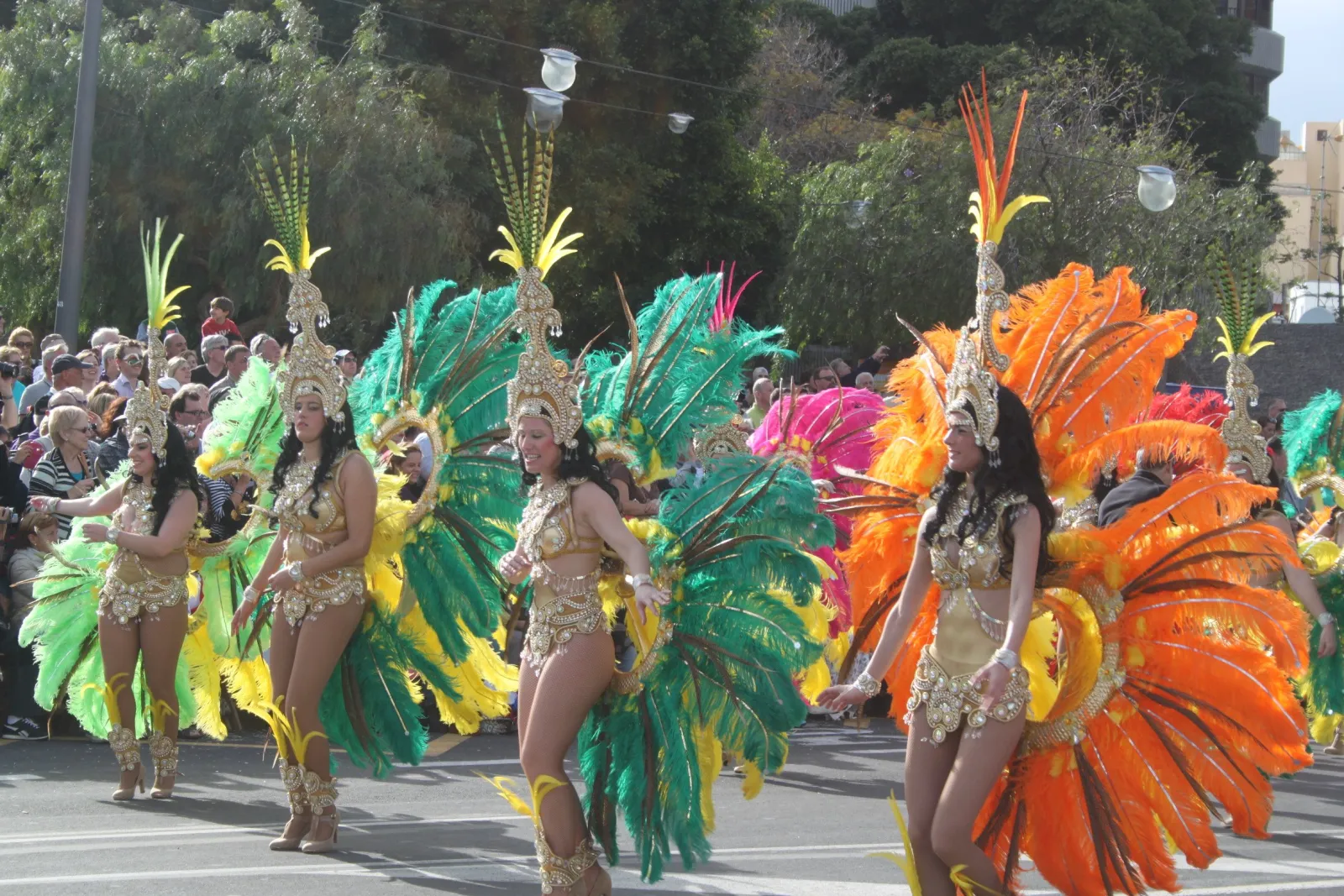
The Carnival Queen is elected in engineered costumes that can weigh over 100 kg and stand several metres tall.
-
Carnival Tuesday
Coso
The Grand Parade of floats, comparsas and costumed groups crosses the city on a local holiday.
-
The Wednesday after
Entierro de la Sardina
A mock funeral procession with fireworks and theatrical mourning marks the end of carnival.
What Carnival of Tenerife is like
- Carnival
- Night
- Free
- Family
- Noise
- Murgas and street parties; you'll want breaks from the loudest spots
- Fire
- Fireworks only at the Burial of the Sardine
- Crowds
- Hundreds of thousands come; agree a meeting point before you dive in
- Mess
- A costume party, not a messy one
- With kids
- Daytime has children's carnival activities; nights are for adults
Highlights
The Carnival of Tenerife is a sensory overload in the best possible way. The Queen's Gala alone is a spectacle unmatched anywhere in Europe, with costumes that push the boundaries of engineering and creativity. But it's the street-level energy — the murgas making you laugh, the comparsas making you dance, and the warmth of the Canarian people welcoming everyone — that makes this carnival truly unforgettable.
Date & Schedule
| Detail | Info |
|---|---|
| Dates 2027 | Galas from 22 January; street carnival 19–28 February 2027 |
| Queen's Gala | 17 February 2027 |
| Grand Parade (Coso) | Carnival Tuesday, 23 February 2027 (local holiday) |
| Burial of the Sardine | The Wednesday after Carnival Tuesday |
| Location | Santa Cruz de Tenerife, Canary Islands |
The programme opens with galas and contests in late January, and the street carnival builds to its climax with the Grand Parade and the theatrical Burial of the Sardine.
Location
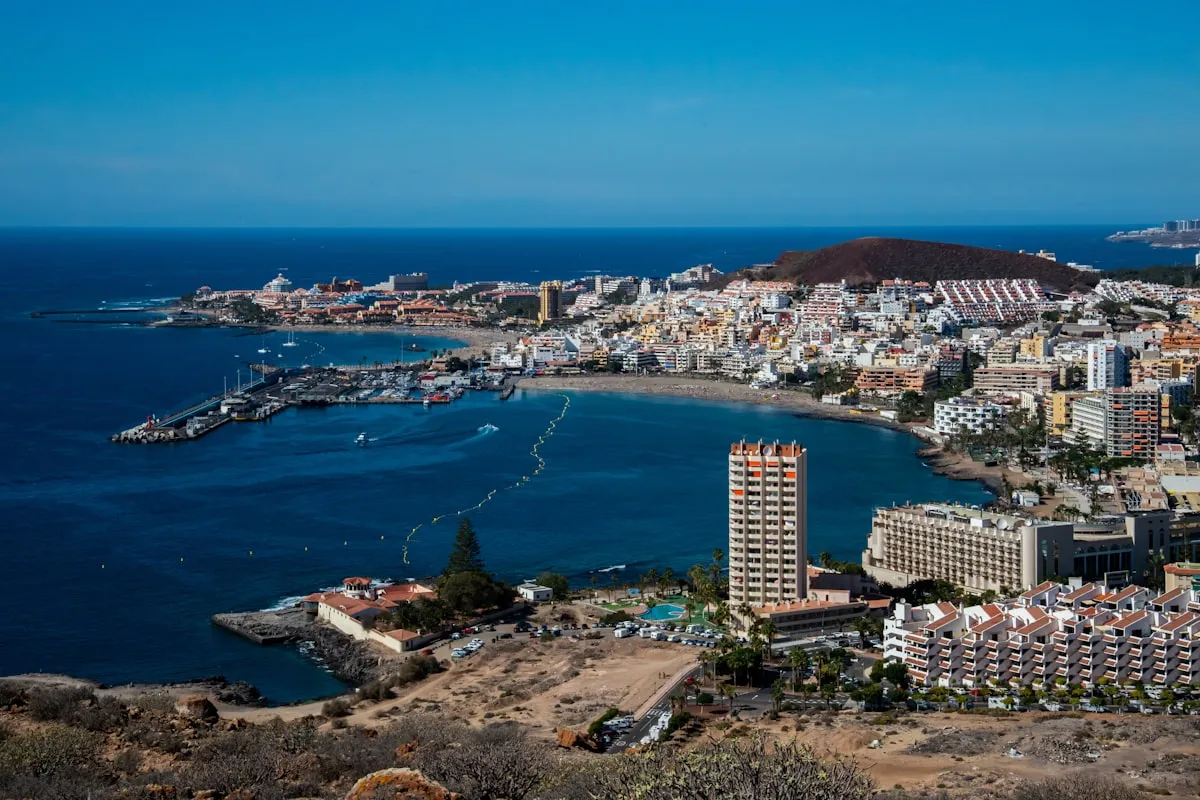
Santa Cruz de Tenerife is the capital of Tenerife in the Canary Islands, Spain's subtropical archipelago off the northwest coast of Africa. Major events take place in the city centre, particularly around Plaza de España, Parque García Sanabria and surrounding streets.
Key Events & Highlights
- Queen's Gala — The spectacular election of the Carnival Queen, who wears enormous engineered costumes that can weigh over 100 kg and stand several metres tall
- Murgas — Satirical musical groups who compose witty songs mocking politics and current affairs
- Comparsas — Dance groups performing coordinated choreography in matching costumes
- Grand Parade (Coso) — The culminating procession of floats, comparsas and costumed participants through the city
- Burial of the Sardine — A mock funeral procession on the Wednesday after Carnival Tuesday with fireworks and theatrical mourning, marking the end of carnival
Weather in Tenerife in February
February in Tenerife is pleasantly mild:
- Average temperature: 18–22°C
- Rain: Occasional light showers possible
- Nights: Around 15°C — a light jacket recommended
Where to Stay
- Santa Cruz de Tenerife — Ideal for being in the heart of the action
- La Laguna — Historic university town connected by tram
- Puerto de la Cruz — Tourist resort in the north with its own carnival celebrations
Book at least 2–3 months in advance — accommodation in Santa Cruz fills up fast during carnival.
How to plan Carnival in Tenerife
Carnival in Tenerife is a multi-day city celebration, not one event in one venue. The practical first step is to choose the experiences that matter most to you: street atmosphere, organised competitions, family activities or the largest outdoor celebrations. Use the official programme published close to the carnival to confirm dates, locations, admission rules and any last-minute changes. Old schedules are especially unreliable because individual events can move between editions.
Santa Cruz de Tenerife becomes busiest around the headline celebrations. If you want a close view, arrive early and accept that leaving the centre will take time. If comfort matters more than proximity, choose a wider street or an outer section with a clear walking route back to your transport. Agree on a meeting point before entering a dense crowd, since mobile coverage and messaging can become unreliable.
Costumes, weather and what to carry
Costumes are part of the fun, but they should still allow safe walking and clear vision. Choose breathable layers, secure footwear and accessories that will not injure another person in a crowd. Tenerife's climate is mild, yet evenings can feel cooler and windier than daytime, especially after standing still. Check the local forecast and bring a light outer layer rather than relying on seasonal averages.
- Carry only essential items in a secure, compact bag.
- Bring water and take regular breaks away from the loudest areas.
- Keep identification and accommodation details protected.
- Do not block exits, crossings or emergency access routes.
Transport and accommodation
Public transport is usually more practical than driving into central Santa Cruz during major events. Temporary closures can affect buses, taxis and pickup points, so check current notices before each outing and save the return route offline. A hotel in the centre reduces late-night travel but may be noisy. Accommodation farther away can offer better rest, provided the final connection is realistic after the event you plan to attend.
Compare the full cost of the trip rather than only the room price. Include airport transfers, intercity transport, meals, ticketed shows and late returns. Book flexible accommodation where possible and confirm whether reception is available when you expect to arrive. Travellers staying elsewhere on Tenerife should not assume normal journey times during the busiest carnival periods.
Tickets, etiquette and safety
Many street activities can be enjoyed without a ticket, while organised galas, competitions or reserved seating may have separate sales. Buy through official channels and check exactly what the ticket includes. Respect performers and other visitors when filming, ask before taking close portraits and avoid publishing images of children without permission. Follow stewards and local authorities if access routes change.
Plan food, water and rest before fatigue becomes a problem. Anyone uncomfortable in the densest crowd can step back and still enjoy the music and costumes from a calmer area. Use the Spain festival calendar to compare Tenerife Carnival with other winter events before committing to flights.
Tenerife Carnival FAQ
Do I need a ticket for Tenerife Carnival?
The main street atmosphere includes public areas, but some organised shows and reserved sections require tickets. Confirm each event separately in the current official programme.
Where is the best area to stay?
Central Santa Cruz is convenient for walking but can be lively late into the night. A quieter district works well when it has a dependable transport connection for your chosen events.
Is a costume required?
No. Visitors can attend in ordinary clothes, although a practical costume helps you join the atmosphere. Comfort, visibility and safe footwear should guide the choice.
Gallery
Video
History & Origins
Carnival arrived in Tenerife with the trade routes: from the 18th century, merchants, sailors and settlers passing through the island's ports brought the pre-Lenten carnival customs of Cadiz, Italy and other parts of Catholic Europe, which blended with local traditions into a distinct island celebration built around masked balls, street costumes and satirical songs.
General Franco's dictatorship banned carnival across Spain from the late 1930s, viewing its anonymity and mockery of authority as subversive. Tenerife kept the celebration alive by officially renaming it the "Fiestas de Invierno" (Winter Festival) — the costumes, music and street parties continued under a name that avoided the ban, a workaround shared with several other Spanish carnival cities. When Franco died in 1975 and the ban lifted, Tenerife's carnival didn't need to be revived from scratch: it re-emerged immediately at something close to full scale, and was formally declared a Festival of International Tourist Interest in 1980, one of the first carnivals in Spain to receive that status. Its scale by that point — regularly cited as the second-largest carnival in the world after Rio de Janeiro's — reflects decades of continuous celebration rather than a modern revival.
What to Expect
- A costume is essential — Tenerife's carnival is a costume event; join in the spirit!
- Comfortable shoes — You'll be dancing and walking for hours
- Light layers — February temperatures in Tenerife hover around 18–22°C, but nights can be cooler
- Waterproof phone case — For the street parties
- Cash — Some street vendors may not accept cards
How to Get There
By air:
- Tenerife South Airport (TFS) receives most international flights; ~60 minutes to Santa Cruz by bus or car
- Tenerife North Airport (TFN) is closer to Santa Cruz; ~15 minutes by car
By bus:
- TITSA bus service connects all parts of the island to Santa Cruz
By tram:
- The Tenerife Tram connects La Laguna with Santa Cruz
Tips & Advice
How does it compare to Rio Carnival? Tenerife's carnival is officially recognised as the second biggest in the world. While Rio has its Sambadrome, Tenerife's is more of a street party where everyone participates.
Is it family-friendly? Yes! Daytime events are very suitable for families with children's carnival activities. Night events are more adult-oriented.
Do I have to wear a costume? Not mandatory, but you'll feel out of place without one. Most people dress up — the more creative, the better.
Planning where to sleep? Compare neighbourhoods, tram access and late-night return options in our Tenerife Carnival accommodation guide.
Los Indianos (La Palma Carnival)
Santa Cruz de La Palma, Canary IslandsOn Carnival Monday the capital of La Palma dresses all in white to parody the emigrants who came home rich from Cuba, and the whole old town disappears under clouds of talcum powder.
Carnaval de Las Palmas de Gran Canaria
Las Palmas de Gran Canaria, Canary IslandsLas Palmas Carnival runs from 22 January to 28 February 2027, with the Drag Queen Gala on 19 February, the Grand Parade on 20 February and the Burial of the Sardine finale on 28 February.
Bajada de la Rama (Agaete)
Agaete, Canary IslandsEvery 4 August, Agaete in north-west Gran Canaria dances from dawn to dusk behind its bands, waving branches in the air and beating the sea with them, in a ritual that recalls the island's ancient prayers for rain.
San Andrés in Tenerife
Icod de los Vinos, Canary IslandsAt the end of November the north of Tenerife opens its new wine and makes a lot of noise about it. In Icod de los Vinos riders slide down the steepest streets on wooden boards, and in Puerto de la Cruz families drag strings of tins through town on the eve of Saint Andrew. In 2026 the celebrations run from 27 to 30 November.