Los Indianos (La Palma Carnival)
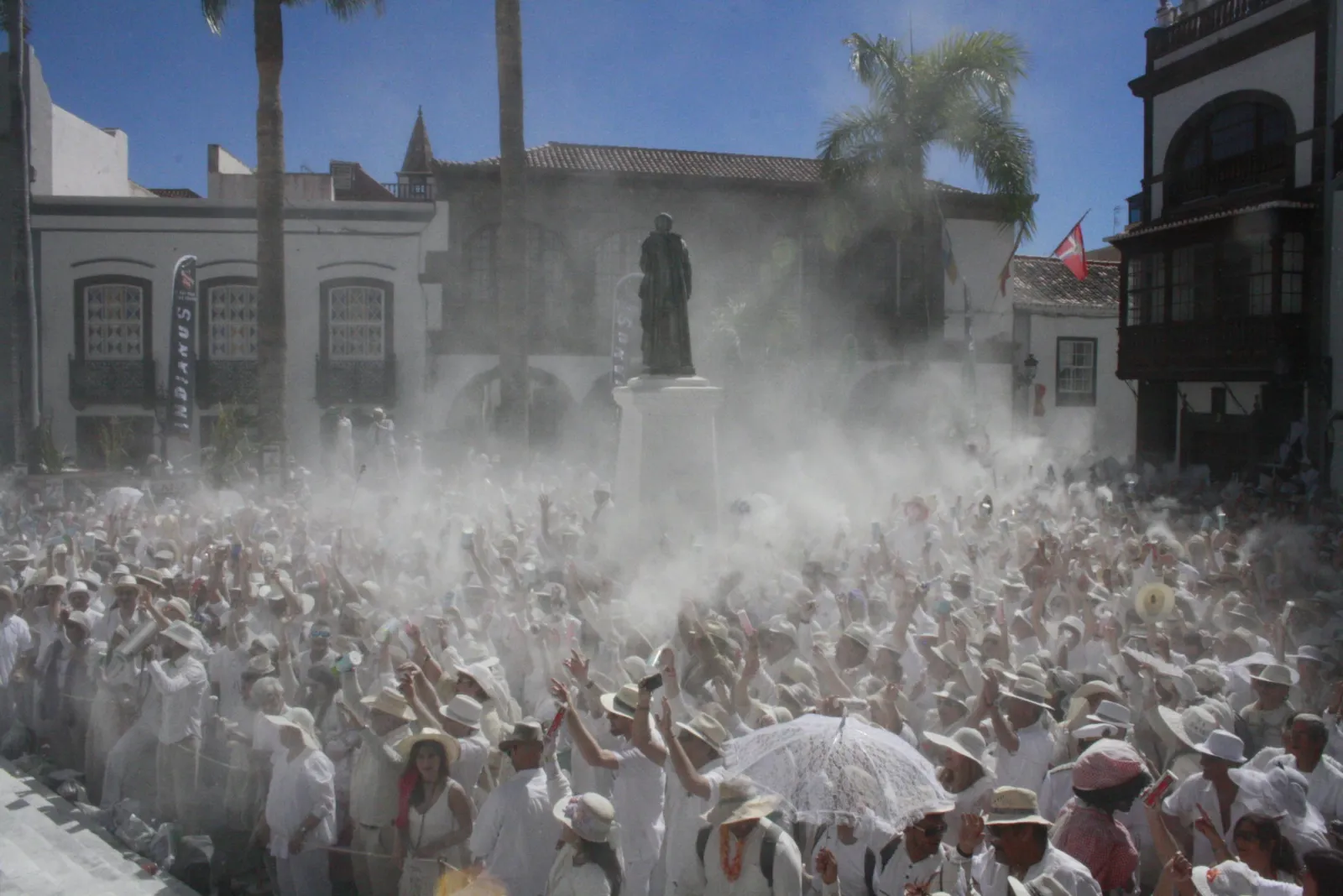
On Carnival Monday the capital of La Palma dresses all in white to parody the emigrants who came home rich from Cuba, and the whole old town disappears under clouds of talcum powder.
The days that matter
-
Mon 8 Feb 2027 from the morning
Indianos take the streets
People dressed in white fill the historic centre and the first talcum powder starts to fly.
-
Mon 8 Feb 2027 around midday
La Espera
The mock welcome of the indianos in the town hall atrium, with Cuban music, sugar cane, molasses and mojito.
-
Mon 8 Feb 2027 afternoon
Parade of the indianos
From Avenida de Los Indianos by the port to the Plaza de La Alameda, with suitcases, cigars and parasols.
-
Mon 8 Feb 2027 evening
Party at the Alameda
Music and dancing go on late into the night in and around the Alameda.
What Los Indianos (La Palma Carnival) is like
- Carnival
- Messy
- Loud
- Free
- Noise
- Cuban music and a packed, cheering crowd all day
- Crowds
- The island capital's population multiplies for the day
- Mess
- Talcum powder everywhere; it washes out, but protect your phone
- With kids
- Fun in white costumes, but the dense crowds and dust tire small children
Highlights
Carnival Monday, 8 February 2027, in Santa Cruz de La Palma
A whole town dressed in white linen, guayaberas and Panama hats
Clouds of talcum powder over the historic centre
La Espera at the town hall around midday, with Cuban music and mojitos
Afternoon parade from Avenida de Los Indianos to the Alameda, with dancing into the night
Los Indianos 2027: the date
Los Indianos is held every year on Carnival Monday, as part of the carnival of Santa Cruz de La Palma. In 2027 that is Monday 8 February, the date announced by Santa Cruz de La Palma Town Council and listed by the Canary Islands' official tourism board. Entry is free and the day is billed for all audiences. The town hall calls the day the Desembarco de Los Indianos, the landing of the indianos.
What the day is about
The festival recalls the era when islanders who had emigrated to the Americas, above all to Cuba, came home showing off their new wealth. These returning emigrants were known as indianos, and on this day the town parodies them. Thousands of people dress in white: guayabera shirts or linen suits with Panama hats for the men, white period dresses, lace parasols and plenty of jewellery for the women. Many carry old leather suitcases supposedly stuffed with money, and cigars are part of the costume; the most elaborate groups add trunks, birdcages with parrots and watch chains. According to the town council, more than 70,000 people dressed as indianos filled the streets in 2026.
The other ingredient is talcum powder. From early in the day people throw it at each other until the streets, balconies and everyone in them are white. Cuban and Caribbean music plays throughout, sones, guarachas and guajiras, and the historic centre, from the town hall in Plaza de España to the Alameda, is taken over by the crowd.
How the day unfolds
People in costume are out in the streets from the morning. The official start comes around midday with La Espera, a mock welcome for the returning indianos in the atrium of the town hall, with Cuban music and tastings of sugar cane, molasses and mojito. A key moment is the arrival of La Negra Tomasa, a traditional character created by local carnival figure Sosó (Víctor Lorenzo Díaz Molina); in 2026 she and her family were received at the carnival's central venue. The 2026 programme also renamed Plaza de España, symbolically, as Plaza de La Habana, a nod to the old ties between La Palma and Cuba. In the afternoon the parade of indianos sets off from Avenida de Los Indianos, next to the port, towards the Plaza de La Alameda, where the party carries on late into the night.
A fiesta the town defends
Santa Cruz de La Palma guards Los Indianos as its own. When Las Palmas de Gran Canaria staged a carnival event called "Los Indianos de Triana", the La Palma town council held an extraordinary plenary session on Carnival Monday 2009 with every councillor dressed in white, read an institutional declaration tying the fiesta to the city, and agreed to seek tourist-interest status and Bien de Interés Cultural protection for it. The Cuban link also shows in the food and drink tied to the fiesta: honey soups (sopas de miel), fritters and cane rum, along with the cigars.
History & Origins
The links between La Palma and Cuba go back centuries, with emigration flowing in both directions, and Los Indianos grew out of them. In the 19th century the arrival of ships from Cuba and Latin America was celebrated in the port, and the returning islanders who boasted of their fortunes became an easy target for satire.
Popular belief says the powder battle started when a ship unloaded a cargo of spoiled flour that ended up being thrown around at carnival, but documents from the 17th century already mention people "powdering" themselves on Carnival Monday. The custom was repressed by the authorities in the early 20th century for disturbing public order and came back strongly in the second half of the century, with talc replacing flour. In the 1960s a group of friends began parodying the emigrant who returns from "making the Americas", and in the 1980s the two ingredients, the talc and the haughty indiano dressed in white, came together into the festival seen today.
What to Expect
Expect to be covered in white powder within minutes, whether you are dressed up or not. The talc hangs in the air in the narrow streets of the old town, so it gets into hair, eyes and anything electronic. The mood is festive and good-humoured, with salsa and son in every square.
Crowds are huge for an island capital: the population of Santa Cruz multiplies on the day, so the area around the town hall and the Alameda gets very packed. The party lasts from morning until late at night, and much of it happens standing in the sun in February, which in La Palma can be warm.
Dressing up is half the fun. White trousers, a white shirt or guayabera and a straw hat are enough to blend in; many locals go much further, with period dresses, fans, parasols and vintage suitcases.
How to Get There
Santa Cruz de La Palma is the capital of La Palma, in the province of Santa Cruz de Tenerife. La Palma airport is a short drive south of the town, with flights from the other Canary Islands and from mainland Spain. Ferries from Tenerife arrive at the port of Santa Cruz de La Palma, right next to Avenida de Los Indianos where the parade starts.
There are no trains on the island. On the day, the centre is closed to traffic and parking is very limited, so arrive early or use public transport.
Tips & Advice
- Wear white from head to toe; anything else will be white by the afternoon anyway.
- Put your phone and camera in a sealed bag: talc gets into everything.
- Sunglasses help protect your eyes, and a light scarf over nose and mouth helps if you are sensitive to dust.
- Book flights, ferries and rooms well ahead; the island fills up for the day.
- Get to the town hall square before midday if you want to see La Espera.
- More island festivals in our Canary Islands guide.
Photos: Ayuntamiento de Santa Cruz de La Palma / CC BY-SA 4.0 / Wikimedia Commons
Carnival of Tenerife
Santa Cruz de Tenerife, Canary IslandsThe Carnival of Santa Cruz de Tenerife is the second-largest carnival in the world, rivalled only by Rio de Janeiro. Every February, the Canarian capital explodes into a dazzling spectacle of costumes, music, dance and street parties that last over two weeks. Declared a Festival of International Tourist Interest, this carnival draws hundreds of thousands of visitors each year.
Carnaval de Las Palmas de Gran Canaria
Las Palmas de Gran Canaria, Canary IslandsLas Palmas Carnival runs from 22 January to 28 February 2027, with the Drag Queen Gala on 19 February, the Grand Parade on 20 February and the Burial of the Sardine finale on 28 February.
Bajada de la Rama (Agaete)
Agaete, Canary IslandsEvery 4 August, Agaete in north-west Gran Canaria dances from dawn to dusk behind its bands, waving branches in the air and beating the sea with them, in a ritual that recalls the island's ancient prayers for rain.
San Andrés in Tenerife
Icod de los Vinos, Canary IslandsAt the end of November the north of Tenerife opens its new wine and makes a lot of noise about it. In Icod de los Vinos riders slide down the steepest streets on wooden boards, and in Puerto de la Cruz families drag strings of tins through town on the eve of Saint Andrew. In 2026 the celebrations run from 27 to 30 November.