Bajada de la Rama (Agaete)
Every 4 August, Agaete in north-west Gran Canaria dances from dawn to dusk behind its bands, waving branches in the air and beating the sea with them, in a ritual that recalls the island's ancient prayers for rain.
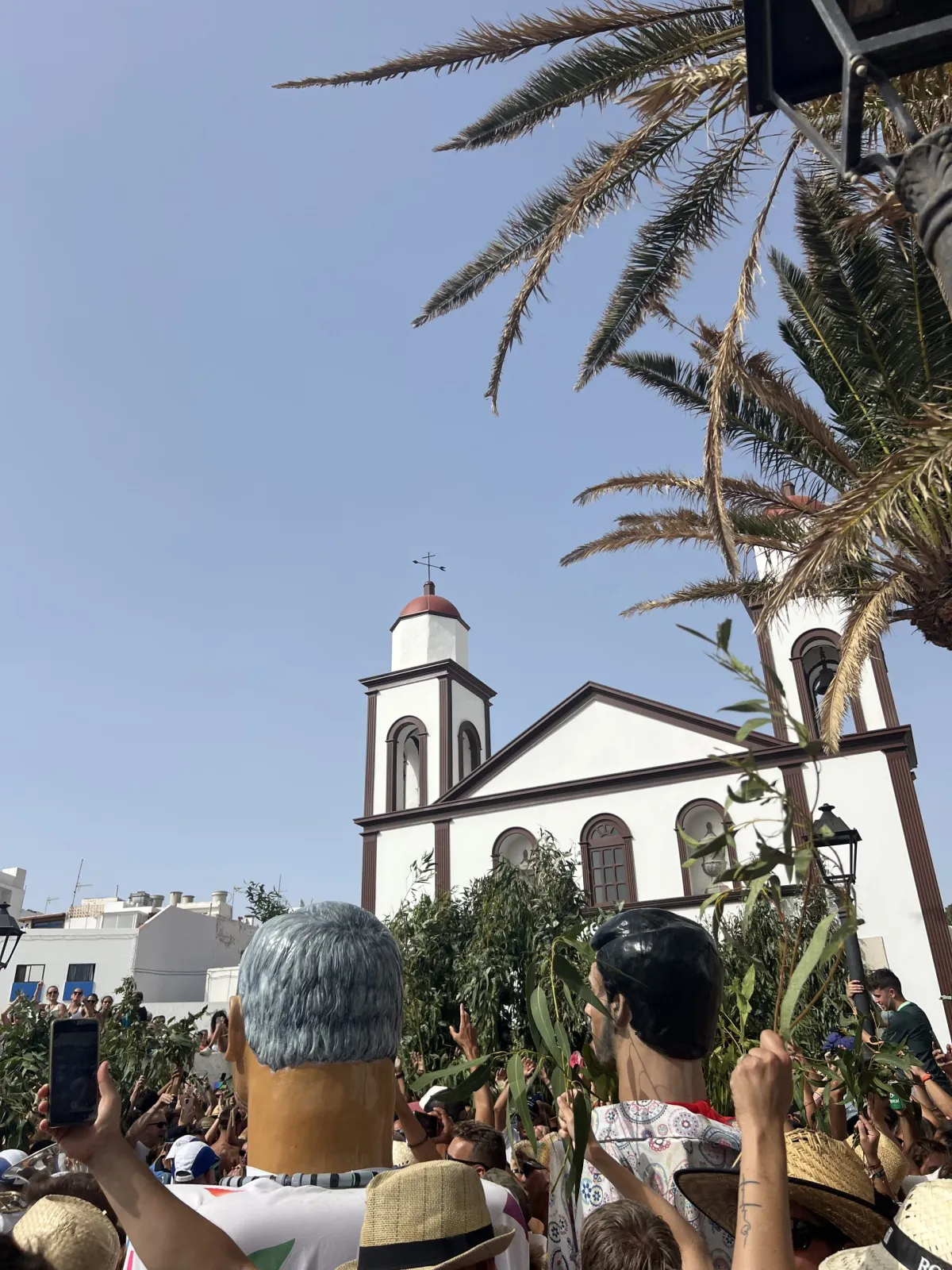
The days that matter
-
4 Aug, dawn 05:00 (2026)
La Diana
A musical parade wakes the town, led by the local bands.
-
4 Aug 10:00
The Rama sets off
Rameros start dancing with their branches beside the church of La Concepción, behind the bands and papahuevos.
-
4 Aug, afternoon around 18:00 (2026)
Down to Puerto de Las Nieves
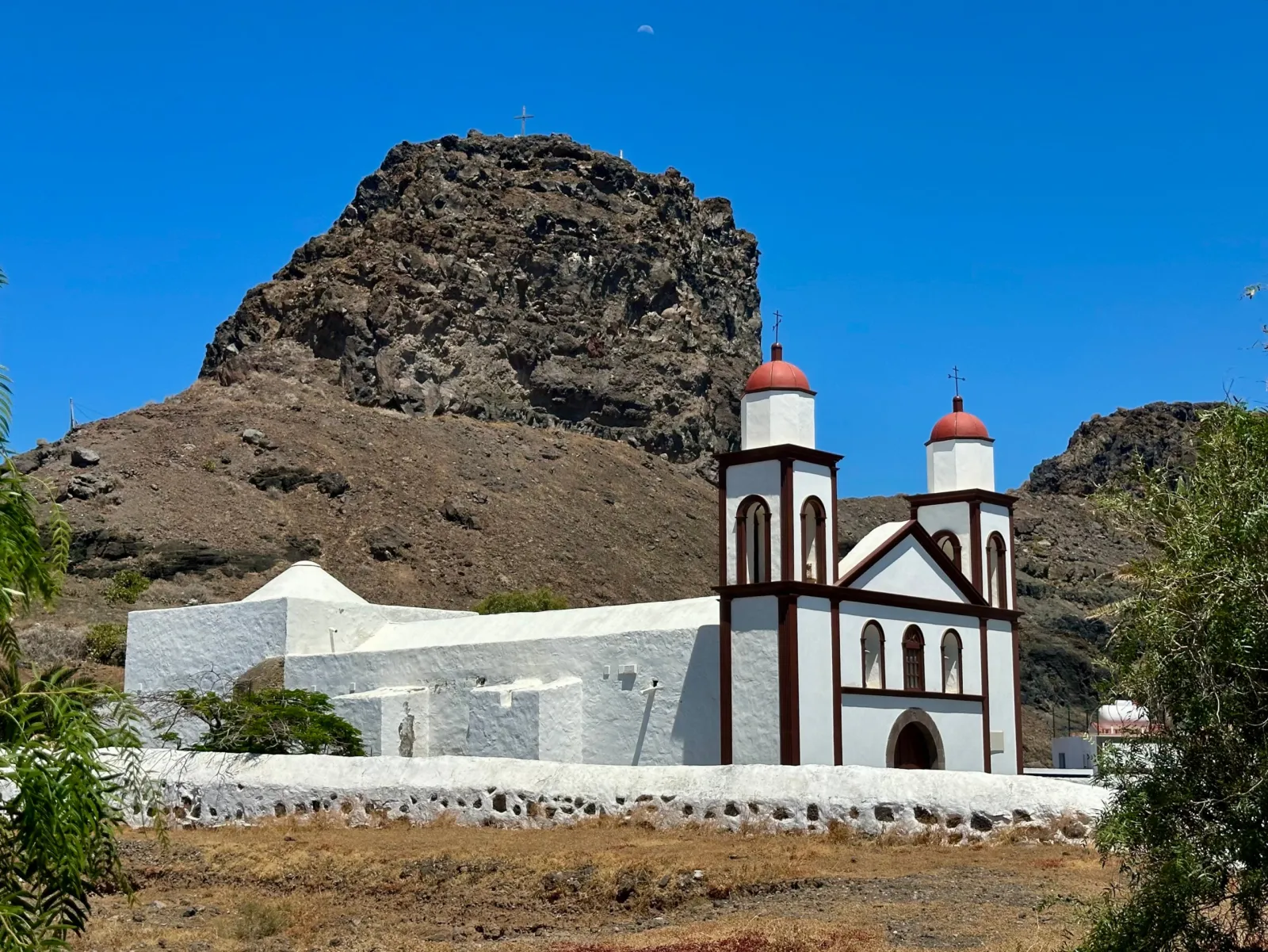
The crowd reaches the coast, beats the sea with the branches and offers them to the Virgen de las Nieves.
-
4 Aug, night
La Retreta
The party returns to the side of the Concepción church to close Agaete's biggest day.
-
5 Aug
Feast of the Virgen de las Nieves
A procession carries the Virgin from her hermitage to the parish church of La Concepción.
What Bajada de la Rama (Agaete) is like
- Loud
- Free
- Procession
- Noise
- Brass bands from dawn until night
- Crowds
- Tens of thousands in a small town's streets
- Mess
- Leaves, sweat and a splash of seawater at the port
- With kids
- Joyful and safe, but the crowds and heat are hard on little ones
Highlights
Wednesday 4 August 2027, a fixed date every year
La Diana at dawn, with the town's bands parading through the streets
Thousands of rameros dancing with pine, laurel and heather branches from 10:00
Beating the sea with the branches at Puerto de Las Nieves
The papahuevos, Agaete's giant-headed figures, dancing with the crowd
The offering of the branches to the Virgen de las Nieves
La Rama 2027: date
The Bajada de la Rama is held every year on 4 August, so in 2027 it falls on Wednesday 4 August. Spain's official tourism portal lists the same date. It is the central day of the Fiestas de Nuestra Señora de las Nieves, Agaete's patron saint festivities, and the town's biggest day of the year.
What happens
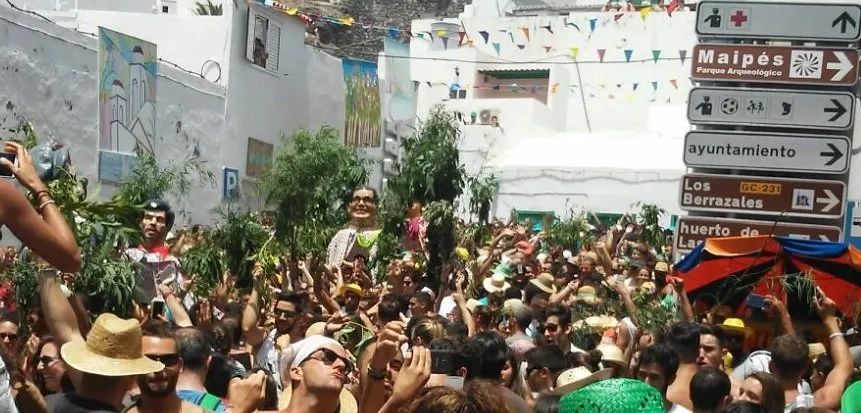
The day starts before sunrise with La Diana, a musical parade that wakes up the town; in 2026 it set off at five in the morning with the Agaete and Guayedra bands and the popular band Clandestina. At ten o'clock the Rama itself begins beside the church of Nuestra Señora de la Concepción. Thousands of rameros dance through the streets behind the bands and the papahuevos, the big-headed figures, holding branches of pine, eucalyptus, laurel and heather high above their heads.
The music never really stops. The crowd works its way down to the Puerto de Las Nieves, where the rameros beat the sea with their branches, and the day ends with the offering of the branches to the Virgen de las Nieves. In 2026 the band reached the Ermita de Las Nieves at around six in the evening, and at night La Retreta brought everyone back to the side of the Concepción church.
Why branches?
The Rama recalls an aboriginal rite with which the ancient Canarians are thought to have asked the gods for rain. Over the centuries it was absorbed into the Christian feast of the Virgen de las Nieves, and the offering of the branches to her image closes the circle. It draws visitors from all over Gran Canaria and the rest of the archipelago.
The festivities continue the next day: on 5 August, the feast of the Virgen de las Nieves, a procession takes her image from the hermitage to the parish church of the Concepción, where it stays for a couple of weeks.
Gallery
History & Origins
Before the Castilian conquest, the aboriginal people of Gran Canaria lived with a scarce and uncertain water supply. Tradition holds that they climbed to the mountains, gathered branches and went down to the sea to beat the water with them, asking for rain. The Bajada de la Rama is understood as the living memory of that rite.
After the conquest, the ritual became part of the celebrations for the Virgen de las Nieves, whose hermitage stands by the sea at Puerto de Las Nieves. Today it combines that ancient gesture with a very Canarian street party: brass bands, papahuevos and a whole town dancing. Local reports describe it as one of the most crowded fiestas in the Canary Islands, and it is also protected as a Bien de Interés Cultural.
What to Expect
Expect a long, hot, joyful day on your feet. Tens of thousands of people pack Agaete's streets, dancing non-stop behind the bands. The party peaked in the town around 13:00 in 2026, and the music continued all afternoon on the way down to the coast. Everyone carries a branch: bring one or pick one up on the day and join in.
Bars and families sell home-made food along the way, and the atmosphere is festive rather than solemn, although the offering to the Virgin at the end of the day matters a great deal to locals. August sun in Gran Canaria is strong, and in 2026 the mayor asked everyone to take care because of the weather conditions.
How to Get There
Agaete is on the north-west coast of Gran Canaria. There are no trains on the island, so the options are the island's Global buses, which link Agaete with Las Palmas de Gran Canaria, or a car or taxi.
On 4 August roads and parking in Agaete fill up early, and many visitors come by bus. Gran Canaria Airport is on the east side of the island, so allow time to cross the island if you arrive on the day.
Tips & Advice
Go early. The Rama starts at 10:00, but the town is already full by then; the most dedicated arrive for La Diana at dawn.
Protect yourself from the sun. Hat, sunscreen and plenty of water: you will be dancing outdoors for hours in August.
Carry a branch. Joining in is the whole point, and nobody minds visitors dancing with the locals.
Use public transport. Leave the car in Las Palmas or elsewhere and take the bus to avoid queues and parking problems.
Stay for the evening. The arrival at the hermitage and La Retreta at night are quieter, more emotional moments.
Photos: CarlotaBGarcia18 / CC BY 4.0 / Wikimedia Commons; Tabona / CC BY-SA 4.0 / Wikimedia Commons; Wolfgang Sauber / CC BY-SA 4.0 / Wikimedia Commons; Rvr / CC BY-SA 4.0 / Wikimedia Commons
San Andrés in Tenerife
Icod de los Vinos, Canary IslandsAt the end of November the north of Tenerife opens its new wine and makes a lot of noise about it. In Icod de los Vinos riders slide down the steepest streets on wooden boards, and in Puerto de la Cruz families drag strings of tins through town on the eve of Saint Andrew. In 2026 the celebrations run from 27 to 30 November.
Carnival of Tenerife
Santa Cruz de Tenerife, Canary IslandsThe Carnival of Santa Cruz de Tenerife is the second-largest carnival in the world, rivalled only by Rio de Janeiro. Every February, the Canarian capital explodes into a dazzling spectacle of costumes, music, dance and street parties that last over two weeks. Declared a Festival of International Tourist Interest, this carnival draws hundreds of thousands of visitors each year.
Carnaval de Las Palmas de Gran Canaria
Las Palmas de Gran Canaria, Canary IslandsLas Palmas Carnival runs from 22 January to 28 February 2027, with the Drag Queen Gala on 19 February, the Grand Parade on 20 February and the Burial of the Sardine finale on 28 February.
Los Indianos (La Palma Carnival)
Santa Cruz de La Palma, Canary IslandsOn Carnival Monday the capital of La Palma dresses all in white to parody the emigrants who came home rich from Cuba, and the whole old town disappears under clouds of talcum powder.