Hogueras Alicante 2026: Fireworks and Mascletas Schedule
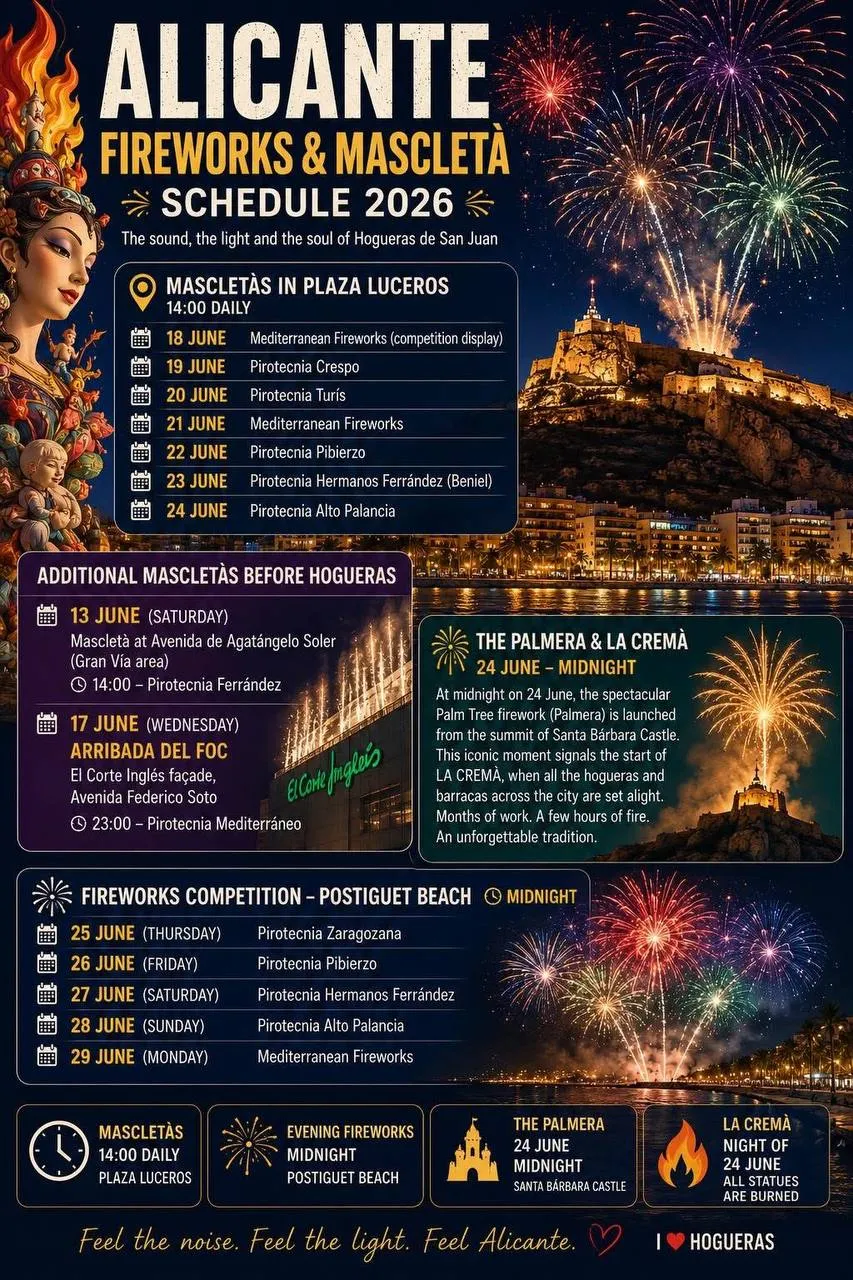
Alicante has unveiled its 2026 pyrotechnics programme: daily mascletas in Plaza de los Luceros, the Palmera and Crema, and five nights of fireworks at Postiguet Beach.
Hogueras Alicante 2026: fireworks and mascletas schedule
Alicante has published the main pyrotechnics programme for Hogueras de San Juan 2026. The schedule includes seven daily mascletas in Plaza de los Luceros from 18 to 24 June, the midnight Palmera and Crema on 24 June, and the five-night fireworks competition at Postiguet Beach from 25 to 29 June.
For the complete festival plan, monuments and practical travel advice, read our Hogueras de Alicante 2026 guide and the Hogueras de San Juan festival page.
Quick schedule
- 13 June, 14:00: additional mascleta on Avenida de Agatangelo Soler, in the Gran Via area.
- 17 June, 23:00: Arribada del Foc by Pirotecnia Mediterraneo, beside El Corte Ingles on Avenida Federico Soto.
- 18-24 June, 14:00: daily mascletas in Plaza de los Luceros.
- 24 June, midnight: the Palmera from Santa Barbara Castle, immediately followed by the Crema across Alicante.
- 25-29 June, midnight: fireworks competition at Postiguet Beach.
Mascletas in Plaza de los Luceros
The mascleta is built around rhythm, pressure and sound rather than aerial colour. Each show starts at 14:00, but the square and nearby streets fill much earlier. Arrive at least 45-60 minutes before the start, carry water and use hearing protection, especially for children.
- 18 June: Pirotecnia Mediterraneo
- 19 June: Pirotecnia Crespo
- 20 June: Pirotecnia Turis
- 21 June: Mediterranean Fireworks
- 22 June: Pirotecnia Pibierzo
- 23 June: Pirotecnia Hermanos Ferrandez, Beniel
- 24 June: Pirotecnia Alto Palancia
The Palmera and Crema on 24 June
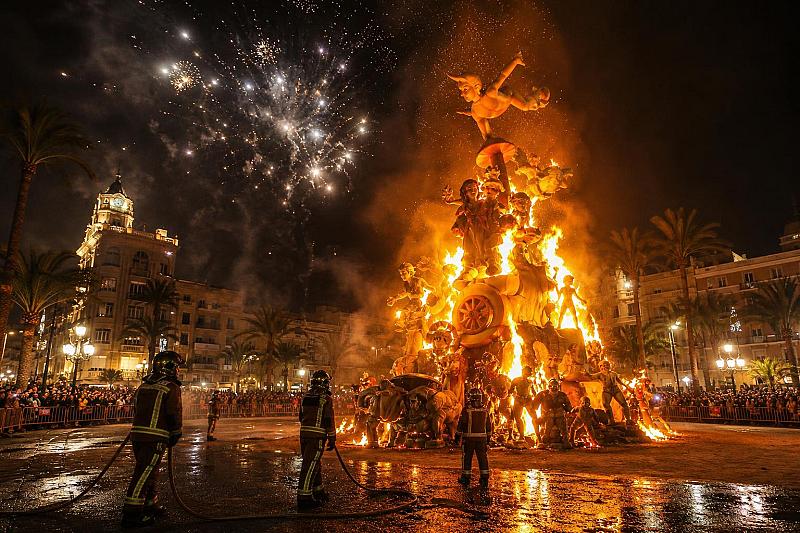
At midnight on 24 June, a large palm-shaped firework is launched from the summit of Santa Barbara Castle. This is the Palmera, the traditional signal for the Crema to begin. The hogueras monuments and barracas are then set alight throughout the city, bringing months of artistic work to a dramatic end in a single night.
Choose one main monument as your viewing point and arrive early. Fire crews establish safety perimeters, streets close and movement between neighbourhoods becomes slow once the burnings start.
Postiguet Beach fireworks competition
The celebration continues after the Crema with five midnight displays over the Mediterranean. The beach, promenade and elevated viewpoints around Mount Benacantil are popular, so allow extra time to walk from the city centre.
- 25 June: Pirotecnia Zaragozana
- 26 June: Pirotecnia Pibierzo
- 27 June: Pirotecnia Hermanos Ferrandez
- 28 June: Pirotecnia Alto Palancia
- 29 June: Mediterranean Fireworks
What to prioritise if it is your first visit
Do not try to see everything. Hogueras spreads across neighbourhoods, barracas, parades, fireworks and late-night street life. A good first trip should focus on three experiences: walking the monuments, feeling one mascletà from a sensible distance, and choosing a strong viewing spot for the cremà.
The monuments are not only decoration. They are satirical, temporary artworks built to be judged, photographed and finally burned. Spend at least one evening walking between central hogueras before the crowds get too heavy.
Best areas to stay
The historic centre and the area around Mercado are the most convenient for walking to monuments, barracas and Luceros. They are also noisy. If sleep matters, look slightly away from the densest nightlife streets: Luceros, Ensanche, Diputación and the beach edges can be practical compromises.
Postiguet and the marina area work well if you want beach access and fireworks, but prices rise quickly in late June. Book flexible accommodation early, especially if you plan to stay through the 25-29 June fireworks run.
Suggested 3-day itinerary
Day 1: arrive and map the monuments
Arrive before evening, check into accommodation, then walk the main central hogueras. Start around Plaza del Ayuntamiento and the Explanada, then move toward Luceros. Use this first walk to understand distances and decide where you want to return for photos.
Day 2: mascletà and flower offering
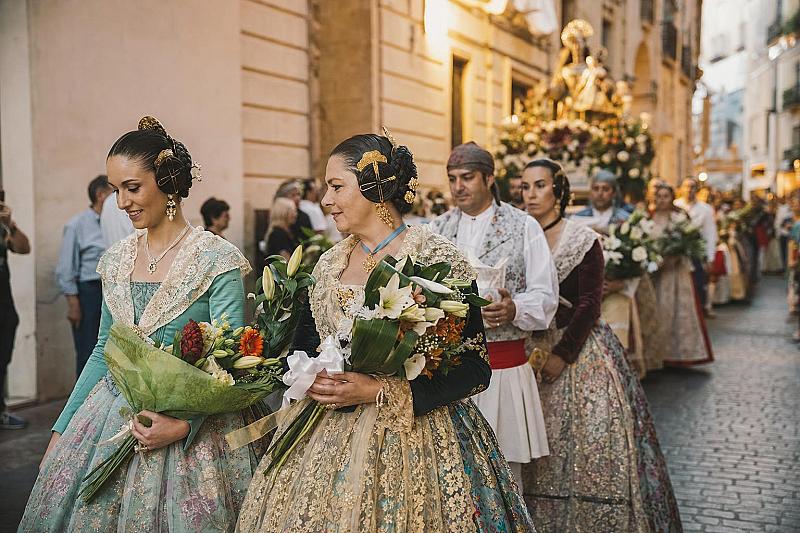
Go to Plaza de los Luceros early for the 2 pm mascletà. It is loud enough that earplugs are sensible, especially for children. After a rest in the afternoon, watch part of the flower offering and have dinner away from the most crowded streets.
Day 3: cremà night
Choose one monument for the cremà before dinner. Moving across the centre late at night is slow, and the best viewing spots fill early. If you are travelling with children, pick a smaller neighbourhood cremà rather than the most crowded central one.
How to get around Alicante during Hogueras
Alicante is walkable, and walking is often faster than trying to cross festival traffic. Use the tram for beach-side stays and regional trips, but expect crowding around central stops. Taxis and rideshare services can be difficult at peak times after major events, so avoid relying on a last-minute car after midnight.
If arriving by train, Alicante Terminal is close enough to the centre for many hotels. If arriving by air, the airport bus is usually the simplest route into the city, but give yourself extra time during festival evenings.
Food, barracas and local rhythm
Hogueras is not only about fire. Barracas and racós are social hubs where neighbourhood groups eat, drink and dance. Some spaces are public-facing while others feel more local. For visitors, the easiest approach is to use central food stalls and restaurants, then enjoy the street atmosphere without assuming every tent is a tourist venue.
Look for coca amb tonyina, tapas around Mercado Central, arroz dishes at lunch, and cold drinks between events. Late June heat can be strong, so build water stops into your day.
Safety and comfort tips
- Bring earplugs for mascletàs; the sound is part of the event, but it is intense.
- Wear breathable clothes and comfortable shoes. You will walk a lot.
- Keep children away from the densest mascletà and cremà crowds.
- Do not stand too close to barriers, fireworks zones or firefighter access routes.
- Carry water and avoid planning back-to-back midday activities in full sun.
Practical viewing tips
- Use public transport or walk; central road closures make driving difficult.
- For Luceros, stand back from the barriers if intense noise is uncomfortable.
- For the Postiguet displays, bring a light layer for the sea breeze and keep beach access routes clear.
- Check same-day municipal notices because wind or safety conditions can alter a pyrotechnics programme.
Frequently asked questions
What time are the Hogueras 2026 mascletas?
The main mascletas take place at 14:00 in Plaza de los Luceros every day from 18 through 24 June 2026.
When is the Crema in Alicante in 2026?
The Palmera is launched at midnight on 24 June, signalling the start of the Crema. Burnings then take place across the city.
Where are the fireworks after Hogueras?
The fireworks competition runs at midnight from 25 to 29 June at Postiguet Beach, beside Alicante city centre.
Related Articles
San Andrés in Tenerife: Tablas de Icod & New Wine
A practical guide to the San Andrés traditions of north Tenerife: the Tablas de Icod, new wine, chestnuts and Puerto de la Cruz cacharros. The traditional dates are 29–30 November; exact 2026 routes and times were still awaiting municipal publication on 22 October.
Fiesta del Orujo in Potes 2026: What to Do in the Picos
Potes celebrates the Fiesta del Orujo on 13–15 November 2026, dates confirmed by the town council. This visitor guide covers Potes, Liébana and the recurring festival traditions; the detailed 2026 timetable was still pending on 22 October.
Zambombas de Jerez 2026: Flamenco Christmas Guide
A practical guide to the Zambombas de Jerez: what the flamenco Christmas gatherings are, the neighbourhoods to explore and how to use the municipal calendar. The exact 2026 programme and authorised dates were not yet published as of 22 October; confirm them on the official Jerez Christmas site before booking.