Semana Santa de Melilla
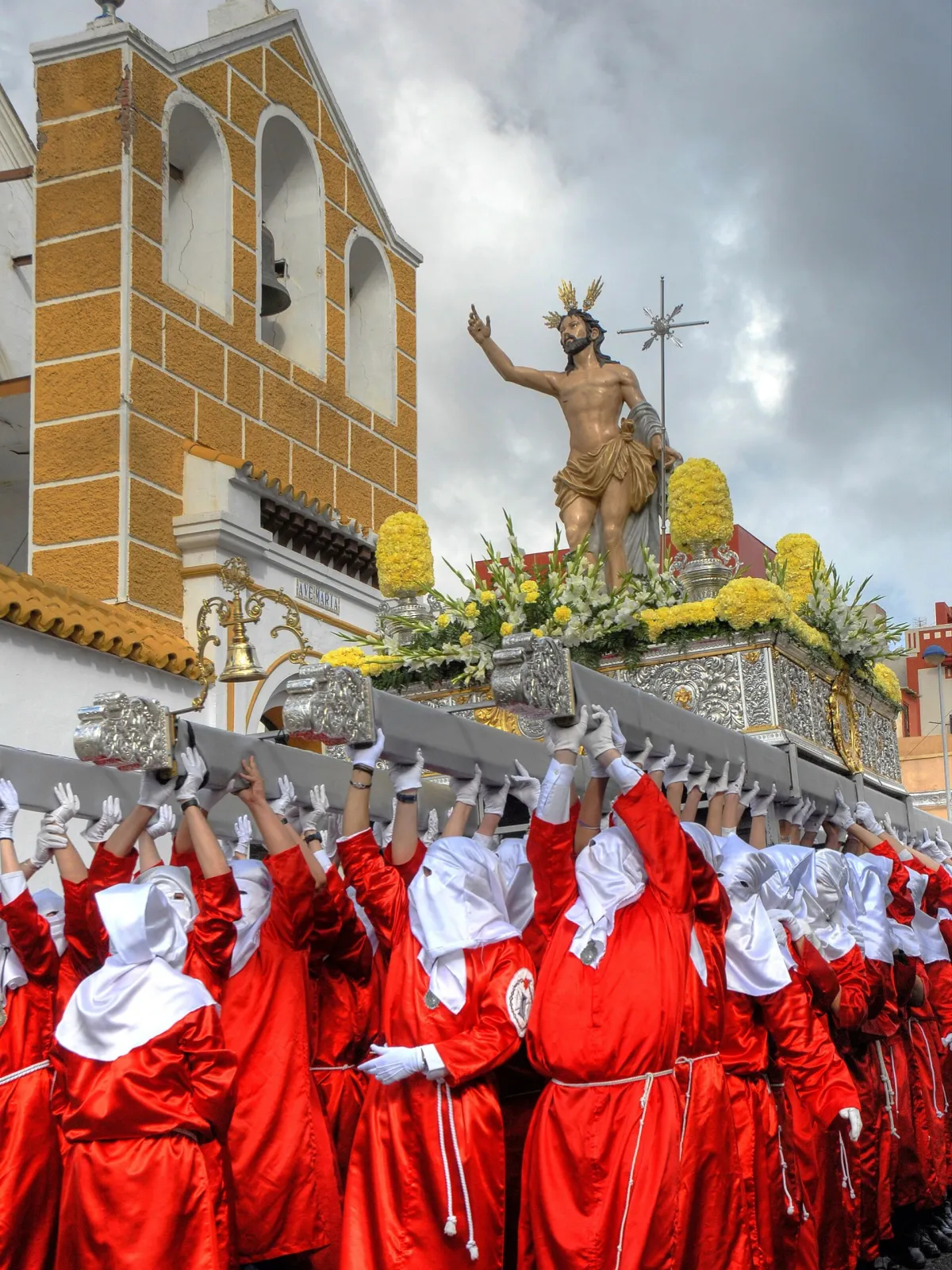
Melilla's Holy Week is one of the least known in Spain and one of the most unusual: a Nazarene attributed to Pedro de Mena leaves from the bullring on Holy Wednesday, a prisoner is set free in front of the procession on Holy Thursday night, and the week ends with the Risen Christ meeting the Virgen del Rocío on Easter Sunday.
The days that matter
-
20 Mar
Via Crucis of the Cristo del Socorro
The Saturday before Palm Sunday, a tradition born of a promise during a siege more than 200 years ago.
-
24 Mar
Nazareno from the bullring
The Nazarene attributed to Pedro de Mena leaves from the Plaza de Toros.
-
25 Mar around 22:00
Liberación del Preso
A prisoner is freed in front of El Cautivo on Avenida Juan Carlos I and rings the float's bells.
-
26 Mar
Santo Entierro
The official Good Friday procession, with civil, military and church authorities.
-
28 Mar
Encuentro
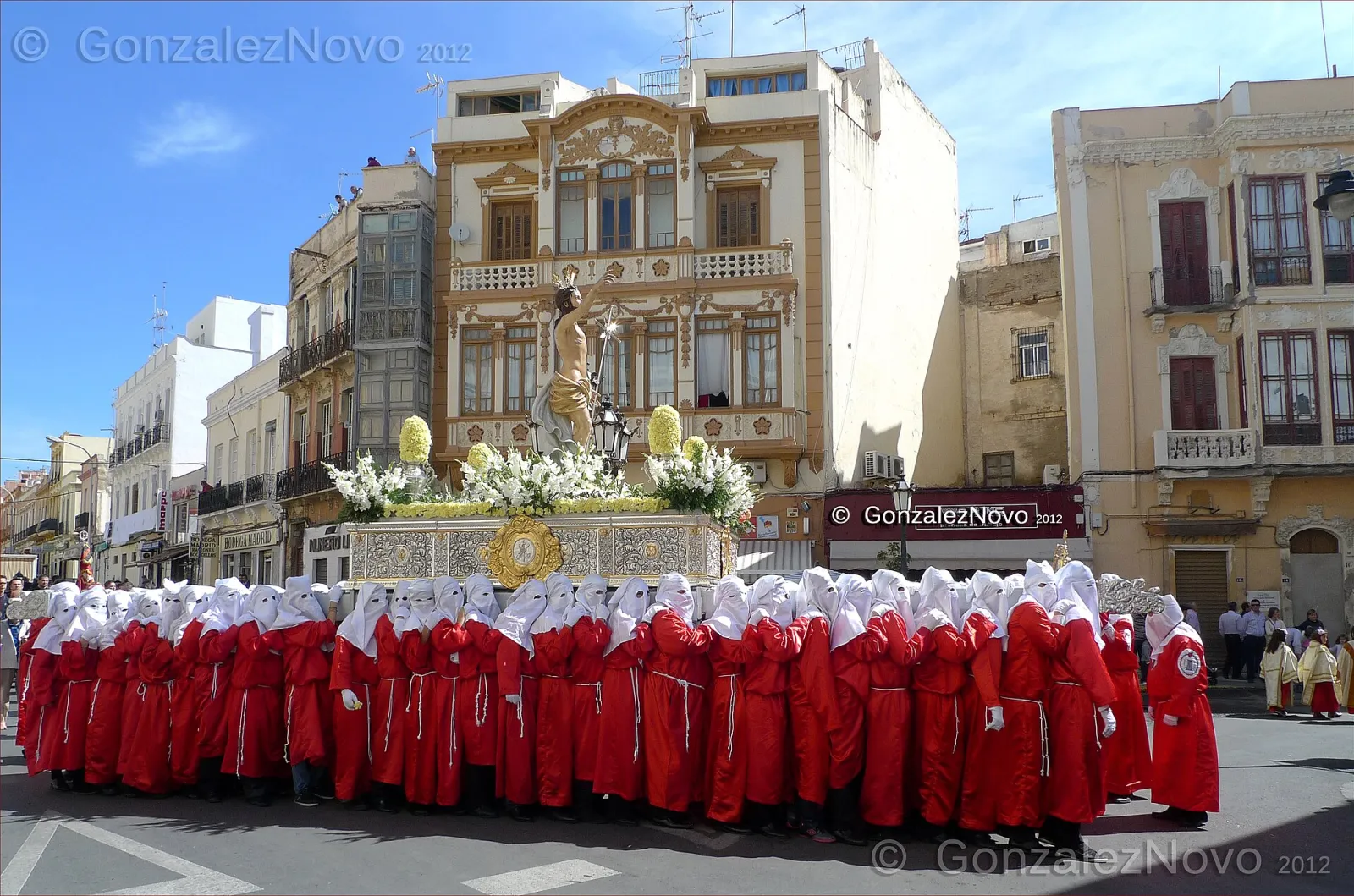
The Risen Christ meets the Virgen del Rocío to close Holy Week.
What Semana Santa de Melilla is like
- Procession
- Night
- Free
- Noise
- Drums and bands, then silence as the floats pass
- Crowds
- Busy on Holy Thursday night, easy elsewhere
- Mess
- Only candle wax on the streets
- With kids
- Fine for children who can stay up late
Highlights
Via Crucis of the Cristo del Socorro, a promise kept for over 200 years
A Nazarene attributed to Pedro de Mena leaving from the bullring on Holy Wednesday
A prisoner set free in front of El Cautivo on Holy Thursday night
The Risen Christ meets the Virgen del Rocío on Easter Sunday
Date & Schedule
| Detail | Info |
|---|---|
| Holy Week 2027 | Palm Sunday 21 March to Easter Sunday 28 March 2027 |
| Before it | Sat 20 March: Via Crucis of the Santísimo Cristo del Socorro |
| Holy Wednesday | 24 March: the Nazareno leaves from the Plaza de Toros |
| Holy Thursday | 25 March: El Cautivo from 16:15; prisoner release around 22:00 on Avenida Juan Carlos I |
| Good Friday | 26 March: La Piedad and the official Santo Entierro procession |
| Easter Sunday | 28 March: the Risen Christ meets the Virgen del Rocío |
| Cost | Free |
Times are those of recent years; each brotherhood publishes its exact route and timetable in the weeks before Holy Week.
Sat 20 March: Via Crucis of the Cristo del Socorro
Holy Week in Melilla starts the day before Palm Sunday, on the Sábado de Pasión, with one of its most solemn acts: the Via Crucis of the Santísimo Cristo del Socorro. The tradition is more than 200 years old and comes from a promise the people of Melilla made when the city was besieged and storms at sea stopped supplies from arriving.
Holy Wednesday: a Nazarene from the bullring
On Holy Wednesday the Nazareno, a carving attributed to the Baroque sculptor Pedro de Mena, leaves from Melilla's Plaza de Toros. A procession setting out from a bullring is unique in Spain, and it makes the bullring a key spot in the city's Holy Week calendar.
Holy Thursday: the prisoner set free
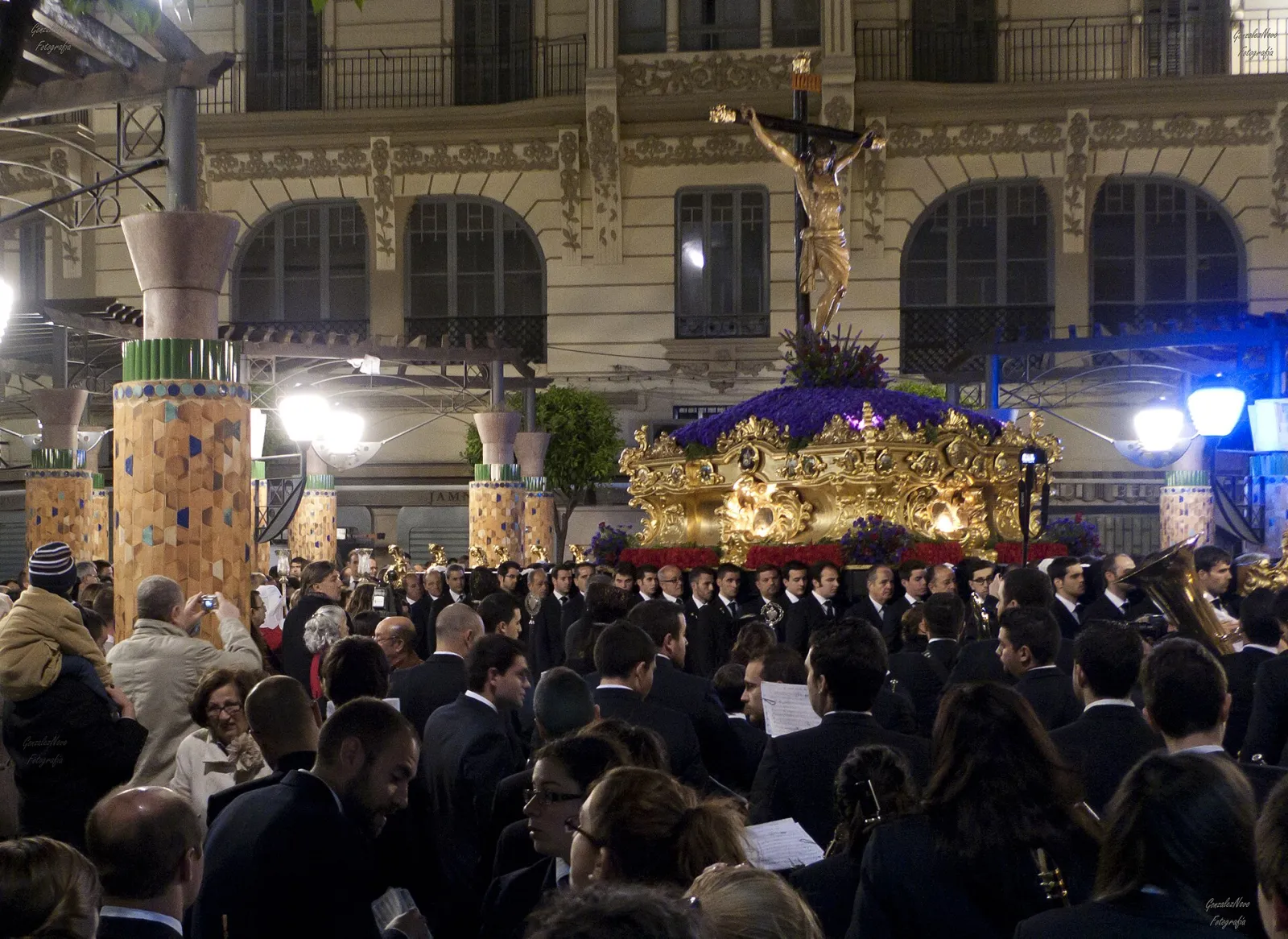
Three brotherhoods process on Holy Thursday: Nuestro Padre Jesús Cautivo de Medinaceli and María Santísima del Rocío, the Flagelación and Mayor Dolor, and the Cristo de la Paz and Soledad. The Cautivo leaves first, at about 16:15, from its brotherhood house in the Virgen de la Victoria district. Around 22:00, in front of the official stand on Avenida Juan Carlos I, comes the Liberación del Preso: a judicial order is read, an inmate is released in an act of mercy that recalls the freeing of Barabbas, and he rings the bells of the Cautivo's float. The brotherhood has done this since 2001; by 2025 it had freed 21 men and three women. The prisoner is chosen months before with the prison chaplaincy and the courts, and on Ash Wednesday the brotherhood takes him the robe he will wear in the procession.
Good Friday and Easter Sunday
Good Friday begins with La Piedad and continues with the official Santo Entierro procession, with civil, military and church authorities. On Easter Sunday the Risen Christ meets the Virgen del Rocío, the most joyful moment of the week and the end of Holy Week in Melilla.
Weather in Melilla in late March
- Mild, around 18–20 °C by day, cooler in the evenings
- Rain can stop a procession: brotherhoods decide at the church door
Sources
Gallery
History & Origins
Melilla's brotherhoods carry a mix of old devotions and newer traditions. The Via Crucis of the Cristo del Socorro has been kept for more than two centuries, since a promise made during a siege. The Nazareno attributed to Pedro de Mena links the city to the great Andalusian Baroque sculptors. The release of a prisoner on Holy Thursday, a custom found in some Andalusian cities, was revived in Melilla by the Cautivo brotherhood in 2001.
What to Expect
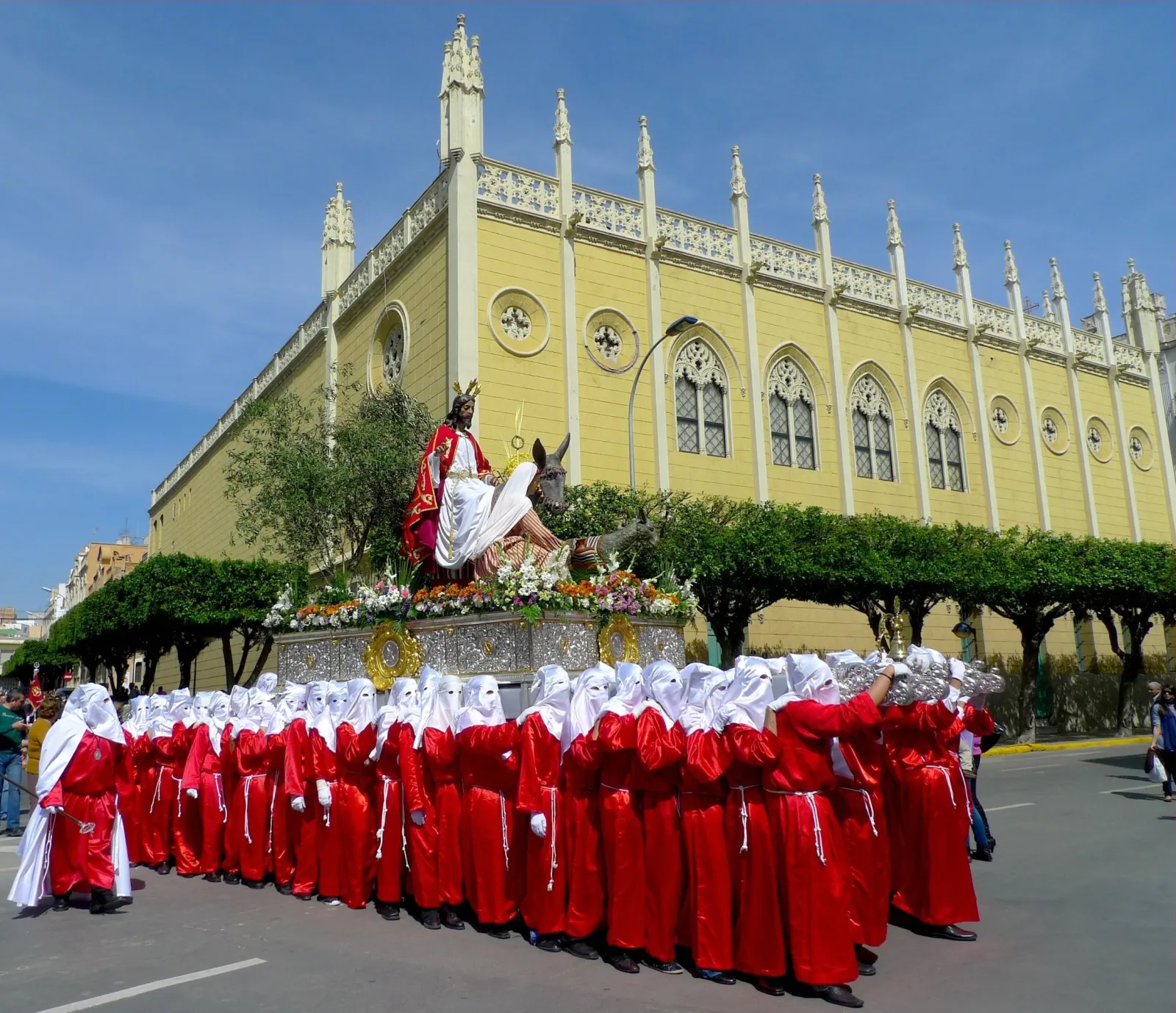
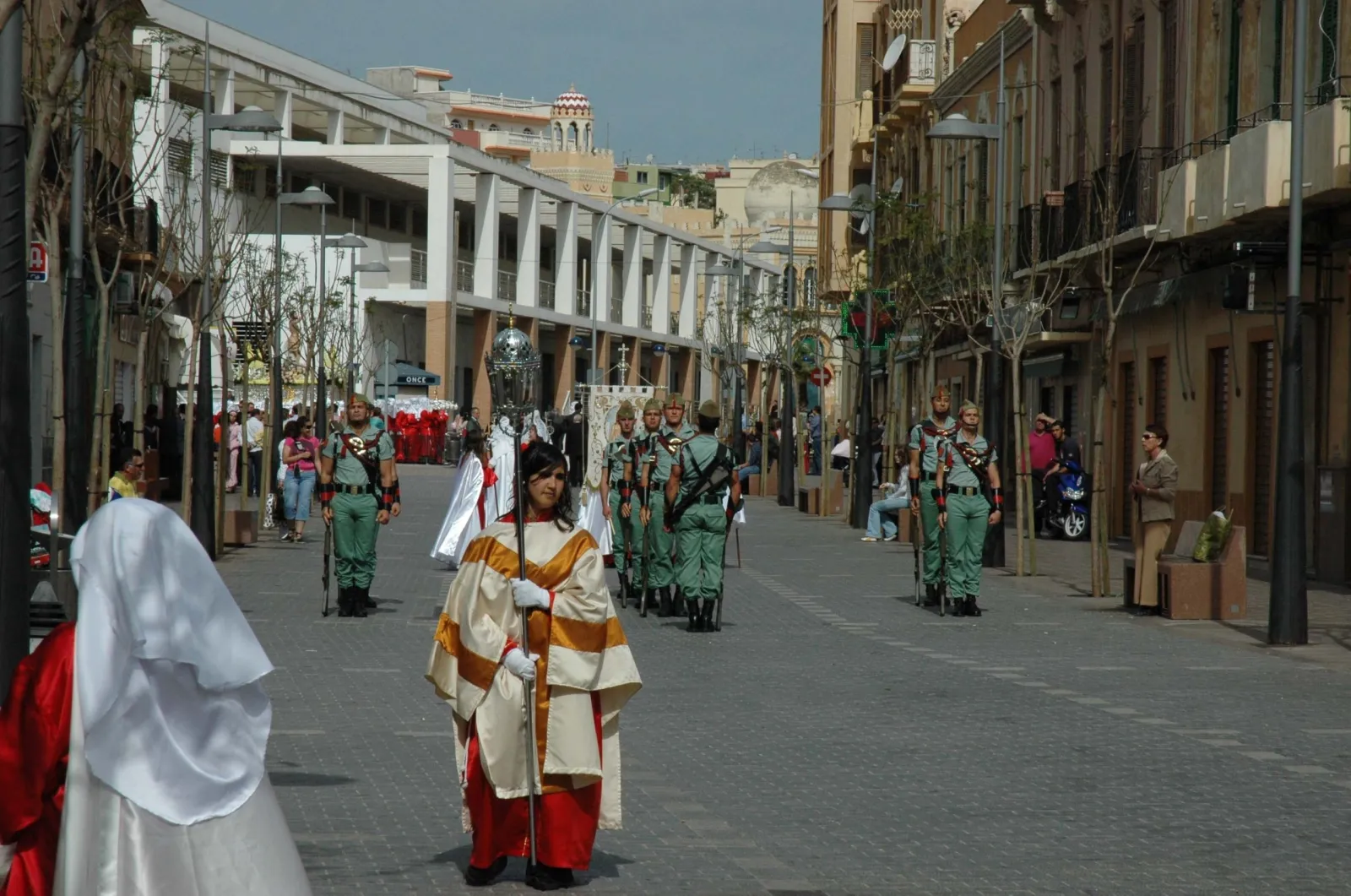
A Holy Week on an Andalusian model, smaller and closer than Seville or Málaga: you can follow a float through the modernist streets of the centre without fighting crowds. Expect bands, incense and long evening processions, with the Holy Thursday night as the emotional peak. Locals call it the great unknown Holy Week of Spain.
How to Get There
By air: Melilla Airport has flights to Málaga, Madrid and other Spanish cities. By ferry: from Málaga, Almería and Motril. By train: Renfe to Málaga or Almería, then the ferry. The processions run through the centre, around Avenida Juan Carlos I and Plaza de España, all walkable.
Tips & Advice
- Holy Week is a holiday week across Spain: book flights and the ferry well ahead.
- For the prisoner release, find a place on Avenida Juan Carlos I near the official stand early in the evening.
- Don't miss the Holy Wednesday departure from the bullring, the only one of its kind in Spain.
- Check each brotherhood's route and times, published in the weeks before.
- More festivals and places to stay: our Melilla guide.
Photos: Miguel González Novo / CC BY-SA 2.0 / Wikimedia Commons
Feria de Melilla
Melilla, MelillaAt the turn of August and September Melilla holds its biggest fiesta: nine days of casetas, rides and concerts at the fairground on the seafront, in honour of the city's patron saint, the Virgen de la Victoria, who is carried through the streets on her feast day, 8 September.
Día de Melilla
Melilla, MelillaEvery 17 September Melilla celebrates the day in 1497 when it became part of the Crown of Castile. The city lays flowers at the statue of Pedro de Estopiñán, holds its main ceremony on the Plaza de Armas of Melilla la Vieja and ends the night with fireworks from the old walls.
Semana Santa
Seville, AndalusiaSemana Santa (Holy Week) is arguably Spain's most emotionally powerful and visually stunning festival. In the week leading up to Easter Sunday, cities and towns across the country fill with solemn religious processions, haunting music, clouds of incense, and enormous ornate floats (pasos) carried by hundreds of robed nazarenos.
Semana Santa de Málaga
Málaga, AndalusiaMálaga's Semana Santa is one of Spain's most emotional and spectacular Holy Week celebrations. Famous for its massive tronos (processional thrones) carried by hundreds of bearers, the spontaneous singing of saetas, and the unique tradition of releasing a prisoner, it draws over a million visitors every spring.