San Fermín Txikito
The authentic 'little San Fermín' celebrates the true feast day without the July crowds. Processions, txistulari music, traditional dances, and neighbourhood celebrations.
Highlights
Pamplona's little San Fermin, celebrated the weekend nearest September 25th
Opens with a txupinazo rocket at the church of San Fermin de Aldapa
Gigantes y Cabezudos parades, mus championships, and street concerts
A relaxed, locals-first alternative to the crowded July Sanfermines
Every 25 September, Pamplona quietly marks the actual liturgical feast day of Saint Fermín — the date the Catholic Church assigns to the saint, distinct from the world-famous July festival, which was moved centuries ago to coincide with the city's summer trade fair. Known as San Fermín Txikito ("little San Fermín"), the celebration is a low-key, distinctly local counterpart: religious processions honouring the saint, txistulari musicians playing the traditional Basque three-holed flute and drum, folk dances, and neighbourhood gatherings replace the bull-running crowds entirely. For residents who find the July festival overwhelming, or simply want the religious core of the tradition without the tourism, Txikito is the version that belongs to Pamplona alone — smaller, quieter, and rooted in exactly the same devotion that the July festival grew out of.
History & Origins
San Fermin Txikito, also known as San Fermin de Aldapa, is Pamplona's little San Fermin, celebrated on the weekend closest to September 25th, the anniversary of the martyrdom of Saint Fermin in Amiens, France, in the year 303. The celebration centres on the church of San Fermin de Aldapa on Calle Dos de Mayo, an early eighteenth-century building raised over a medieval chapel that already venerated the saint; according to local tradition, the site was once the childhood home of the senator Firmus, father of Saint Fermin. The festival's roots run deep, since Pamplona's city council is recorded petitioning the bishop for permission to hold celebrations in the saint's honour as far back as 1591. One of the most fondly remembered editions took place in 1978, when, after a difficult year, the people of Pamplona threw themselves into the September festival with particular enthusiasm.
What to Expect
Unlike its famous July counterpart, San Fermin Txikito is a quieter, distinctly local affair aimed at the people of Pamplona rather than international visitors, and it is not accompanied by bull runs, which have only been staged a handful of times, briefly, back in the 1990s. The festival opens with a txupinazo rocket-launching ceremony at the church of San Fermin de Aldapa, followed by a weekend packed with concerts, dances, Gigantes y Cabezudos giant-figure parades, a mus card game championship, raffles, and live music filling the streets of the Casco Viejo, Pamplona's historic old quarter. It is a chance to see the city celebrate on its own terms, without the crowds of the summer festival.
How to Get There
Pamplona, the capital of Navarra, is served by its own airport with domestic connections to Madrid and Barcelona, as well as by regular train and bus services linking it to major Spanish cities. The Casco Viejo, where San Fermin Txikito takes place, is Pamplona's historic old quarter and is easily reached on foot from the train and bus stations, or via the city's local bus network; a car is not needed once in the city, since the old quarter is largely pedestrianised.
Tips & Advice
Because this is a local festival rather than a major tourist draw, expect a more relaxed and authentic atmosphere than the July Sanfermines, with far smaller crowds and no need to book accommodation as far in advance. Late September evenings in Pamplona can be cool, so bring a jacket for outdoor concerts and parades. Since there are no bull runs to plan around, visitors can enjoy a slower pace, exploring the Casco Viejo's bars and joining the community events without the frenzy of the summer celebration.
Plan Your Trip
Book accommodation and transport for this festival. Get the best deals on hotels and train tickets.
This page contains affiliate links. We may earn a commission at no extra cost to you.
 July
San Fermín
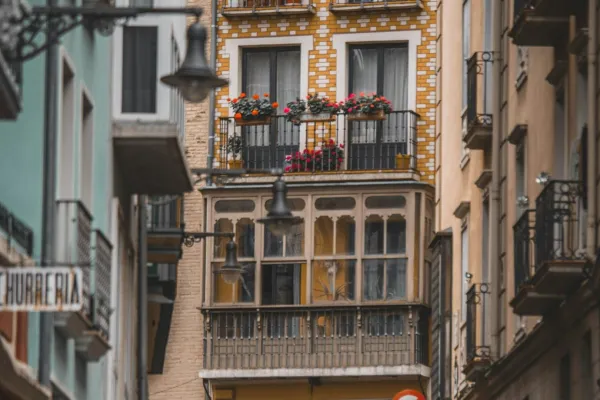
The Fiestas de San Fermín are among the most famous and adrenaline-charged festivals in the world. Held annually in Pamplona, the capital of Navarre, the festival draws over a million visitors every July for nine non-stop days of bullfighting, parades, music, and the legendary encierro — the Running of the Bulls.
 September
Fiesta del Cascamorras
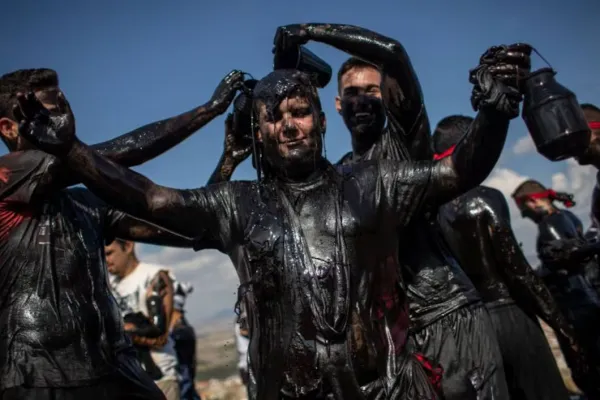
The Fiesta del Cascamorras is one of Spain's most extraordinary and bizarre festivals. Every 6 September, a man covered in black grease (the Cascamorras) attempts to run from the town of Guadix to Baza to reclaim a statue of the Virgin of Piedad — while thousands of equally grease-covered locals try to stop him. The result is a spectacular, chaotic, oil-black mass of humanity. Declared a Festival of International Tourist Interest, it's an ancient rivalry turned into joyful, slippery mayhem.
 March
Las Fallas
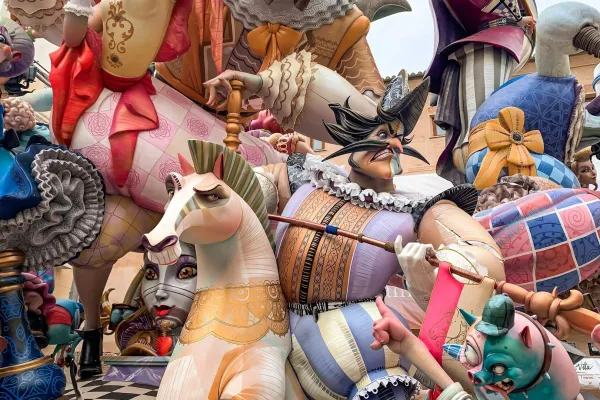
Las Fallas is one of Spain's most spectacular and UNESCO-recognised festivals — a stunning combination of art, fire, music, and Valencian pride. Every March, the city of Valencia fills its streets with hundreds of enormous satirical sculptures (fallas), only to burn them all to the ground in a magnificent midnight inferno on the final night.
 April
Feria de Abril
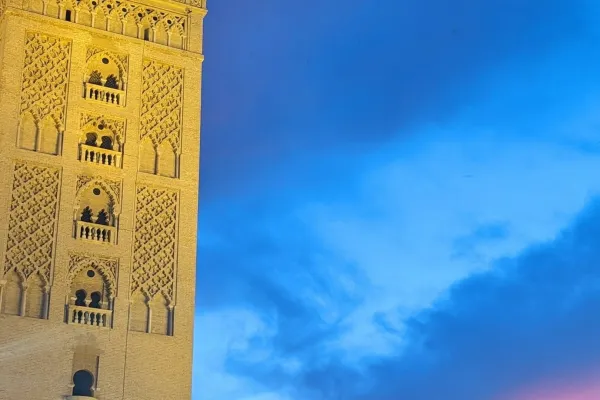
The Feria de Abril (April Fair) of Seville is one of the most joyful and glamorous festivals in Spain — a six-day explosion of flamenco, fine horses, manzanilla sherry, and sevillana dancing that transforms the city's fairgrounds into the most colourful party in Andalusia.