Guerras Cántabras
Two weekends when a Cantabrian valley town splits into Cantabrian tribes and Roman legions, builds its own camps and re-enacts the wars of 29–19 BC.
The days that matter
-
First Friday 21:00 in 2026
Opening: the sacred fire
Tribes and legions gather, the sacred fire is lit and handed to each group, and the temple of Janus opens: the war has begun.
-
First Saturday 20:00–23:00 in 2026
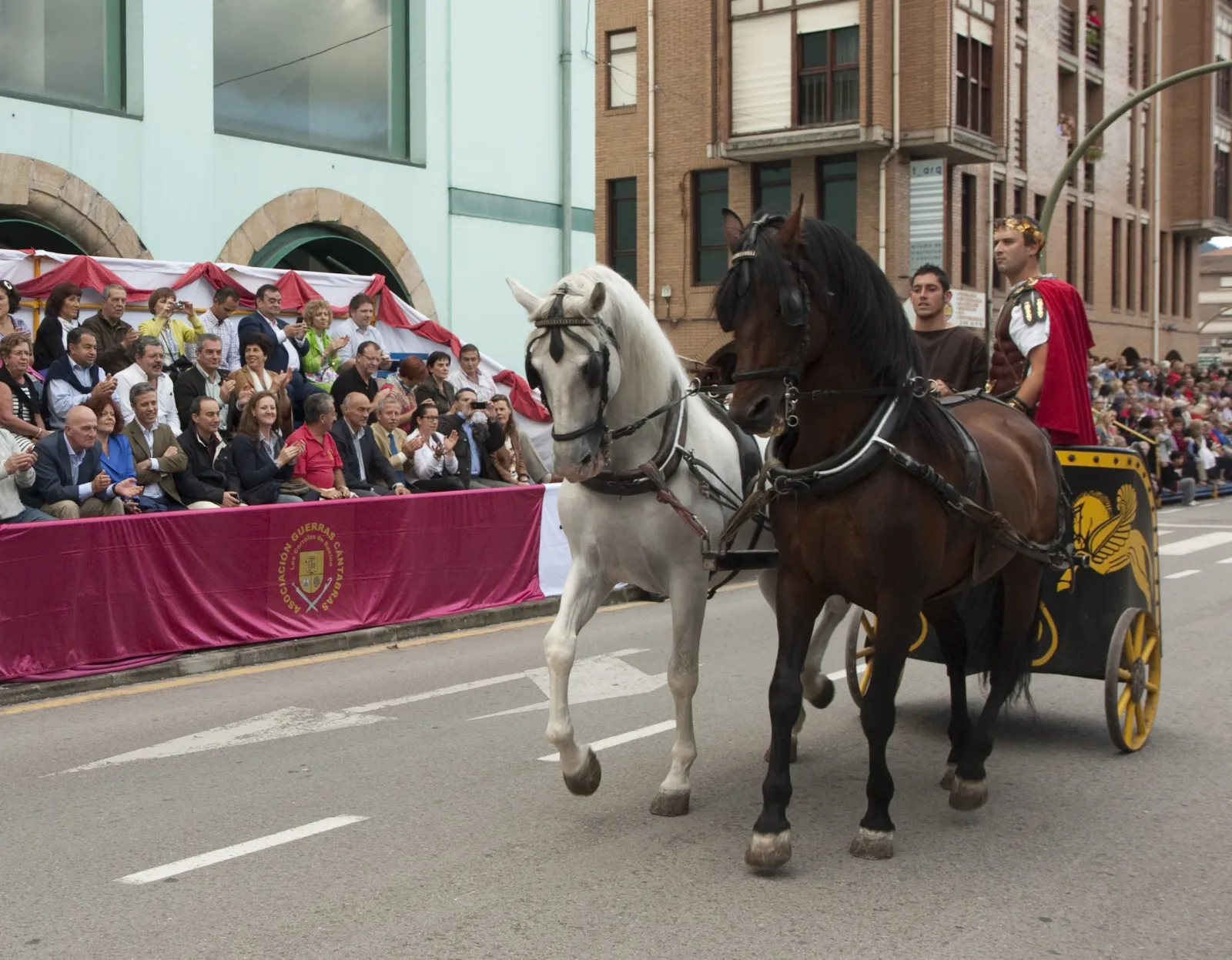
Augustus arrives and the first combat
Augustus enters the camp, the Cantabrian leader Corocotta claims his reward, and at night Cantabrians and Romans clash.
-
First Sunday from 20:00 in 2026
Cantabrian wedding
After the children's parade, Augustus addresses the legions and the evening closes with a Cantabrian wedding and the start of the second war.
-
Second Friday from 18:00 in 2026
Market and torch march
The Macellum market opens, followed by a night torch march, the tribal council and the proclamation of Corocotta.
-
Second Saturday 20:00–23:00 in 2026
Senate, gladiators and the rebellion
Roman forum, senate session and gladiator fights, then the Cantabrian rebellion, Agrippa's punishment and the Roman triumph.
-
Second Sunday 18:00 in 2026
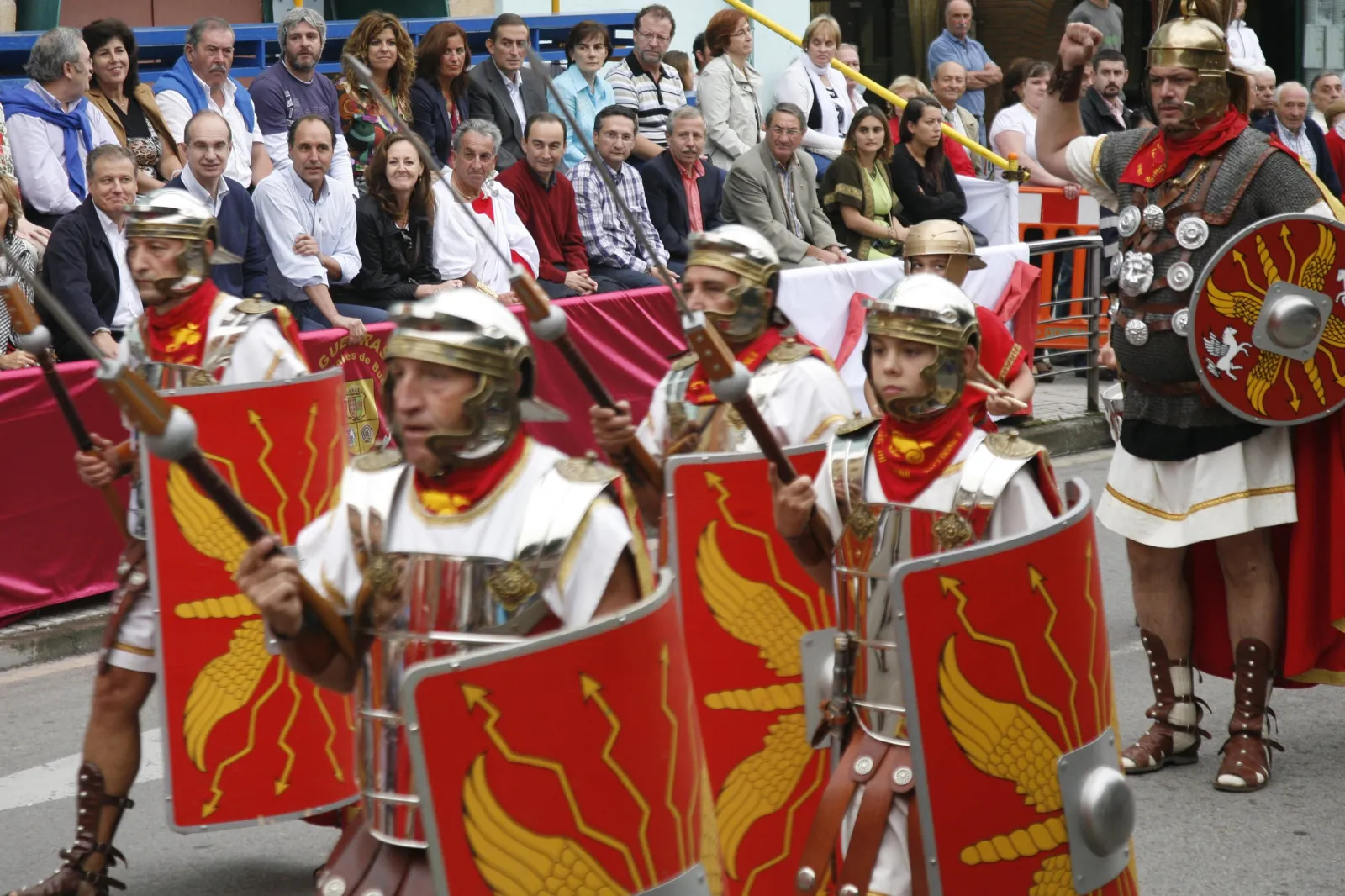
Grand parade
All tribes and legions parade along Avenida Cantabria, then the temple of Janus closes and the sacred fire goes out.
What Guerras Cántabras is like
- Family
- Night
- Fire
- Noise
- Drums, war cries and night shows, but no all-night street party
- Fire
- A sacred fire and torches in the night acts
- Crowds
- Busy on Saturday nights and at the final parade
- Mess
- You stay clean
- With kids
- Children's parades, games and workshops; night battles are fine for older kids
Highlights
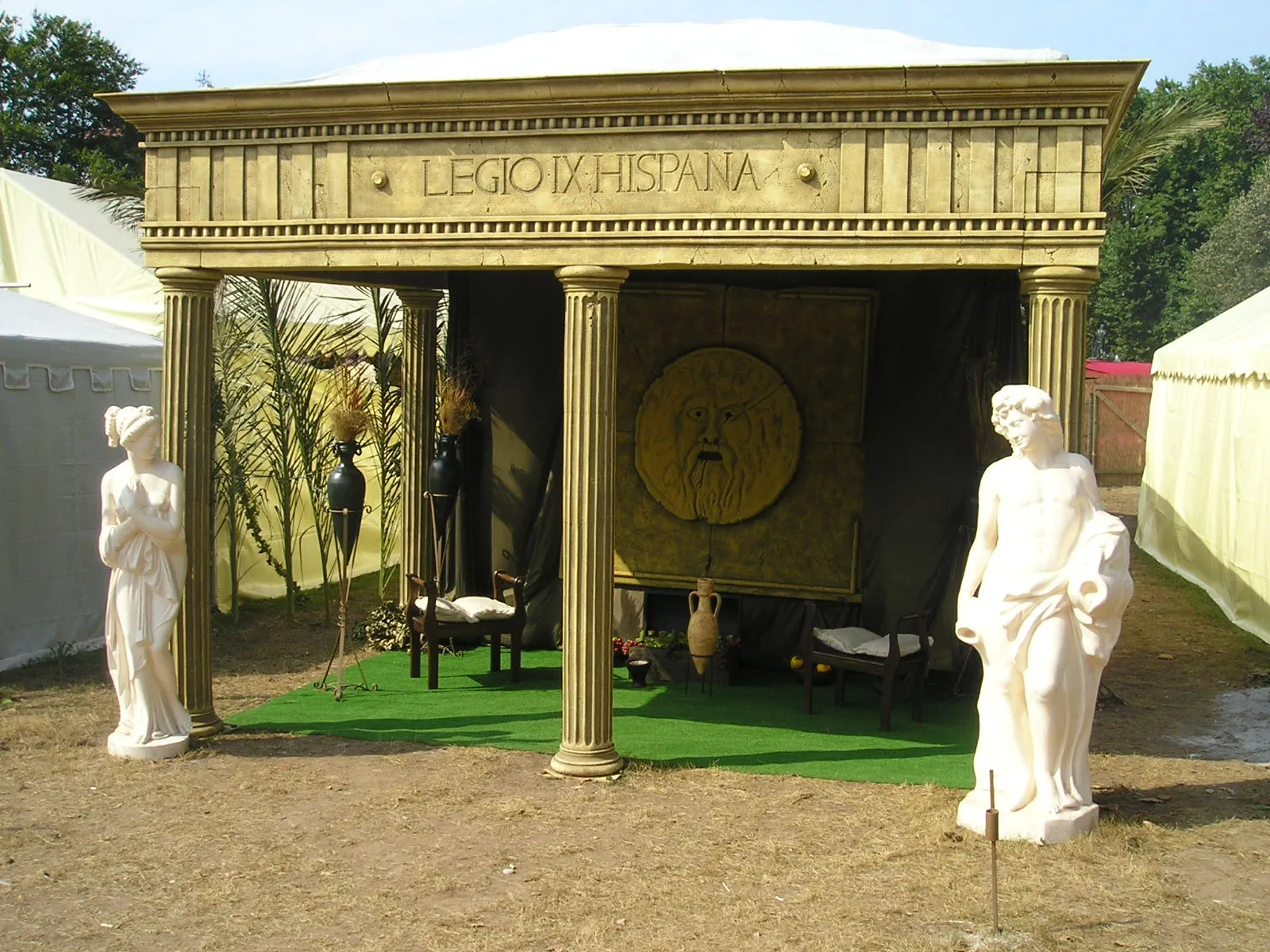
The Cantabrian village and Roman camp built by the festeros next to the town hall
Opening night: lighting of the sacred fire and opening of the temple of Janus
The Cantabrian-Roman combat and the night of the Cantabrian rebellion
The Roman forum, senate session and gladiator fights
The Macellum period market and the grand parade of tribes and legions on the final Sunday
Guerras Cántabras 2027: dates
The Guerras Cántabras fill Los Corrales de Buelna, in the heart of Cantabria, over two consecutive weekends: the last weekend of August and the first weekend of September. In 2025 the fiesta ran from 29 August to 7 September and in 2026 from 28 August to 6 September, with the main acts on Friday, Saturday and Sunday of each weekend. On that pattern, expect Friday 27 August to Sunday 5 September 2027; Spain's official tourism site still lists the 2027 dates as pending, so check the programme published by the Asociación Guerras Cántabras over the summer.
A town at war with Rome
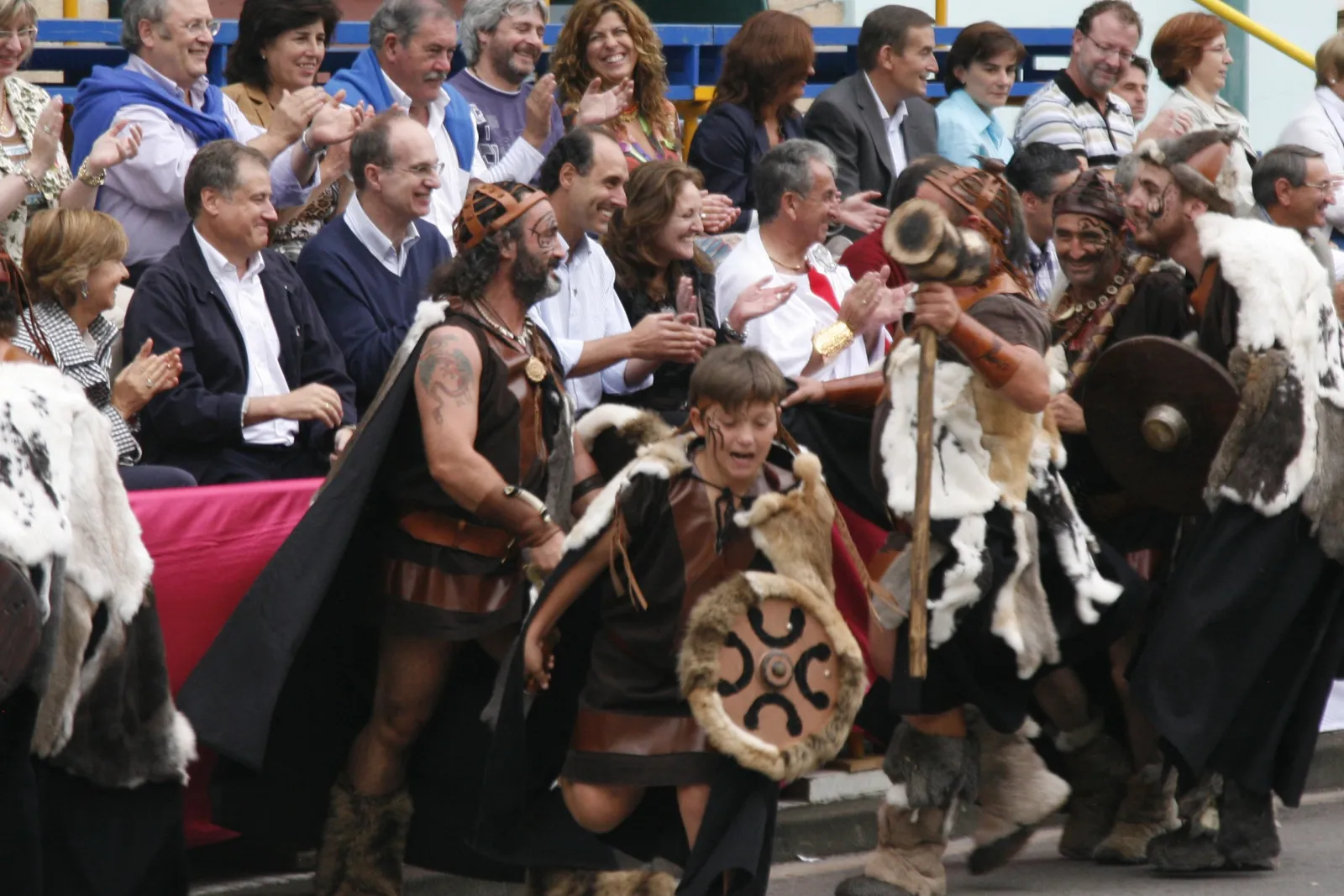
The fiesta recreates the Cantabrian Wars, the campaigns of 29 to 19 BC in which Rome finally subdued the last free peoples of northern Hispania. Locals join either a Cantabrian tribe or a Roman legion, sew their own costumes and spend the fiesta in two camps built next to the town hall: a Cantabrian village and a Roman settlement, with an agora, an amphitheatre, a temple of Janus and a period market. The organisers count well over a thousand festeros, which makes it one of the biggest historical re-enactment festivals in Spain.
What happens
Each weekend tells part of the story. The opening night brings tribes and legions together to light the sacred fire and open the temple of Janus. Later come Augustus's entrance, the clash between Cantabrians and Romans, a Cantabrian wedding, a session of the Roman senate, gladiator fights and the dramatic night of the Cantabrian rebellion and its crushing by Agrippa. Everything ends with the grand parade of all tribes and legions along Avenida Cantabria. The fiesta has been held since 2001 and was declared a Fiesta de Interés Turístico Internacional in 2019.
Gallery
History & Origins
Roman writers recorded the Cantabrian (or Astur-Cantabrian) Wars of 29 to 19 BC as one of the hardest campaigns of Augustus's reign; the emperor himself came to Hispania to lead the early fighting. The festival in Los Corrales de Buelna turns that story into a community fiesta.
It began in 2001 and grew fast. According to the organising association, it became a Fiesta de Interés Turístico Regional within three years and a Fiesta de Interés Turístico Nacional in its eighth year (2008). In 2019 Spain's Secretary of State for Tourism awarded it the Internacional title.
What to Expect
The big set-pieces happen in the evening and at night: in 2026 the opening ceremony began at 21:00, the combat on the first Saturday at 23:00 and the rebellion and crucifixion scenes on the second Saturday also at 23:00. Short "Crónica de Guerras" introductions before each act explain the story, which helps if you are new to it.
Daytimes are gentler: open camp visits, forge and weaving workshops, children's games and parades, cooking contests and, during the second weekend, the Macellum market. Between the two weekends there are evening talks by historians and archaeologists. Some late-night parties inside the camps are for festeros only.
How to Get There
Los Corrales de Buelna sits in the Besaya valley, about 40 km south-west of Santander and just south of Torrelavega, beside the A-67 motorway. Santander's Seve Ballesteros airport is the nearest. The town has its own station, Los Corrales de Buelna, on the Santander–Reinosa commuter line (Cercanías Santander), which is the easiest way in if you are staying in Santander or Torrelavega.
On the main nights, parking near the camps fills early; arriving by train or on foot from your accommodation saves time.
Tips & Advice
- Download the programme from guerrascantabras.net: it maps every act to its venue in the camps.
- Choose your weekend: the first has Augustus, the combat and the Cantabrian wedding; the second has the market, the senate, the rebellion and the grand parade.
- Arrive early for the night acts to get a view; crowds are biggest on Saturdays.
- Bring a jacket and rain layer: late-summer nights in inland Cantabria can be cool and wet.
- Stay in Torrelavega or Santander if rooms in town are gone and come in by train.
Photos: Nacho Romero / CC BY 3.0 ES / Wikimedia Commons; José Cavia / CC BY 3.0 ES / Wikimedia Commons; Desmondrx / Public domain / Wikimedia Commons
Fiesta del Orujo
Potes, CantabriaA national-interest festival in the mountain town of Potes, Cantabria, celebrating orujo, the region's traditional pomace brandy.
Aste Nagusia
Bilbao, Basque CountryAste Nagusia (Great Week) is Bilbao's biggest annual celebration. For nine days in August, the Basque city transforms with concerts, fireworks, street theatre, and the beloved Marijaia figure presiding over it all. It's a free, open festival with incredible energy.
Semana Grande San Sebastián
San Sebastián, Basque CountrySemana Grande (Aste Nagusia in Basque) is San Sebastián's biggest annual celebration, transforming the elegant coastal city into a week-long party every August. Centred around the International Fireworks Competition over La Concha Bay, the festival combines world-class pyrotechnics with concerts, traditional Basque sports, street theatre and gastronomy. It's the cultural highlight of summer in the Basque Country.
Madrid Orgullo
Madrid, MadridMadrid Orgullo is one of Europe's largest LGBTQ+ pride celebrations, transforming the Chueca neighborhood into a vibrant week-long party with parades, concerts, and over two million attendees.