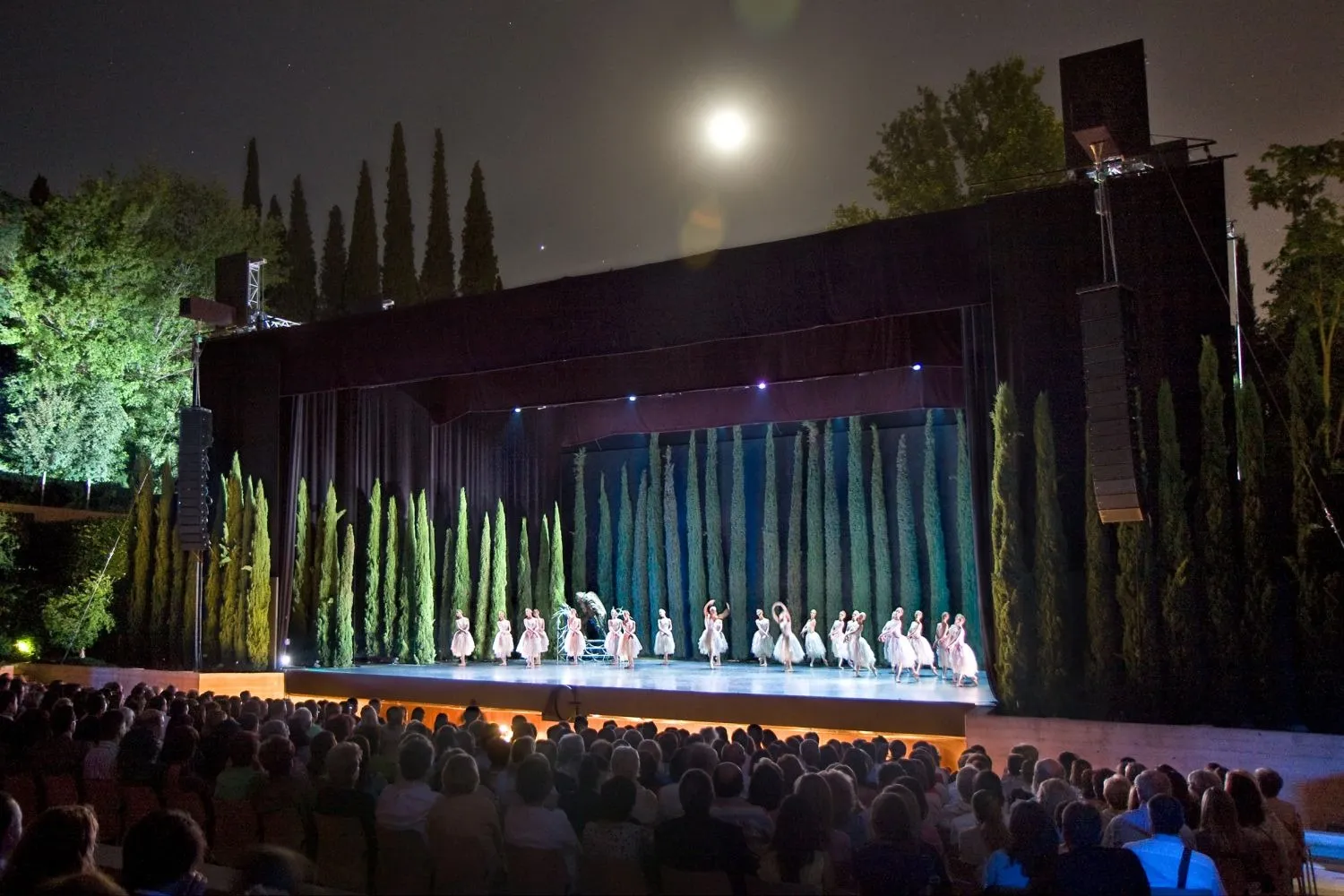
Granada International Festival of Music and Dance
One of Europe's most prestigious performing arts festivals, held in stunning venues including the Alhambra and Generalife gardens. Since 1952, world-class ballet, flamenco, classical music, and opera.
Highlights
Running since 1952, one of Europe's longest-established performing arts festivals
Concerts staged inside the Alhambra's palaces and the Generalife gardens
Has hosted legends such as Andres Segovia, Herbert von Karajan, and Rudolf Nureyev
Includes the Manuel de Falla courses and the street-based FEX programme
Date & Schedule
| Detail | Info |
|---|---|
| Festival dates 2027 | 18 June – 11 July 2027 (estimated; official 2027 dates not yet announced) |
| Founded | 1952 — 76th edition in 2027 |
| Main venues | Palacio de Carlos V and the Generalife gardens, inside the Alhambra |
| Programme | Classical music, opera, ballet, Spanish dance and flamenco |
| Location | Granada, Andalusia, Spain |
The Granada International Festival of Music and Dance ranks among Europe's oldest and most prestigious performing arts festivals. Over three weeks each summer it turns the Alhambra's palaces and gardens, along with venues across Granada and its province, into stages for a programme built around classical music, opera, ballet, Spanish dance and flamenco. In 2027 the festival marks its 75th edition — a run that has drawn many of the leading performers of the last seven decades to a setting few other festivals in the world can match: concerts staged among Nasrid palaces and cypress-lined gardens with almost a thousand years of history behind them.
Planning the Granada Festival of Music and Dance
The Granada International Festival of Music and Dance is best planned as a programme of individual performances rather than a single open-access event. Start with the official schedule and choose a small number of priorities based on venue, repertoire and starting time. Popular performances can sell quickly, while different venues create very different transport and access needs. Confirm every ticket against the current programme before booking accommodation or a return journey.
Granada's historic setting is central to the experience, but it also makes logistics important. Some venues involve slopes, steps, uneven surfaces or longer walks than a map suggests. Read the access instructions attached to the specific performance and arrive with enough time for ticket checks and finding your seat. Do not assume that a taxi can stop at the venue entrance, especially where historic-area traffic controls apply.
Tickets and choosing performances
Buy through the festival's official sales channel or a venue explicitly named by the organiser. Check the date, venue, seat category, refund terms and whether late admission is permitted. When deciding between performances, consider the complete evening: travel to the venue, the likely finishing time and the route back. A cheaper seat may still offer an excellent experience, while an expensive ticket is poor value if the transport plan is unworkable.
Visitors without tickets can still build a cultural trip around Granada, but should not assume access to a performance area. Look for officially announced public activities and keep museum or neighbourhood plans separate from ticketed events. The Spain festival calendar can help avoid clashes when combining Granada with another Andalusian festival.
Where to stay and how to move around Granada
The historic centre is convenient for restaurants and general sightseeing, while other districts may offer easier vehicle access and quieter nights. Choose accommodation after mapping your actual venues, not only the city's headline attractions. Ask the property about hills, steps and late check-in if mobility or arrival time matters. During a busy festival period, flexible cancellation conditions are often worth more than a small saving.
Walking and public transport cover much of the city, but allow extra time for steep streets and warm weather. Carry water, wear shoes suited to stone surfaces and save the venue address offline. If a performance ends late, confirm the return option before leaving the hotel. Keep a backup route in case a temporary closure changes the most direct path.
Dress, etiquette and accessibility
There is usually no need for formal evening wear unless a specific event states otherwise. Smart, comfortable clothing and a light layer work for most settings. Arrive before the performance begins, silence devices and avoid recording unless the organiser explicitly permits it. Historic venues can have different accessibility constraints, so review the official information for each event and contact the organiser when details are unclear.
Granada Festival FAQ
Can I buy one pass for the whole festival?
Ticket formats can change. Treat each performance as a separate booking unless the current official sales page clearly offers a pass or package.
How early should I arrive?
Follow the time stated by the organiser and add a margin for walking, security and finding the correct entrance. Historic venues may take longer to reach than expected.
Is the festival suitable for a short city break?
Yes. Choose one priority performance and leave space for Granada itself. A focused itinerary is usually more enjoyable than trying to cross the city between several tightly scheduled events.
History & Origins
The festival traces its roots to the symphonic concerts held in the Palacio de Carlos V within the Alhambra during Corpus Christi celebrations from 1883 onward, and to the influential Concurso de Cante Jondo, a flamenco singing competition organised in 1922 by Federico Garcia Lorca, Manuel de Falla, and fellow artists including guitarist Andres Segovia and painter Ignacio Zuloaga. The festival itself was formally founded in 1952 as the First Festival of Spanish Music and Dance, an initiative of Antonio Gallego Burin, then director general of fine arts, intended to bring cultural life and economic activity to postwar Granada. The inaugural edition featured the dancers Antonio and Rosario, conductor Ataulfo Argenta, soprano Victoria de los Angeles, and Segovia himself. By its second edition in 1953 the festival had adopted its current international name, and the open-air cypress theatre in the Generalife gardens was built specifically to host its dance and ballet performances. Over the decades the festival has welcomed an extraordinary roster of artists, and in 2027 it celebrates its 75th anniversary.
What to Expect
Held each June and July across roughly a month, the festival transforms the palaces and gardens of the Alhambra, along with major monuments, streets, and squares throughout Granada and its province, into stages for classical music, opera, ballet, Spanish dance, and flamenco, drawing around 60,000 spectators every summer. Alongside its central programme, the festival runs the Manuel de Falla International Courses, advanced training sessions held in partnership with the University of Granada, and the FEX or Festival Extension, which brings performances into the streets and public spaces of the city and province with a multicultural, family-friendly programme aimed at younger audiences. Many concerts take place in the Palacio de Carlos V or the cypress-lined open-air theatre of the Generalife gardens, settings that have become inseparable from the festival's international reputation.
How to Get There
Granada has its own airport, Federico Garcia Lorca Granada-Jaen Airport, with a limited number of domestic and seasonal international routes, and is also well connected by high-speed and regional trains and by long-distance coaches from Madrid, Seville, and Malaga. The Alhambra and Generalife, the festival's principal venues, sit on a hill above the city centre and can be reached on foot via a steep uphill walk, by taxi, or by the local minibus service that runs directly to the monument from the centre.
Tips & Advice
Tickets for the most popular concerts, especially those staged in the Generalife gardens, tend to sell out well ahead of the festival, so book as early as possible once the season's programme is announced. Evenings in the Alhambra's gardens can turn cool even in summer, so bring a light layer for outdoor performances. Arrive with plenty of time before each show, since access to the Alhambra grounds is controlled and security checks can take a while on busy festival nights. Consider combining a concert with a daytime visit to the Alhambra, as palace and garden admission is generally ticketed separately from festival performances.
Plan Your Trip
Book accommodation and transport for this festival. Get the best deals on hotels and train tickets.
This page contains affiliate links. We may earn a commission at no extra cost to you.
 March
March
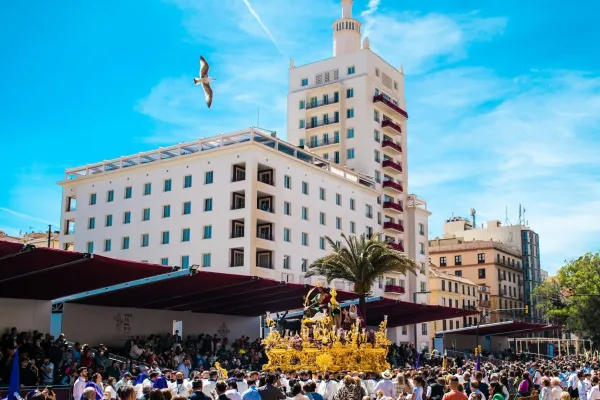
Semana Santa
Semana Santa (Holy Week) is arguably Spain's most emotionally powerful and visually stunning festival. In the week leading up to Easter Sunday, cities and towns across the country fill with solemn religious processions, haunting music, clouds of incense, and enormous ornate floats (pasos) carried by hundreds of robed nazarenos.
 April
April
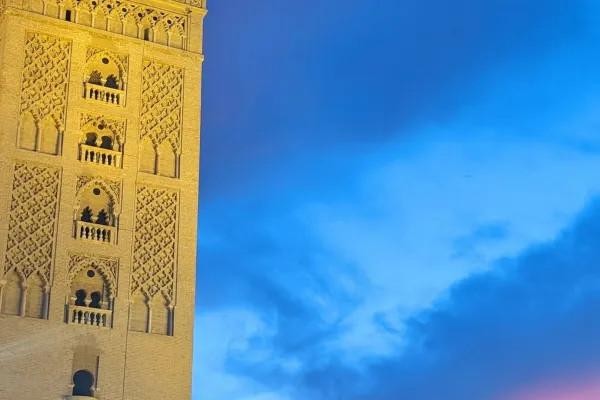
Feria de Abril
The Feria de Abril (April Fair) of Seville is one of the most joyful and glamorous festivals in Spain — a six-day explosion of flamenco, fine horses, manzanilla sherry, and sevillana dancing that transforms the city's fairgrounds into the most colourful party in Andalusia.
 May
May
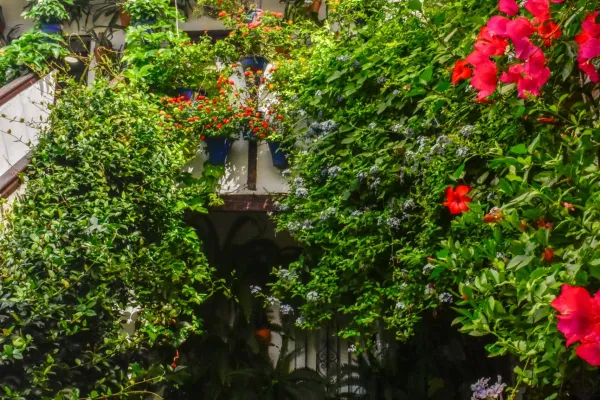
Festival de los Patios de Córdoba
Every May, the residents of Córdoba open the doors of their private courtyards, revealing breathtaking displays of flowers, ceramics and fountains. Declared UNESCO Intangible Cultural Heritage in 2012, this is one of Spain's most beautiful and photogenic traditions.
 February
Carnaval de Cádiz
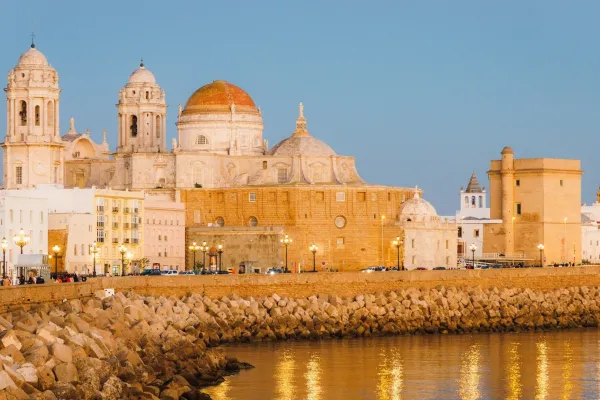
The Carnaval de Cádiz is widely considered Spain's greatest and most original carnival — not for its parade floats or samba schools, but for something uniquely gaditano: the chirigotas, comparsas, and coros — satirical singing groups who spend months composing sharp, political, and hilarious songs performed on the streets and in competition at the Gran Teatro Falla.