Fires de Sant Narcís
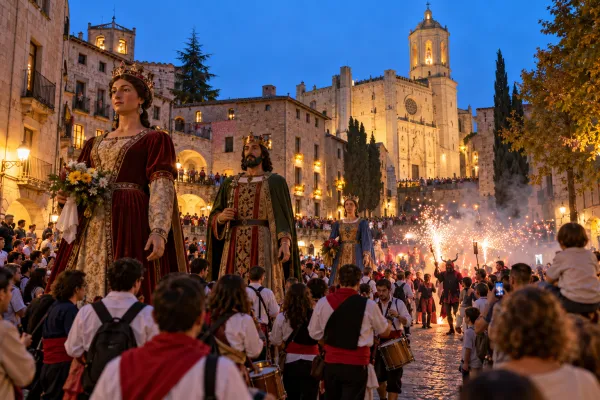
Ten days honouring Girona's patron saint with castells competitions, correfoc fireworks, sardana dancing, fairground rides, and concerts.
Highlights
Girona's biggest festival of the year, centred on October 29th
Rooted in the legend of Sant Narcis and the swarm of flies that drove out invaders
Funfair rides in Parc de la Devesa and late-night barraques in La Copa
The Fira de Mostres, the largest trade fair in the Girona region
Fires de Sant Narcís 2026: confirmed dates and highlights
Girona City Council confirms that the 2026 Fires run from 23 October to 1 November. The opening day includes the start-of-festival parades at 17:30, the proclamation in Plaça del Vi at 20:00 and the 12-minute Un somni a Fires show with 300 drones, viewed from La Copa at 22:00. The official programme also lists the Diables de l’Onyar correfoc at 22:30 on Saturday 24 October and the Diada Castellera at 11:30 in Plaça del Vi on Sunday 25 October. The closing fireworks on 1 November affect access around Parc de les Ribes del Ter, La Devesa and Fontajau; the Devesa pedestrian bridge closes from 19:00 until the display finishes.
Use the live municipal programme before setting out because event details may change.
Accessibility and getting around in 2026
The council recommends walking, cycling or public transport and provides current bus, night-bus and parking information on its Fires mobility page. The 2026 accessibility measures include Catalan sign-language interpretation at the proclamation and selected concerts, vibrating backpacks for selected performances, reserved areas for visitors with reduced mobility, three calm spaces and adapted sound and lighting on the fairground rides from 17:00 on 26 October. Check the official portal for locations and any equipment requests.
History & Origins
The Fires de Sant Narcis are Girona's most important annual festival, held around October 29th in honour of Sant Narcis, the city's patron saint. According to legend, when French troops besieged and captured Girona in 1285, they desecrated the tomb of Sant Narcis inside the church of Sant Feliu, and in response a swarm of flies is said to have burst from the tomb and attacked the invaders and their horses, driving them out of the city. Ever since, the saint has traditionally been depicted surrounded by flies, and the insect has become an enduring symbol of Girona folklore. The festival itself grew out of medieval agricultural, livestock, and merchant fairs held to mark the saint's feast day, gradually expanding over the centuries into the wide-ranging cultural celebration the city hosts today.
What to Expect
Modern Fires de Sant Narcis blend traditional Catalan festival culture with a major trade fair. Parc de la Devesa fills with funfair rides and attractions, while the La Copa neighbourhood hosts barraques: temporary stages and stalls with live music, food, and drink that run late into the night. Alongside these popular festivities, the city's Palau de Fires hosts the Fira de Mostres, the largest multi-sector trade fair in the Girona region, drawing exhibitors and well over a hundred thousand visitors during the festival period. Concerts, family activities, traditional Catalan cultural performances such as castells human towers and sardana dancing, correfoc fire-runs, and fireworks round out the programme across roughly two weeks of celebrations.
How to Get There
Girona is in Catalonia, about 100 kilometres northeast of Barcelona and well connected by rail, with high-speed AVE trains linking Girona to Barcelona in under 40 minutes and to Madrid and southern France as well. Girona-Costa Brava Airport, a few kilometres outside the city, offers a smaller number of European routes, mainly budget carriers, and is linked to the centre by bus. Regional and long-distance buses also serve the city. Once in Girona, the historic centre, Parc de la Devesa, and the La Copa festival area are all within comfortable walking distance of one another.
Tips & Advice
Because the Fires de Sant Narcis draw huge crowds to a relatively compact old town, book accommodation well ahead if visiting around the peak dates near October 29th. Evenings in late October can be cold, so bring warm layers for outdoor concerts and the funfair. If trade or business interests you, check the Fira de Mostres schedule separately from the popular festival programme, since it runs on its own timetable at the Palau de Fires. Wear comfortable shoes for the cobbled streets of the old town, and be prepared for large crowds and lively nightlife in La Copa on weekend evenings.
Plan Your Trip
Book accommodation and transport for this festival. Get the best deals on hotels and train tickets.
This page contains affiliate links. We may earn a commission at no extra cost to you.
 August
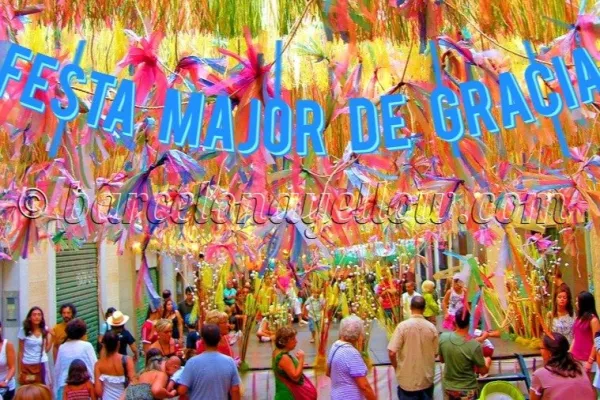
Festa Major de Gràcia
Each August, the Gràcia neighborhood erupts into a spectacular celebration where streets compete to create the most imaginative decorations from recycled materials, with live music and communal dinners.
 May
May
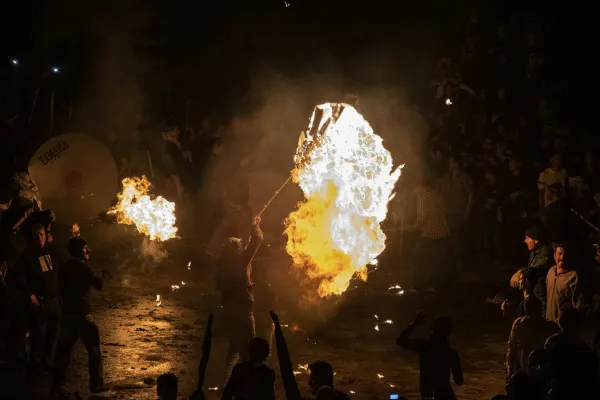
La Patum de Berga
La Patum is a medieval festival of fire, music and mythical beasts celebrated in the mountain town of Berga during Corpus Christi week. Recognised by UNESCO as a Masterpiece of the Oral and Intangible Heritage of Humanity in 2005, it features fire-breathing demons, battling angels, giants and a climactic inferno called the Salt de Plens where the entire plaza erupts in flames. It is one of the oldest and most intense festival traditions in Spain.
 December
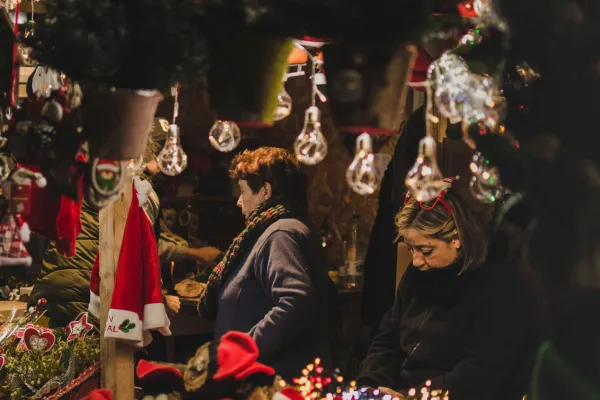
Fira de Santa Llúcia
Barcelona's oldest Christmas market (since 1786) fills the square in front of the Cathedral with nativity scene figures, caganers, Christmas trees and traditional Catalan holiday crafts.
 November
Todos los Santos & Castañada
Barcelona's official 2026 programme spreads Castañada and All Saints activities across the districts, from chestnut celebrations and panellet workshops to a Poblenou Cemetery night route and an Old Town correfoc.