Fiestas de la Virgen Blanca
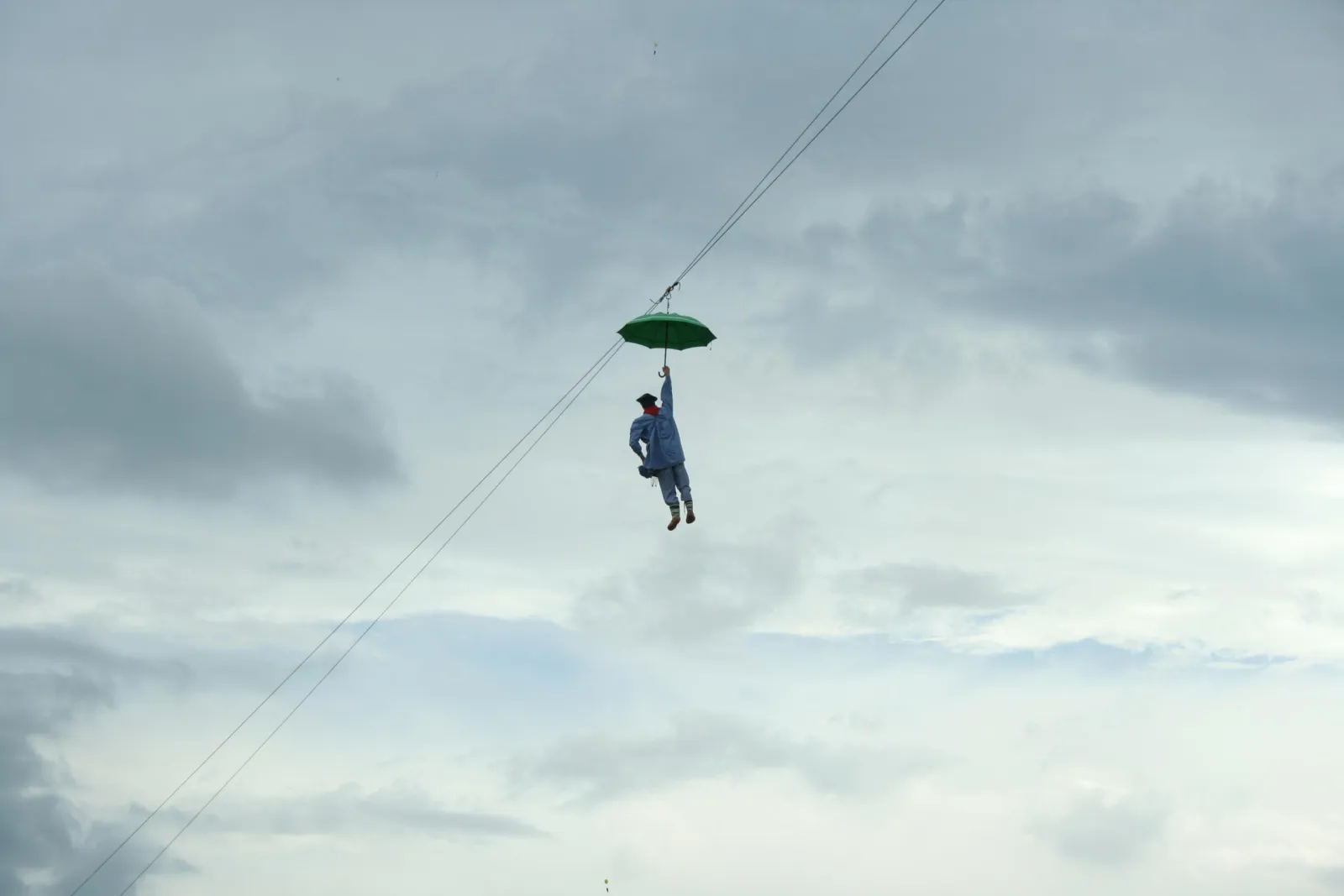
Six days of fiesta in the Basque capital, opened by Celedón, a figure who glides down a cable over a packed square, umbrella in hand, while thousands light cigars and pop corks.
The days that matter
-
Late July
Prefiestas and Día del Blusa
Warm-up activities start before the official opening; on 25 July the blusas and neskas hold their first parade and a garlic fair fills the Cuesta de San Francisco.
-
Wed 4 Aug 18:00
Chupinazo and Celedón's descent
Celedón glides from the tower of San Miguel over the Plaza de la Virgen Blanca, umbrella in hand, to open the fiestas.
-
Wed 4 Aug, night 22:00
Procesión de los Faroles
The lantern-lit rosary procession in honour of the Virgen Blanca winds through the city centre.
-
Thu 5 Aug
Feast of the Virgen Blanca
The city's patron saint's day, from the dawn rosary at 7:00 to flower offerings, aurreskus and the pontifical mass.
-
4–8 Aug, nights midnight
Concerts in Plaza de los Fueros
Free midnight concerts by Basque and Spanish bands; in 2026 they ran from the 4th to the 8th.
-
Mon 9 Aug, night
Celedón's ascent
Celedón flies back up to the tower of San Miguel, closing the fiestas until next year.
What Fiestas de la Virgen Blanca is like
- Loud
- Night
- Free
- Noise
- Chupinazo, bands, fireworks and late-night concerts
- Fire
- Fireworks and a square full of lit cigars
- Crowds
- The square is packed for Celedón; calmer the rest of the week
- Mess
- Expect to get sprayed with fizz on the 4th
- With kids
- Lots of txiki activities, but avoid the crush on the 4th
Highlights
Wednesday 4 to Monday 9 August 2027
Celedón's descent from the tower of San Miguel at 18:00 on 4 August
Cigars, champagne corks and a packed Plaza de la Virgen Blanca
The Procesión de los Faroles on the night of the 4th
Free midnight concerts in Plaza de los Fueros
Celedón's farewell ascent on the night of 9 August
La Blanca 2027: dates
The Fiestas de la Virgen Blanca run every year from 4 to 9 August, so the 2027 edition goes from Wednesday 4 to Monday 9 August, with the closing in the early hours of the 10th. The Basque tourism board lists these dates for 2027. Before the official start, a programme of prefiestas livens up the city from late July, and 25 July, Santiago, is the Día del Blusa y de la Neska: a garlic fair on the Cuesta de San Francisco and the first parade of the year by the fiesta groups.
Celedón's descent
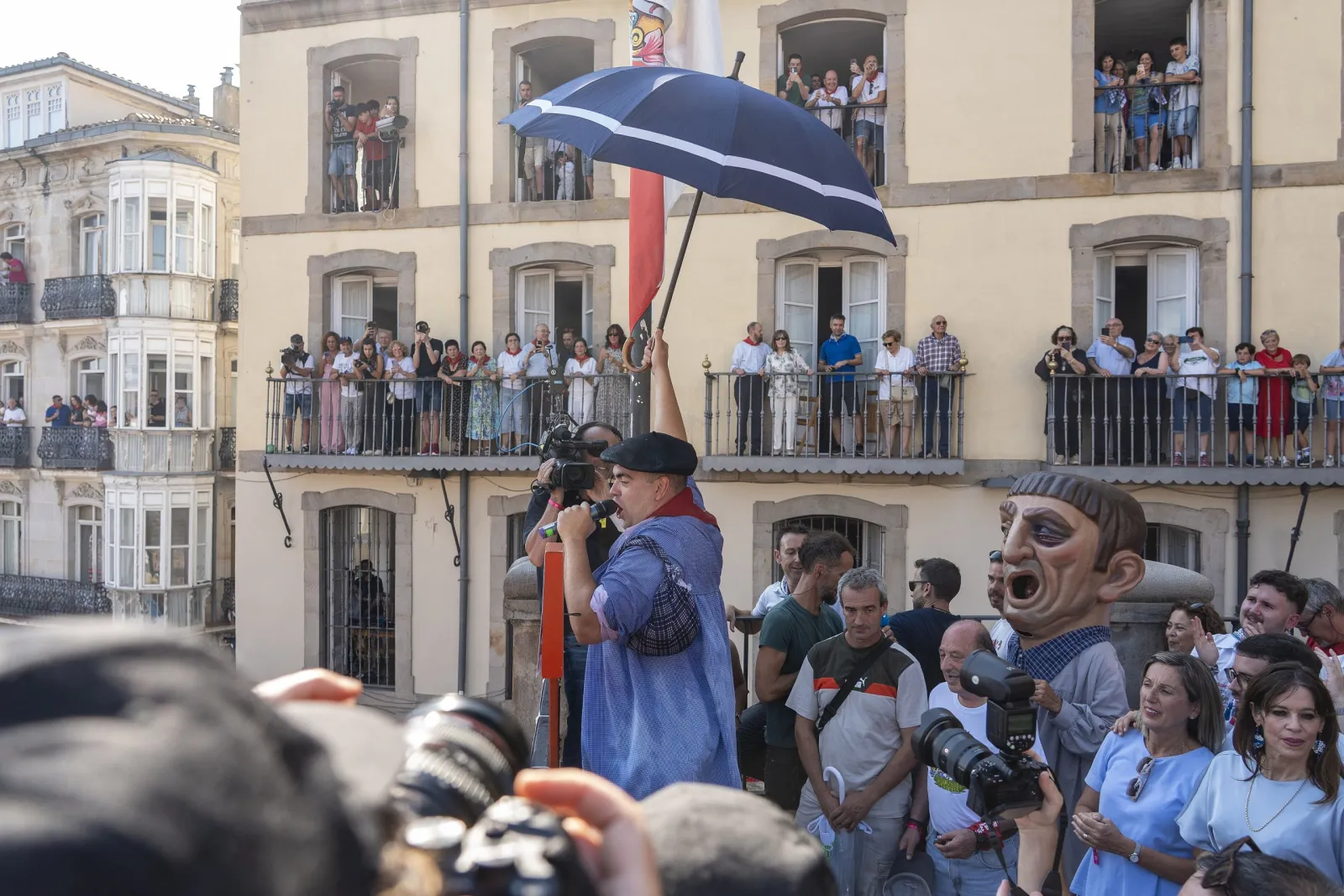
Everything starts at 18:00 on 4 August in the Plaza de la Virgen Blanca. After the chupinazo, the rocket that opens the fiestas (launched in 2026 by the Baskonia basketball club), Celedón appears at the top of the tower of the church of San Miguel. The figure, holding an open umbrella, glides down a cable over thousands of people to a balcony on the square. Minutes later a real person emerges as Celedón, crosses the crowd and climbs to the balcony of San Miguel to speak to the city and invite everyone to enjoy the fiestas. Since 2024 the role has been played by Iñaki Kerejazu.
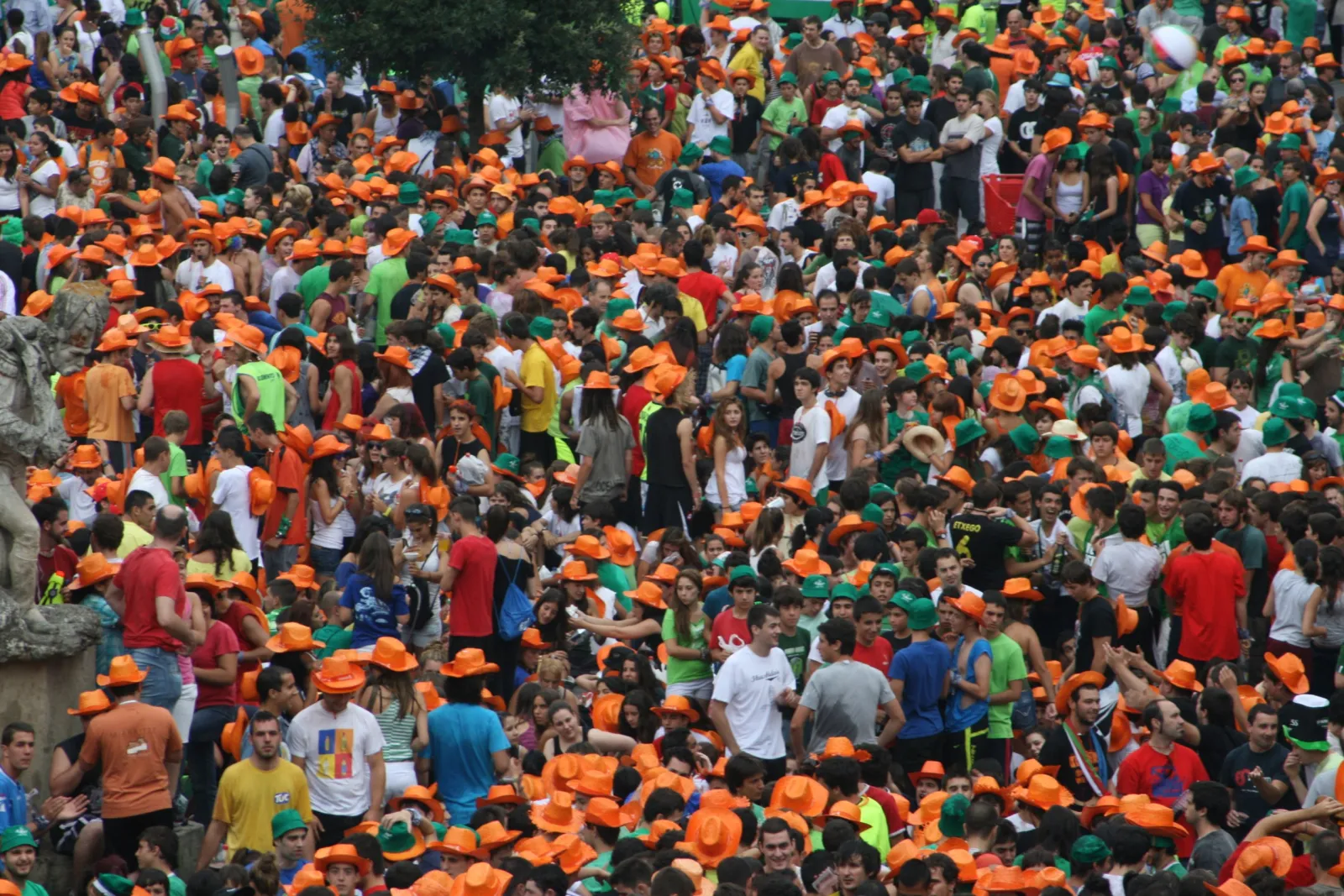
The square greets him by lighting cigars and opening bottles of champagne, while the Municipal Band plays the pasacalles Celedón, composed in 1918 by Mariano San Miguel. Glass bottles and cans are not allowed in the square. It is one of the most crowded and emotional moments of the Basque summer.
Six days of fiesta
At 22:00 on the 4th the Procesión del Rosario de los Faroles, a lantern-lit rosary procession, winds through the centre, followed by the first toros de fuego in calle Olaguíbel. The 5th is the feast day of the Virgen Blanca, the city's patron: it starts at 7:00 with the Rosario de la Aurora, followed by a dawn mass in the square, flower offerings, aurreskus and a pontifical mass in San Miguel. From the 5th to the 9th the 32 cuadrillas of blusas and neskas parade through the centre every afternoon, and children get their own descent, by Celedón Txiki and Edurne (on the 7th in 2026).
Around that come Basque pelota, herri kirolak (rural sports), bertsolari sessions and Basque-language music in Plaza del Machete, giants and big-heads, an Arab souk in Plaza de Juan de Ayala, funfair rides at Mendizabala and fireworks there at 23:00 (from the 5th to the 8th in 2026). The cuadrillas add their own contests, such as barrel races and abarca (traditional shoe) throwing. Free concerts start at midnight in Plaza de los Fueros. In 2026 the programme listed more than 400 activities.
The fiestas end on the night of 9 August, when Celedón flies back up to the tower of San Miguel and says goodbye until the next year.
Gallery
History & Origins
Until 1883 Vitoria held its town fiestas in the first week of September. In 1884 the council moved them to August and dedicated them officially to the Virgen Blanca, whose feast day is 5 August, and in 1953 it set the festive calendar that the city still follows today.
Celedón is much younger. In 1957 a group of friends created a dummy that would slide down a cable and then be "brought to life" by a person, José Luis Isasi. On that first descent the cable broke, but Isasi still came out onto the balcony and opened the fiestas. The character is said to recall Celedonio Alzola, a villager from Zalduendo de Álava who came to the fiestas every year. The descent originally went from the tower of San Miguel to the Plaza de España and moved to the Plaza de la Virgen Blanca in 1970, because of building works. Several people have played Celedón since; there was no descent in 2020 or 2021 because of the pandemic.
What to Expect
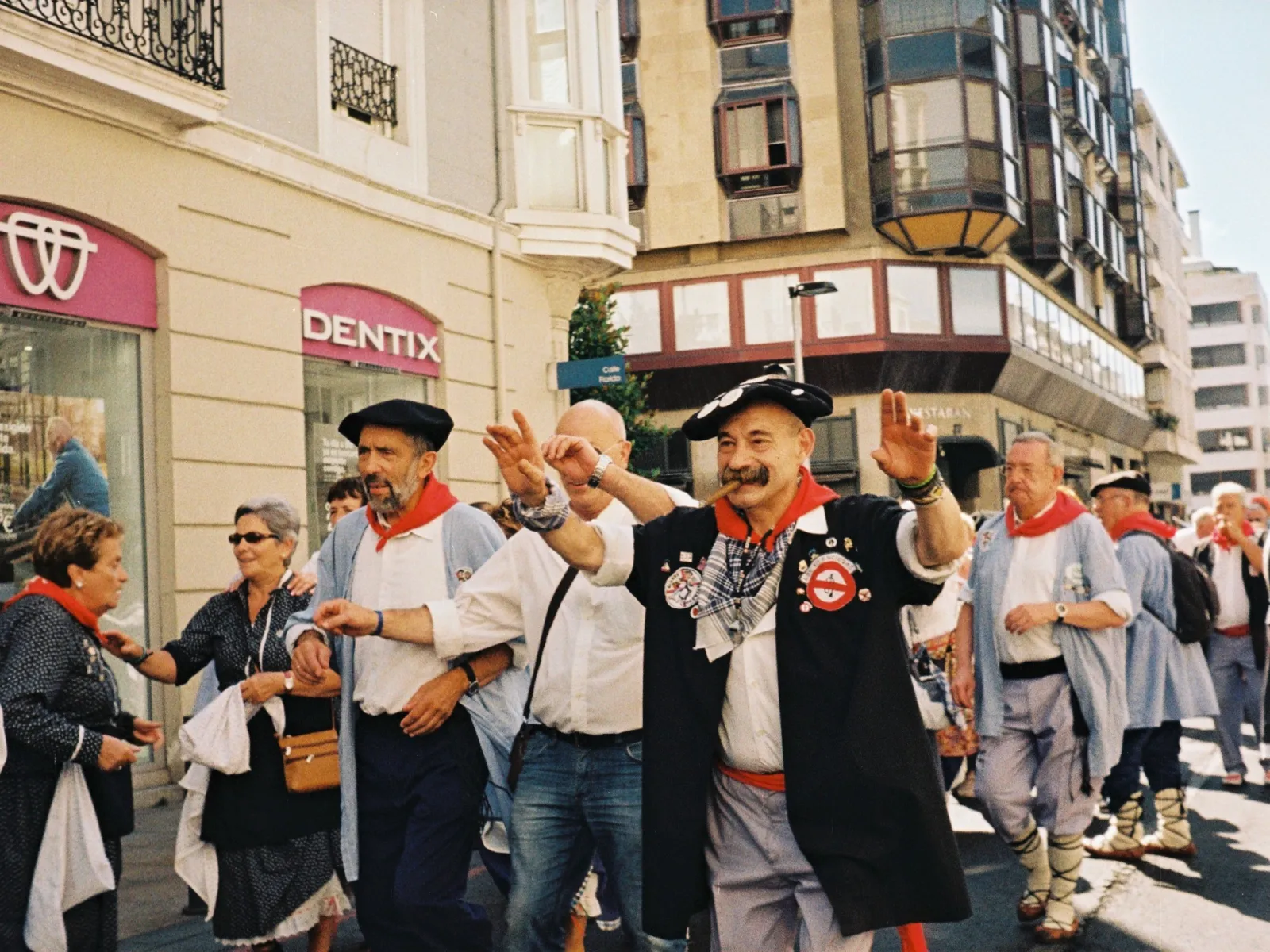
On the afternoon of the 4th, the Plaza de la Virgen Blanca and the streets around it are packed long before 18:00. Locals arrive in groups (cuadrillas) with cigars and bottles ready, and many wear the traditional outfits of the blusas and neskas, the fiesta groups that animate the streets all week. Expect pushing, cheering and a shower of fizz when Celedón lands; in recent years volunteers from the cuadrillas help clear his path through the crowd.
The rest of the week is easier going. Days are for fairs, family activities and rural sports; nights are for concerts, fireworks and the bars of the old town. Local institutions and groups also run a campaign for respectful, aggression-free fiestas, with an assistance service for anyone who needs help.
How to Get There
By train: Vitoria-Gasteiz station has Renfe services to Madrid, Barcelona and other cities and is a walk from the old town.
By bus: the city's bus station has frequent connections with Bilbao, San Sebastián and Pamplona.
By air: Bilbao airport is the main international gateway for the region, with buses to Vitoria-Gasteiz; the city also has its own small airport.
The Plaza de la Virgen Blanca is at the foot of the old town, and the whole fiesta area can be covered on foot.
Tips & Advice
Choose your spot for Celedón. The centre of the square is a crush of cava and cigar smoke; for a calmer view, watch from the edges or the surrounding streets.
Dress for a soaking. Wear clothes you don't mind getting sticky on the 4th.
Book early. Hotels fill up for the opening days, especially the night of the 4th.
Check the programme. The city publishes the full schedule in July, including the prefiestas and the concert line-up in Plaza de los Fueros.
Watch the farewell. Celedón's ascent on the night of the 9th is quieter and more nostalgic than the descent, and much less crowded.
Photos: Alberto Cabello / CC BY 2.0 / Flickr; Pixelillo / CC BY-SA 4.0 / Wikimedia Commons
Tamborrada de San Sebastián
San Sebastián, Basque CountryOn 20 January 2027, San Sebastián celebrates its patron saint with 24 hours of drums and barrels. The official city tourism page says the Tamborrada starts at 00:00 with the flag-raising in Plaza de la Constitución, continues with more than 147 companies across the city and ends with the flag-lowering at 24:00.
Aste Nagusia
Bilbao, Basque CountryAste Nagusia (Great Week) is Bilbao's biggest annual celebration. For nine days in August, the Basque city transforms with concerts, fireworks, street theatre, and the beloved Marijaia figure presiding over it all. It's a free, open festival with incredible energy.
Semana Grande San Sebastián
San Sebastián, Basque CountrySemana Grande (Aste Nagusia in Basque) is San Sebastián's biggest annual celebration, transforming the elegant coastal city into a week-long party every August. Centred around the International Fireworks Competition over La Concha Bay, the festival combines world-class pyrotechnics with concerts, traditional Basque sports, street theatre and gastronomy. It's the cultural highlight of summer in the Basque Country.
BBK Live
Bilbao, Basque CountryBBK Live is one of Spain's top music festivals, set on Mount Cobetas above Bilbao with stunning views of the Basque coastline. Three days of major international and Spanish acts across rock, indie, and electronic music, just minutes from the Guggenheim city.