Cherry Blossom in the Jerte Valley
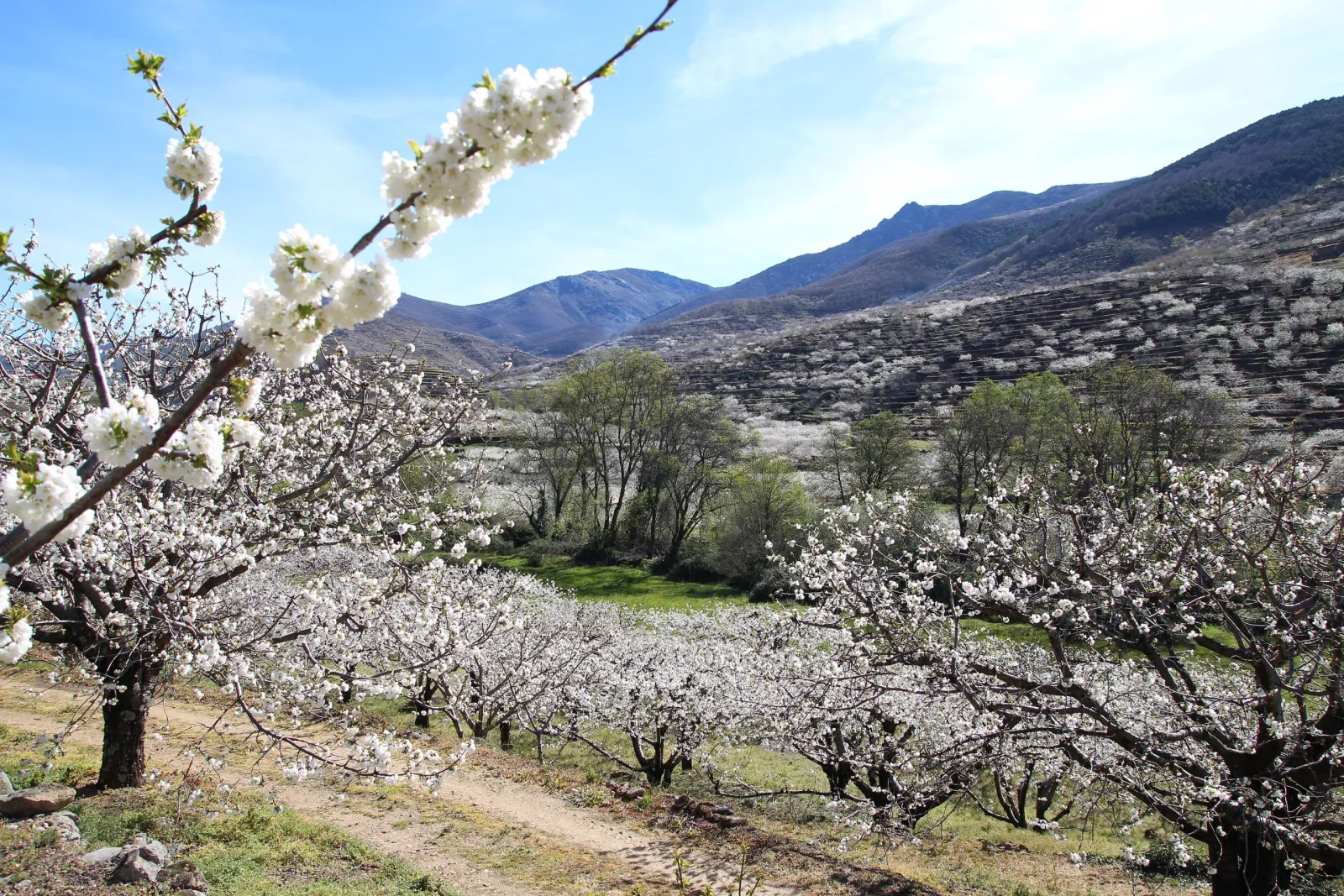
Every spring the terraced slopes of the Jerte Valley in northern Extremadura turn white with more than a million and a half cherry trees in flower, and its eleven villages throw a festival to match.
The days that matter
-
Late Feb – early Mar
Bloom forecast
The valley's tourist office publishes its first indications of when the trees will flower.
-
Usually from about 20 Mar
Bloom starts low in the valley
Orchards at lower altitude open first, then the white spreads up the slopes.
-
Late March weekend
Opening of the Fiesta del Cerezo en Flor
The festival opens in one host village with folk music, tastings and open workshops. In 2026 it was Tornavacas.
-
Early April
Bloom in the highest orchards
The coldest, highest terraces are the last to flower, extending the season.
-
Mid-April
Closing of the fiesta
A final weekend of events in another village. In 2026 it was Casas del Castañar.
What Cherry Blossom in the Jerte Valley is like
- Flowers
- Family
- Food & drink
- Noise
- Quiet orchards and village lanes, with the odd folk concert
- Crowds
- Busy roads and viewpoints at weekends, calm on weekdays
- Mess
- Just walking shoes for the orchard paths
- With kids
- Easy walks, open countryside and village fiestas
Highlights
More than 1.5 million cherry trees in flower on terraced hillsides
Eleven villages, each with its own viewpoints and lanes
Old wineries, forges and presses opened to visitors during the fiesta
Tastings of local produce, folk music and open-air dances
A bloom that climbs the valley for two to three weeks
When the cherry trees bloom in 2027
The blossom in the Valle del Jerte (Cáceres) usually arrives in the second half of March and lasts into early April, but nature sets the calendar. In 2026 the bloom ran from about 20 March to 3 April. The valley's tourist office publishes its forecast for 2027 in late February or early March, so plan with flexible bookings until then.
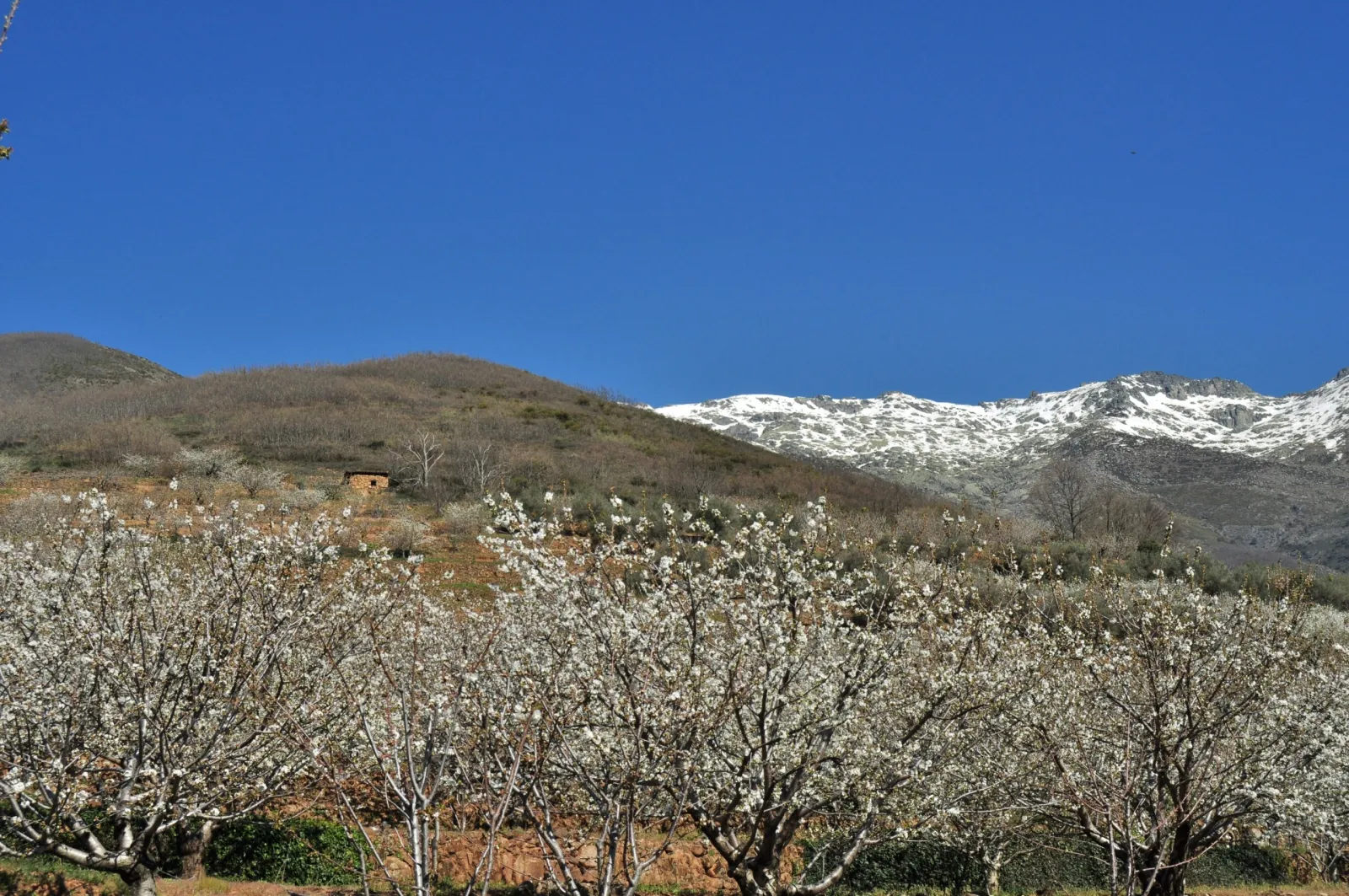
The flowers don't open all at once. Orchards at lower altitude bloom first and the coldest, highest terraces finish last, so the white tide climbs the valley over two or three weeks. If one village is past its best, another higher up may be at its peak.
The Fiesta del Cerezo en Flor
The bloom comes with a festival, the Fiesta del Cerezo en Flor, declared a Fiesta de Interés Turístico Nacional in 2010. It is part of the wider "Primavera y Cerezo en Flor" programme and is meant to show the valley's culture, food, traditions and way of life. Old wineries, forges and presses open as they worked fifty or more years ago, traditional houses let visitors in, and the programme adds exhibitions, tastings of local produce, open-air dances and folk groups. In 2026 the opening was held in Tornavacas (27–29 March) and the closing in Casas del Castañar (11–12 April); the host villages for 2027 have not been announced yet.
Eleven villages, one valley
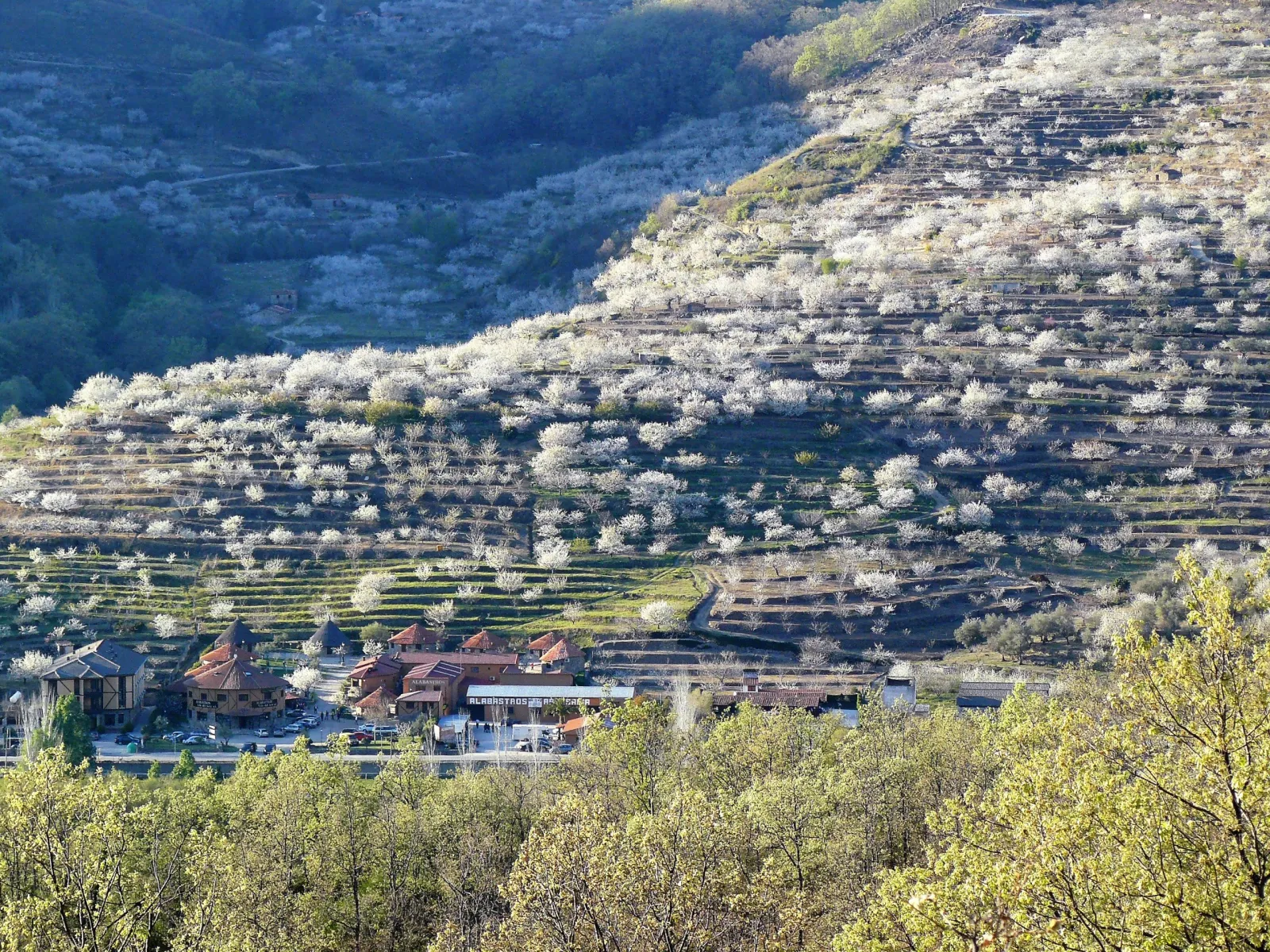
The valley's tourist office counts more than 1.5 million cherry trees across eleven villages: Barrado, Cabezuela del Valle, Cabrero, Casas del Castañar, El Torno, Jerte, Navaconcejo, Piornal, Rebollar, Tornavacas and Valdastillas. The slopes are terraced for cherry growing, which is what gives the views their layered, almost Japanese look.
Gallery
History & Origins
Cherries are the backbone of the Jerte Valley's economy. Growers' cooperatives organised the trade and launched the Cereza del Jerte designation of origin, best known for the local picota cherry. Over generations the steep slopes on both sides of the river were cut into terraces to make room for the orchards.
The spring bloom turned into a celebration of the whole valley: its crafts, its food and its villages. The Spanish tourism authority recognised the Fiesta del Cerezo en Flor as a Fiesta de Interés Turístico Nacional by a resolution of 12 March 2010, and each year the programme moves between the valley's villages.
What to Expect
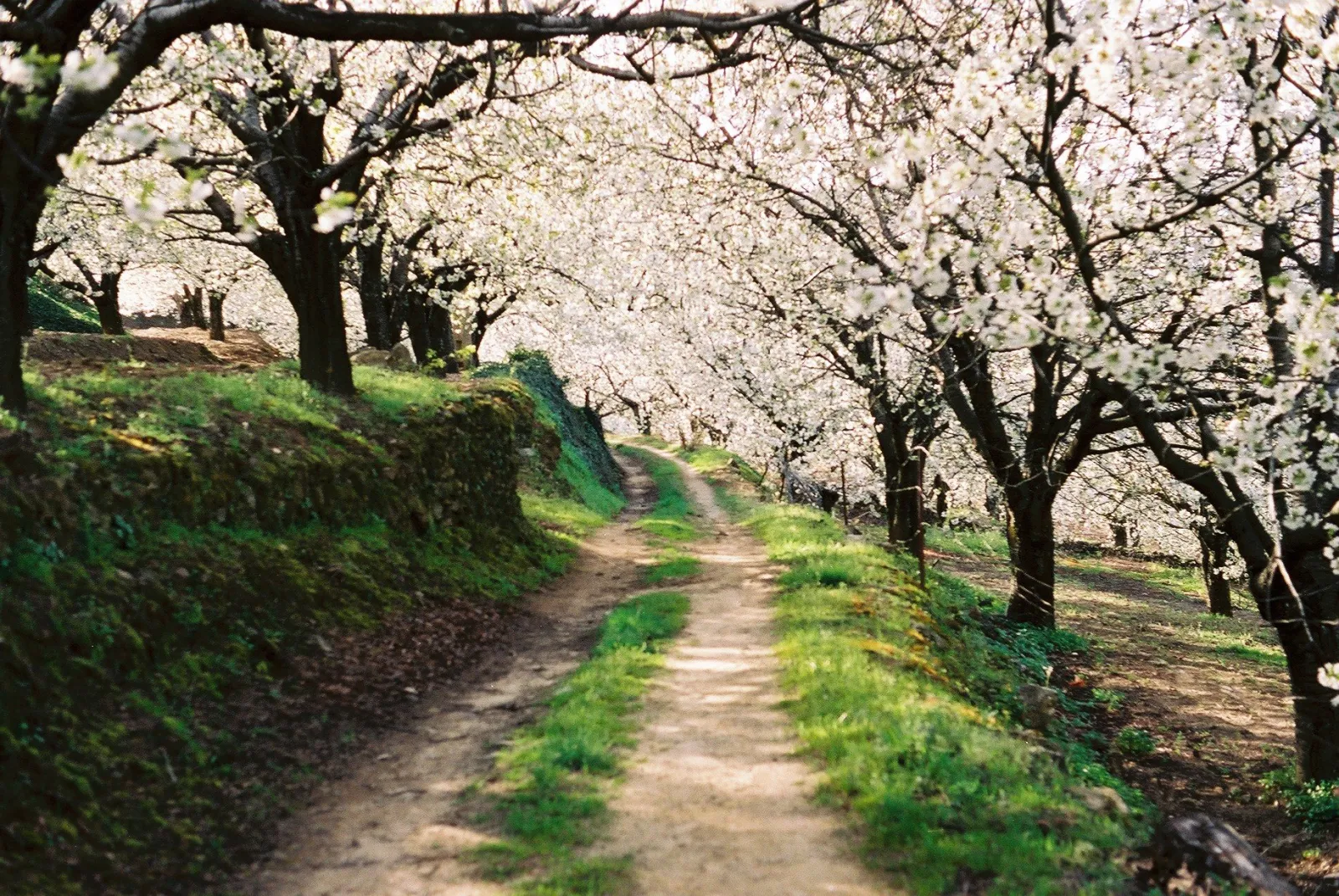
This is a landscape festival first. Most people come to drive or walk between villages, stop at viewpoints and wander among the orchards, then join whatever the fiesta has on that weekend: a tasting, a folk group, an open forge or press.
The tourist office suggests two driving routes. The circular mountain route (about 50 km) links Valdastillas, Piornal, Barrado, Cabrero, Casas del Castañar, El Torno and Rebollar. The linear route (about 30 km) follows the N-110 along the river through Navaconcejo, Cabezuela del Valle, Jerte and Tornavacas up to the Puerto de Tornavacas. Weekends are busy on the roads; weekdays are much quieter.
How to Get There
By car: the easiest way. The N-110 runs up the valley from Plasencia; Jerte is about 39 km from Plasencia by road. A car also lets you follow the bloom from village to village.
By train: the nearest station is Plasencia, on the Madrid–Extremadura line. From there you will need a bus, taxi or hire car to reach the valley.
Information: the valley's tourist office is in Cabezuela del Valle (Paraje de Peñas Albas).
Tips & Advice
- Watch the bloom updates on turismovalledeljerte.com from late February before fixing your dates.
- Book cancellable accommodation: the valley's rural houses and hotels fill fast for bloom weekends, and Easter often overlaps.
- Go on a weekday if you can, and start early to beat the traffic on the N-110.
- Bring layers. Mornings in the upper villages can be cold even when the afternoon is warm.
- Stay on the paths and don't pick blossom or branches; the orchards are working farms.
Photos: Gonzalo Riestra / CC BY 2.0 / Wikimedia Commons; MACfoto1963 / CC BY-SA 4.0 / Wikimedia Commons; victor estrada diaz / CC BY-SA 3.0 / Wikimedia Commons; Luis Rogelio HM / CC BY-SA 2.0 / Wikimedia Commons
Jarramplas (Piornal)
Plasencia, ExtremaduraJarramplas is a traditional winter festival in Piornal (Extremadura), typically around 19–20 January, where a masked character is pelted with turnips in a ritual tied to local identity and devotion to San Sebastián.
Feria de San Juan
Badajoz, ExtremaduraBadajoz's biggest celebration brings a week of colourful casetas, flamenco, bullfighting and fireworks to the Extremaduran capital every June around St John's Day.
Holy Week in Cáceres
Cáceres, ExtremaduraProcessions winding through one of Europe's best-preserved old towns, from the silent midnight walk of the Cristo Negro to the joyful Encuentro in Plaza Mayor on Easter Sunday.
Carnaval de Badajoz
Badajoz, ExtremaduraThe Carnaval de Badajoz is mainland Spain's largest carnival celebration, with over 100,000 people parading through the streets in spectacular comparsas and murgas. Declared a Fiesta of International Tourist Interest, it rivals the Canary Islands carnivals in scale and creativity.