Madrid Transhumance Festival
Once a year, shepherds drive their flock through the heart of Madrid to defend the ancient right of way of Spain's drovers' roads.
The days that matter
-
Days before
Activities at the Casa de Campo
Wool-spinning demonstrations, felting workshops, storytelling and a family walk with the flock in the Casa de Campo, as in 2025.
-
Sunday 10:00 in 2025
The flock sets off
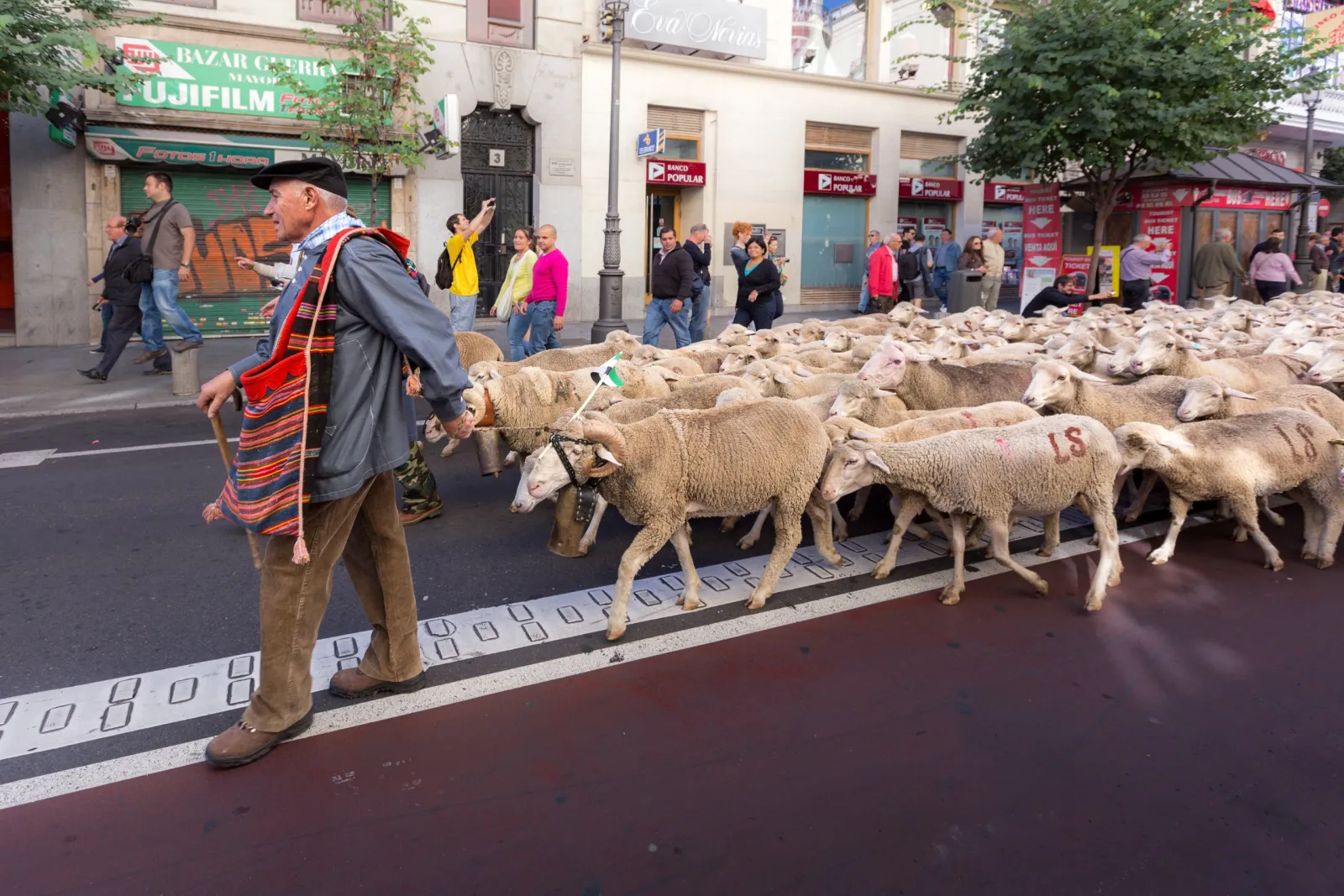
Shepherds lead the sheep and goats out of the Casa de Campo and over the Manzanares by the Puente del Rey.
-
Sunday about 12:30 in 2025
Puerta del Sol (usual route)
After climbing the Cuesta de la Vega and Calle Mayor, the flock fills the Puerta del Sol and heads down Calle de Alcalá. In 2026 it turned back before Sol.
-
Sunday about 13:00 in 2025
The toll
The 1418 Concordia is read and the shepherds pay the 50 maravedís per thousand head, usually at Cibeles (Plaza de la Villa in 2026); the flock then returns to the Casa de Campo.
What Madrid Transhumance Festival is like
- Free
- Family
- Noise
- Sheep bells and folk music
- Crowds
- Thick crowds at Sol and Cibeles; easier along the route
- Mess
- Watch your step after the flock passes
- With kids
- A short, free morning that children love
Highlights
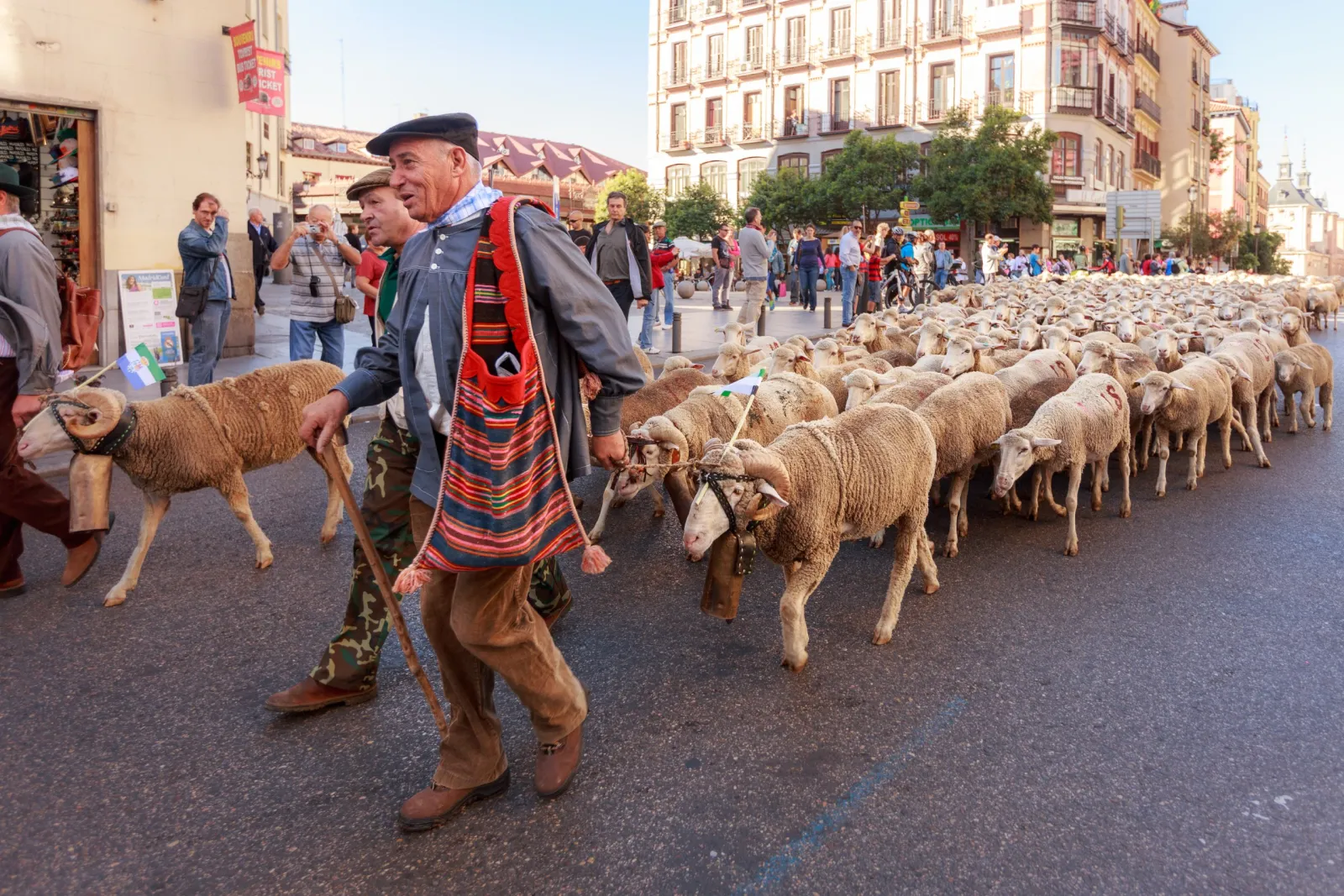
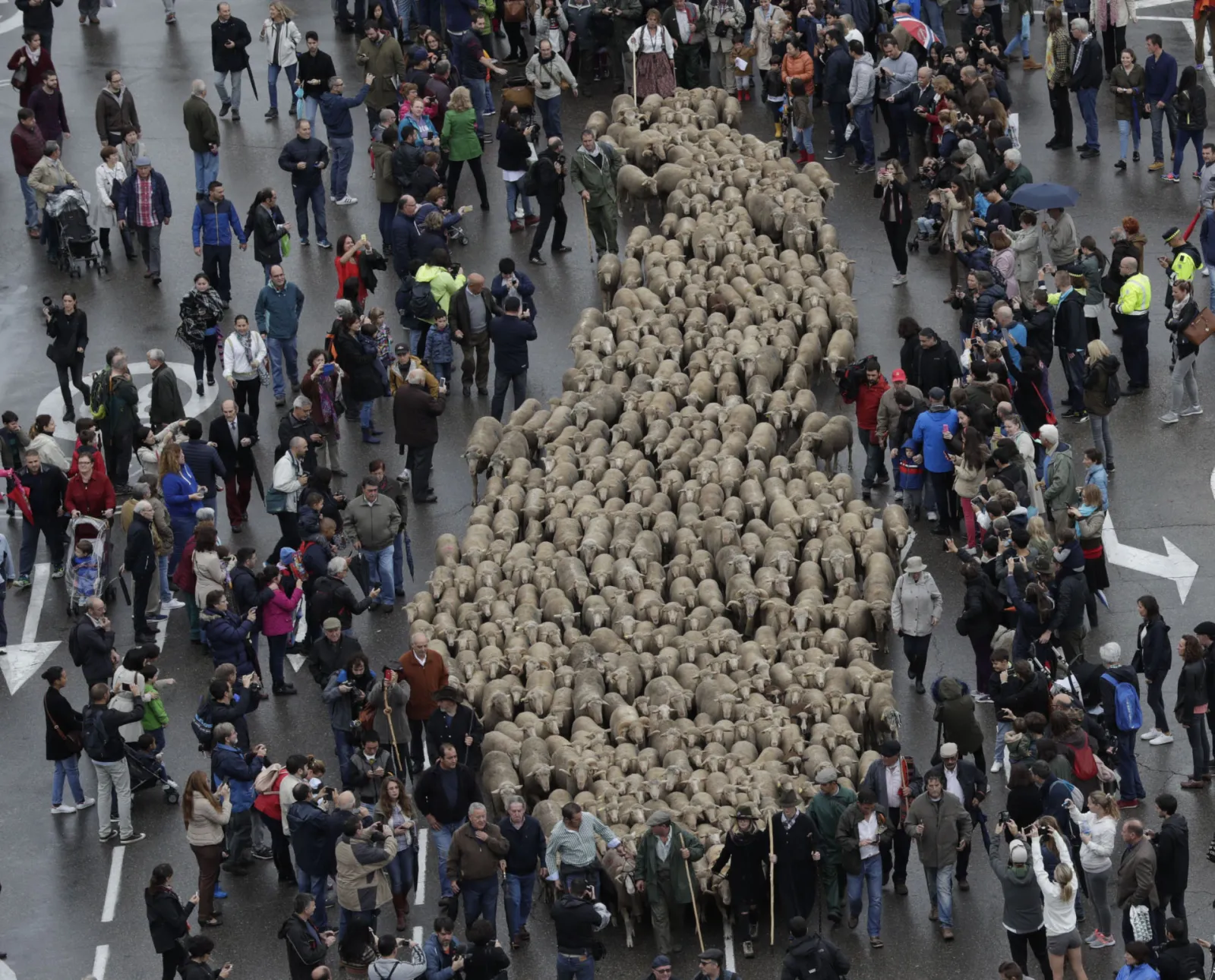
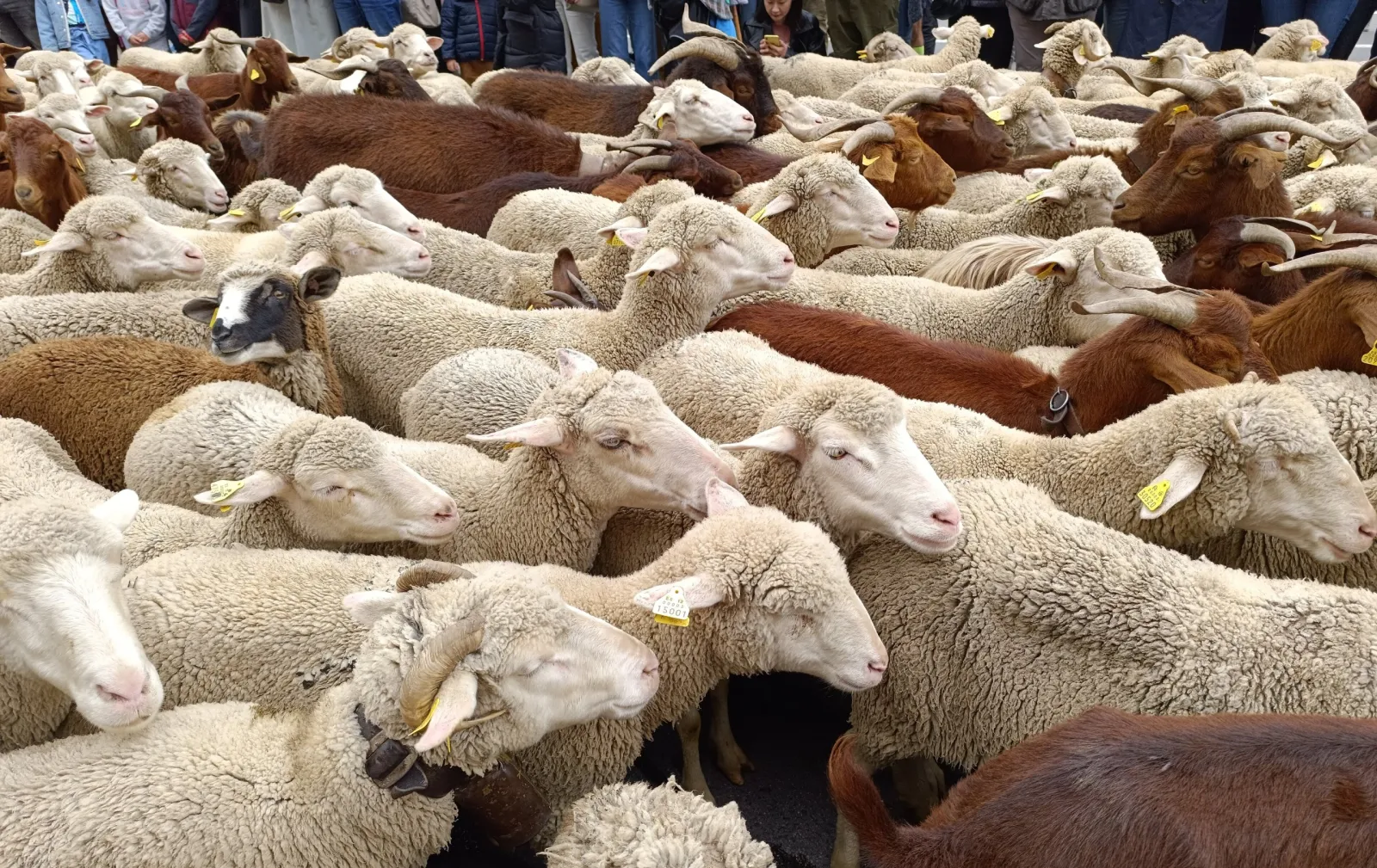
Over a thousand sheep and goats filling the centre of Madrid, usually the Puerta del Sol and Calle de Alcalá
Shepherds and folk groups in regional costume walking with the flock
The reading of the 1418 Concordia and the payment of 50 maravedís, usually at Cibeles
The flock crossing the Manzanares by the Puente del Rey and climbing through old Madrid
Activities at the Casa de Campo in the days before: wool, felting and storytelling
Madrid Transhumance Festival 2027: when
The Fiesta de la Trashumancia is held on a Sunday in autumn, usually in the second half of October: in 2025 it was on 19 October and in 2026 on 25 October, with related activities at the Casa de Campo in the days before. The 2027 date had not been announced at the time of writing; Madrid's tourism office and the Ayuntamiento publish the date, route and times a few days ahead, so check before you go.
Sheep in the Puerta del Sol
For one morning, central Madrid gives way to a flock. Shepherds from transhumant families bring well over a thousand sheep and goats out of the Casa de Campo, cross the Manzanares and, on the usual route, walk them up through the old town to the Puerta del Sol and down Calle de Alcalá to the Plaza de Cibeles. Calle de Alcalá was once part of an old royal drovers' road, the Cañada Real Galiana, and stone markers still stand in the Plaza de la Independencia. At Cibeles the shepherds read the medieval agreement between the Mesta and the city and pay the symbolic toll of "50 maravedís al millar" (50 coins per thousand head) to a city official, before the flock returns to the Casa de Campo by the same route.
Why it matters
The festival began in 1994 to support the new Spanish law on drovers' roads, which protects the network of cañadas, cordeles and veredas as public land. It is run by the City of Madrid with Trashumancia y Naturaleza and other partners, and it is free. Folk groups in regional costume, musicians and dancers walk with the flock, and the Casa de Campo hosts wool, felting and storytelling activities around the festival.
Gallery
History & Origins
Transhumance, the seasonal movement of flocks between summer and winter pastures, shaped the Iberian landscape for centuries. In 1273 Alfonso X created the Honrado Concejo de la Mesta, the powerful guild of sheep owners, and a network of protected drovers' roads crossed the kingdom. In 1418 the Mesta and the town of Madrid signed a "Concordia" setting the toll shepherds paid to cross the town's land: the 50 maravedís per thousand head that are still handed over, symbolically, at Cibeles.
The modern festival was first held in 1994, when transhumant shepherds and conservationists, with naturalist Jesús Garzón among the main promoters, were pressing for a law to protect the drovers' roads. The Ley de Vías Pecuarias was passed in 1995, and the flock has crossed Madrid almost every autumn since. In 2024 the event was cancelled because of bluetongue disease in livestock; it returned in 2025.
What to Expect
In 2025 the flock left the Casa de Campo at 10:00, crossed the Puente del Rey and climbed via the Cuesta de la Vega and Calle Mayor to reach the Puerta del Sol around 12:30 and Cibeles around 12:45, with the ceremony at about 13:00. The route can change: in 2026, because of a demonstration in the centre, the flock did not reach Sol or Cibeles. It went via Calle Mayor, Plaza de la Villa, Plaza Mayor and Calle de Toledo, with the ceremony in Plaza de la Villa. Check the official route and times in the days before.
Thousands of people line the streets, so the best views are along the route rather than at the packed final stop. The flock moves quickly through each point; arrive early, keep behind the barriers and give the animals and dogs space. It is a short, free, family-friendly morning rather than an all-day fiesta.
How to Get There
The route runs through the centre of Madrid, so public transport is the way to go: the Sol metro and Cercanías station sits on the Puerta del Sol, and Banco de España metro is next to Cibeles. To see the flock set off, go to the Casa de Campo side of the Puente del Rey, near Príncipe Pío station. Madrid-Barajas airport and the Atocha and Chamartín railway stations are all well connected to the centre.
Streets along the route close to traffic during the morning, so avoid driving into the centre.
Tips & Advice
- Check esMadrid or the Ayuntamiento's announcements in October for the confirmed date, route and times.
- Pick a spot on Calle Mayor or Calle de Alcalá at least 30 minutes before the flock is due.
- Do not touch or feed the animals and keep children close to you behind the barriers.
- If you have kids, add the Casa de Campo activities on the Saturday.
- Combine the morning with lunch in the old town once the streets reopen.
Photos: Barcex / CC BY-SA 3.0 / Wikimedia Commons; Diario de Madrid / CC BY 4.0 / Wikimedia Commons; Carlos Teixidor Cadenas / CC BY 4.0 / Wikimedia Commons
San Isidro
Madrid, MadridThe Fiestas de San Isidro are Madrid's most beloved traditional celebrations, honouring the city's patron saint, San Isidro Labrador. Every May, the capital comes alive with free concerts, traditional chotis dancing, markets, and a joyful atmosphere that captures the authentic spirit of Madrid.
Mercado de Navidad de Plaza Mayor
Madrid, MadridMadrid's iconic Plaza Mayor hosts Spain's most famous Christmas market since 1860, with over 100 stalls selling nativity figures, ornaments, costumes and traditional joke items.
Fiesta de la Paloma
Madrid, MadridThe Fiestas de la Paloma is Madrid's most beloved and traditional neighbourhood festival, celebrating the Virgin of La Paloma in the historic La Latina district. Every August, the narrow streets fill with paper lanterns, the sound of chotis music, and neighbours dressed in traditional chulapo and chulapa costumes. It's the most authentic window into old Madrid's soul — a living tradition that has survived centuries of change.
Fiesta de San Antonio de la Florida
Madrid, MadridEvery June 13th, young madrileñas visit the Ermita de San Antonio de la Florida to place 13 pins in the baptismal font, hoping the saint will help them find a partner.