Three Kings Parades 2027: Where & How to Watch in Spain
Where to watch Spain's best Three Kings parades on Tuesday 5 January 2027, how each city's cabalgata works, where to stand with children and what is open on 6 January.
Quick answer: Spain's Three Kings parades, the cabalgatas de Reyes, take place on the evening of Tuesday 5 January 2027, and Wednesday 6 January is a national holiday for presents and roscón. Every town has one. The ones worth travelling for are Madrid (down the Castellana to Cibeles, with the Kings' speech and fireworks at the end), Barcelona (the Kings land at the port, then parade towards Montjuïc), Seville (the Ateneo's six-hour parade, held since 1918), Valencia (arrival by sea at La Marina, parade to the Plaza del Ayuntamiento), Alcoy (Spain's oldest cabalgata, with pages climbing ladders to the balconies) and Málaga (from the town hall to the cathedral). Cities publish the 2027 routes and times in late December or the first days of January; the patterns below come from the January 2026 editions. The tradition itself is explained on our Día de los Reyes Magos page; this guide is about where and how to watch.
5 and 6 January at a glance
| When | What happens |
|---|---|
| December | Children write to the Kings and hand their letters to royal pages in shopping centres and squares |
| 4 January | In some cities a royal herald or envoy announces the Kings' arrival (Seville, Alcoy) |
| 5 January, afternoon | The Kings arrive by sea in Barcelona and Valencia |
| 5 January, about 16:00–22:00 | Cabalgatas in every city and town, with sweets thrown to the crowd |
| Night of 5 January | Children leave their shoes out, with a treat for the Kings and water for the camels |
| 6 January | Presents in the morning, roscón de Reyes, family lunch; national holiday |
Madrid: down the Castellana to Cibeles
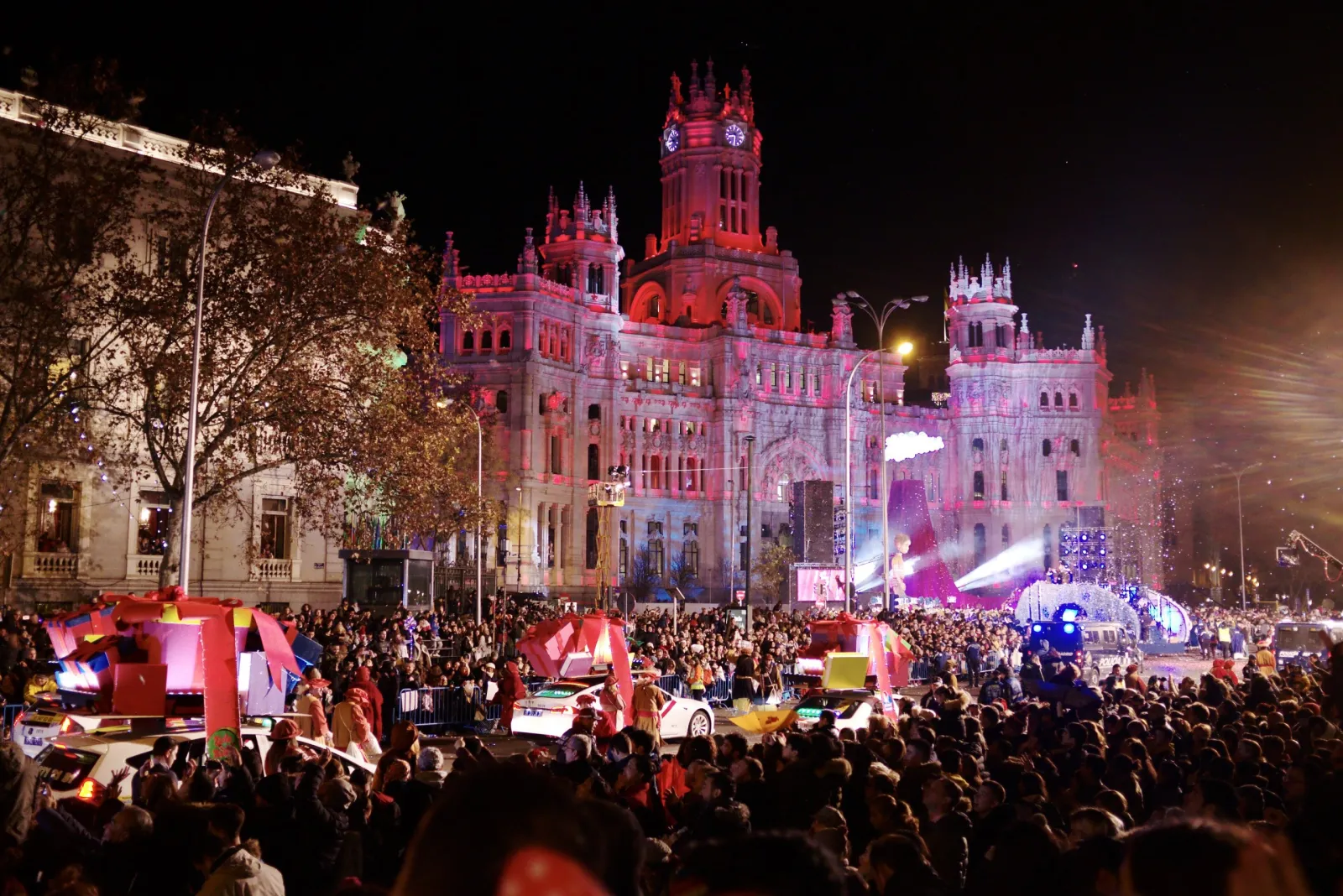
In 2026 Madrid's main cabalgata set off at 18:00 from Plaza de San Juan de la Cruz, went down the Paseo de la Castellana and Paseo de Recoletos, and reached Plaza de Cibeles at about 21:00, where the Kings gave their speech in front of the Palacio de Cibeles, the city hall, followed by a firework and music show. Around 2,100 people took part, including more than 250 royal pages, and the floats threw 1,200 kg of sweets. The city expects more than 200,000 spectators and closes the Castellana–Recoletos–Prado axis to traffic from early afternoon.
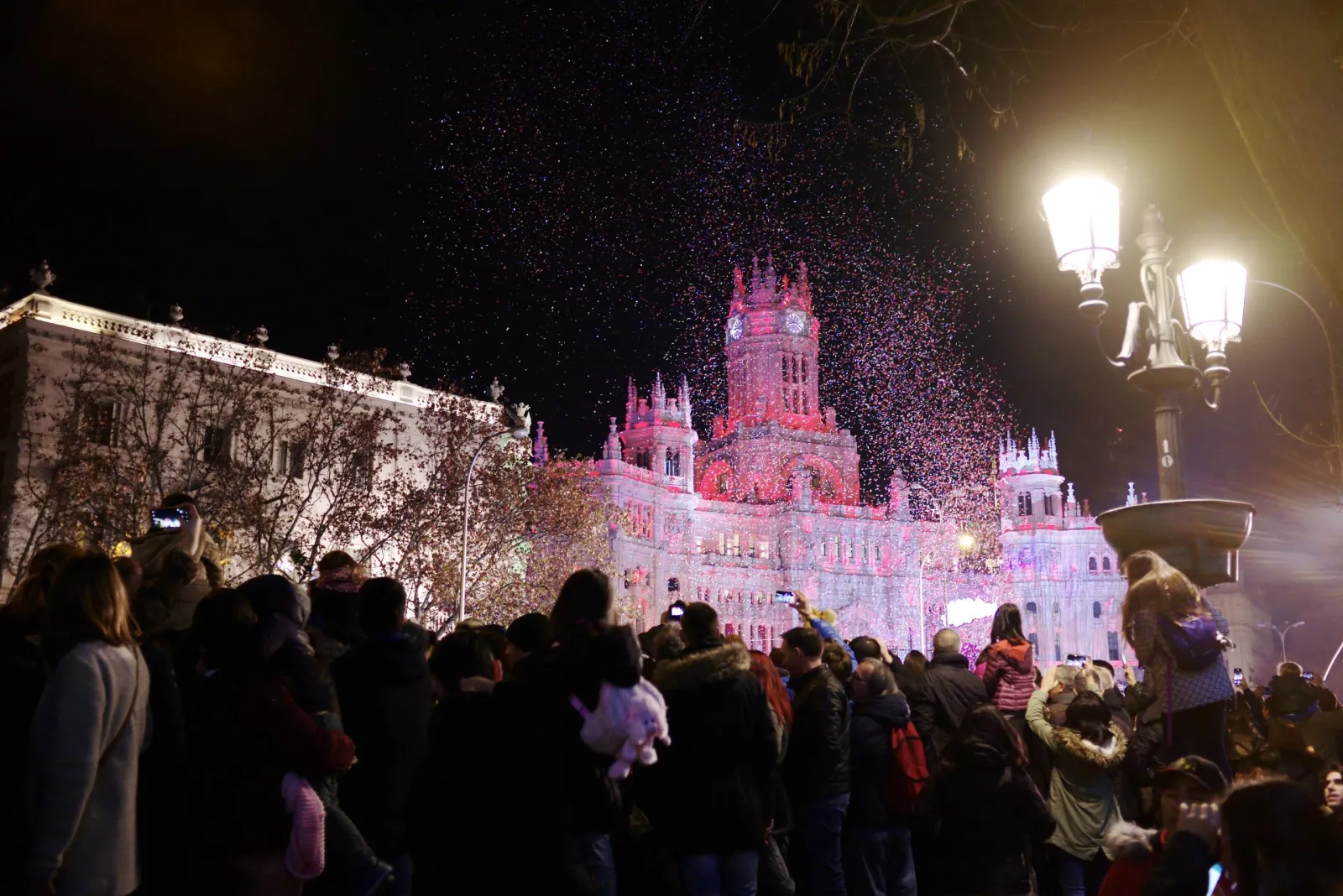
Where to stand. The upper Castellana, between San Juan de la Cruz and Plaza de Colón, is wide and gets the parade first, which suits small children who flag after 20:00. Cibeles has the speech and the fireworks, and the densest crowd of the night. Anywhere central, arrive one to two hours early and claim the kerb. The nearest metro stations are Nuevos Ministerios at the start, then Gregorio Marañón, Rubén Darío, Colón and Banco de España at the end; after the finale, walk a few blocks away before going underground.
With small children, consider a district parade instead. Madrid's districts hold their own, much calmer cabalgatas around 4 and 5 January, and the city publishes the full list in the first days of January. Our Madrid region guide has more on the city in winter, and if you are in town for New Year too, see our Nochevieja at Puerta del Sol page.
Barcelona: Kings by sea, then the Cavalcada
In 2026 the Kings arrived by sea at the Portal de la Pau, beside the Columbus monument, at 16:30, where the mayor handed them the magic key that opens every home in the city. The Cavalcada de Reis set off at 18:00 from the Parc de la Ciutadella area and followed Passeig de Colom, the Avinguda del Paral·lel, Ronda de Sant Pau, the Mercat de Sant Antoni and Carrer de Sepúlveda to Avinguda de la Reina Maria Cristina below Montjuïc, reaching its last checkpoint at about 21:10. With some 1,300 performers spread over 1.2 km, it takes about an hour to pass any one spot, and seven tonnes of gluten-free sweets are handed out. The city publishes a live map of the floats' position on barcelona.cat.
Where to stand. Passeig de Colom sees the parade first (around 18:35–18:55 in 2026); the Paral·lel and Sepúlveda are wide and easier with a pushchair. The arrival at the port is the most magical moment but fills early. The city's own advice is worth repeating: wear closed shoes, do not climb bins, traffic lights or signs, and keep children back from the floats. More on the region in our Catalonia guide.
Seville: the Ateneo's marathon
Seville's cabalgata has been organised by the Ateneo de Sevilla since 1918, and it is a marathon. In 2026 it had 33 floats and left at 16:15 from Calle Palos de la Frontera, beside the University in the old Royal Tobacco Factory. It crossed the Macarena, Plaza del Duque and La Campana, went down Reyes Católicos and over the Isabel II bridge into Triana, reached Plaza de Cuba at about 20:15, looped through Los Remedios and returned to its starting point at about 22:00: roughly six hours in total. The day before, the Heraldo Real rides through the city to announce the Kings and ask for the keys of the city.
Where to stand. Pick one spot and let the parade come to you; it takes a long time to pass. Triana and Los Remedios have a neighbourhood feel, while the centre around La Campana is denser. The bridges close to traffic and the centre is hard to reach by car from mid-afternoon, so use the metro to San Bernardo, Prado de San Sebastián or Puerta Jerez and walk. Our Andalusia guide covers the rest of the region.
Valencia: arrival by sea and the Plaza del Ayuntamiento
In 2026 the Kings landed at 16:30 at a new spot in La Marina, the Plaza de la Sal, where the city set up grandstands for the public. The parade left at 17:30 along Avenida de Navarro Reverter, General Palanca, General Tovar, Calle de la Paz, Plaza de la Reina and Calle San Vicente to the Plaza del Ayuntamiento, ending in Marqués de Sotelo. The city reserves areas for people with reduced mobility in the Plaza del Ayuntamiento and streams the parade live on YouTube. The arrival at La Marina is the relaxed family moment; the town hall square is the crush.
Alcoy: Spain's oldest cabalgata
Alcoy (Alcoi), in the mountains north of Alicante, has the oldest Three Kings parade in Spain: first documented in 1866 and held every year since 1885, except 1914, when heavy snow stopped it. It has been a Fiesta de Interés Turístico Nacional since 2001, and it feels different from any city parade. The day before, the royal envoy reads the Bando Real through the main streets. On the 5th more than a thousand people take part: pages, torch-bearers, escorts and the town's three bands with dulzainas and drums. The parade starts at about 18:00 in the upper town and ends around 22:00 on the Avinguda del País Valencià. In the Plaça d'Espanya the Kings dismount to adore the Child at a nativity scene, with fireworks and Handel's Messiah. Most memorable of all, pages climb long ladders up to the balconies to deliver presents to children's homes.
Alcoy is under an hour by car from Alicante, and hotels in town are few, so book early or stay in Alicante. The town's other great festival is the Moros y Cristianos de Alcoy in April; the Valencia region guide has more.
Málaga: from the town hall to the cathedral
In 2026 the plan was for the Kings to reach the Ayuntamiento at 17:30 and set off at 18:00 along Avenida de Cervantes, the Paseo del Parque, Plaza de la Marina and the Alameda Principal, cross the Puente de Tetuán into El Perchel and La Trinidad, return over the Puente de la Esperanza and finish at the cathedral with an offering at a living nativity. A bad weather forecast pushed everything back an hour on the day, a reminder to check the city's channels on the afternoon of the 5th. Málaga sells numbered chairs along the Paseo del Parque, Plaza de la Marina and the Alameda through its online Ventanilla Virtual, and the Cercanías C1 from the Costa del Sol stops at Málaga Centro-Alameda, a few minutes' walk from the route. It is also the mildest parade on this list.
Where to stand: a practical checklist
- Start or finale? The start of the route is less crowded and earlier, ideal for young children. The finale has the speech and fireworks, and the biggest crowds.
- Arrive early. One to two hours in the big cities, 30–60 minutes in a town.
- Stay behind the barrier. Never step into the road for sweets or a photo: floats cannot stop quickly and feet get run over.
- Bring a bag for sweets and shield small faces: the sweets are thrown hard.
- Dress for the cold. Madrid's average January low is 2.7 °C (AEMET, 1981–2010). Bring layers, gloves and a folding stool.
- Label your children. Write a phone number on a wristband or inside a coat; Madrid hands out ID wristbands for children in the centre during the Christmas season.
- Ear defenders help toddlers with brass bands and fireworks.
- Ask about accessible areas. Valencia, for example, reserves zones for people with reduced mobility.
- Watch it live if needed. Barcelona's live map, Valencia's stream and regional TV (Alcoy's parade is broadcast on À Punt) help you time your arrival.
For more family planning, see our guide to family-friendly festivals in Spain.
Getting around on 5 January
- Roads close from early afternoon along the routes, and buses are diverted. The metro is your friend, but stations next to the finale are swamped; walk one or two stations away.
- Hotels. 5 January is a busy night in Madrid, Seville and Alcoy; book early.
- Going home. Trains and flights on 6 and 7 January are full of families returning after the holidays; buy tickets well ahead.
6 January: roscón, presents and what's open
- A national holiday. In 2027 it falls on a Wednesday. Most shops close; restaurants are busy with family lunches, so book.
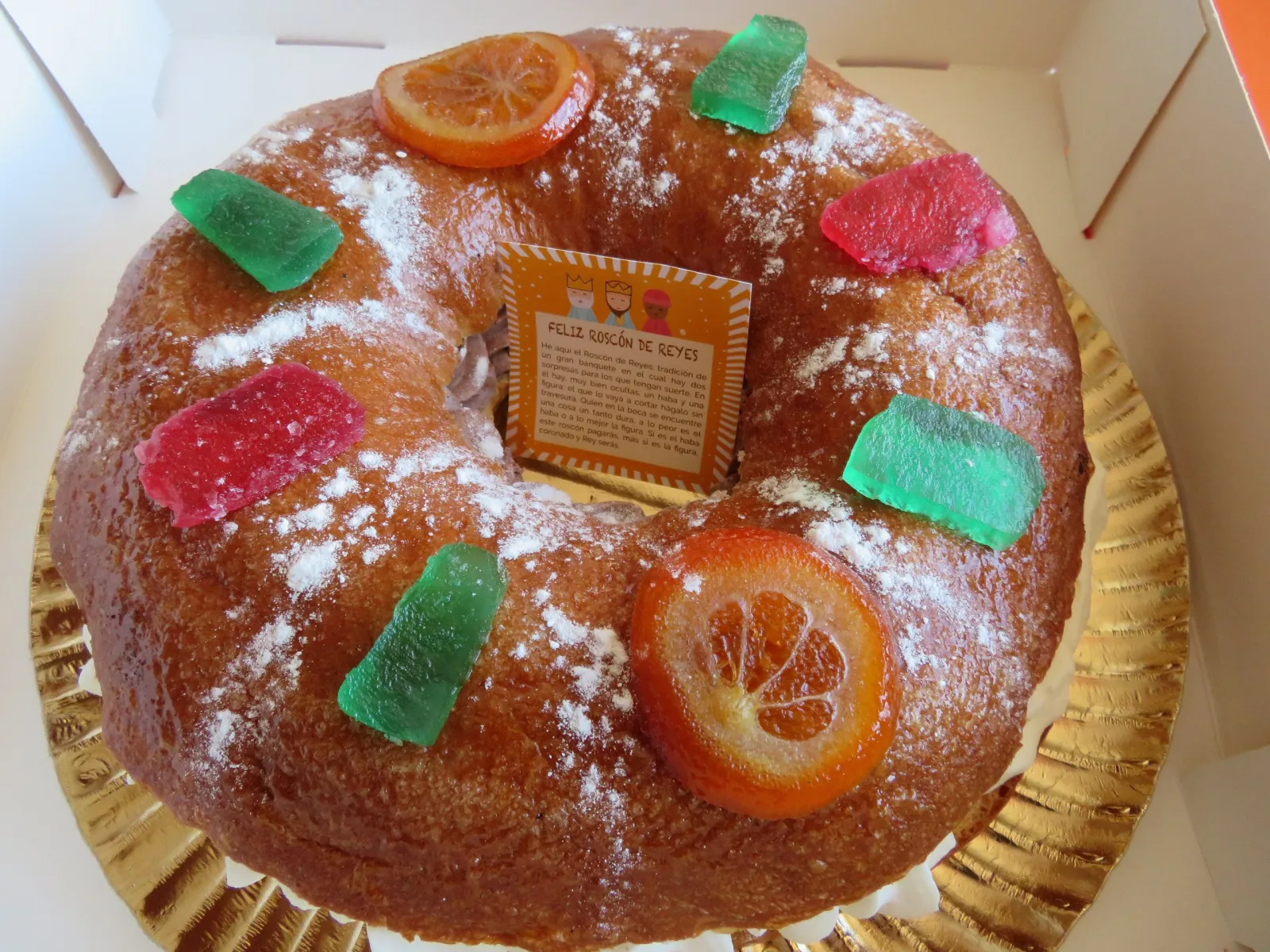
- Roscón de Reyes. A ring of sweet brioche scented with orange-blossom water and topped with candied fruit and sugar, often filled with cream. It hides a small figure (whoever finds it is crowned) and a dried bean (whoever finds that pays for next year's). Order from a good bakery in advance; queues on the 5th and 6th are long.
- El Niño. The Sorteo del Niño lottery is drawn on 6 January; its first prize pays €200,000 for a €20 tenth-share ticket.
- Museums. Check opening hours individually; the Prado, for example, opens with reduced hours, 10:00–14:00, on 6 January.
- The end of Christmas. The Christmas lights go off around this night, and the January sales traditionally start on the 7th.
January continues with the blessing of animals at San Antón in Madrid and San Sebastián's Tamborrada on 20 January; see our January festival calendar for the full month.
FAQ
When are the Three Kings parades in 2027? On the evening of Tuesday 5 January 2027 in every Spanish city and town. Wednesday 6 January is the national holiday when presents are opened.
What time does the Madrid cabalgata start? In 2026 it left Plaza de San Juan de la Cruz at 18:00 and reached Cibeles at about 21:00. The 2027 times are published in late December or early January.
Which is the oldest cabalgata in Spain? Alcoy's, documented since 1866 and held every year since 1885 except 1914.
Which is the longest? Seville's, organised by the Ateneo: about six hours from mid-afternoon to around 22:00 in 2026.
Are the parades free? Yes. Some cities also offer paid or reserved seating, such as Málaga's numbered chairs, and grandstands at Valencia's arrival point.
Where should I go with small children? To the start of the route, or to a neighbourhood parade, such as Madrid's district cabalgatas, rather than the finale.
Is 6 January a public holiday? Yes, nationwide. Shops mostly close, and some museums open with reduced hours.
Key dates 2027
| Date | Event | Where |
|---|---|---|
| Mon 4 Jan (expected) | Royal herald and Bando Real | Seville, Alcoy |
| Tue 5 Jan, afternoon | Kings arrive by sea (16:30 in 2026) | Barcelona, Valencia |
| Tue 5 Jan, from about 16:15 | Ateneo cabalgata, about six hours | Seville |
| Tue 5 Jan, from about 18:00 | Main cabalgatas (2026 times) | Madrid, Barcelona, Alcoy, Málaga |
| Tue 5 Jan, about 21:00 | Kings' speech and fireworks | Cibeles, Madrid |
| Wed 6 Jan | Día de Reyes, national holiday; Sorteo del Niño | Nationwide |
| Thu 7 Jan | January sales traditionally begin | Nationwide |
Photos: Nicolas Vigier / CC0 / Wikimedia Commons; Juan Emilio Prades Bel / CC BY 4.0 / Wikimedia Commons
Related Articles
Puerta del Sol on New Year's Eve 2026: Grapes, Access, Metro
Planning the twelve grapes in Madrid's Puerta del Sol on 31 December 2026? How the access filters and capacity work, when to arrive, the Preuvas, Metro hours and alternatives.
New Year's Eve in Spain 2026: Where to Celebrate
Where to see in 2027 in Spain: the twelve grapes at Madrid's Puerta del Sol, Barcelona's Montjuïc show, Valencia, Granada, Las Palmas and Palma, with the 2025 rules and times.
Bilbao BBK Live 2027: Dates, Camping, Buses & Tickets
A practical guide to Bilbao BBK Live 2027 (8–10 July, Kobetamendi): shuttle buses, the festival campsite vs a bed in Bilbao, ticket phases, Basque weather and costs.